10 Best Modular Herb Gardens Using Cinder Blocks
Cinder blocks for herb gardens? Oh, where have you been all my gardening life?
I’ve dabbled in this trendy approach and honestly, it’s a game changer. My 4×4 feet beds, crafted from these stylish 8-inch blocks, perfectly cradle herbs like basil, thyme, and mint.
Stacking them vertically? Genius. Who knew I could maximize my tiny backyard while creating a sweet spot for my morning coffee?
The blend of colors and textures—from bold rosemary to adorable sedums—has
Quick Takeaways
- Cinder blocks create affordable and versatile modular herb gardens with excellent drainage and insulation for optimal herb growth.
- A 4×4 feet square layout is ideal for building raised beds using 8-inch high cinder blocks to ensure stability and durability.
- Staggered or stacked configurations maximize vertical space, making them ideal for small gardens or urban settings.
- Plant various compatible herbs like basil, cilantro, and thyme in designated sections to enhance visual appeal and ensure similar care requirements.
- Engaging local communities in modular gardening can promote sustainable practices and foster a sense of collaboration in green spaces.
Creating Square Modular Herb Gardens With Cinder Blocks
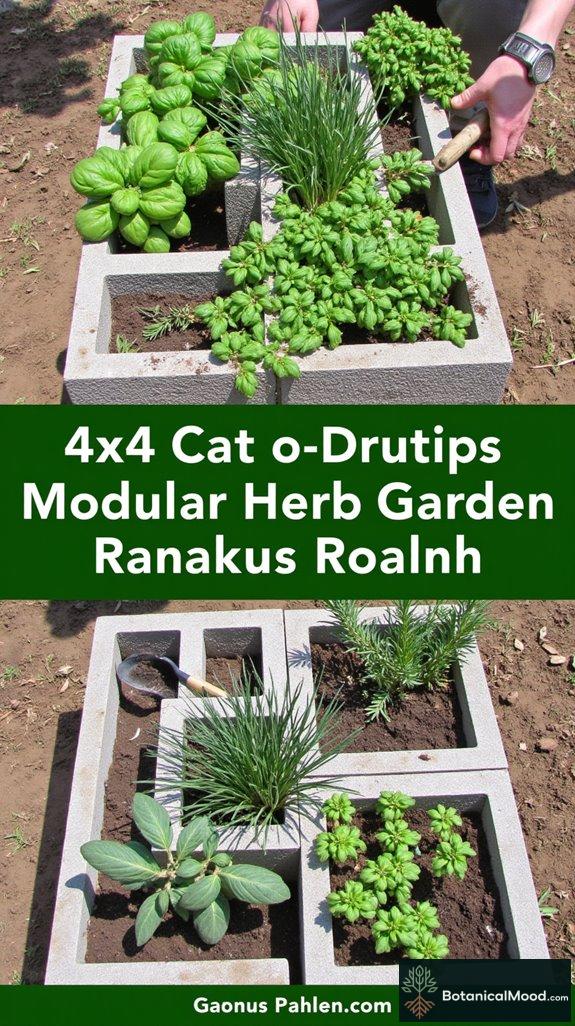
Creating Square Modular Herb Gardens With Cinder Blocks
Modular herb gardens using cinder blocks offer an affordable and versatile planting solution, perfect for both novice and seasoned gardeners. Typically, a square layout can measure 4×4 feet, accommodating various herbs in each block’s cavity.
Construction is simple: stack cinder blocks in a square formation, leaving the hollow sections open for planting. Opt for well-draining soil and consider incorporating a weed barrier at the base to maintain soil quality. Popular herbs include basil, mint, cilantro, and parsley. The rustic appearance of cinder blocks complements any garden, creating an urban, eco-friendly aesthetic. Additionally, using well-draining soil is essential for optimal herb growth and root health.
Selecting Plants for Cinder Block Beds
Choose herbs that thrive in your climate and prefer similar light and water conditions. Suggested plants include:
- Basil
- Thyme
- Chives
- Oregano
- Rosemary
Designing Your Cinder Block Garden
Plan your modular garden by sketching a layout that allows easy access to each herb. Arrange taller plants like rosemary in the back and shorter ones like chives in the front.
Tips for ideal design include:
- Space plants 12-18 inches apart
- Confirm each block receives sunlight
- Group herbs with similar growth habits
Considerations for Vertical Gardening
Explore vertical gardening techniques to maximize space in small yards, using trellises for climbing herbs or installing shelving for pots.
This method not only enhances aesthetics but also improves air circulation and plant health.
Designing L-Shaped Cinder Block Herb Beds
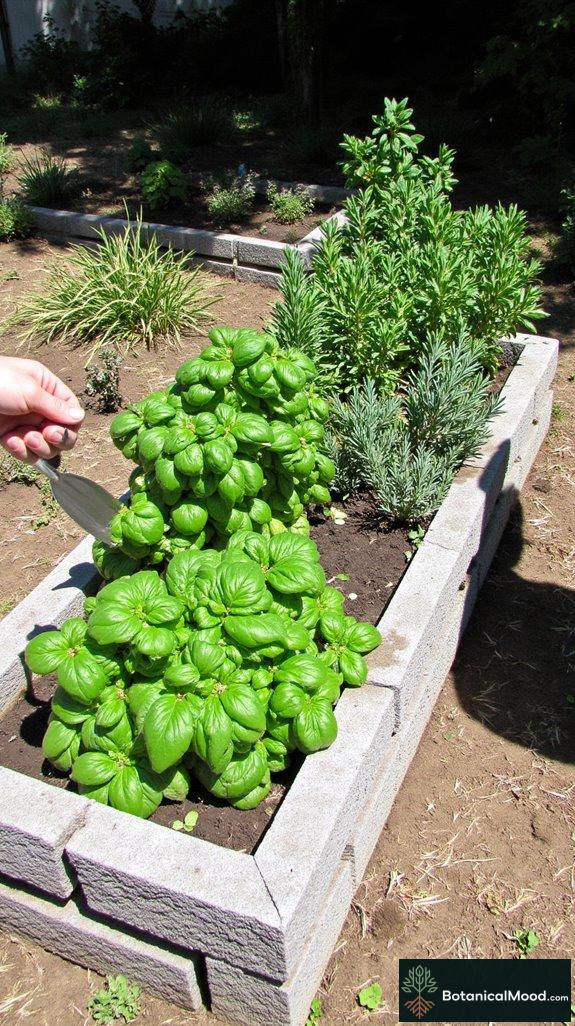
L-shaped cinder block herb beds are an attractive and functional choice for gardeners looking to maximize space while creating a unique garden design. Each bed typically measures 3-4 feet on one side and 6 feet on the other, constructed using sturdy cinder blocks arranged in an L shape. The blocks provide excellent drainage and insulation for herbs. Popular materials for this setup include well-draining soil mixed with compost to enrich plant growth. With customizable cinder block gardens, you can easily design your garden to fit your specific needs and style.
To construct, stack cinder blocks to form the L shape, fill with soil, and plant your favorite herbs, leaving enough space for each to thrive.
How to Select Plants for Your Bed
When selecting plants for your cinder block herb bed, consider the climate, sunlight, and herbs favorable for your cooking needs. Here are some great options:
- Basil
- Rosemary
- Thyme
- Parsley
- Chives
- Mint
Tips for Designing Your L-Shaped Herb Bed
Designing your L-shaped herb bed involves planning the layout and spacing carefully. Consider the following tips:
- Sunlight Exposure: Position taller herbs on the northern side to avoid shading shorter ones.
- Water Requirements: Group plants sharing similar water needs together.
- Plant Size: Space plants according to their mature size—allow 12-18 inches between larger herbs.
- Companion Planting: Mix herbs like basil and tomatoes for mutually beneficial growth.
- Pro Tip: Use decorative mulch around plants for added aesthetics and moisture retention.
Vertical Gardening and Herb Integration
Exploring vertical gardening can enhance your herb garden’s appeal and productivity.
Utilize trellises or hanging planters to increase growing space, especially in limited areas. This method not only beautifies your garden but also allows for better air circulation and light exposure.
Building Vertical Gardens With Stacked Cinder Blocks

Stacked cinder block gardens are functional and visually appealing planting beds, perfect for urban and small spaces. These gardens are typically arranged in a rectangular shape, composed of varying heights of cinder blocks providing both structure and an innovative way to grow plants vertically. Each cinder block can be filled with soil, allowing for creative plant placement, ideal for herbs and small vegetables.
To construct your garden, stack the blocks in a stable manner, guaranteeing they’re level. Use quality potting soil and consider lining the holes for drainage. The cinder blocks’ rustic characteristics also add a unique aesthetic to your garden. Additionally, stacked cinder blocks can help maximize your gardening space by utilizing vertical height effectively.
Selecting Plants for Cinder Block Gardens
When choosing plants for your cinder block garden, focus on herbs and compact crops that thrive in smaller spaces.
Suggested plants:
- Basil
- Mint
- Thyme
- Chives
- Strawberries
Designing Your Cinder Block Garden Layout
To design your planting bed, start by sketching the layout according to available space. Keep in mind the sun’s direction to position plants that require partial or full sunlight.
Tips for designing:
- Plan for easy access when watering and harvesting
- Group plants with similar light and water needs
- Space plants adequately to allow for growth and airflow
Pro Tips:
- Use taller herbs like mint at the back if placed against a wall
- Guarantee each cinder block has adequate drainage to prevent root rot
Creative Uses for Cinder Blocks in Gardening
Cinder blocks aren’t just for gardens; they can create unique outdoor decor elements. Use them to form pathways, borders, or seating areas in your gardening design.
The versatility of cinder blocks allows for numerous applications while enhancing the overall aesthetic of your outdoor space.
Integrating Seating Into Cinder Block Garden Designs
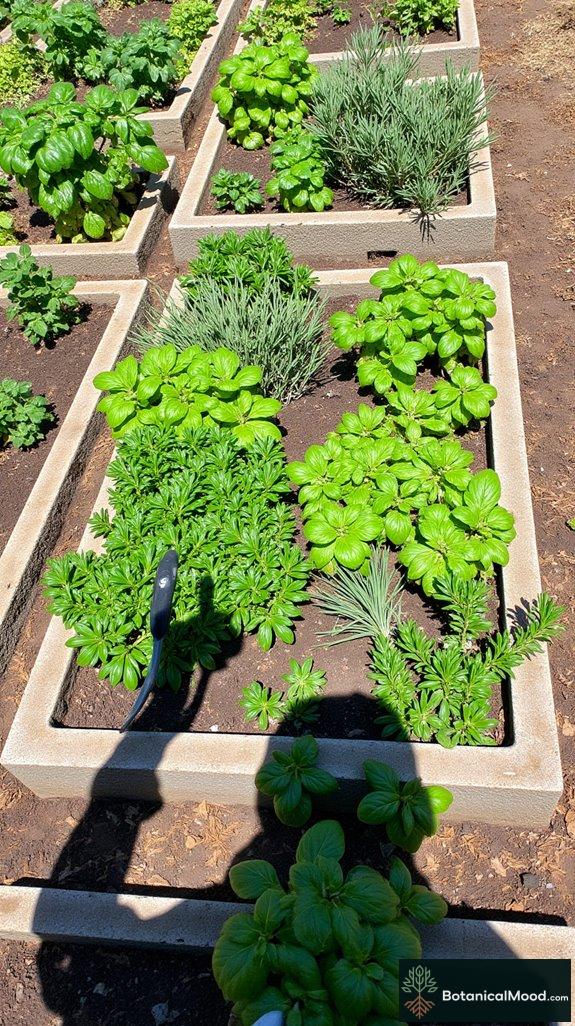
Cinder block planting beds offer a versatile and durable option for modular herb gardens. Typically designed with blocks measuring 16” x 8” x 8”, these beds can be arranged in various shapes—like rectangles or circles—to suit your garden space.
Using cinder blocks (often reused for eco-friendliness), you can create a raised bed that not only provides excellent drainage but also retains moisture and warmth for plants. The open cavities make perfect homes for herbs such as rosemary, thyme, basil, and mint, while also serving as additional seating or decorative elements in your garden. Additionally, vertical garden designs can further enhance the available planting space in small areas.
Create a raised bed with cinder blocks for excellent drainage, moisture retention, and beautiful herb displays.
Selecting Plants for Cinder Block Gardens
Choose plants that thrive in your climate and have varying heights for visual interest. Recommended options include:
- Basil
- Oregano
- Parsley
- Chives
- Sage
These herbs are generally low-maintenance and complement each other well, both in flavor and space.
Designing Your Cinder Block Planting Bed
To design an effective cinder block planting bed, consider the following tips:
- Layout: Start with a simple rectangular or square shape to accommodate a range of herbs.
- Spacing: Allow at least 12 inches between each plant for ideal growth; for larger herbs, increase spacing.
- Layering: Use taller plants like basil at the back and shorter ones like chives in the front for a pleasing aesthetic.
Pro Tip: Opt for companion planting to enhance growth and deter pests, which can maximize your harvest and keep the garden healthy.
Exploring Cinder Block Garden Accessories
Consider adding decorative elements like fairy lights or colorful planters to enhance your cinder block garden. Incorporating garden statues or unique rocks can also provide personalized touches that make your space inviting and reflective of your personality.
Utilizing Cinder Block Planters for Succulents and Herbs
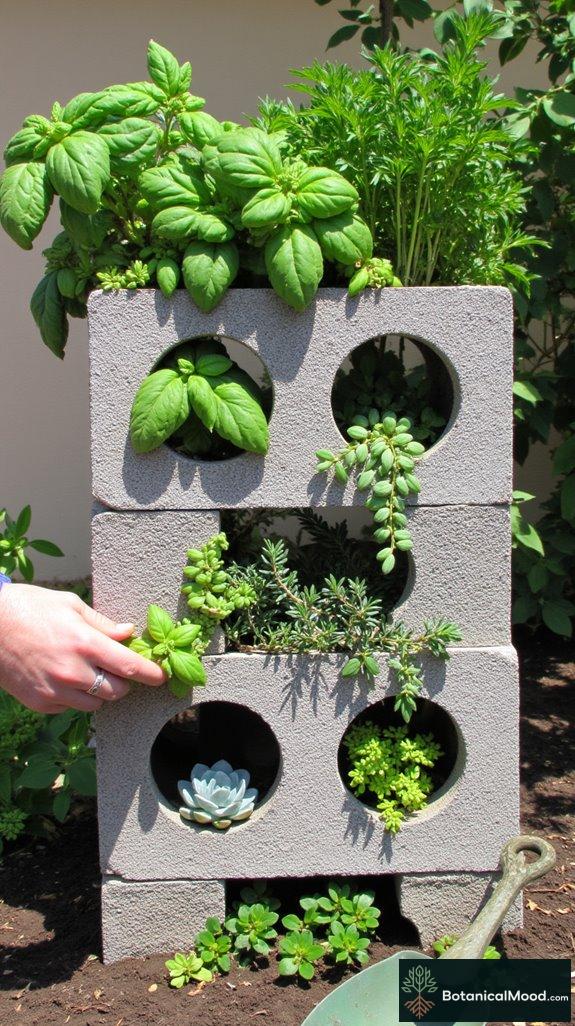
Cinder block planters are an innovative and visually appealing option for creating modular herb gardens. These versatile structures typically consist of standard-sized cinder blocks arranged in a rectangular or square formation. The holes of the blocks create natural planting spaces, making them suitable for small herbs and succulents.
When constructing your bed, stack the blocks, guaranteeing stability and an even layout. Fill the openings with quality potting soil and select plants that thrive in similar conditions. Ideal materials include concrete cinder blocks, organic soil, and an optional ground cover fabric to enhance drainage.
How to Select Plants for Cinder Block Gardens
Choosing the right plants is key. Opt for herbs and succulents that thrive in well-draining soil. Here’s a selection:
- Basil
- Thyme
- Mint
- Rosemary
- Sedum
- Aloe Vera
- Echeveria
Designing Your Cinder Block Planter Layout
To design your planting bed, consider the following tips:
- Plan Spacing: Leave space between plants to guarantee air circulation and growth.
- Layering: Use taller herbs like rosemary toward the back and shorter varieties like thyme in front.
- Mix Textures: Combine different leaf shapes and colors for visual appeal.
- Sun Exposure: Position sun-loving plants in the sunniest spots—generally the top of cinder blocks.
Pro Tips:
- Use companion planting to deter pests and enhance growth.
- Regularly trim herbs to encourage bushier plants.
Benefits of Modular Herb Gardens
Modular herb gardens provide gardeners with the ability to create personalized spaces that fit their aesthetic tastes while promoting biodiversity. They also allow easy access for harvesting and maintenance, accommodating various gardening styles. Cinder blocks also retain heat, perfect for extending the growing season for herbs, making them an ideal choice for vegetable gardening.
Tips for Constructing Raised Cinder Block Beds

Cinder block raised beds are an innovative and durable option for home gardening. Typically, these beds are constructed using 8-inch high cinder blocks arranged in a rectangular or square layout, allowing for easy access to soil and plants.
The anchored blocks create a sturdy frame, which can be filled with quality soil and compost to promote healthy plant growth. Easy to customize, these beds can hold a variety of plants such as herbs, vegetables, or flowers, depending on your gardening goals. Additionally, modular ideas for concrete block gardens can further enhance the layout and versatility of your planting space.
Selecting Plants for Cinder Block Beds
When selecting plants for your cinder block bed, consider the following options:
- Basil
- Oregano
- Thyme
- Chives
- Lettuce
- Cherry tomatoes
These plants thrive in raised beds and are ideal for modular herb gardens.
Designing Your Cinder Block Planting Bed
Designing a cinder block planting bed involves simple steps:
- Choose Location: Survey sun exposure and drainage.
- Plan Layout: Sketch the design on paper, considering dimensions (3-4 feet wide) for easy reach.
- Space Plants: Follow spacing guidelines—typically, 12-18 inches apart for herbs; 24 inches for larger vegetables.
- Utilize Block Holes: Plant herbs in the holes of the blocks.
Pro Tip: Rotate your crops annually to improve soil health and prevent pests.
Exploring Sustainable Gardening Techniques
Embrace sustainable gardening practices by incorporating composting, crop rotation, and water conservation methods into your gardening routine.
These techniques not only improve plant health but contribute to a thriving ecosystem.
Enhancing Aesthetic Appeal With Cinder Block Features

Cinder block planting beds offer a versatile and visually appealing method for herb gardening. These beds typically measure 4×4 feet, constructed using durable cinder blocks arranged in a square or rectangular layout.
The open spaces in the blocks provide practical planting pockets, ideal for herbs like basil, rosemary, and thyme. Enhanced by soil, compost, and mulch within the blocks, these gardens beautifully blend function with aesthetics, creating a modern garden look.
Choosing the Right Plants for Cinder Blocks
When selecting plants for your cinder block garden, consider herbs that thrive in well-drained soil. Suggested plants include:
- Basil
- Mint
- Oregano
- Thyme
- Chives
- Rosemary
Designing and Planning Your Cinder Block Garden
To craft an inviting cinder block garden, keep these design tips in mind:
- Choose a sunny spot with at least 6 hours of sunlight.
- Plan for drainage by ensuring the bottom blocks are slightly raised.
- Space plants 12-18 inches apart for proper air circulation.
- Use varying heights of herbs for visual interest.
Pro Tip: Group plants with similar watering needs in adjacent blocks to maintain consistent moisture levels.
Exploring Vertical Gardening Options
Cinder block beds integrate well with vertical gardening strategies, such as trellises or wall planters.
These approaches enhance limited space utilization while allowing for creative plant arrangements. Incorporating vertical elements can create a unique garden silhouette and improve yield from your gardening efforts.
Maximizing Space With Vertical Cinder Block Gardens
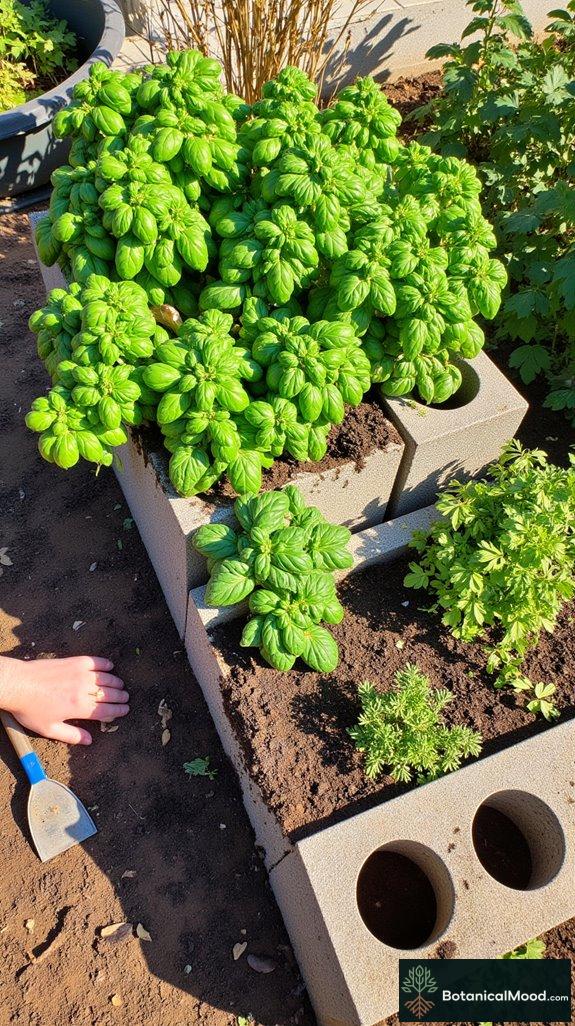
Vertical cinder block gardens are innovative planting beds that maximize limited space while adding a unique aesthetic to your garden. Typically, each cinder block measures 8×16 inches and can be arranged in various layouts, like staggered or stacked configurations.
These gardens are built using standard concrete cinder blocks, easily accessible at hardware stores. To assemble, stack the blocks with open ends facing upwards to hold plants and soil. Fill the plant holes with quality potting soil and choose herbs that thrive in these beds, creating a lush wall of greenery.
Selecting Plants for Vertical Cinder Block Gardens
When selecting plants for your vertical cinder block garden, consider herbs that flourish in confined spaces. Here are some suggestions:
- Basil
- Thyme
- Oregano
- Chives
- Mint
- Cilantro
Designing Your Cinder Block Planting Bed
To design an effective cinder block garden, follow these tips:
- Choose a sunny location, ideally 6-8 hours of sunlight daily.
- Create a sturdy base by leveling the ground.
- Vary plant heights (taller herbs in the back, shorter in front).
- Space plants about 6-12 inches apart for airflow.
- Consider companion planting for healthier growth.
Pro Tip: Use a mix of annual and perennial herbs for continuous yields.
Exploring Urban Gardening Trends
Urban gardening trends, like vertical gardening and container gardening, have surged in popularity, allowing city dwellers to cultivate fresh produce and lush greenery.
Community gardens and rooftop gardens are perfect examples of how limited space can be effectively utilized. Consider integrating composting solutions to enhance soil fertility and encourage sustainable practices in your gardening routine.
Safety Considerations for Using Cinder Blocks in Gardens

Cinder block planting beds are an innovative and durable choice for herb gardens, offering a unique aesthetic and functional design. Typically, these beds are constructed using standard cinder blocks, arranged in a rectangular or square layout measuring about 3 feet by 6 feet for manageable access. The open spaces of the blocks can be filled with soil and planted with herbs or flowers, providing an attractive look.
For ideal drainage, consider using good-quality potting soil blended with compost. Enhancing the garden with colorful flowering herbs such as lavender, chives, or oregano can create a visually pleasing atmosphere.
Selecting Plants for Your Cinder Block Bed
Choosing the right plants is essential for a thriving cinder block garden. Consider herbs that thrive in similar conditions. Here are some great options:
Selecting compatible herbs is crucial for a successful cinder block garden, ensuring that your plants thrive together and enhance your garden’s beauty.
- Basil
- Thyme
- Sage
- Mint
- Parsley
Designing Your Cinder Block Garden Bed
Designing your cinder block bed requires careful planning. Here are tips to get started:
- Location: Choose a sunny spot that receives at least 6 hours of sunlight daily.
- Spacing: Space plants 6-12 inches apart, depending on their growth habits.
- Layering: Incorporate taller herbs, like basil, at the back and shorter ones, like chives, at the front.
- Accessibility: Guarantee easy access for harvesting and maintenance.
Enhancing Your Garden Experience
Engaging with your garden can be incredibly rewarding. Experiment with different plant combinations and consider companion planting. Using diverse herbs can help deter pests and promote healthy growth.
Regular care, including watering and pruning, will keep your cinder block garden lush and productive.
Exploring DIY Cinder Block Garden Projects and Ideas

Cinder block planting beds make a versatile and modern garden feature. Typically, each bed measures around 2 feet wide and 4-8 feet long, allowing plenty of space for various plants. The arrangement commonly showcases blocks stacked in a single layer or double for added height.
The unique attribute of cinder blocks lies in their hollow centers, perfect for planting herbs, vegetables, or flowers like basil, thyme, and marigolds. Constructing a cinder block garden involves placing the blocks in a rectangular layout, leveling the ground, and filling the holes with quality soil and compost for ideal growth.
Selecting Plants for Cinder Block Beds
Choosing the right plants is vital for a successful cinder block garden. Consider herbs and compact vegetables as they thrive in limited spaces. Some excellent plant options are:
- Basil
- Cilantro
- Chives
- Cherry tomatoes
- Lettuce
Designing and Planning Your Cinder Block Bed
When designing a cinder block planting bed, layout and plant selection play an essential role. Follow these tips:
- Plan Dimensions: Guarantee a comfortable reach for maintenance.
- Choose Companion Plants: Pair plants that benefit each other.
- Spacing: Plant in blocks every few inches to allow for growth.
- Visual Appeal: Consider color and height for an attractive display.
Pro Tip: Plant taller herbs, like basil, behind shorter ones, like chives, for a visually pleasing arrangement.
Benefits of Vertical Gardening Techniques
Vertical gardening not only maximizes space but also provides greater yield in small areas. Suitable for urban environments, growers can utilize walls and fences for climbing plants.
It improves air circulation and sun exposure, contributing to healthier plants.
Plant Bed Upkeep Timetable

Plant care doesn’t stop once the cinder block beds are planted; in fact, regular upkeep is key to maintaining a flourishing garden throughout the growing season.
I establish a seasonal maintenance timetable to guarantee my herbs thrive. Each week, I check soil moisture, ensuring it’s neither too dry nor waterlogged.
Every month, I trim the plants, promoting bushy growth, and I harvest herbs regularly to encourage new shoots.
In late spring, I apply organic compost (e.g., compost from a trusted local supplier) to nourish the plants.
Summary
Incorporating cinder blocks into my herb garden has transformed its look and improved my gardening practices. I love how I can experiment with designs like L-shaped beds or vertical gardens to create a vibrant space that thrives all year round.
I’d love to hear about your own experiences with modular herb gardens. What designs have you tried and what worked best for you?
Feel free to share pictures of your garden and the unique ways you’ve set it up. I can’t wait to see your creativity!
References
- https://www.youtube.com/watch?v=tVvXFSqO1U0
- https://olivegreyavenue.com/diy-raised-garden-bed/
- https://www.youtube.com/watch?v=nLN934oHV1g
- https://frontyardveggies.com/how-to-build-a-concrete-block-herb-and-flower-garden/
- https://www.instructables.com/Build-a-Concrete-Block-Garden-for-Food-and-Memorie/
- https://bonnieplants.com/blogs/diy-garden-projects/super-simple-concrete-block-garden