Want to know what happens when a perfectionist designs a kidney-shaped garden bed? Let me tell you.
I’ve been obsessing over my kidney-shaped garden beds since my first disastrous attempt left me with a blob that looked more like a failed art project. Now I’m actually pretty good at this stuff.
The Classic Curved Edge design is my go-to (trust me, your basil will thank you for that drainage). I’ve learned to space plants 12-18 inches apart – learned that one the hard way when my lavender turned into an overcrowded mess.
For a real game-changer, try the Multi-Layered Kidney Island. My herbs are literally living their best life on different levels, like they’re at some exclusive plant party.
How My Garden Design Disaster Turned into a Happy Accident
Remember that “failed art project” I mentioned? Well, what started as a wonky kidney shape actually became my most productive herb garden. While trying to fix my misshapen bed, I accidentally created these amazing micro-climate pockets where my Mediterranean herbs thrived. The irregular curves provided perfect sun-shade patterns, and the varying soil depths worked wonders for root development. I even had neighbors asking for my “innovative” design tips. Sometimes the best garden designs come from our biggest mistakes – just don’t tell my local garden club I said that.
Quick Takeaways
- Classic Curved Edge Kidney Garden Beds are ideal for herbs, flowers, and vegetables, promoting drainage and plant growth.
- Multi-Layered Kidney Island Designs incorporate diverse plant heights and textures, perfect for seasonal interest with herbs and perennial flowers.
- Raised Kidney-Shaped Planters feature nutrient-rich soil, suitable for a variety of plants, including cherry tomatoes and marigolds.
- Herb-Centric Kidney-Shaped Islands are designed for efficient herb growth, combining perennial and annual herbs for continuous interest.
- Colorful Flower-Encased Kidney Beds offer a cozy design, mixing perennial and annual flowers, with taller plants positioned at the back.
Classic Curved Edge Kidney Garden Bed
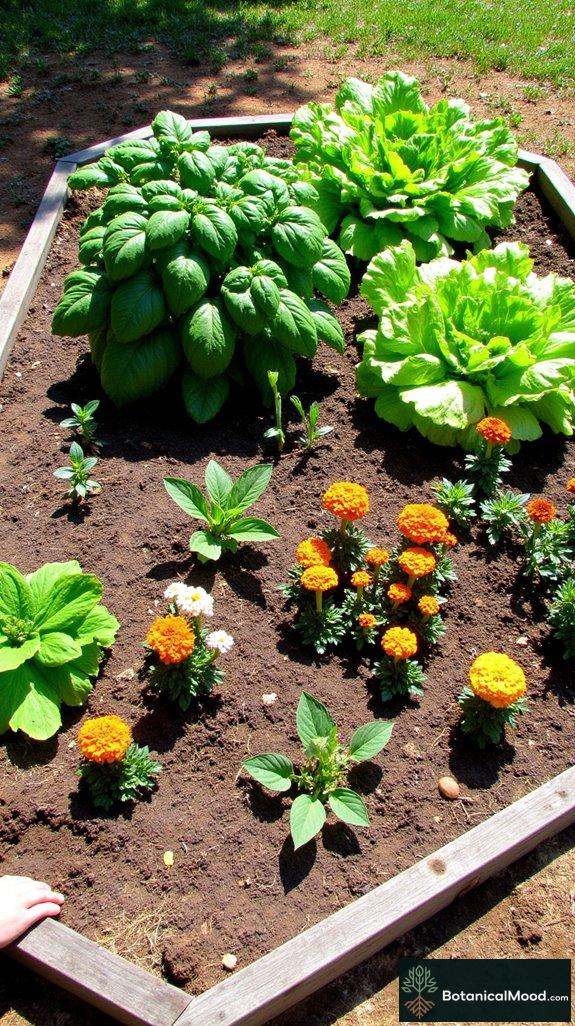
The classic curved edge kidney garden bed is a charming and functional choice for any gardener. Typically measuring 4-6 feet in length and 3-4 feet at its widest point, this design offers a soft, organic shape that enhances any environment. Constructed from materials like untreated wood, stone, or recycled composites, it’s easy to match with your outdoor aesthetic. Digging a shallow trench and forming the kidney shape before filling it with quality soil guarantees ideal drainage and plant growth. Popular plants for this garden bed include herbs like basil, flowers such as marigolds, and vegetables like lettuce. Additionally, incorporating geometric designs can elevate your garden’s aesthetic while maintaining structure and functionality.
A kidney garden bed adds charm and functionality, with its organic shape enhancing any outdoor space.
Selecting Plants for Your Kidney Garden Bed
When choosing plants for your kidney-shaped garden bed, consider their sun and moisture requirements. Here are some suitable plants:
- Basil
- Marigolds
- Lettuce
- Lavender
- Snapdragons
Designing Your Kidney Garden Bed
To design your kidney-shaped garden bed, begin by sketching the layout on paper. Make sure to account for the sun’s direction and select a location that receives ample light.
Here are tips for effective layout:
- Use a mix of perennials and annuals for year-round interest
- Space taller plants at the back and shorter ones in front
- Group plants with similar watering needs together
- Keep plants at least 12-18 inches apart to allow for growth
Exploring Sustainable Gardening Practices
Sustainable gardening practices play a significant role in creating a flourishing home garden. Techniques such as companion planting, crop rotation, and organic pest control enhance soil health and promote biodiversity.
Incorporating rainwater harvesting and composting enriches the ecosystem while minimizing environmental impact.
Multi-Layered Kidney Island Design
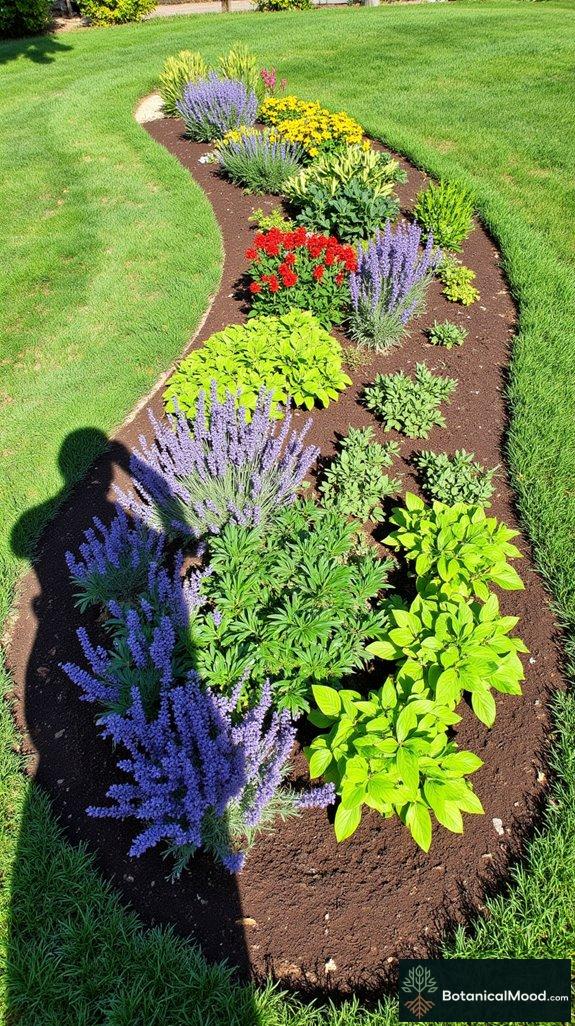
The Multi-Layered Kidney Island Design is a stunning garden bed that enhances visual appeal and maximizes space in your yard. Typically ranging from 4 to 8 feet wide, this kidney-shaped bed features layered levels for diverse plant heights and textures.
Constructed using materials like treated wood, stone, or recycled composites, the design incorporates rich compost to promote healthy soil. Use a mix of perennials, annuals, and ornamental grasses to create a dynamic look throughout the seasons. Adding native plants can also improve biodiversity and attract beneficial wildlife to your garden.
Selecting Plants for Your Kidney Bed
When selecting plants for your Multi-Layered Kidney Island Design, choose those that thrive together in similar conditions. Here are some great options:
- Lavender: Provides fragrance and attracts pollinators.
- Salvia: Adds vibrant color and is drought-resistant.
- Hostas: Perfect for shady spots with lush foliage.
- Coneflowers: Brighten up the border while self-seeding.
Designing a Multi-Layered Kidney Bed
To create your Multi-Layered Kidney Island Design, keep these tips in mind:
- Plan Your Layout: Sketch the kidney shape and layer levels before planting.
- Spacing: Group plants based on height—taller varieties at the back and shorter at the front.
- Soil Preparation: Amending the soil with organic compost boosts nutrient availability.
- Seasonal Interest: Mix spring, summer, and fall bloomers for year-round beauty. Follow a spacing guideline of 12-18 inches between plants to confirm they’ve room to grow and air circulation.
Understanding Kidney Garden Bed Maintenance
Proper maintenance of kidney-shaped garden beds involves regular watering, mulching, and pruning.
Use organic mulch to retain moisture and suppress weeds. Moreover, keep an eye out for pests, regularly checking your plants to prevent infestations.
Consider planting companion species that can naturally repel unwanted insects.
Raised Kidney-Shaped Planter
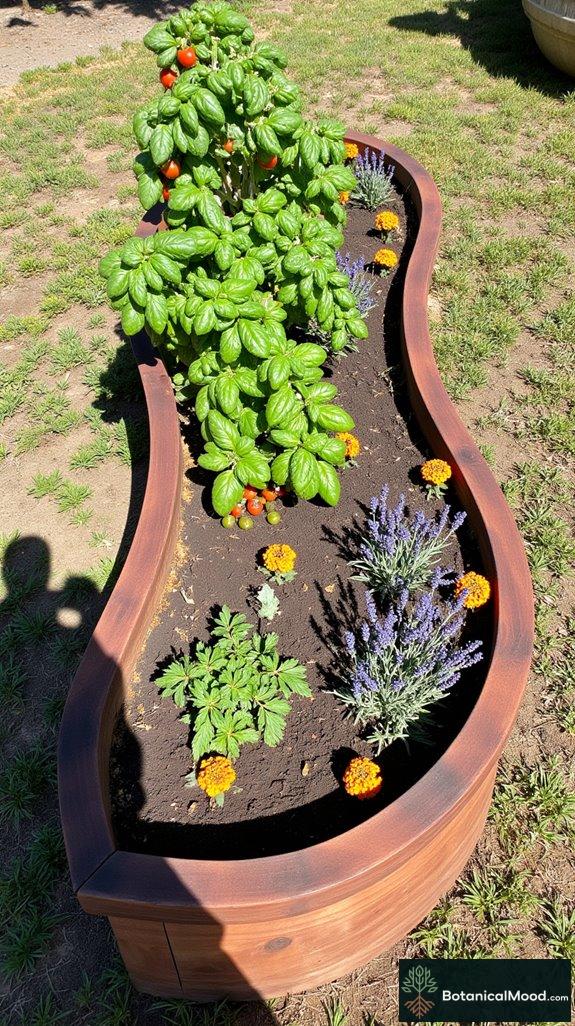
The raised kidney-shaped planter is a unique and visually appealing garden bed, typically ranging from 4 to 6 feet in length and 3 to 4 feet at the widest point. Designed to create a gentle, flowing silhouette, it can be constructed from materials like cedar, composite wood, or even bricks. The height generally allows for easy accessibility, making it ideal for gardeners of all ages. For the layout, consider a mix of height and color by utilizing herbs, vegetables, and flowers such as tomatoes, basil, marigolds, and zinnias. When constructing, guarantee a sturdy frame with drainage holes at the bottom and fill with nutrient-rich soil. Additionally, incorporating geometric landscape structures can enhance the organization and design of your garden.
A kidney-shaped planter adds unique charm and elegance to any garden, available in various materials and sizes.
Selecting Plants for Your Kidney Planter
When choosing plants for a kidney-shaped planter, consider the sun exposure and space. Here are some suggestions:
- Basil
- Lavender
- Strawberries
- Dwarf Marigold
- Cherry Tomatoes
- Creeping Thyme
Designing Your Kidney-Shaped Planter
To successfully design your kidney-shaped planter, follow these essential tips:
- Sketch Your Layout: Begin with a rough sketch imagining plant placement.
- Tiered Planting: Utilize taller plants at the back and shorter ones in front for layered effects.
- Spacing Is Key: Space plants at least 12-18 inches apart for proper growth and air circulation.
- Color Harmony: Choose color combinations that complement each other.
Pro Tip: Use companion planting techniques to promote plant health and maximize space effectively.
Enhancing Your Garden with Decorative Features
To elevate your garden experience, consider integrating decorative features such as garden sculptures, bird baths, or wind chimes to create a serene, inviting atmosphere.
These elements not only bring visual appeal but also enhance the overall ambiance, encouraging butterflies and birds into your garden.
Kidney Garden Bed With Pathway Integration
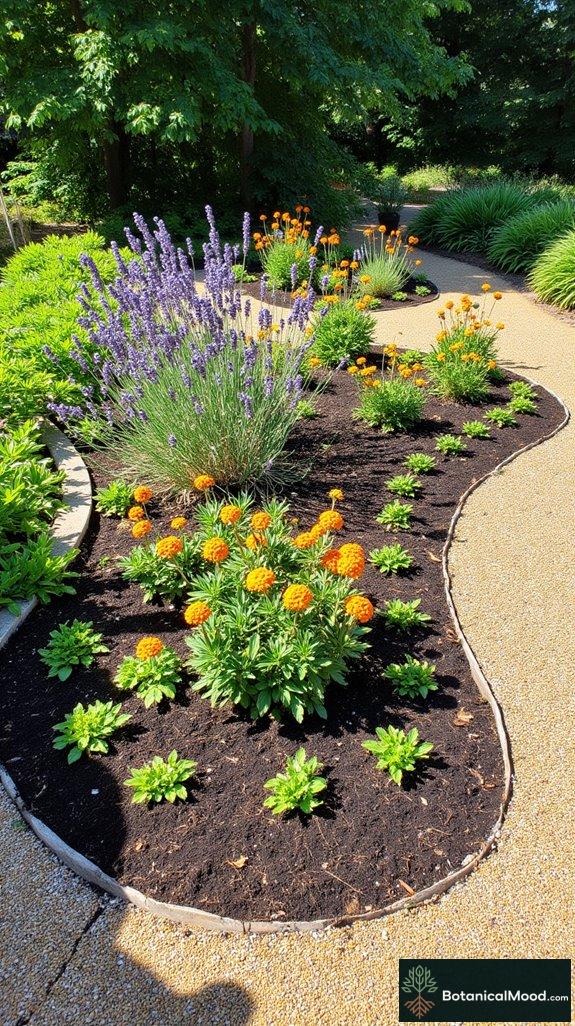
A kidney-shaped garden bed seamlessly blends beauty and functionality, offering an inviting space for flowers, herbs, or vegetables. Typically sized between 4 to 8 feet at its widest point, the design features gentle curves that create a visually appealing layout. This bed can be constructed using treated wood, stone, or composite materials, ensuring durability and natural aesthetics. Symmetrical formal garden design emphasizes balance and harmony in placement, which can further enhance your garden’s overall appeal.
Pathways can be integrated around the bed for easy access and an organized look. Fill the bed with a mix of perennial and annual plants to enjoy year-round blooms.
Choosing Plants for Your Kidney Garden Bed
When selecting plants for your kidney garden bed, consider the sunlight, soil type, and moisture levels. Opt for a diverse selection to create visual interest. Suggested plants include:
- Lavender
- Coneflower
- Hostas
- Marigolds
- Basil
- Snapdragons
Designing a Kidney-Shaped Garden Bed
To design your kidney-shaped planting bed, start by sketching your desired layout on paper. Pay attention to the bed’s curves for a natural look.
Tips for plant arrangement include:
- Place taller plants at the back or center for height variation.
- Use trailing plants on edges to soften outlines.
- Space plants 12 to 18 inches apart for airflow.
Pro Tip: Consider seasonal color changes for all-year appeal.
Related Topic: Benefits of Raised Garden Beds
Raised garden beds enhance soil drainage, improve accessibility, and extend the growing season. Adding a kidney shape can further optimize your garden’s layout, creating a unique focal point while maximizing space and plant health.
Herb-Centric Kidney-Shaped Island

The herb-centric kidney-shaped island is an appealing and efficient garden bed design that maximizes space while adding a stunning focal point to your garden. Typically, these beds range from 4 to 8 feet in length and are constructed using rot-resistant materials such as cedar or treated wood.
The curved shape enhances accessibility and allows for an array of herbs to flourish. To construct, begin by outlining the desired shape on the ground, digging out soil, and then lining the perimeter with your chosen materials. Fill with nutrient-rich soil and gently plant a variety of herbs in the center and along the edges to optimize growth and ease of harvest.
Selecting Plants for Your Herb Bed
Choosing the right herbs is critical for optimizing your kidney-shaped garden bed. Consider the following suggestions:
- Basil
- Oregano
- Thyme
- Parsley
- Rosemary
- Chives
- Mint
Mix perennial and annual herbs to guarantee year-round interest and flavor.
Designing Your Kidney-Shaped Herb Bed
To design your kidney-shaped garden bed effectively, follow these tips:
- Sketch your desired layout first to visualize the arrangement.
- Use taller herbs like Rosemary towards the back and shorter ones like Chives at the front.
- Space plants adequately, typically 12-18 inches apart for healthy growth.
- Cluster herbs with similar sunlight and watering needs together.
Pro Tip: Use mulch to retain moisture and suppress weeds, promoting a healthier herb garden.
Exploring Related Garden Structures
Consider additional garden structures to enhance your space, such as vertical garden trellises for climbing plants or compost bins for sustainable gardening. Incorporating these features can notably improve plant health and yield while creating a collaborative ecosystem within your garden.
Colorful Flower-Encased Kidney Bed

A colorful flower-encased kidney bed is a lively and inviting planting design, ideal for medium gardens, typically ranging from 4 to 6 feet in width.
Constructed using materials such as timber, stone, or composite borders, it features a distinctive kidney shape that allows ample space for a vibrant assortment of flowers.
The overall layout creates a cozy nook, encouraging diversity in plant presentations while maximizing sunlight exposure. Ideal for colorful perennial blooms, this bed often includes species like echinacea, daisies, and gaillardia for visual interest throughout the seasons.
Selecting Plants for Your Kidney Bed
How to Choose Plants for Your Kidney Bed
- Choose a mix of perennial and annual flowers for continuous blooms
- Consider color palettes: complementary or monochromatic styles
- Select plants at varying heights for added dimension
Recommended Plants:
- Coneflower (Echinacea)
- Black-eyed Susan (Rudbeckia)
- Coreopsis (Coreopsis)
- Lavender (Lavandula)
- Yarrow (Achillea)
Designing Your Kidney-Shaped Garden Bed
Creating Your Kidney Bed Design
- Sketch the layout to visualize plant placements and spacing
- Arrange taller plants at the back and shorter ones in front
- Use grouping (3 or 5 plants) for a more natural look
- Maintain a spacing of 12 to 18 inches to guarantee healthy growth
- Pro Tip: Utilize trailing plants on the edges to soften the design.
Enhancing Garden Aesthetics with Lighting
Incorporating strategic lighting can elevate your colorful kidney bed design.
Solar-powered garden lights accentuate blooms at night, creating a serene atmosphere. Pathway lights guide visitors seamlessly, enhancing accessibility, while LED spotlights can highlight focal plants or features.
Use this approach to transform your garden into a stunning, evening oasis.
Sustainable Kidney-Shaped Garden Bed With Composting

Creating a sustainable kidney-shaped garden bed not only adds a unique aesthetic but also promotes eco-friendly practices through composting. Typically, this bed ranges from 4 to 6 feet in width with a gentle curve for easy access.
Constructed using untreated wood or stone, this design features a central compost area, where organic waste enriches the surrounding soil. Ideal for herbs, vegetables, and flowers, these beds thrive in well-drained, nutrient-rich soil.
Selecting Plants for Your Kidney Bed
When selecting plants for your kidney bed, consider height, color, and growth requirements. A list of suitable plants includes:
- Basil
- Zucchini
- Marigolds
- Kale
- Lavender
Designing Your Kidney-Shaped Garden Bed
To design your kidney-shaped garden bed, start with a layout plan using graph paper to visualize space. Here are helpful tips:
- Choose a sunny location with at least 6 hours of light.
- Space plants to allow for future growth—typically 12-24 inches apart depending on plant size.
- Create layers by placing taller plants in the center and shorter ones around the edges for ideal sunlight exposure.
- Pro Tip: Incorporate companion planting for pest control and increased yield.
Related Gardening Practices for Eco-Friendly Spaces
Exploring vertical gardening is an excellent way to maximize space and increase plant diversity.
Using trellises or vertical planters, one can incorporate climbing plants, creating truly unique aesthetics while minimizing ground space usage in your sustainable garden.
Weather-Appropriate Plant Preparation

Weather conditions can greatly influence the success of your kidney-shaped garden bed, making it essential to prepare your plants accordingly. Focusing on seasonal plant selection and proper soil preparation sets the foundation for thriving greenery.
| Weather Type | Recommended Plants |
|---|---|
| Warm | Zinnia (Zinnia elegans) |
| Cool | Pansy (Viola tricolor) |
| Dry | Lavender (Lavandula angustifolia) |
| Humid | Ferns (Pteridophyta) |
| Frost-prone | Kale (Brassica oleracea) |
FAQ
What Materials Are Best for Building a Kidney-Shaped Garden Bed?
I’ve found that composite lumber and recycled plastic are great wood alternatives for kidney-shaped garden beds. Plus, adding proper drainage solutions like gravel guarantees your plants thrive, making it easier to serve others with flourishing greenery.
How Do I Choose Plants for My Kidney-Shaped Island?
I choose plants by considering color combinations and seasonal interest. I mix vibrant flowers, lush foliage, and evergreens, ensuring year-round beauty. It’s fulfilling to create a welcoming space that brings joy to everyone who visits.
Can Kidney-Shaped Beds Fit Into Small Yards?
Absolutely, kidney-shaped beds fit well in small yards! With creative spacing, I’ve managed to maximize my garden’s potential while ensuring it serves my family and friends beautifully. It’s all about smart design choices!
What Maintenance Is Required for Kidney-Shaped Garden Beds?
Maintaining kidney-shaped garden beds involves regular pruning techniques to encourage growth and enhance appearance. I focus on soil health too, ensuring it’s rich and nutrient-dense, which helps my plants thrive and serves the community beautifully.
Are There Any Eco-Friendly Options for Kidney-Shaped Garden Beds?
I’ve found that using reclaimed wood and repurposed materials for my kidney-shaped garden beds truly promotes organic gardening. It’s ironic how sustainable choices not only channel creativity but also serve our planet—and others—so well.
Summary
I’m designing my kidney-shaped garden bed to blend beauty with function. My curved edges create a natural flow while maximizing planting space. I’ve found these organic shapes work perfectly for combining different plant heights and textures, making my garden truly unique and visually striking.
Have you tried creating a kidney-shaped garden bed? Tell us about your challenges and successes in designing and maintaining this distinctive garden feature.
We’d love to see your garden creations! Share photos of your kidney-shaped beds and tell us about your design process, plant selections, and any tips you’ve discovered along the way.