6 Stylish Ways to Keep Pets Warm
My dog shivers like it’s his job. I learned the hard way.
Merino sweaters from Lana Paws saved us. Stretch knits for his weird corgi spine. Ruffwear shells for muddy hikes. Waterproof layers. Fleece below 7°C because he’s basically retired now.
Heated bowls. Insulated cat nooks with tiny vents.
Warm pets, happy life. Mostly happy. He still judges me.
—
Garden Microclimates for Pet Comfort: A Designer’s Mistake
I once planted a lavender hedge too close to the patio. Looked gorgeous. Useless for warmth.
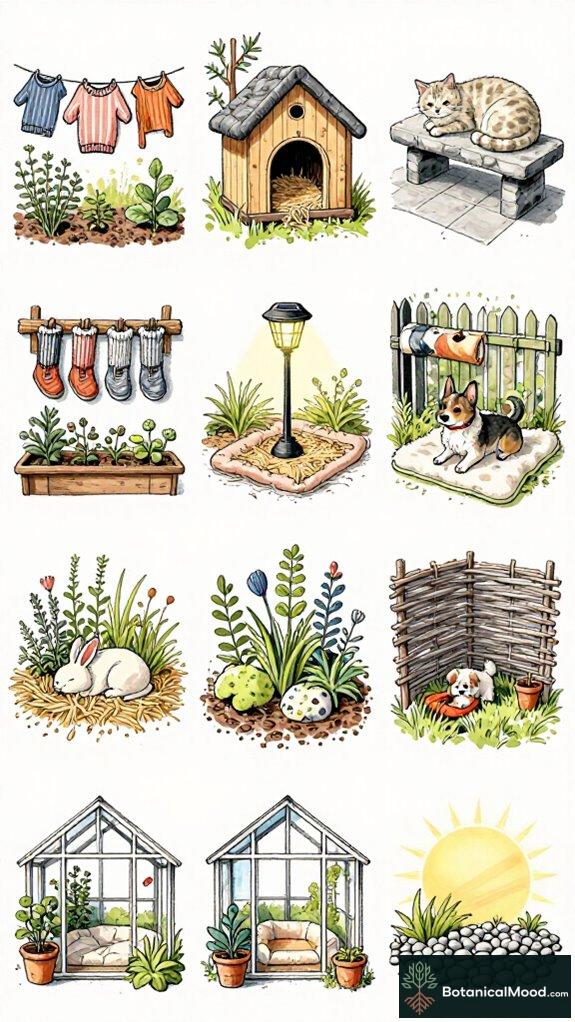
Now I use larch-edged herb beds and charcoal paver coping for thermal mass. The stone absorbs afternoon sun, releases heat slowly. My dog naps there for hours.
Southeast-facing walls work best. Windbreaks matter more than you’d think. I added a simple timber pergola with climbing jasmine. Creates shelter without blocking light.
The difference? Measurable. He actually stretches out instead of curling tight.
Consider hardscaping materials, sun orientation, and airflow together. One element fails, the comfort drops. I learned that winter. He reminded me daily.
Quick Takeaways
- Layer breathable base fleeces with knit sweaters and waterproof shells for warmth, mobility, and weather protection.
- Choose garden-friendly, eco-friendly fabrics like merino or recycled polyester blends that wick moisture and shed wind.
- Add removable fleece liners or heated pads for senior or short-haired pets when temperatures drop below about 7°C.
- Fit garments for movement—measure neck-to-tail, allow chest expansion, and avoid friction points or restricted gaits.
- Use insulated shelters, raised resting areas, and heated bowls outdoors to keep pets warm and hydrated during cold nights.
Quick Guide: Pick a Dog Sweater for Winter Gardens
A quick guide to picking a dog sweater for winter gardens starts with evaluating the microclimate of your outdoor space—whether it’s a windswept urban courtyard, a sheltered suburban border bed, or a sun-trap patio lined with Lavandula angustifolia (lavender) and Helleborus niger—because exposure to wind, damp soil, and low light will determine the insulation and fabric you need.
I recommend exploring garden sweater trends like eco-friendly knits from Lana Paws or machine-washable options by The Foggy Dog, and applying layering techniques—base fleece, mid-knit cable, waterproof outer—to balance warmth, breathability, and movement for active breeds in courtyard beds and pond-side borders. For senior pets spending extended time outdoors, consider pairing sweaters with insulated dog houses to provide a warm retreat during colder months. Additionally, heated dog bowls can prevent water from freezing and ensure your pet stays hydrated while enjoying outdoor time in winter gardens.
Choose the Right Material for Cold Garden Time
From the quick guide on microclimates in winter gardens I’d now focus on choosing the right material for cold garden time, because fabric choice governs insulation, moisture management, and freedom of movement when your dog explores wind-exposed courtyards or sheltered patio beds planted with Lavandula angustifolia (lavender) and Helleborus niger; For senior pets spending extended time outdoors, heated cat houses provide essential warmth and protection during cold months. I recommend garden friendly fabrics like recycled polyester blends, merino wool, and soft-shell hybrids that balance insulation properties, breathability, and water-shedding performance, noting brands such as Ruffwear for hybrid insulation, Coco & Pud for classic knits, and eco alternatives for sustainable palettes, matching color to stone, brick, or native planting schemes. Quality insulation kits designed for outdoor shelters can significantly enhance your pet’s comfort during extended winter exposure.
How to Fit a Sweater : Stop Chafing, Trap Heat
One key rule I follow when fitting a sweater is to prioritize freedom of movement while eliminating friction points, so I measure from the base of the neck to the base of the tail, add a thumb’s width at the chest for expansion, and check shoulder placement against natural gait to prevent chafing where the forelegs meet the sternum.
For breeds with deep chests like a Labrador or mastiff, I select styles with a wider belly panel or adjustable straps, while for short-backed dogs such as a dachshund I choose stretchier rib-knit fabrics or slits at the flank to avoid bunching.
For outdoor gardeners tending Lavandula angustifolia (lavender) beds or sheltered patio beds planted with Helleborus niger, I favour fleece-lined or soft-shell hybrids—Ruffwear’s pullover fleece or Coco & Pud’s easy slip-on cable knits—because they trap heat efficiently without overheating, shed light moisture from dewy mornings, and match stone or brick patios in muted neutrals or mossy greens to keep the overall look coherent with planting schemes and hardscape.
I adjust hems, necklines, and sleeve openings as fine fit adjustments, testing gaited turns and scenting behaviours to prevent chafing, prioritizing stretch, breathable insulation, and materials that complement garden palettes.
When to Add a Fleece Liner or Hoodie
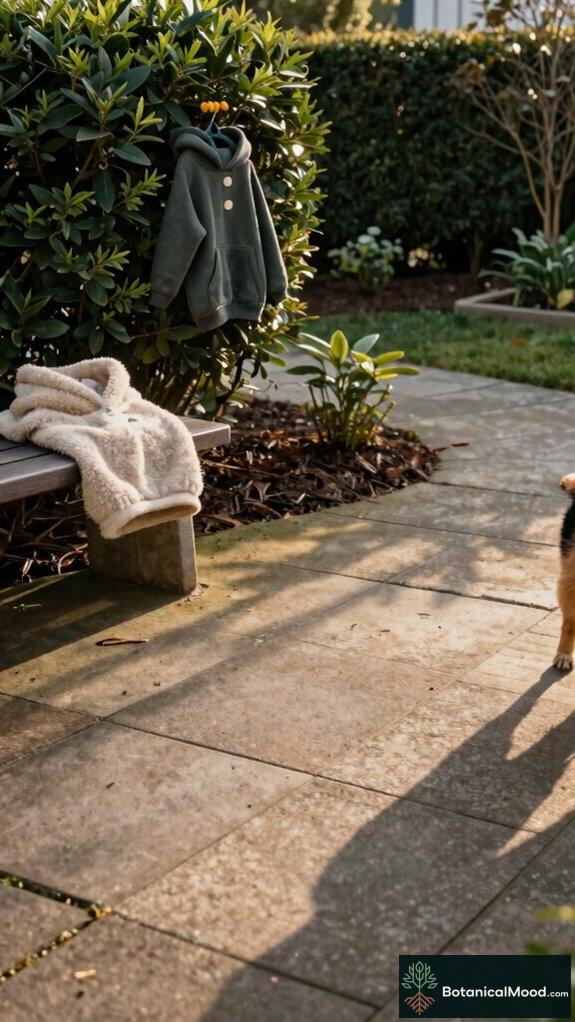
When should you add a fleece liner or hoodie to your dog’s wardrobe, and how do you decide between Coco & Pud’s cable knits, Ruffwear’s pullover fleece, or a lined hoodie from Lana Paws for a specific garden or climate?
I add a fleece liner when mornings drop below 7°C and senior dogs show stiffness, valuing fleece benefits like insulation, breathability, and joint warmth.
I choose Ruffwear for active hikes, Lana Paws for classic, fleece-lined hoodies in sheltered courtyard gardens, and Coco & Pud for stylish winter beds indoors.
Consider soil moisture, sheltering hedges (Taxus baccata), color palette, and mobility when selecting hoodie features.
Pick Water‑Resistant, Wind‑Blocking Styles
Although the seasons can be unpredictable, I choose water‑resistant, wind‑blocking styles first whenever damp winds and saline spray threaten a morning walk along coastal promenades or a blustery courtyard bordered by yew (Taxus baccata) hedging, because outer fabrics and seam construction make the biggest difference in keeping a dog dry, warm, and mobile.
I prioritize innovations like water proof fabrics, taped seams, and breathable membranes from brands such as Ruffwear or The Foggy Dog, combining streamlined silhouettes with layering options to retain insulation, permit gait, and resist spray; consider muted coastal greys, olive hedgerow greens, and reflective trims for visibility. Winter salt and snow can damage your pet’s paws, so pairing protective clothing with pet paw balms creates comprehensive protection during cold weather walks.
Best Styles by Activity: Play, Hikes, and Senior Walks
For active days in the park, rugged hikes in alpine foothills, or gentle circuits around a courtyard, I pick pet outerwear by matching form to function—prioritizing durable, breathable fabrics like Ruffwear’s breathable hardshells or The Foggy Dog’s taped‑seam jackets for exposed trails, fleece‑lined hoodies and Blueberry Pet’s soft pullovers for playtime, and low‑profile, joint‑supportive fleece vests for senior walks.
I favor playful patterns for agility sessions, reflective trims for evening fetch, and hiking essentials like booties, gaiters, reinforced seams and harness‑friendly cuts; textures, color palettes and eco‑fibers inform choices, while plant palette references (Lavandula angustifolia) guide calming tones. During warmer weather, cooling mats provide essential relief for pets resting in the garden between outdoor activities.
Heated Outdoor Cat Nook
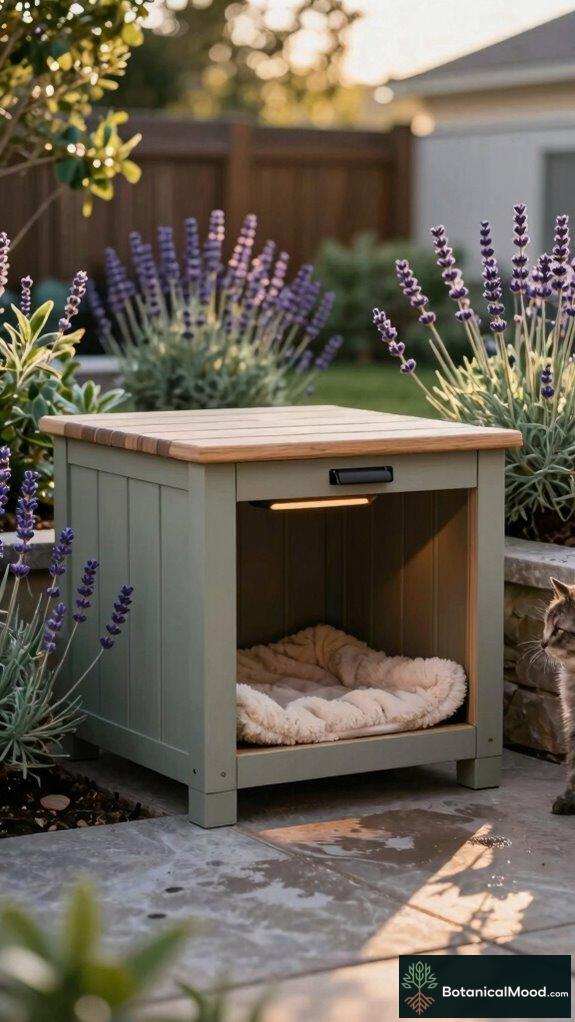
I’m designing a heated outdoor cat nook that balances thermal efficiency, weatherproofing, and a calm, garden‑friendly aesthetic. This will pair a compact insulated shelter—rigid foam panels (polyisocyanurate), closed‑cell spray foam seams, and a cam‑lock door flap—with a thermostatically controlled low‑wattage heating pad (12–24 W). Senior pets benefit particularly from insulated dog houses designed with accessibility and thermal comfort in mind.
Additionally, it will feature a waterproof exterior cladding in cedar (Thuja plicata) or rot‑resistant larch, and an elevated base to prevent damp. I recommend natural, muted palettes—sage green, soft taupe, and warm graphite—to blend with planting palettes like Lavandula angustifolia and Nepeta × faassenii. Insulated hutch covers provide superior weatherproofing and thermal retention for year-round outdoor pet comfort.
For functionality, I specify a probe thermostat, GFCI‑protected exterior outlet, and interchangeable fleece liners or faux‑wool (eco‑wool blends, recycled fibers) from brands such as Chilly Dog or Lana Paws for easy cleaning and thermal layering. It should also allow for a small skylight or adjustable vent to regulate humidity and airflow during milder days.
An insulated cat shelter using these outdoor heating solutions supports nocturnal comfort, reduces condensation, and fits contemporary garden schemes. It offers targeted warmth, durable materials, and low energy draw for responsible, design‑led caretaking.
Raised Herb Bed Edges
When I design raised herb bed edges, I prioritize a blend of functional durability and a garden‑friendly aesthetic that suits both formal kitchen gardens and relaxed cottage plots. I specify materials like rot‑resistant larch or cedar (Thuja plicata) for long life, compacted crushed stone or concrete pavers for stable footings, and stainless‑steel or powder‑coated fasteners to avoid corrosion in damp microclimates.
I also consider edge height for soil depth, integrated seating, and how nearby pets use the space so that the herb bed supports plant health and offers sweater protection when chilly evenings call for pet comfort. Solar path lights can illuminate the herb bed area while keeping your pets safe during nighttime garden exploration.
- Larch timber edging, 20–30 cm high, warm honey tones
- Concrete paver coping, charcoal or terracotta, thermal mass
- Stainless brackets, hidden joints, low maintenance finish
FAQ
Can Sweaters Help Protect Against Ticks and Fleas?
No — I don’t rely on sweaters for full tick prevention; sweater materials can block some fleas or ticks mechanically, but I’d combine treated fabrics or repellents, regular checks, and vet-approved prevention for reliable protection.
Can Dogs Wear Human Baby Sweaters Safely?
Yes — I’ll caution you: human baby sweaters can work if you check pet sweater sizes and dog sweater materials for fit, stretch, and non-toxic fibers; I’ll prefer purpose-designed options for safety and innovation.
How Do I Clean Hand‑Knit Wool Safely at Home?
Softly, safely: I soak wool gently in cool water, stir sparingly, squeeze suds, spot-treat stains, reshape while damp, and air-dry flat. I favor mild wool care soap and respect knitting techniques to preserve fibers and form.
Are Battery‑Heated Pet Jackets Safe Long‑Term?
They can be safe long-term if I follow strict battery safety, choose quality heating elements, monitor pet comfort, rotate use, avoid moisture, and replace batteries or jackets at first sign of wear to prevent overheating or leaks.
Can Pets Overheat Indoors Wearing Multiple Layers?
Yes — I worry layering concerns indoors can make pets overheat; I monitor indoor temperatures, use breathable fabrics, remove layers if panting or lethargic, and prefer innovative temperature-regulating gear to keep them safe and comfortable.
References
- https://www.prettyfluffy.com/trends-shopping/latest-trends/trends-dog-sweaters-outerwear
- https://www.thefoggydog.com/collections/apparel-dog-sweaters-jackets-raincoats
- https://www.blueberrypet.com/collections/dog-sweaters
- https://ruffwear.com/collections/dog-apparel
- https://lanapaws.com/blogs/friends-of-lana/top-10-cozy-amp-stylish-dog-sweaters-for-cold-weather-2025
- https://chillydogsweaters.com
- https://littlebeast.co/collections/dog-sweaters