Creating a symmetrical garden can feel like trying to nail jelly to a wall. I mean, who knew balance could be so tricky?
But, inspired by legends like Gertrude Jekyll and Frederick Law Olmsted, I dove in. Thanks to the Golden Ratio and other fancy math, I discovered that a little symmetry can turn my chaos of plants into a mesmerizing scene.
Remember the time I tried to mimic a perfect garden? Let’s just say the squirrels were my biggest critics. Who knew they had such high standards?
But amidst the tangled vines, a beauty emerged!
—
Discovering Balance: My Personal Garden Journey
One summer, I decided to renovate my backyard into a garden oasis. The goal? A stunning symmetrical design, of course!
Armed with my newfound “expertise,” I carefully planned my planting beds and pathways. Yet, as I placed each flower, I couldn’t help but feel like I was trying to set up dominoes with wobbly hands.
Midway, I realized: nature doesn’t always play by our rules. A few misaligned stones led to an unexpected cozy nook for critters, which turned out to be the highlight of the garden. Sometimes, embracing imperfection breeds the most joy!
This journey taught me that while symmetry enhances beauty, nature prefers its own rhythm—leaving room for surprises.
Quick Takeaways
- Utilize bilateral symmetry in garden design to create balance and order in outdoor spaces, enhancing visual appeal.
- Apply mathematical principles like the Rule of Thirds and the Golden Ratio for harmonious placement of plants and features.
- Layer plants by height while considering color contrasts to create dynamic, visually engaging planting beds that maintain symmetry.
- Start with a central focal point and mirror elements on either side to strengthen the structured beauty of the garden.
- Draw inspiration from landscape architecture visionaries who emphasized balance, aesthetics, and ecological awareness in their designs.
Understanding Bilateral Symmetry in Garden Layouts
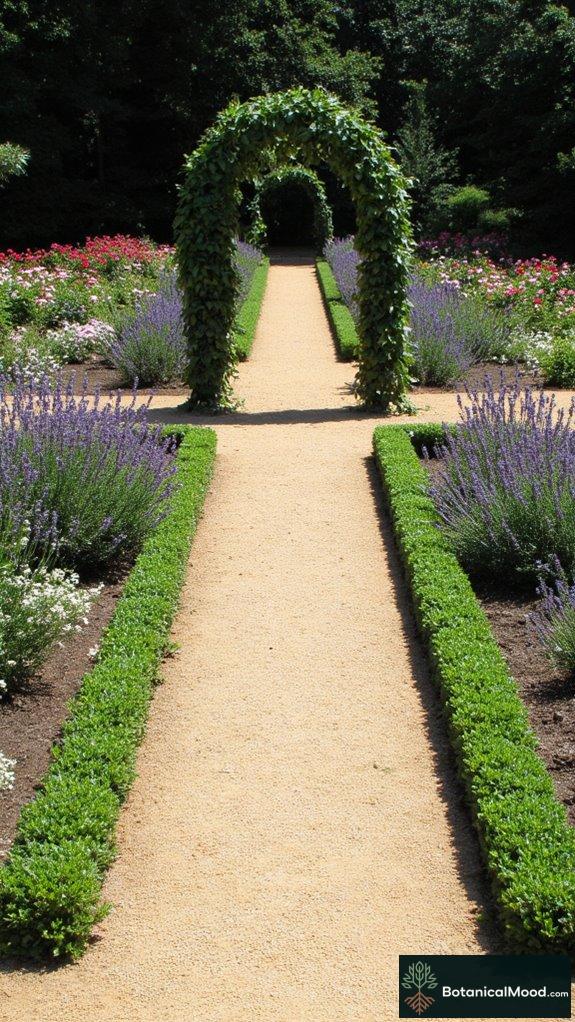
Bilateral symmetry plays a crucial role in garden layouts, creating a pleasing sense of order and balance that can elevate any outdoor space.
When I design my garden, I love arranging plants like roses and lavender in mirrored patterns, embodying the principles of symmetry. Renowned figures like Vita Sackville-West embraced this approach, showcasing harmony with every element.
I often consider color choices, pairing vibrant reds with calming greens, crafting a visual rhythm that liberates the spirit. Exploring elements like pathways or arches, I aim for seamless changes, enhancing my garden’s beauty. Understanding the design principles of symmetry helps to develop layouts that bring forth equilibrium in the space.
This practice inspires me, encouraging a deeper connection with nature, a key purpose of my website, Botanical Mood.
Key Mathematical Principles for Proportions

Understanding proportions in garden design helps create spaces that not only appeal to the eye but also foster a sense of harmony within the scenery.
When I consider famous garden designers like Piet Oudolf or Gertrude Jekyll, I see how they adeptly apply principles such as the Rule of Thirds or the Fibonacci sequence to distribute plants and structures in balanced ways.
It’s about feeling liberated through design, where each element shares an intimate relationship with others, creating flow. Additionally, incorporating features like modern fountain designs can enhance the overall aesthetics and tranquility of garden spaces.
As I designed this website, Botanical Mood, I aimed to inspire those wanting to cultivate their unique, harmonious garden spaces that truly resonate.
The Role of the Golden Ratio in Design

While delving into the art of garden design, I can’t help but appreciate the transformative power of the Golden Ratio, a mathematical principle that has captivated artists and architects alike for centuries.
This ratio creates harmony and balance, guiding me to position flower beds, pathways, and even water features in ways that evoke feelings of peace and beauty.
Renowned gardeners like Roberto Burle Marx used this approach to shape breathtaking sceneries. By incorporating the Golden Ratio, I find freedom in my designs, allowing nature to flourish.
It’s this pursuit of elegance that inspires my work on Botanical Mood, reminding me of the beauty surrounding us.
Utilizing the Rule of Thirds for Balance

The Golden Ratio isn’t the only design principle that can elevate my garden to new heights; the Rule of Thirds adds an intriguing layer of balance and visual appeal.
Crafting Symmetrical Planting Beds

Creating a beautifully crafted symmetrical planting bed can transform any outdoor space into a harmonious retreat, where each element complements the other.
I often start with a focal point, like a vibrant hydrangea or a neatly trimmed boxwood, and build outward, ensuring both sides mirror each other.
For instance, pairing bright marigolds with soft lavender offers dynamic contrast while maintaining balance. I admire the works of famous garden designers like Gertrude Jekyll, who mastered symmetry and color palettes.
At Botanical Mood, I believe it’s essential to embrace this structured beauty, inviting liberation through organized nature.
Symmetry can truly elevate your gardening experience.
Integrating Sculptural Elements for Visual Interest

Sculptural elements in gardens add an enchanting dimension that elevates the design beyond mere plants and soil.
In my garden, I’ve embraced pieces like sleek metal sculptures from brands like Corten or colorful ceramic pots, which create striking focal points. Renowned designers like Piet Oudolf inspire me to select shapes that harmonize with the natural environment, enhancing visual interest.
I find that integrating materials like stone or wood complements plant shapes while creating a rich tapestry of textures.
Through my journey with Botanical Mood, I’ve learned that these artistic accents breathe life into spaces, inviting freedom and imagination into the surroundings.
Maintaining Cohesion Through Proportional Relationships

Amidst the artistic allure of garden sculptures, maintaining a sense of cohesion through proportional relationships becomes imperative for a harmonious design.
Balance and symmetry guide my choices, from the graceful curves of a bronze statue by David Harber to the structured elegance of a stone bench by the iconic Stonegate Designs.
It’s essential to match the scale of elements, fostering visual flow. Bold colors, like vibrant reds and serene blues, can guide the eye while creating a unified message.
When I started Botanical Mood, I aimed to inspire others to embrace this beauty, elevating their garden’s design into an evocative escape.
Symmetrical Garden Plot Blueprint

To achieve a stunning garden design, one must center their layout around a central axis, enabling balance and harmony throughout the space.
I envision drawing a straight line through the center, creating an axis where focal points, like stately fountains and elegant statues, align perfectly. Symmetry establishes order and harmony, enhancing the aesthetics and usability of the garden. I mirror garden beds and vibrant plantings on either side, encouraging visual symmetry. Paths, whether winding or straight, should replicate each other’s curves, while using identical materials adds texture and cohesion.
As I curate the elements, I find joy in crafting space that echoes nature’s perfection, a principle dear to renowned designers like Gertrude Jekyll, inspiring my passion for gardening and sharing it through Botanical Mood.
Symmetrical Layout for Harmony

Creating a beautifully symmetrical garden layout fosters a sense of harmony and tranquility that invites one to linger longer in the serene space.
To achieve this, consider the following elements:
- Pathways: Align paths through the garden to guide the eye and feet evenly.
- Plant Groupings: Use identical plant varieties on either side for balance.
- Focal Points: Install a central feature, like a fountain, that draws attention.
- Seating Areas: Position benches symmetrically for social interaction and comfort.
- Color Schemes: Select colors that complement one another, enhancing unity.
This pursuit of symmetry became the foundation of Botanical Mood, where beauty and design intertwine.
Proportional Symmetry in Layout

While establishing proportional symmetry in garden layout may seem challenging, it’s essential for cultivating a space that resonates with beauty and functionality. Using the rule of thirds, I segment my garden into harmonious ratios, ensuring a balanced flow between areas like dining and lawn zones. I also embrace human scale, aligning garden features with our natural dimensions for comfort, which reinforces the importance of proportionality in design.
| Element | Proportional Ratio |
|---|---|
| Lawn | 1:2 or 2:3 |
| Paths | Based on stride |
| Containers | 1/3 and 2/3 sizes |
| Planting | Height variations |
These intentions guide my designs at Botanical Mood.
Ideal Scale in Garden Layout

Establishing an ideal scale in garden layout is essential for guaranteeing that the space feels inviting and accessible.
When designing, I keep these key elements in mind:
- Design features that relate to human proportions, like seating and paths
- Layer plants by height for a balanced aesthetic
- Scale hardscape elements, such as paths, to fit the garden’s size
- Ensure all components harmonize with existing structures
- Adjust designs based on specific site conditions, considering proportion and scale to enhance the overall visual appeal.
How To Design Perfect Proportions in Formal Garden Design
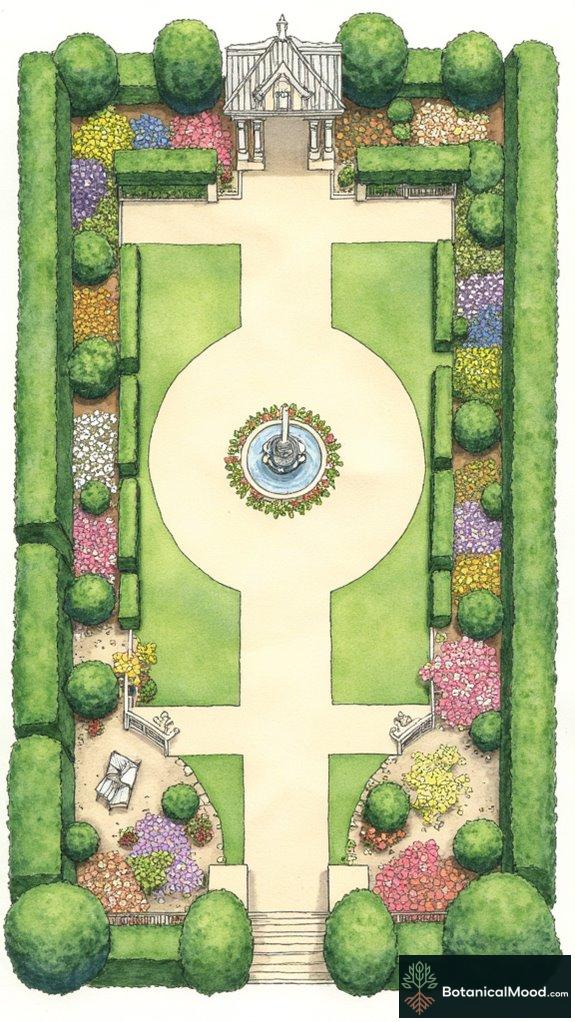
Achieving perfect proportions in formal garden design is a meticulous process that requires keen attention to detail and an understanding of spatial relationships. To create harmony, I often utilize the rule of thirds, ensuring that elements like lawns, dining, and seating zones interact pleasingly.
Grouping plants with proportional ratios fosters unity; for example, pairing taller conifers with softer, lower perennials balances visual weight. When incorporating hardscapes, I match benches and pathways to the human scale, enhancing usability and comfort. Knowledge of elements and principles is essential in creating visually appealing and harmonious layouts that elevate the overall design.
Meet the Visionary Designer

Emily Wayment, a dedicated garden designer from Oregon, turned her lifelong passion for nature into an enchanting garden space inspired by classic formal and English garden symmetry.
To create her vision, Wayment meticulously researched harmonious design principles and engaged in extensive planning, much like Frederick Law Olmsted, who advocated for the creation of pastoral spaces in crowded cities.
Collaborating with local horticulturists and gardening experts, she developed a detailed layout that accentuates balance and tranquility while incorporating various textures and colors.
Wayment utilized tools such as the Gardena Hand Trowel and Fiskars Pruners, alongside accessories like decorative trellises from the brand Evergreen Garden.
Her choices were informed by her engagement with professional horticulturists to guarantee that each selected plant complemented her garden’s design intent.
Notable Landscape Architects and Designers

The art of environmental architecture encompasses a rich history of visionary designers who’ve transformed outdoor spaces into breathtaking environments.
Here are some notable architects and designers who shaped terrain aesthetics:
- Lancelot “Capability” Brown, master of over 250 estates, redefined naturalistic parklands. His designs often featured large bodies of water that enhanced the natural scenery.
- Gertrude Jekyll, a key proponent of the Arts and Crafts movement, intricately blended horticulture with artistry.
- Frederick Law Olmsted, the father of American terrain architecture, integrated nature into urban spaces.
- Roberto Burle Marx, a modernist innovator, harmonized ecology and art.
- Beatrix Farrand, a trailblazer in garden design, crafted stunning spaces like the White House Rose Garden.
At Botanical Mood, I celebrate these legacies.
Garden Design FAQ
What Are Common Mistakes to Avoid in Symmetrical Garden Design?
I’ve noticed common mistakes like ignoring scale, overplanting in one area, and lacking unity. Don’t let symmetry stifle creativity; balance it with spontaneity to create a garden that’s both harmonious and liberating.
How Do Seasonal Changes Affect Symmetry in Gardens?
Seasonal changes really transform garden symmetry. I notice how plants bloom or wilt, shifting balance. Adjusting my layouts keeps harmony alive, allowing for spontaneity in nature while embracing the beauty of every season’s rhythm.
Can Symmetry Be Achieved in Smaller Garden Spaces?
Absolutely, you can achieve symmetry in smaller garden spaces! I love using repeated plantings, strategic colors, and even mirrored elements to create balance. It transforms compact areas into beautiful, harmonious retreats that feel liberating and expansive.
What Plants Work Best for Symmetrical Designs?
I love using boxwoods for their neat shapes, peonies for their lush blooms, and lavender for its fragrance. Combining these plants creates balance and harmony, freeing the spirit while inviting elegance into my garden space.
How Often Should Garden Maintenance Be Performed for Symmetry?
I usually maintain my garden every two weeks to keep that perfect symmetry. It’s essential to trim plants, weed, and evaluate balance regularly; even a little attention can make a beautiful, liberating difference in appearances.
Share Your Own Garden
Mastering symmetry in garden design turns messy patches into stunning landscapes. I admire how the structured lines of boxwood hedges pair with the gentle curves of paths, creating a peaceful atmosphere that invites reflection and appreciation of nature’s beauty.
I’d love to hear about your experiences with garden symmetry. What have you found works best in your own space?
Please share photos of your garden and tell us how you designed it!
References
- https://www.houzz.com/magazine/6-basic-elements-of-classic-garden-style-stsetivw-vs~23847820
- https://notanothergardeningblog.com/2012/12/31/principled-gardening-the-final-chapter-proportion/
- https://www.eco-outdoor.com/en-us/outdoor-design/paul-bangays-top-design-elements-classic-gardens
- https://gardendrum.com/2016/10/11/how-to-design-interesting-elegant-symmetrical-garden/
- https://www.whiteflowerfarm.com/mas_assets/theme/whiteflowerfarm/pdfs/gardener_symmetry_asymmetry.pdf
- https://www.backyardboss.net/create-a-symmetrical-landscaping-design/
- https://www.houzz.com/magazine/bring-more-balance-to-your-garden-with-symmetry-stsetivw-vs~74641494
- https://www.youtube.com/watch?v=cTPIxCWbQX8
- https://www.gardenary.com/blog/how-to-start-a-garden-part-2-creating-a-garden-design
- https://platthillnursery.com/symmetry-and-balance-in-the-garden-chicago/