5 Clever Ways to Feed Birds Safely
I’m basically running a bird buffet that Yelp would rate 4 stars if birds had thumbs.
Black-oil sunflower, millet, safflower. Rotate weekly. Storage? Airtight. Game changer for not hosting a salmonella rave.
Cleaning’s my emotional support chore now. Hot soapy water, bird-safe disinfectant, air dry. Repeat when I remember. Which is… sometimes.
Squirrel baffles at 18 inches. Still defeated. Nature finds a way. Respect.
My window collision disaster of 2019 taught me decals matter. I mourned a cardinal. Never again.
Winter only. No bread. Birds deserve better than my carb scraps, apparently.
Native Plant Garden Design for Bird-Friendly Backyard Ecosystems
My butterfly bush obsession ended badly. Invasive. Attracted exactly zero actual butterflies. Classic.
Switched to native flowers. Coneflower, black-eyed Susan, serviceberry. Bees showed up. Then warblers. Felt like I’d unlocked a cheat code.
Water feature went in last spring. Shallow. Moving water. Bathing diners everywhere.
Now? My yard’s basically a wildlife alley. Sometimes messy. Always alive.
Quick Takeaways
- Rotate diverse seed blends weekly and store them dry in sealed bins to reduce feeder-borne disease risk.
- Clean and air-dry feeders 2–3 times weekly using hot soapy water, then bird-safe disinfectant, to prevent pathogen buildup.
- Install squirrel baffles on smooth poles, mounted 15–24 inches high, and inspect weekly to prevent squirrel contamination.
- Place feeders away from cats and windows, at 1.5–2.5 meters height and 1.5–3 meters from windows.
- Feed mainly in winter (October–March), avoid bread and scraps, and clean before refilling to keep birds healthy.
Choose Seed Blends That Lower Disease Risk
When I choose seed blends, I aim to reduce feeder-borne disease pressure by feeding birds with components that support nutrition while avoiding the “everything pile” problem that can concentrate pathogens at a single dish.
For innovation, I rotate seed diversity across weeks, mixing black-oil sunflower with white proso millet, safflower, and small sunflower chips, then adding peanuts in limited portions. This distribution can improve health benefits by strengthening immune function and lowering stress during cold spells at my back-yard platform.
I buy uniform, reputable products, store them dry in sealed bins, and measure portions so (Carduelis carduelis) and others feed evenly.
Clean Feeders 2–3×/Week and Replace Cracks
Regular feeder hygiene is one of the most direct ways I reduce disease pressure in my yard, because a lightly soiled perching station can quickly become a pathogen reservoir.
I clean feeders 2–3×/week, scrubbing every surface where droppings and wet seed cling, then I rinse thoroughly and air-dry in sun.
I use hot soapy water first, then a bird-safe disinfectant, and I wipe perches, ports, and hopper seams with dedicated cleaning techniques that don’t cross-contaminate between feeder styles.
If I see cracks in feeder materials, I replace the unit immediately, since crevices outlast routine sanitation.
Add Squirrel Baffles to Protect Feeders Safely
I install squirrel baffles on my feeder poles so gray squirrels (Sciurus carolinensis) can’t climb up to the seed ports, and I do it in a way that still lets songbirds like chickadees and finches feed safely.
The trick is anticipating squirrel behavior: mounting height, smooth metal sheeting, and a snug clearance that blocks access without trapping airflow or light.
I follow these feeding techniques, tuned for disease prevention and resilience:
- Wrap poles with a 15–24 inch baffle band.
- Leave a 2–3 inch gap below the feeder.
- Anchor with weatherproof brackets, brand-agnostic.
- Inspect weekly, replacing warped parts.
Best squirrel baffles designed for pet-friendly gardens use smooth surfaces and proper spacing to exclude rodents while maintaining safe access for birds.
Place Feeders Away From Cats and Windows
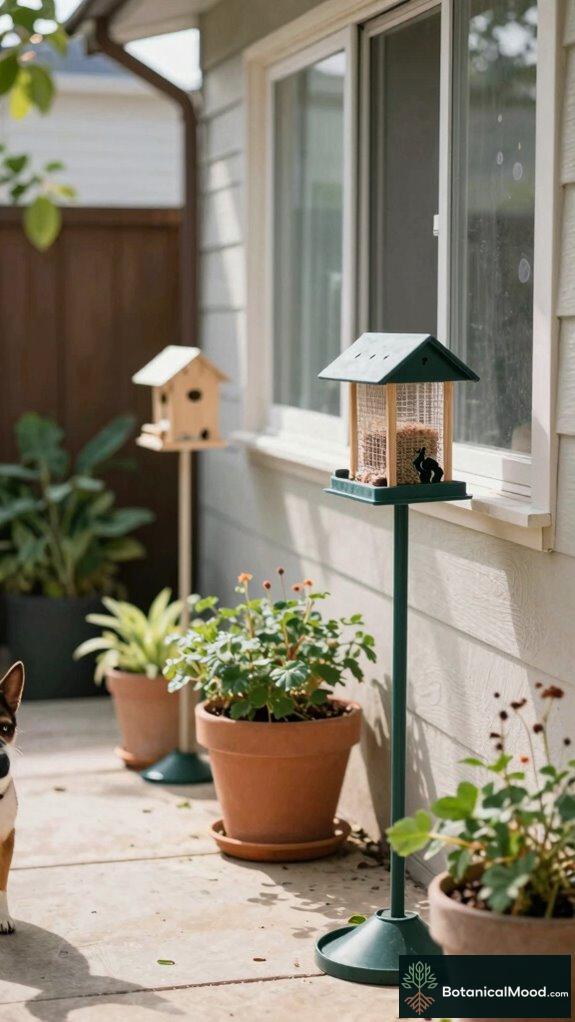
After you’ve added squirrel baffles that block climbing access, you can further reduce bird stress and injury risk by placing your feeders where cats can’t ambush them and where glass won’t confuse migrating songbirds.
I aim for feeder height high enough to deny a crouched Felis catus strike, yet low enough for easy perch stability and quick exits, usually 1.5–2.5 m on a shepherd’s-hook or powder-coated pole.
I also position feeders 1.5–3 m from windows, and I add decals or patterned films to stop collisions, boosting predator awareness while keeping (Turdus migratorius) safe during peak fall travel.
For additional nighttime protection, consider installing solar predator deterrent lights around your yard to discourage nocturnal predators from approaching feeding areas after dark.
Feed Only in Winter: Avoid Bread and Table Scraps
Feeding birds only in winter helps you support healthy wild populations without turning your yard into a year-round “food subsidy” where disease can spread more easily and where flocks cluster.
I plan my bird menu from October to March, so winter food stays purposeful and natural foraging rebounds.
I avoid bread and table scraps, because harmful foods rot fast, attract insects, and foul local soil.
Instead, I offer labeled seed blends in feeders I can clean weekly, and I watch for cracks.
- Set winter feeding dates
- Skip bread, rice, and leftovers
- Choose sealed, dry seed mixes
- Clean feeders before filling
Hanging Seed Feeder Stations
When you hang a seed feeder station, you can control access, reduce predation risk, and still deliver reliable nutrition during the October–March window in temperate regions.
I set mine up so it stays functional and safe in real garden conditions. I choose hanging designs with a sturdy shepherd’s-hook, anti-swing swivels, and a baffled throat. Then I position it 1.5–2.5 m from dense cover. That gap lets wary finches and nuthatches approach on their own terms, matching bird preferences. Pole-mounted feeders effectively keep feeders away from cats and other ground predators when positioned at the correct height and distance.
To limit disease spread, I use quality, crack-resistant housings and clean weekly, targeting debris where (Salmonella) and (E. coli) can persist. During winter months, applying protective paw balms to nearby ground areas can prevent salt and ice damage to visiting ground-feeding birds’ feet.
Position Feeders Beyond Pets
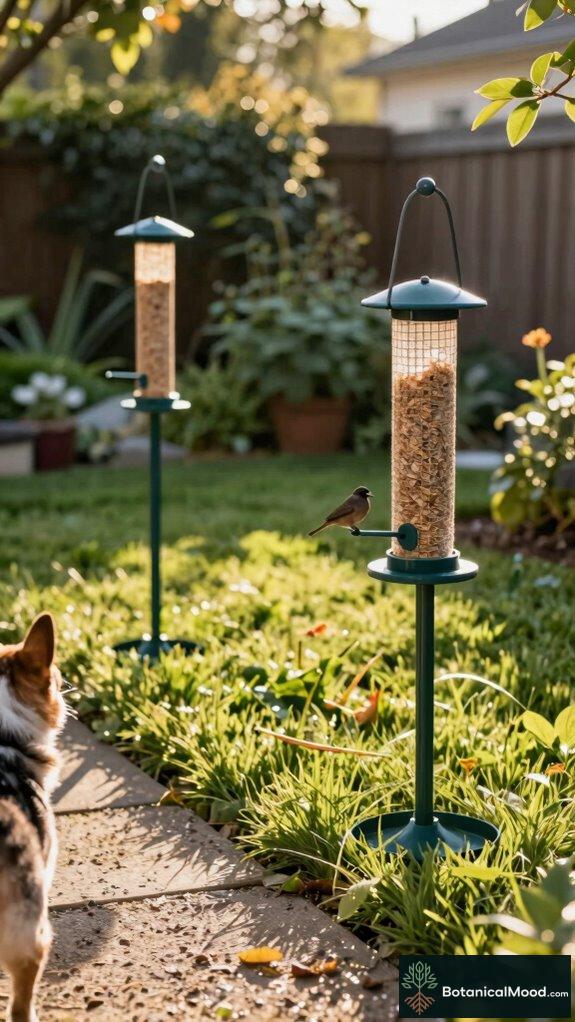
I position my seed feeders well away from cats and other household pets, because even well-made, baffle-equipped hanging stations still become easy ambush points when they’re close to garden access routes like low fences, patio doors, and gravel walkways.
To protect bird health, I also treat placement as a system, then schedule feeder maintenance like a precision tool:
- Place platforms 1.5–2 m from shrub edges.
- Keep feeders off windowside glass collision corridors.
- Clean weekly, replacing cracked wooden or brittle plastic ports.
- Aim for dry, sheltered aprons to reduce pathogen persistence.
This reduces disease spread risks, including salmonella and E. coli.
FAQ
How Often Should I Deep-Clean Feeder per Month?
Twice monthly, and once more if weather’s wet—this matching timing boosts feeder maintenance and cleaning frequency. I deep-clean my feeder every 2 weeks, scrubbing all crevices, then sanitize and fully dry to cut disease risk.
Which Disinfectant Is Safe for Birds and Feeder Materials?
Use safe cleaning with a dilute, bird-safe disinfectant: either 3% hydrogen peroxide or a no-rinse bleach solution (1 tablespoon bleach per gallon). Scrub first, then fully rinse and dry feeders before refilling.
Can I Use the Same Feeder for Multiple Species Without Risk?
Yes, but only with smart feeder design: I limit bird compatibility by cleaning often, swapping cracked parts, and separating diets when needed. FeederWatch shows feeder users improved over decades—yet dense sharing raises disease risk.
What Seed Should I Avoid to Reduce Contamination and Waste?
I’d avoid bread, rice, and human foods, plus seed blends that include mold-prone, dusty mixes. I choose non toxic seeds like black-oil sunflower over questionable lots, and I prevent waste by filling small amounts often.
How Can I Tell if Birds at My Feeder Have Salmonella?
You can’t confirm salmonella at a glance, but I watch for salmonella symptoms: swollen eyes, ruffled feathers, lethargy, diarrhea, and sudden die-offs. I also track bird behavior like crowding, stumbling, or refusing seed—then stop feeding and contact a vet.
References
- https://pmc.ncbi.nlm.nih.gov/articles/PMC4778448/
- https://toronto.wbu.com/downloadc/131423.pdf
- https://feederwatch.org/research-news/impacts-supplemental-feeding-bird-populations/
- https://www.allaboutbirds.org/news/analysis-do-bird-feeders-help-or-hurt-birds/
- https://www.fws.gov/story/feed-or-not-feed-wild-birds
- https://spca.bc.ca/news/get-the-facts-on-backyard-bird-feeding/
- https://forum.inaturalist.org/t/bird-feeders-what-is-the-verdict/33595
- https://www.audubon.org/birding/backyard