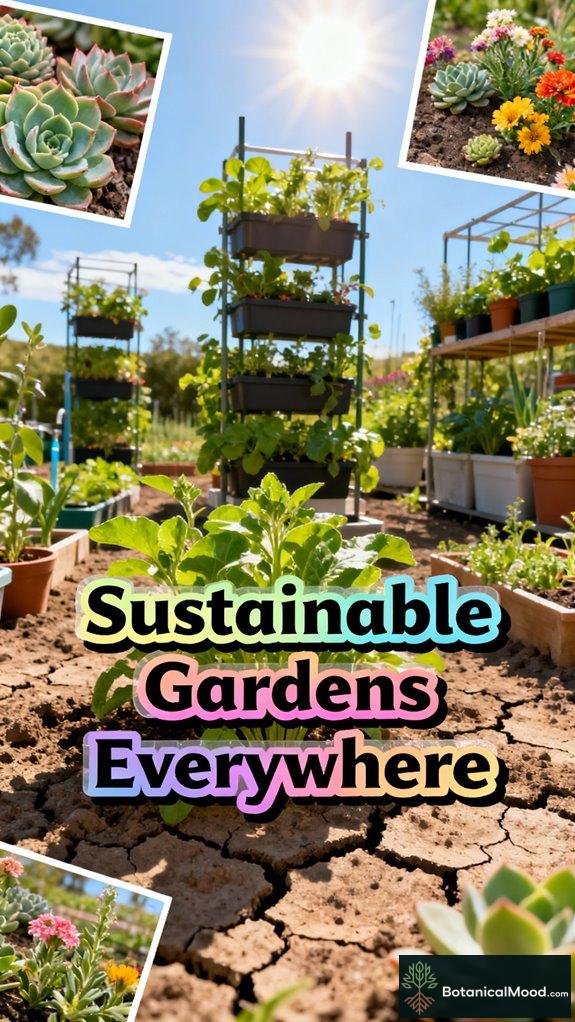
Tag: drought-resistant plants

  • Design Drought-Smart Gardens With Ecological Wisdom

    Design Drought-Smart Gardens With Ecological Wisdom

    Ever tried gardening in a drought? Talk about a challenge!

    I’m all about crafting drought-smart gardens with a splash of ecological wisdom.

    Using resilient native plants like Echinacea purpurea feels like having a secret weapon. They practically laugh in the face of water shortages!

    Then there’s the magic of good soil—organic compost and biochar work wonders for moisture retention. I swear by drip irrigation; it’s almost like giving my plants a little drink on demand. Don’t forget a solid 2-4 inch layer of mulch. It’s like a cozy blanket, keeping the moisture in and the weeds out.

    Sure, it feels complex, but isn’t that part of the fun?

    Transform Your Dry Patch into a Lush Oasis

    Last summer, I turned my sad, baked patch of earth into a vibrant patch of life. I thought, “Why not?” I picked up some local wildflower seeds and experimented with planting them, not knowing if they would even survive.

    To my surprise, not only did they sprout, but they flourished! It was a riot of color and life, attracting butterflies and bees, which I’d sadly missed in my old garden. Drought-proof? More like drought-fabulous!

    Incorporating biodiversity and companion planting led to unexpected, beautiful blooms. Now, my garden isn’t just surviving; it’s thriving—and I feel like a proud plant parent. 🌱

    Quick Takeaways

    • Choose drought-resistant native plants and climate-adaptive species to enhance biodiversity and conserve water needs in your garden design.
    • Improve soil health by using organic compost, coconut coir, and biochar to maximize water retention and support healthy plant growth.
    • Apply organic mulch to suppress weeds and maintain soil moisture, typically at a thickness of 2-4 inches for optimal results.
    • Implement efficient irrigation systems, such as drip irrigation and rainwater harvesting, to promote water conservation and sustain healthy plants.
    • Design microclimates by strategically placing plants and using hardscaping solutions, ensuring compatibility of water needs and maximizing ecological benefits.

    Smart Plant Selection for Drought Resilience

    native drought resistant plant selection

    When I think about creating a drought-smart garden, I realize that choosing the right plants is essential for both sustainability and beauty.

    Native plant benefits extend beyond aesthetics—they flourish in our local climate, requiring less water and maintenance than non-natives. Incorporating climate adaptive species, such as Salvia (sage) or Echinacea (coneflower), not only conserves resources but enhances biodiversity. Additionally, selecting drought-resistant native plants contributes to the overall resilience of the local ecosystem.

    Native plants thrive in our climate, needing less water and care while boosting biodiversity with climate-adaptive species.

    I make decisions based on hardiness zones and soil requirements, ensuring each selection thrives in its environment.

    Crafting a garden that mirrors our ecosystem fosters a sense of control, allowing beauty to coexist with environmental responsibility, a principle I emphasize through my website, Botanical Mood.

    Enhancing Soil for Optimal Water Retention

    soil enhancements for water retention

    To guarantee that my drought-smart garden can thrive with minimal water, I focus on enhancing soil properties that promote ideal water retention. By applying specific soil amendments, I create a foundation that guarantees my plants have the moisture they need. Incorporating xeriscaping techniques not only optimizes water use but also encourages the growth of native plants that are well-suited to dry conditions.

    Here’s how I incorporate various soil enhancements:

    Soil Amendment Retention Technique
    Organic compost Improves soil structure
    Coconut coir Adds moisture-holding capacity
    Perlite Enhances drainage while retaining water
    Zeolite Absorbs nutrients and water
    Biochar Increases porosity and aeration

    With these strategies, I confidently create a garden that flourishes.

    Effective Mulching Techniques for Moisture Conservation

    moisture retaining mulch techniques

    Effective mulching techniques play an essential role in my drought-smart garden, as they help to conserve precious moisture and enhance the overall health of my plants. I prioritize using beneficial mulch, like shredded bark or straw, to suppress weeds and moderate soil temperature.

    My seasonal application strategy guarantees I refresh the mulch layer, optimizing its moisture-retaining benefits.

    • Choose organic materials for added nutrients
    • Apply mulch around perennials (e.g., Echinacea purpurea) and annuals
    • Maintain a thickness of 2-4 inches for best results

    These strategies not only support my plants but also create an attractive garden aesthetic.

    Implementing Efficient Irrigation Systems

    efficient drought smart gardening techniques

    While tending to my drought-smart garden, I’ve discovered that implementing efficient irrigation systems not only conserves water but also promotes the healthy growth of plants.

    For instance, using drip irrigation allows me to deliver water directly to the roots of my Helianthus annuus (sunflowers) and Lavandula angustifolia (lavender), reducing waste considerably.

    I also embrace rainwater harvesting, capturing precious precipitation with barrels strategically placed beneath downspouts. This eco-friendly technique not only replenishes my garden but gives me control over water sources, ensuring my plants thrive during dry spells.

    Every drop counts, and with these systems, I’m creating a lush, sustainable oasis.

    Creative Hardscaping Solutions for Sustainable Gardens

    sustainable hardscaping for gardens

    Creating a sustainable garden involves more than just choosing the right plants; it often starts with thoughtful hardscaping that complements the natural surroundings while promoting environmental benefits.

    Sustainable gardening begins with thoughtful hardscaping that enhances the environment and supports ecological benefits.

    I’ve found that incorporating elements like:

    • Permeable paving for reducing runoff and allowing water to recharge the ground
    • Raised beds to enhance soil quality and improve drainage
    • Natural stone pathways that blend with the environment and provide durability

    These creative hardscaping solutions not only contribute to sustainability, but they can also give you control over your garden’s aesthetics and ecological impact.

    Trust me, your garden will thrive beautifully!

    Drought-Resistant Plant Selection

    drought resistant plant selection strategy

    Selecting drought-resistant plants is vital for creating a garden that can flourish even in the most arid conditions.

    By choosing plant diversity, particularly native species, I can guarantee my garden thrives with minimal water. For instance, California Fescue (*Festuca californica*) and Russian Sage (*Perovskia atriplicifolia*) not only brighten spaces with their colors but also attract beneficial pollinators.

    Their deep root systems enhance water uptake, reducing irrigation needs considerably. By integrating these resilient options, I create a sustainable environment that’s not only beautiful but also ecologically responsible, aligning perfectly with the principles I aim for at Botanical Mood.

    Zoning for Moisture Retention

    effective moisture zoning strategies

    Effective zoning for moisture retention is essential for cultivating a garden that not only thrives but also conserves precious water resources.

    Effective moisture zoning not only supports a flourishing garden but also conserves invaluable water resources.

    When I implement moisture mapping and strategic plant grouping, I create tailored microenvironments for different plants.

    To enhance moisture retention, I focus on:

    • Grouping drought-tolerant species together, facilitating efficient watering.
    • Using organic mulches to minimize evaporation and suppress weeds, enhancing soil moisture.
    • Designing irrigation zones that align with each plant’s water needs, encouraging deeper root development.

    Meet the Garden Visionary

    sustainable drought resistant gardening techniques

    Jennifer McAllister, a native of Tucson, Arizona, cultivated her passion for drought-resistant gardening after witnessing the devastating effects of prolonged droughts in her community, inspiring her to create a sustainable oasis.

    To achieve her dream garden, McAllister meticulously researched xeriscaping techniques, consulted with local horticulturists, and planned the layout by selecting native plants that thrive in arid conditions. She emphasized harmony with the environment while ensuring the garden remains aesthetically pleasing.

    Using tools like the Fiskars garden spade and Felco pruners, McAllister implemented high-quality irrigation solutions from Rain Bird.

    Collaborating with horticulturists from the University of Arizona, she strategically incorporated drought-tolerant species such as agave and succulents to enhance sustainability.

    Compact Urban Garden Solutions

    urban gardening made efficient

    Transforming a small urban space into a thriving garden oasis might seem challenging, yet it can be done with thoughtful planning and a strategic approach.

    I’ve found that vertical gardening techniques—like trellises and wall planters—maximize even the most confined areas, allowing for a flourishing urban agriculture experience.

    Opting for dwarf plant varieties and utilizing raised beds not only conserves water but guarantees efficient growth.

    Choosing dwarf plants and raised beds promotes water conservation and ensures effective growth in limited spaces.

    Implementing drip irrigation and planting drought-tolerant species, such as Echeveria (Echeveria spp.), enhances resilience.

    Summary

    Designing my drought-smart garden is both practical and rewarding. I’m excited to choose drought-resistant plants like *Sedum* and incorporate thoughtful hardscaping. This space will reflect my commitment to sustainability and beauty, creating a vibrant oasis in tune with nature.

    I’d love to hear about your experiences with drought-smart gardening. What have you learned along the way?

    Share your own garden designs with us. Include some pictures and describe how you approached your project!

    References

  • Smart Sustainability: Drought-Defying Gardens That Thrive Anywhere

    Smart Sustainability: Drought-Defying Gardens That Thrive Anywhere

    Why does gardening have to be so complicated?

    Let me tell you about my journey to creating drought-defying gardens.

    I threw out the idea of traditional lawns and embraced xeriscaping instead. Who knew that using cacti like Echinocactus grusonii and Agave americana could make me feel like the ultimate gardening hero?

    With drip irrigation—bless those little hoses!—and organic mulch that holds moisture like a champion, I crafted a vibrant oasis. It’s like a party for pollinators, and I’m the host!

    But hey, who am I kidding? Droughts are tricky. Yet, with some creativity, you can thrive!

    Designing Gardens That Actually Grow: My Personal Encounter with Drought-Resilient Landscapes

    A few summers ago, I faced a garden crisis. My plants were drooping, begging for water. I decided to take a leap of faith and attended a workshop on garden design that focused on sustainable techniques. There, I learned about layering plants, incorporating rain gardens, and using native species.

    Transforming my backyard into a drought-defying paradise was tough, but every plant contributed to the greater good—promoting biodiversity. Each time I saw bees buzzing around, I felt like I was revolutionizing the horticultural world.

    Now, I marvel at how my garden flourishes, even when the sun blares down. Who knew smart sustainability could be this life-changing?

    Quick Takeaways

    • Xeriscaping utilizes native, drought-resistant plants to create sustainable gardens that thrive in various climates and support local biodiversity.
    • Efficient irrigation techniques, such as drip systems and rainwater harvesting, optimize water use and maintain healthy plant growth.
    • Mulching with organic materials retains moisture and suppresses weeds, improving the overall health of drought-tolerant gardens.
    • Grouping plants by water requirements enhances irrigation efficiency and ensures that each plant receives the necessary moisture.
    • Resourceful tools and local nurseries provide essential support for developing resilient gardens that flourish with minimal water.

    Understanding Xeriscaping and Its Benefits

    sustainable drought tolerant landscaping techniques

    When I first explored the world of gardening, I was captivated by the concept of xeriscaping, which involves designing terrains that thrive in arid conditions, maximizing water efficiency and minimizing maintenance.

    The xeriscaping principles emphasize strategic planning, incorporating native plants, efficient irrigation methods, and soil enhancement to create sustainable, drought-tolerant landscaping.

    I learned to appreciate how using materials like gravel or mulch conserves moisture while allowing vibrant colors and textures to flourish, showcasing nature’s artistry. Additionally, incorporating native desert plants supports local wildlife and promotes biodiversity, creating a balanced ecosystem.

    Choosing the Right Drought-Resistant Plants

    drought resistant garden selection tips

    How do you select drought-resistant plants that not only endure harsh conditions but also add beauty and interest to your scenery?

    I start by exploring native species, as they naturally thrive in our local climate and exhibit incredible climate adaptability. For instance, Agastache foeniculum, commonly known as anise hyssop, not only attracts pollinators but also withstands dry spells.

    I also recommend incorporating succulents like Echeveria or Sedum, which offer vibrant colors and unique textures. Creating a drought-resistant native plant garden layout enhances the aesthetic while conserving water.

    Combining these plants with ornamental grasses, such as Panicum virgatum (switchgrass), can create striking contrasts.

    Focusing on these elements enhances the aesthetic while conserving water. This thoughtful selection guarantees your garden not only survives but flourishes, embodying the spirit of Smart Sustainability.

    It’s a demonstration of resilience and beauty.

    Efficient Irrigation Techniques for Water Conservation

    efficient water conservation techniques

    As I explore the art of cultivating a thriving garden under water-scarce conditions, efficient irrigation techniques become essential for conserving every precious drop.

    Employing drip systems, for instance, delivers water directly to the plant roots, minimizing evaporation and runoff while maximizing efficiency. These systems not only reduce water usage considerably but also help maintain healthy soil moisture levels, essential for robust growth.

    Drip systems provide efficient irrigation by targeting plant roots directly, conserving water and enhancing soil moisture for optimal growth.

    Rainwater harvesting is another powerful tool at our disposal. By capturing and storing rainwater, I can provide my garden with a sustainable irrigation source that thrives even in dry spells.

    Utilizing these methods not only champions sustainability but profoundly blends beauty and practicality, creating an environment that flourishes and inspires, all while respecting nature’s limitations.

    The Role of Mulching in Xeriscape Design

    mulching promotes garden health

    The integrity of a garden thrives on multiple layers of thoughtful design, and mulching plays an essential part in nurturing xeriscape environments.

    Selecting the right mulch types—like organic materials such as shredded bark, wood chips, or even gravel—ensures effective moisture retention. These layers not only reduce evaporation but also suppress weeds that might compete for limited resources.

    I’ve seen how a thick layer of mulch in my own garden dramatically enhances the soil’s ability to retain precious water, allowing hardy plants like Agave americana and Sedum spp. to flourish even in the scorching sun.

    Soil Preparation for Maximum Moisture Retention

    soil preparation for moisture

    Preparing the soil for maximum moisture retention is essential if we want our xeriscape gardens to truly thrive in arid conditions. Start by testing your soil’s pH and structure; this foundational step empowers you to choose the right soil amendments.

    Incorporate organic matter like aged compost (Humus) or well-rotted manure, which considerably enhance moisture retention, creating a sponge-like environment.

    I often mix in water-retentive gels or natural fibers, such as coconut coir (Cocos nucifera), that deeply embed moisture within the soil matrix.

    Creating Visual Interest in Drought-Defying Gardens

    drought resistant garden aesthetics

    Gardens can be strikingly beautiful, even in the face of drought. By incorporating colorful contrasts, such as the fiery reds of Sedum spurium paired with the cool greens of Lavandula angustifolia, we create an eye-catching display that defies arid conditions.

    Textured layers add depth, enticing viewers to explore. For instance, the spiky forms of Agave americana juxtaposed with the soft, cascading petals of Santolina chamaecyparissus can evoke a sense of dynamic movement.

    In my pursuit of crafting powerful vistas, I find inspiration in native flora that thrives under harsh conditions, showcasing resilience.

    As I curate each drought-defying garden, I’m reminded that aesthetics and sustainability can coexist, making the vista an enduring expression of beauty, even amid challenges.

    Planning Your Xeriscape Layout and Plant Grouping

    xeriscape plant grouping strategy

    When I consider the layout of a xeriscape, I often envision a harmonious blend of functionality and aesthetic appeal, ensuring that each element complements the overall design. Planning your xeriscape effectively involves strategic garden zoning and careful plant placement. By grouping plants with similar water needs, I create a sustainable haven that thrives with minimal resources.

    Here’s a table to visualize effective plant groupings:

    Plant Type Water Needs Ideal Placement
    Succulents (Echeveria) Low Sun-drenched borders
    Native Grasses (Muhlenbergia) Moderate Middle zones
    Perennials (Lavandula) Low Front arrangements
    Groundcovers (Thymus) Very Low Understory areas
    Shrubs (Rudbeckia) Moderate to Low Focal points

    This structured approach not only beautifies but fortifies resilience in my garden designs.

    Maintenance Strategies for Sustainable Landscaping

    sustainable landscaping maintenance strategies

    While many might assume that xeriscaping requires little attention, I believe that effective maintenance strategies are essential for ensuring the longevity and sustainability of these drought-defying gardens.

    Implementing proper drainage solutions is critical; heavy rains can saturate your scenery, so let’s incorporate a dry creek bed or rain garden to direct excess water away from sensitive plants.

    Regular garden maintenance, including seasonal pruning of native shrubs such as Salvia (Salvia spp.) and ornamental grasses like Miscanthus (Miscanthus sinensis), preserves not just shape but health, enabling each specimen to thrive.

    I encourage the use of organic mulch to retain moisture and suppress weeds, enhancing the aesthetic appeal.

    Embracing these practices elevates your garden into a resilient masterpiece, thriving amid challenges while echoing nature’s ingenuity.

    Sustainable Garden Planning

    sustainable garden planning strategies

    Creating a sustainable garden requires a thoughtful approach that encompasses both beauty and function, allowing us to nurture our plants while respecting the environment.

    To begin, I strategically plan my vegetable garden, integrating native species like Echinacea purpurea and Asclepias tuberosa, which not only thrive in local conditions but also attract pollinators.

    I prioritize companion planting, pairing tomatoes (Solanum lycopersicum) with basil (Ocimum basilicum) to enhance flavor and deter pests.

    I’m also mindful of sun exposure and soil quality, choosing the perfect location to maximize growth.

    Utilizing organic mulch helps retain moisture while enriching the soil.

    Water-Wise Desert Garden Design

    sustainable desert garden design

    Designing a water-wise desert garden not only fosters a sustainable scenery but also enhances the visual harmony of arid environments. By carefully selecting desert plants (such as Agave americana or Echinocactus grusonii) that require minimal water, I guarantee a terrain that thrives even in extreme conditions.

    Here are some key elements to reflect upon:

    • Grouping plants by similar water requirements optimizes efficiency and encourages climate adaptation.
    • Testing and amending soil elevates nutrient absorption and overall plant resilience. Additionally, implementing drip irrigation systems ensures efficient water delivery while conserving resources.
    • Utilizing vertical gardening expands planting opportunities, allowing diverse textures and colors to bloom.

    This vibrant approach redefines desert gardening, making it more than just survival; it’s a striking portrayal of nature’s beauty in harmony with limited resources.

    Irrigation-Efficient Garden Layout

    irrigation efficiency in gardening

    Achieving irrigation efficiency in garden layouts fundamentally enhances both plant health and resource conservation, especially in environments where water is a precious commodity. By strategically organizing plant placement, I group species with similar water needs into tailored irrigation zones, ensuring optimal water usage and reducing waste.

    Irrigation efficiency is key to nurturing plant health and conserving precious water resources in sustainable gardening.

    For instance, I segregate drought-tolerant plants (like Salvia spp.) from shade-loving varieties (such as Hosta spp.), creating distinct zones that prevent over- or under-watering.

    The right irrigation layout, whether employing end-fed tubing or center-fed designs, adapts to each garden’s unique contours, enhancing efficiency. Careful attention to soil types and topography further refines my approach.

    Ultimately, these thoughtful choices nurture a thriving ecosystem while conserving invaluable water resources, all essential in my quest for sustainable gardening excellence.

    Meet the Garden Visionary

    sustainable drought resistant garden design

    From San Diego, California, the visionary garden designer, Johnson, cultivated her passion for sustainable gardens after witnessing the adverse effects of drought in her community, motivating her to create lasting ecological spaces.

    Through a meticulous design process, Johnson incorporated xeriscaping principles, selecting native plants and efficient irrigation systems. Collaborating with local horticulturists, she guaranteed her garden not only beautified the area but also contributed to the biodiversity and resilience of the local ecosystem.

    To bring her vision to life, Johnson utilized tools like drip irrigation systems from Rain Bird and organic compost from Miracle-Gro.

    Furthermore, she sourced drought-tolerant plants from local nurseries and employed decorative accessories such as natural mulch from Gardener’s Supply Company to enhance her garden’s functionality and aesthetic appeal.

    Iconic Botanical Gardens Nationwide

    iconic u s botanical gardens

    The beauty and diversity of botanical gardens across the United States offer a vibrant demonstration to nature’s resilience and artistry.

    Consider these iconic gardens, each an illustration of the splendor of plant life:

    • Longwood Gardens, Pennsylvania: Spanning over 1,100 acres, it boasts 10,000 species and the largest green wall in America.
    • United States Botanic Garden, D.C.: Known for its museum exhibits and multisensory experiences, it ignites passion for conservation.
    • New York Botanical Garden, New York: As a hub for art and science, it showcases themed displays that celebrate natural beauty.

    These urban gardens inspire challenges to traditional gardening norms, encouraging innovative, drought-resistant designs that unite aesthetic with practicality—essential in today’s changing climate.

    References

  • Water-Wise Desert Gardens: Design Thrive Conserve

    Water-Wise Desert Gardens: Design Thrive Conserve

    Turning my garden into a water-wise desert oasis was a wild ride, I tell ya!

    I mean, who knew that loving plants would mean falling for drought-resistant rock stars like Agave americana? I was knee-deep in design choices, sweating over innovative drip irrigation systems—yep, plant pampering at its best.

    But just when I thought I had it all figured out, the gravel paths decided they wanted to steal the show. I can’t tell you how much *fun* that was! My brain battled between beauty and sustainability. Yet, here I am, thriving despite the odds.

    Ever thought about the good ol’ organic compost? It’s a game changer, trust me!

    How I Discovered the Magic of Desert Garden Design

    One sweltering summer, I found myself facing a sandy expanse that screamed for help. After learning about soil retention, I took a leap. I added layers of organic compost, *hoping* it would transform my barren patch.

    Through trial and error, I crafted an enchanting scene featuring Lavandula angustifolia, which bloomed beautifully—almost as if to say, “Look, Mom, no water wasted!” The satisfaction of making a thriving garden—without a river in sight—was a win I won’t forget.

    If you’re wondering if desert gardens can sparkle too, let’s just say mine has become the talk of the neighborhood! Embrace the struggle, and your garden will thank you for it.

    Quick Takeaways

    • Select drought-resistant plants like Agave americana to enhance moisture retention and conserve water in arid gardens.
    • Implement drip irrigation systems for efficient water delivery directly to plant roots, significantly reducing overall water usage.
    • Group plants based on their water needs to optimize irrigation strategies and improve aesthetic appeal in desert landscapes.
    • Use organic matter such as compost to improve soil quality and enhance water retention, supporting healthy plant growth.
    • Engage the community through educational workshops to promote sustainable gardening practices and ecosystem preservation efforts.

    Understanding Water-Wise Principles for Desert Gardens

    water wise desert gardening principles

    When we explore the concept of water-wise principles for desert gardens, it becomes essential to understand how to create a thriving oasis in an arid environment, where every drop counts.

    One key aspect is soil conservation; choosing drought-resistant plants like Agave americana or Euphorbia rigida helps retain moisture in the soil.

    Soil conservation through the selection of drought-resistant plants like Agave americana enhances moisture retention in desert gardens.

    Furthermore, I focus on microclimate management, utilizing shade from taller plants and structures to cool surrounding areas, thereby minimizing water loss through evaporation.

    Implementing techniques such as mulching with gravel or wood chips also aids in safeguarding moisture.

    Cultivating a seamless blend of native species, like Salvia clevelandii, not only enhances aesthetic appeal but also preserves water, creating a sustainable environment.

    Incorporating drip irrigation systems can significantly reduce water usage while efficiently delivering moisture directly to plant roots.

    In these gardens, beauty and practicality unite, maximizing resources in arid spaces.

    The Importance of Efficient Water Use in Arid Landscapes

    efficient water use strategies

    Efficient water use in arid environments is essential, not merely a matter of convenience but a necessity for sustainable gardening.

    With increasing water scarcity, every drop counts. By employing innovative irrigation techniques, like drip irrigation and rainwater harvesting, we can conserve precious resources.

    Selecting native and drought-tolerant plants, such as Agave americana or Echinocactus grusonii, further enhances sustainability, reducing the need for excessive watering.

    Incorporating mulch not only retains soil moisture but also shields plants from extreme temperatures, promoting healthier environments.

    As I explore these practices, it becomes clear that the beauty of a desert garden doesn’t just lie in its design but in our commitment to efficient water use.

    Adopting these methods can transform our gardening experience, nurturing both aesthetics and ecology. Additionally, understanding xeriscape gardening principles can help to create landscapes that are not only beautiful but also resilient to environmental challenges.

    Key Design Elements for Sustainable Desert Landscapes

    sustainable desert landscape design

    To create a sustainable desert environment, it’s essential to integrate design elements that not only enhance beauty but also promote resilience against arid conditions.

    Start by focusing on soil improvement, using organic matter like compost to enhance water retention and nutrient content, which is critical for plant health. Pay attention to climate considerations, ensuring that your garden is arranged to protect against harsh winds and excessive heat.

    Utilizing terraces or raised beds can help manage drainage while providing a visual contrast through varying heights.

    Incorporating hardscape elements, such as gravel paths and stone features, adds texture and reduces water evaporation, further supporting your desert environment.

    Choosing the Right Plants for Low Water Requirements

    drought resistant plant selection

    Selecting plants that thrive on limited water is a vital aspect of crafting a sustainable desert garden, and it’s one of the most rewarding tasks in scenery design.

    My approach to plant selection focuses on species renowned for their drought resilience, such as Agave americana and Lavandula angustifolia. These plants not only conserve water but also lend an aesthetically pleasing structure to borders and beds.

    I often incorporate native varieties, as they’re well-adapted to our arid climate and require less maintenance.

    By utilizing a mix of flowering succulents and aromatic herbs, I create visual interest while ensuring a functional space.

    This thoughtful selection reinforces my commitment to sustainability and the beauty of the desert environment, reflecting the ethos behind my website, Botanical Mood.

    Grouping Plants by Water Needs for Optimal Growth

    desert garden water management

    Grouping plants according to their water needs can greatly enhance the liveliness of a desert garden, and I believe it’s an essential practice for achieving ideal growth.

    By placing moisture-loving plant companions, like Agave americana and Aloe vera, alongside those with lower water requirements, such as Sedum morganianum, I maximize moisture retention and guarantee health from the roots up.

    This thoughtful arrangement creates a mini-ecosystem that prevents overwatering and promotes efficiency in water use, allowing plants to thrive together.

    I often recommend clustering plants based on their specific hydration needs, employing driplines for greater accuracy.

    With this strategy, my desert garden remains vibrant, beautiful, and brimming with life, making the most of our precious resources in a sustainable manner.

    Incorporating Hardscape Elements to Enhance Landscape Design

    hardscape enhances desert gardens

    In a desert garden, the interplay between hardscape elements and plant life can truly elevate the aesthetic appeal and functionality of the surroundings. Utilizing a variety of hardscape materials like stone pathways, gravel, and pavers not only enhances the visual interest but also promotes safety.

    These design elements, strategically positioned, can guide visitors through the vista, preventing erosion while minimizing foot traffic on delicate plant roots.

    Incorporating features such as raised beds or decorative boulders can create visual focal points, drawing attention to native plantings like Agave americana or Echinocactus grusonii.

    I’ve found that thoughtful use of hardscape not only organizes space but also conserves precious water by reducing the overall area needing irrigation.

    This balance inspires a harmonious desert garden, showcasing both beauty and sustainability.

    Conducting a Site Analysis for Effective Planning

    site analysis for gardens

    Conducting a site analysis before starting on a desert garden project is essential, as it allows me to intimately understand the unique conditions of the environment, ultimately leading to a more successful and sustainable design. By evaluating site characteristics like sunlight exposure, wind patterns, and existing vegetation, I can better tailor my choices for plant selection. A soil assessment provides understanding into drainage, pH levels, and nutrient availability, which helps in creating a thriving ecosystem.

    Here’s a simple table summarizing key factors to reflect on:

    Site Characteristic Description Importance
    Sun Exposure Direct, partial, or shade Determines plant selection
    Soil Texture Sandy, clay, loamy Impacts drainage and nutrients
    Elevation Flat, sloped Affects microclimate
    Drainage Well-draining or poor Key for plant health
    Existing Flora Native plants, invasive species Influences landscaping choices

    Creating Distinct Water-Use Zones in Your Garden

    distinct desert water zones

    Creating distinct water-use zones in my desert garden allows me to allocate resources more efficiently while enhancing the overall aesthetic appeal.

    Establishing water-use zones in my desert garden maximizes resource efficiency while enhancing visual beauty.

    By categorizing plants into microclimate zones, I can select drought-tolerant groupings that thrive in specific conditions, leading to a vibrant yet sustainable environment.

    1. High Water Zone: This area includes plants like Hesperaloe parviflora (red yucca), which enjoy more moisture and create a stunning focal point.
    2. Moderate Water Zone: Here, I plant resilient species like Agave americana, showcasing their dramatic forms while demanding less frequent watering.
    3. Low Water Zone: This section features xeriscaping with plants such as Mesa Verde sage (Salvia dorrii), which require minimal irrigation and provide texture.

    Implementing Efficient Irrigation Systems for Water Conservation

    efficient desert garden irrigation

    Finding the right balance between beauty and water conservation is essential when tending to a desert garden, especially given the arid conditions many of us face.

    One of the most effective methods I’ve found is installing a drip irrigation system. Unlike traditional methods, this technique delivers water directly to the plant roots, minimizing evaporation and runoff.

    Incorporating moisture sensors into my irrigation setup has revolutionized my watering routine.

    These sensors monitor soil moisture levels, ensuring that I only water when necessary. By adjusting the frequency and quantity based on real-time data, I greatly reduce water waste.

    Benefits of Using Native and Drought-Tolerant Plants

    sustainable native plant benefits

    As I explore the enchanting world of desert gardening, I’ve discovered how incorporating native and drought-tolerant plants not only enhances the garden’s beauty but also aligns perfectly with the principles of sustainability.

    Here are three compelling benefits:

    1. Adaptation to Native Habitat: These plants have evolved to thrive in local conditions, requiring minimal watering and care.
    2. Ecological Benefits: They provide essential support for local wildlife, promoting biodiversity and offering habitat for pollinators like bees and butterflies.
    3. Soil Health Improvement: Many drought-tolerant species, such as *Agave* and *Echinocactus*, enrich soil quality through their extensive root systems, which prevent erosion and improve moisture retention.

    Reducing Maintenance Needs in Water-Wise Landscapes

    sustainable low maintenance landscaping solutions

    With strategic planning and the right selections, your garden can maintain its allure while requiring far less intervention than conventional settings reliant on high water consumption.

    By focusing on native plants like Agave americana or Echinocactus grusonii, I’ve found that these species thrive with minimal upkeep.

    Mulch application is a game-changer, preventing weed growth and retaining moisture, which means I spend less time weeding and watering.

    Applying mulch transforms my garden, cutting down on weeds and requiring less watering, which saves me precious time.

    Additionally, I schedule seasonal pruning, which not only keeps plants healthy but enhances their appearance, producing beautiful blooms in spring.

    Utilizing drought-resistant groundcovers like Lantana camara also contributes to a vibrant garden that asks for little.

    These thoughtful choices reflect my commitment to beauty and safety, ensuring my water-wise environment is as stunning as it’s sustainable.

    Inspiring Examples of Successful Desert Xeriscaping

    vibrant sustainable desert landscaping

    Successful desert xeriscaping can transform dry terrains into vibrant havens, and one compelling example that stands out is the stunning garden at the Desert Botanical Garden in Phoenix, Arizona.

    With its incredible design, I see firsthand how xeriscape benefits create sustainable environments that flourish with minimal water.

    Here are three inspiring elements I admire:

    1. Cacti and Succulents: A diverse array including *Agave americana* and *Echinocactus grusonii* add unique shapes and textures.
    2. Native Plants: Plants like *Rhus ovata* and *Salvia greggii* not only thrive but encourage local wildlife.
    3. Smart Irrigation: Innovative drip systems keep moisture close to the roots, maximizing water efficiency.

    These desert inspirations remind me of the beauty achievable in water-wise environments.

    Desert Landscaping Benefits Analysis

    sustainable desert gardening benefits

    How can desert gardening redefine our outdoor spaces while promoting sustainability? By embracing drought resistance and xeriscape techniques, I’ve witnessed firsthand how these elements transform our gardens into vibrant ecosystems that require far less water than traditional lawns.

    Incorporating diverse native plants, like Agave parryi and Lavandula angustifolia, groups them by water needs, efficiently retaining soil moisture. This method not only lessens irrigation demands but also eases pressure on municipal water resources, essential in arid climates. Additionally, many desert plants serve as air purifiers, contributing to better air quality in our homes.

    Furthermore, strategic shade trees greatly lower temperatures, enhancing urban comfort while cutting cooling costs. Ultimately, these environments foster healthier soils, support local wildlife, and symbolize an elegant commitment to sustainability, all without sacrificing beauty for efficiency.

    Sustainable Desert Plant Arrangement

    sustainable desert garden design

    When we thoughtfully arrange desert plants, we not only enhance the beauty of our outdoor spaces, but we also create sustainable ecosystems that thrive in arid conditions.

    To achieve a harmonious garden design, consider these key principles:

    Achieving a harmonious garden design involves thoughtful arrangement based on key principles for beauty and sustainability.

    1. Cluster plants by water needs: Grouping native species like Agave americana and Yucca brevifolia guarantees efficient irrigation while promoting plant resilience.
    2. Choose sustainable materials: Using materials like decomposed granite or permeable pavers reduces runoff while enhancing visual appeal.
    3. Incorporate year-round interest: By mixing evergreen shrubs with seasonal bloomers such as Desert Marigold (Baileya multiradiata), your garden will remain vibrant and inviting throughout the year.

    Meet the Garden’s Creator

    sustainable desert garden designer

    Miriam Seger, a designer based in Joshua Tree, California, developed a passion for sustainable gardening while observing the challenges posed by drought in her region, leading her to create innovative desert gardens.

    To achieve her vision, Seger meticulously researched native and drought-tolerant plants, customizing irrigation solutions for her garden.

    She engaged in hands-on experimentation on her property, testing various planting techniques and materials to guarantee ecological compatibility and aesthetic appeal within the desert setting.

    Using tools like drip irrigation systems from Rain Bird and incorporating natural elements such as boulders, Seger designed the garden with a focus on functionality and beauty.

    She consulted local horticulturists to select the best native species, ensuring a resilient environment that thrives in the desert climate.

    Botanical Gardens in the Desert

    desert botanical garden diversity

    Amidst the expansive arid terrains of desert regions, botanical gardens play an essential role in showcasing the unique beauty and diversity of desert flora.

    With over 4,000 species of desert plants, including a remarkable collection of cacti and succulents, these gardens are a demonstration of plant diversity and conservation efforts.

    Each visit reveals vibrant seasonal wildflower displays, demonstrating how arid ecosystems can burst with color.

    By employing innovative design features, such as water-efficient systems, they use 75% less water than traditional environments, exemplifying responsible gardening practices.

    As a passionate advocate for desert conservation, I appreciate how these gardens blend aesthetics and sustainability, engaging the public through educational programs that highlight techniques and the importance of preserving our fragile ecosystems.

    Garden Design FAQ

    How Can I Start a Water-Wise Garden From Scratch?

    To start a water-wise garden from scratch, I focus on soil preparation first, improving drainage and nutrients. Then, I select drought-tolerant plants that thrive in my climate, ensuring they’re safe for our environment.

    What Are the Costs Associated With Installing a Drip Irrigation System?

    Installing a drip irrigation system involves installation expenses like materials and labor, plus ongoing maintenance costs for repairs. I’ve found it’s worth investing for safety and efficiency, ensuring my plants thrive without wasting precious resources.

    Can I Mix Native Plants With Non-Native Species?

    Yes, I can mix native plants with non-native species. I love the benefits of native plants, but I also recognize non-native challenges. It’s important to choose carefully for a safe, balanced garden environment.

    How Often Should I Adjust My Irrigation Schedule?

    I adjust my irrigation frequency based on seasonal changes. In hotter months, I water more often, but during cooler periods, I decrease it. Regularly checking soil moisture keeps my plants healthy and safe from overwatering.

    What Resources Are Available for Landscape Design Assistance?

    I’ve found excellent resources for terrain design assistance, like local gardening clubs, online forums, and professional services. Checking local extension offices can also provide valuable support and promote safe, sustainable practices in my terrain projects.

    Summary

    Desert gardens inspire me with their beauty and resilience. By choosing water-wise plants like Agave americana and Echinocactus grusonii, I can turn a dry space into a stunning oasis. It’s a rewarding experience to design an eco-friendly masterpiece.

    What are your experiences with desert gardening? I’d love to hear your stories in the comments!

    Feel free to share pictures of your garden and describe your design process. I’m excited to see what you’ve created!

    References

  • Resilient Southwestern Plants: Stunning Drought-Defying Garden Designs

    Resilient Southwestern Plants: Stunning Drought-Defying Garden Designs

    Ever feel like plants are the only ones that have it easy in this harsh Arizona sun?

    Well, let me tell you about my favorite drought-defying rock stars: the Soaptree Yucca (Yucca elata) and the Organ Pipe Cactus (Stenocereus thurberi). These beauties don’t just survive; they flaunt their survival skills!

    Last summer, I planted a few of these gems and watched my garden transform into a pollinator’s paradise. Honestly, who knew I’d be so enchanted by cacti?

    Pairing them with vibrant shrubs and low-maintenance ground covers made it oozing with character. It turns out, sustainability can look fabulous—or at least that’s what I tell myself when I talk to my plants!

    Finding My Garden Design Sweet Spot: A Personal Journey through Resilient Landscapes

    Remember that time I decided to embrace the minimalist garden design? I went all in, yanking out thirsty grass and heavy hitters like roses. I swapped them for native, hardy varieties that thrive without begging for attention.

    One afternoon, I secured some vibrant Desert Marigolds and low-water succulents. The transformation amazed me! I found peace in the simplicity of my labor, creating an ecosystem both beautiful and functional. With that win, I felt like I had unlocked a secret: sustainability can be visually stunning! Gardening became therapeutic as bees danced among my plants. Why don’t we all try it?

    Quick Takeaways

    • Incorporating native plants like Soaptree Yucca and African Sumac enhances drought resilience and aesthetic appeal in Southwestern gardens.
    • Edible cacti and fruiting shrubs add beauty and sustainability while attracting pollinators to promote biodiversity.
    • Utilizing low-maintenance ground covers such as creeping thyme ensures vibrant gardens that thrive with minimal water requirements.
    • Employing xeriscaping principles, like grouping plants with similar moisture needs, reduces water waste and fosters healthy ecosystems.
    • A diverse array of visually striking Southwestern cacti introduces unique shapes and seasonal colors, creating focal points in garden designs.

    Diverse Tree Selections for Vertical Interest

    vertical interest through diverse trees

    When you consider the importance of vertical interest in garden design, selecting the right trees can transform a flat scenery into an enchanting vertical tapestry.

    In my experience, incorporating diverse tree selections not only creates stunning silhouettes but also enhances the overall aesthetic of a garden. For instance, the graceful curvature of the Soaptree Yucca (Yucca elata) provides striking heights, while the African Sumac (Rhus lancea) offers ample shade structures for relaxation.

    The beauty of these trees lies in their ability to capture light, creating mesmerizing shadows that dance across the ground, inviting liberation through nature’s artistry. Native plants are particularly suited for this role, as they thrive in arid conditions, ensuring a sustainable garden environment.

    Pairing these selections with careful placement guarantees that each tree contributes its unique personality, composing a vivid and harmonious environment that uplifts the spirit.

    Colorful Shrubs That Attract Pollinators

    nature s harmony in gardens

    By selecting the right plants, I’m not just focusing on aesthetics; I’m embracing nature’s harmony.

    Each carefully chosen shrub transforms my garden into a sanctuary, celebrating the freedom and beauty of life.

    After all, gardens can be a profound expression of our love for nature.

    Low-Maintenance Ground Covers and Perennials

    low maintenance garden beauty

    A multitude of low-maintenance ground covers and perennials exists, offering a perfect solution for gardeners seeking both beauty and practicality.

    I’ve found that using hardy plants like Salvia dorii and Artemisia tridentata not only conserves water but also provides year-round charm.

    These low maintenance options, such as creeping thyme (Thymus serpyllum) and Apache plume (Fallugia paradoxa), blanket the ground effortlessly while dazzling the eye.

    Pairing these perennial choices with colorful rocks or decorative gravel can elevate your garden’s aesthetic, creating a vivid tapestry of textures and hues.

    Adopting such resilient flora allows us to connect with nature without being bogged down by incessant upkeep, promoting a sense of freedom and ease in our gardening practices. Additionally, choosing native plants helps ensure that your garden thrives in the local climate.

    Edible Plant Options for Sustainable Gardens

    edible plants for sustainability

    Incorporating edible plants into your garden not only enhances its beauty but also contributes to sustainability, as these green treasures can provide fresh produce while minimizing your environmental footprint.

    Here are three fabulous options to contemplate for your sustainable garden:

    1. Edible Cacti (Opuntia spp.): With their stunning pads and vibrant fruit, these resilient plants thrive in arid conditions, offering nutritious prickly pears for tasty jams or salads.
    2. Fruiting Shrubs (Vaccinium spp.): Blueberries or elderberries not only provide delicious fruit but also add seasonal interest and complexity to your surroundings.
    3. Herbs (Salvia spp.): Drought-tolerant herbs such as sage or oregano enhance your culinary dishes while attracting beneficial pollinators.

    Additionally, incorporating native plants into your garden can drastically improve its resiliency to drought conditions.

    Ecological Benefits of Native Species in Xeriscaping

    native species enhance biodiversity

    Native species transform xeriscaping into a sanctuary for biodiversity, appealing not only to the ecological enthusiast but also to anyone who appreciates the beauty of sustainable environments.

    By integrating local plants, such as Agave americana and Salvia apiana, we create beneficial ecosystems that are inherently adapted to regional climates, enhancing resilience against climate fluctuations.

    These native varieties thrive with minimal water, driving down our reliance on external resources while inviting wildlife, from pollinators to songbirds.

    I’ve experienced firsthand how this approach cultivates a vibrant tapestry of colors and textures, enriching our organic environments.

    Implementing xeriscaping with native species isn’t just an aesthetic choice; it’s a pathway to reclaiming our connection to nature while fostering an environment that champions ecological harmony.

    Xeriscaping Success in Arid Environments

    xeriscaping for sustainable beauty

    While discovering the transformative power of xeriscaping, I’ve observed how a thoughtful approach to design can create stunning, resilient settings in arid environments.

    Implementing effective xeriscaping techniques can lead to both beauty and sustainability. Here are three strategies I’ve found invaluable:

    1. Site Assessment: Analyze slope, sun exposure, and soil type to guide plant selection and optimize for soil conservation, as these factors play crucial roles in minimizing water usage in gardens.
    2. Water Usage Zones: Group plants with similar moisture needs, reducing water waste and improving irrigation efficiency.
    3. Soil Improvement: Amend soil with organic matter to enhance moisture retention and promote healthy root systems, creating a thriving environment. Native plants are especially valuable for their adaptability and minimal maintenance needs in xeriscaping.

    Embracing these principles liberates us to cultivate vibrant gardens, even amidst challenging conditions.

    Drought-Resilient Plant Arrangements

    drought resistant garden arrangements

    Creating a drought-resistant garden can transform arid terrains into vibrant havens of color and texture, particularly when you strategically arrange plant groupings.

    I love combining succulents, resilient grasses, and heat-loving shrubs, crafting layered plantings that provide bold contrasts and complementary textures.

    For instance, interspersing Aster (Symphyotrichum spp.) with striking Black-eyed Susan (Rudbeckia spp.) not only brings visual delight but also supports pollinators.

    Meet the Xeriscaping Innovator

    sustainable xeriscaping garden design

    Meet the owner, Leavitt, from Denver, Colorado, whose inspiration for her xeriscaping garden emerged during the severe drought conditions that impacted her community, driving her passion for sustainable landscaping.

    To bring her vision to life, Leavitt meticulously planned her garden design, grouping drought-tolerant plants, such as native succulents and ornamental grasses, to guarantee water efficiency while maintaining aesthetic appeal.

    She utilized the principles of xeriscaping, emphasizing proper soil preparation and organic mulches to maximize moisture retention.

    Leavitt used essential tools like a drip irrigation system from Rain Bird and organic mulch from Gardener’s Supply Company.

    She consulted with horticulturists from the Denver Botanic Gardens to ascertain her plant choices were both resilient and visually pleasing, ensuring her garden thrived in harmony with the environment.

    Iconic Southwestern Native Species

    iconic southwestern native plants

    Under the vast, azure skies of the Southwest lies a remarkable assemblage of native species that define the region’s iconic scenery.

    Among these stunning plants, I find these three particularly enchanting:

    1. Saguaro (Carnegiea gigantea): More than just a symbol of the Sonoran Desert, its significance extends to providing crucial habitats for diverse wildlife, thriving over 150 years.
    2. Organ Pipe Cactus (Stenocereus thurberi): With unique characteristics, it can reach heights of 25 feet, showcasing its resilience prominently at the Organ Pipe Cactus National Monument.
    3. Golden-spined Cereus (Bergerocactus emoryi): This medium-sized cactus dazzles with its striking lemon-yellow flowers and vibrant, golden spines, adding brilliant color to arid terrains.

    These plants embody the stunning beauty and resilience of Southwestern gardens, certainly inspiring any garden enthusiast.

    Garden Design FAQ

    How Do I Prepare My Soil for Drought-Tolerant Plants?

    To prepare your soil for drought-tolerant plants, I first assess its structure and drainage.

    I mix in organic soil amendments like compost or well-rotted manure to enhance both nutrient content and moisture retention.

    It’s essential to guarantee proper drainage, so I avoid heavy clay soils that hold too much water.

    Mixing in sand or perlite can help create the ideal environment for plants like Agave americana or Lavandula angustifolia to thrive beautifully.

    What Is the Ideal Spacing for These Plants in My Garden?

    I’ve found that spacing drought-tolerant plants, like Echinacea purpurea or Agave americana, about 18 to 24 inches apart usually strikes the perfect balance.

    This distance allows for ideal light exposure while utilizing plant companioning techniques to enhance biodiversity.

    Curiously, studies show that proper spacing can improve growth by 30%.

    Can I Combine Different Species in One Planting Area?

    Absolutely, you can combine different species in one planting area!

    I’ve found that focusing on plant compatibility and color harmony can create stunning aesthetics in your garden. For instance, pairing Agave americana with Echinocactus grusonii not only works well with respect to water requirements, but their contrasting textures and colors bring vibrancy.

    How Often Should I Initially Water Newly Planted Drought-Tolerant Plants?

    Initially, I water newly planted drought-tolerant plants every three to four days for the first few weeks. This initial watering frequency allows roots to establish in the soil without drowning them.

    As I shift to long-term maintenance, I gradually reduce frequency, fostering a deeper root system.

    I find that observing each plant, like the vibrant Agave americana, leads to a deeper appreciation for their resilience within our beautiful gardens.

    What Pests Should I Watch Out for in a Xeriscaped Garden?

    In a xeriscaped garden, I keep an eye out for common pests like aphids (Aphis spp.), spider mites (Tetranychus urticae), and whiteflies (Aleurolobus spp.).

    Pest identification is essential, as early detection helps in pest prevention.

    I often introduce beneficial insects, such as ladybugs (Hippodamia convergens), to maintain balance.

    Incorporating diverse plant selections like Agave parryi not only enhances beauty but also deters pests, creating a thriving oasis that celebrates resilience while staying vibrant.

    Summary

    I love creating a drought-resistant garden in the Southwest. Using native plants like Agave americana and Salvia apiana not only cuts water use by half but also beautifies my space and attracts pollinators. It’s a simple way to embrace sustainability and the unique charm of this region.

    What’s been your experience with drought-resistant gardening? I’d love to hear your thoughts in the comments!

    Feel free to share pictures of your own garden and tell us how you designed it. Your creativity could inspire others!

    References