Cinder block garden beds—who knew they could turn my little patch of dirt into a lush oasis?
I’ve tried my hand at seven designs, starting with the classic 4×8 ft rectangle. Ah, the nostalgia of growing tomatoes (*Solanum lycopersicum*)—my childhood dreams of becoming a farmer were in full swing.
Then there’s the U-shaped planter for those “tiny backyard” dilemmas. I mean, because everyone has a sprawling estate, right?
And vertical wall beds? They turned my limited space into an epic jungle. Let’s not even start on the herb spirals—my cooking game has never been stronger!
I love my terraced beds too; they’re perfect for those pesky slopes. The multi-zoned setups are just mysteries begging to be solved.
But really, is there ever a perfect garden design?
My Garden Journey: From Chaos to Organized Bliss
I remember the first time I tried to create a garden in my sloping backyard. It was one of those “what was I thinking?” moments. Little did I know that cinder blocks would become my best friends.
After a couple of frustrating attempts and a few too many seedlings wilting away, I embraced a terraced design. I stacked cinder blocks, creating a layered effect that not only tamed the slope but also made my garden look like an Instagram-worthy paradise.
Who knew that soil management could involve so much sweat and tears? I learned about drainage, soil types, and the art of companion planting. Now I grow everything from radishes to zucchinis, and the satisfaction? Pure joy!
Quick Takeaways
- Classic rectangle garden beds provide a sturdy and spacious option for a variety of plants, ranging from vegetables to flowers.
- Innovative vertical wall gardens maximize planting space in compact areas with staggered arrangements for herbs and small flowering plants.
- Staggered corner beds offer a unique design that enhances drainage and aeration while still being visually appealing.
- Cinder block herb spirals create microclimates and optimize space, promoting healthy growth for a diverse range of herbs.
- Terraced beds are ideal for sloped gardens, preventing soil erosion while providing level surfaces for planting.
Classic Rectangle Garden Bed
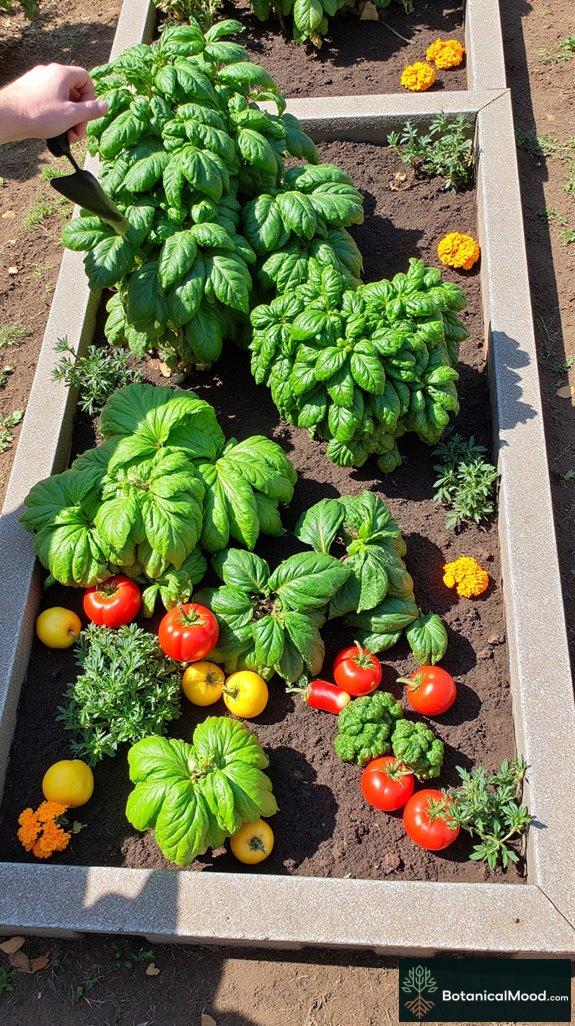
Classic Rectangle Garden Bed
A classic rectangle garden bed is a timeless choice for gardeners, typically measuring 4×8 feet. Constructed from sturdy cinder blocks, it features well-defined boundaries that promote organized plant growth.
The design allows for ideal sunlight exposure and drainage, making it perfect for vegetables, herbs, and flowers. To create this bed, simply stack cinder blocks in a rectangular formation, guaranteeing they’re level and secure. Fill the center with nutrient-rich soil to encourage healthy root development. Utilizing custom cinder block gardens can enhance both aesthetics and functionality in your gardening layout.
Selecting Plants for Your Rectangle Bed
Choosing the right plants is essential for a thriving garden bed. Consider the following plants for your classic rectangle garden bed:
- Tomatoes
- Bell peppers
- Basil
- Lettuce
- Marigolds
Designing Your Rectangle Garden Bed
To design your classic rectangle garden bed effectively:
- Plan your layout: Group plants by height to guarantee sunlight reach.
- Space wisely: Leave 12-18 inches between larger plants and 6-12 inches for smaller varieties.
- Pro tip: Utilize companion planting to deter pests and enhance growth.
Inspiring Garden Design Ideas
Consider incorporating vertical gardening elements for added space and aesthetics. Utilizing trellises, hanging pots, or even decorative stakes can create visual interest and maximize space for climbing plants like cucumbers or sweet peas.
Integrating paths or stepping stones can also enhance accessibility and garden flow.
Staggered Corner Bed Design
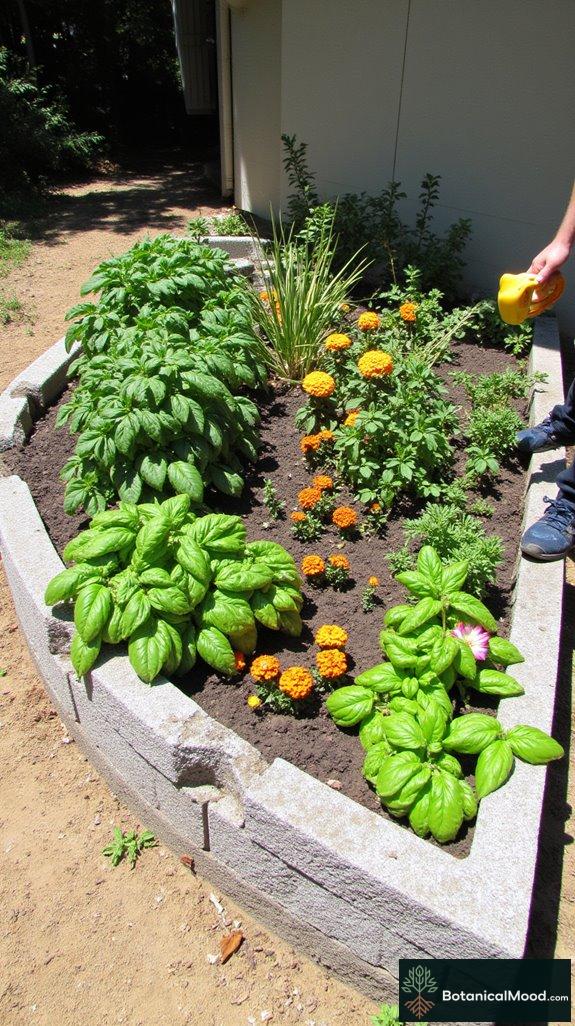
The staggered corner garden bed design features a unique zigzag arrangement that maximizes space and adds visual interest. Typically, each corner measures 2 feet, creating a rectangular shape of about 4×8 feet.
Constructed from durable cinder blocks, this raised bed design allows for excellent drainage and soil aeration. The open, staggered arrangement makes it easy to reach plants for maintenance while promoting a lush growth environment. Furthermore, the tiered approach of this design can also benefit container garden beds on patios by enhancing the overall aesthetic appeal and space utilization.
Ideal plant choices include colorful annuals, herbs, and dwarf vegetables such as cherry tomatoes, peppers, and marigolds for pest control.
Choosing Plants for Staggered Corners
To select plants for your staggered corner bed, consider the following suggestions:
- Cherry tomatoes
- Basil
- Marigolds
- Dwarf peppers
- Compact zinnias
These options thrive in sunny conditions and offer vibrant color, aroma, and functionality.
Designing Your Staggered Corner Bed
To design your staggered corner garden bed, follow these planning tips:
- Choose a sunny location with at least 6 hours of sunlight.
- Plan for staggered plant heights to create an appealing visual effect.
- Space plants adequately, approx. 12-18 inches apart.
Pro tip: Use taller plants towards the back and shorter ones at the front to guarantee all plants receive equal light and coverage.
Exploring Vertical Garden Options
Consider incorporating vertical garden designs into small spaces. Utilizing vertical planters, trellises, or wall-mounted containers can maximize your growing area while adding a dynamic look to your garden.
Mix ornamental and edible plants for a stylish and functional vertical arrangement.
U-Shaped Modular Planter
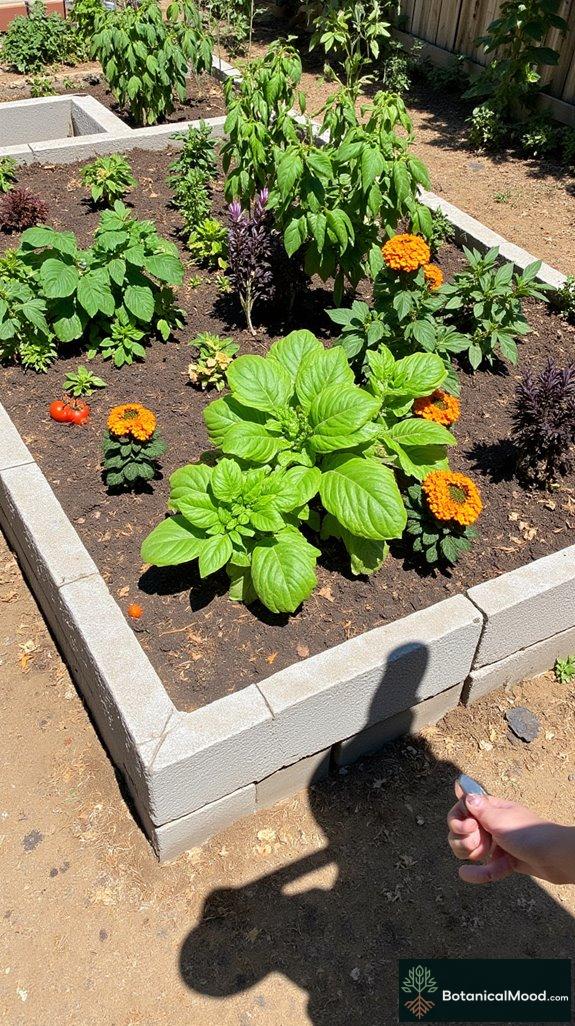
U-Shaped modular planters are an innovative and functional gardening option, ideal for small to medium-sized spaces. These raised beds typically measure 4-6 feet in width and can stretch up to 8 feet in length, creating an inviting central area for gardening.
U-shaped modular planters offer a practical and stylish solution for gardening in limited spaces.
Constructed from durable cinder blocks, this design combines efficiency and aesthetics with an open-ended layout allowing easy access from all sides. You can fill the bed with nutrient-rich soil and grow a variety of plants, including flowers, herbs, and vegetables. The elevated structure promotes drainage and reduces back strain while gardening. Additionally, this design allows for optimal sunlight exposure**** when positioned correctly, making it perfect for various plant types.
Selecting Plants for U-Shaped Planter
When selecting plants for your U-shaped planter, take into account factors like sunlight exposure and growth patterns.
Here are some recommended plants:
- Cherry Tomatoes
- Basil
- Marigold
- Lettuce
- Zucchini
Opt for companion plants to enhance growth and deter pests.
Designing Your U-Shaped Planter
To design your U-shaped modular planter, begin by sketching your layout, deciding how many sections to include.
Here are some tips to keep in mind:
- Create sections for different plant types.
- Position taller plants at the back for maximum sunlight.
- Space plants generously for air circulation.
Pro Tip: Use a triangular formation for plants to maximize exposure and create an aesthetically pleasing look.
Garden Sustainability Tips for a Modular Bed
Enhancing sustainability in your garden bed is essential for a successful ecosystem.
Think about adding composting bins nearby to recycle organic waste and enrich soil fertility. Integrating companion planting not only maximizes space but also encourages beneficial insects, promoting a thriving garden environment.
Use rain barrels for irrigation, conserving water while keeping plants hydrated.
Vertical Wall Garden Bed
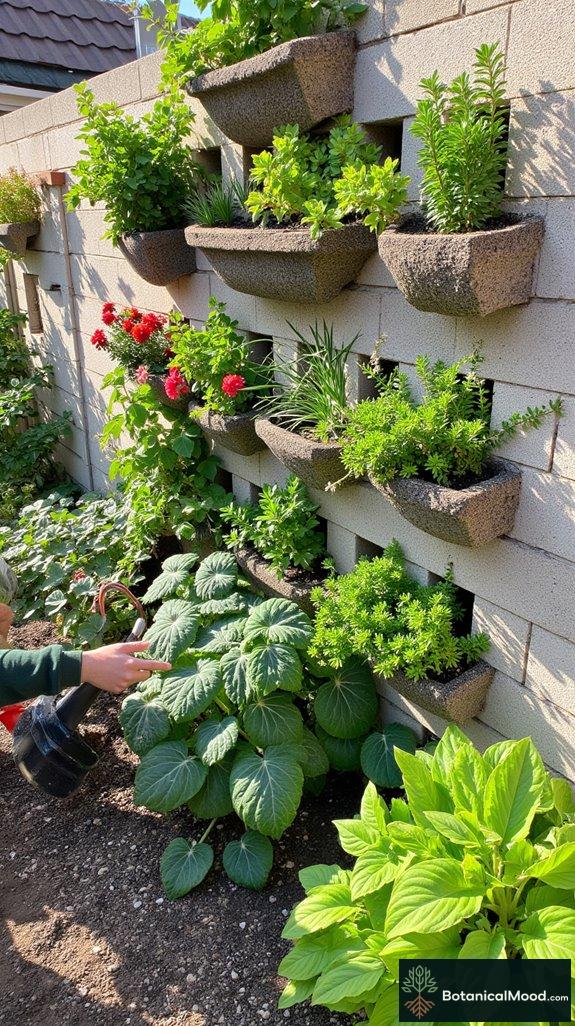
A vertical wall garden bed is an innovative gardening solution constructed from cinder blocks, creating a visually appealing and space-efficient planting area. Typically, these beds can vary in size, commonly ranging from 4 to 6 feet wide and up to 4 feet tall.
The cinder blocks are stacked in a staggered arrangement, offering several pockets for soil and plants. This type of garden bed is excellent for herbs, succulents, and flowering plants that thrive in small spaces.
Materials primarily include cinder blocks and potting soil, while optional features like garden fabric and watering systems can enhance productivity. Additionally, utilizing a modular herb garden can increase the versatility of your planting options and allow for easy rearrangement as seasons change.
Selecting Plants for Vertical Wall Garden
To guarantee a thriving vertical garden, choose plants that suit the light and watering conditions of your space. Excellent choices include:
- Herbs: Basil, Thyme, Mint
- Flowers: Pansies, Nasturtiums, Petunias
- Succulents: Aloe Vera, Sedum, Echeveria
Designing a Vertical Wall Garden Bed
When planning your vertical wall garden bed, consider the overall aesthetics, sunlight exposure, and plant compatibility. Follow these tips:
- Layering: Taller plants at the top, trailing plants at the bottom.
- Spacing: Maintain 6-12 inches between plants for air circulation.
- Irrigation: Integrate a drip irrigation system for easy watering.
Pro Tip: Use lightweight soil amendments to reduce the weight of each cinder block and guarantee durability.
Exploring Natural Garden Trends
As we admire vertical gardens, it’s essential to recognize how natural garden trends evolve. Incorporating natural resources, like native plants and organic materials, can greatly enhance eco-friendliness.
Battling climate change through sustainable gardening practices promotes biodiversity and resilience in our ecosystems.
Cinder Block Herb Spiral

A cinder block herb spiral is an innovative and space-efficient planting bed designed to create microclimates suitable for various herbs. Typically sized about 4 feet in diameter and 3 feet high, this spiral arrangement gradually rises from a central point, allowing for diverse sunlight exposure and moisture retention.
Constructed from concrete cinder blocks, the bed features a mix of soil to support plant health. When properly built, it not only adds visual appeal to any garden but also provides ideal conditions for herbs like basil, thyme, and chives. The design of a cinder block herb spiral inherently promotes drainage and airflow, ensuring that herbs thrive in their unique microenvironments.
How to Select Plants for Your Herb Spiral
When choosing herbs for your cinder block herb spiral, consider plant compatibility with varying moisture and light conditions. Here are some excellent plant options:
- Basil
- Oregano
- Rosemary
- Parsley
- Sage
- Mint
Designing Your Cinder Block Herb Spiral
To design a successful herb spiral, follow these essential planning tips:
- Start with a solid base level.
- Arrange blocks in a circular pattern or spiral shape.
- Verify the design allows for adequate drainage and airflow.
When planting, place taller herbs like rosemary at the top, shifting to shorter ones like thyme and oregano as you spiral down. Aim for approximately 6-12 inches of space between plants to guarantee healthy growth.
Exploring Cinder Blocks Beyond Gardens
Cinder blocks are versatile beyond gardening, proving useful in outdoor furniture projects, retaining walls, and even artistic installations.
Check local regulations when using them for structural purposes, and consider repurposing old blocks for eco-friendly initiatives. Their durability and affordability make them an excellent choice for various DIY tasks.
Terraced Bed for Sloped Gardens
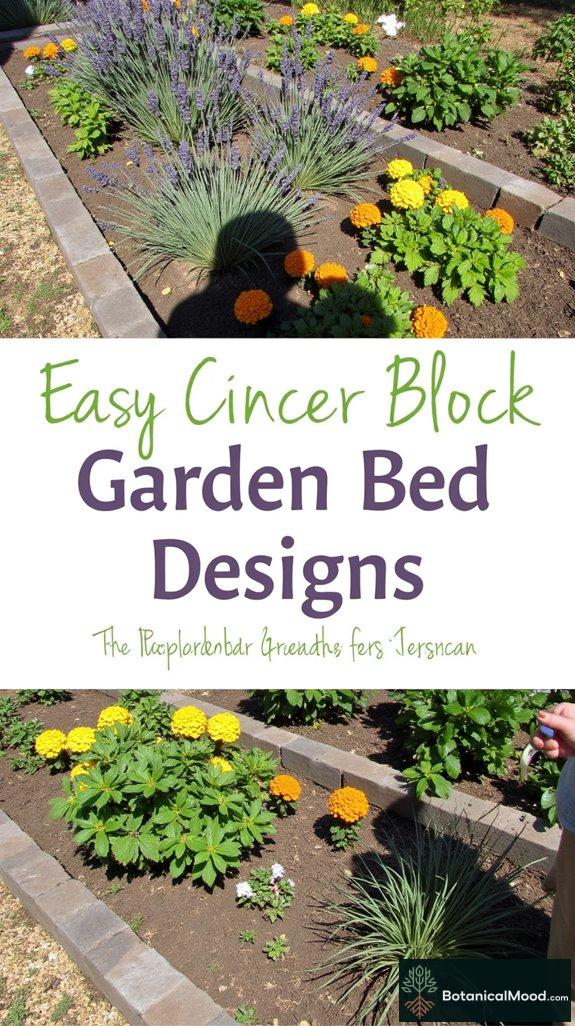
Terraced garden beds are an excellent solution for sloped areas, helping to prevent soil erosion while maximizing planting space. These beds can be constructed using durable cinder blocks, arranged in a step-like formation to create flat surfaces ideal for gardening.
Terraced garden beds effectively prevent soil erosion while enhancing planting space in sloped areas.
A typical size might range from 4 to 8 feet in length and 2 to 3 feet in depth, depending on your garden’s slope. Fill each level with nutrient-rich soil, and plant a variety of herbs, vegetables, and flowering plants to enhance biodiversity. Additionally, incorporating sustainable sculptural elements can increase visual interest and promote a cohesive design.
Materials like ground cover fabric can help retain moisture and reduce weeds.
Selecting Plants for Sloped Terraced Beds
Choose plants that thrive in well-drained soil and can handle varying sun exposure. Consider these options:
- Lavender
- Thyme
- Sedum
- Geraniums
- Marigolds
Designing Your Terraced Garden Bed
For designing your terraced bed, follow these tips:
- Assess your garden’s slope and sunlight.
- Plan the number of terraces based on available space.
- Space plants at least 12 to 18 inches apart for growth.
- Use taller plants at the back and shorter ones in the front for visual appeal.
- Maintain good water drainage to avoid plant rot.
Pro Tip: Incorporate a drip irrigation system to keep water consistently applied.
Explore Vertical Gardening Alternatives
Vertical gardening can complement your terraced beds, making use of wall space. Utilizing pots, shelves, or pockets filled with soil allows you to grow a variety of plants with minimal ground space.
Multi-Zoned Cinder Block Garden
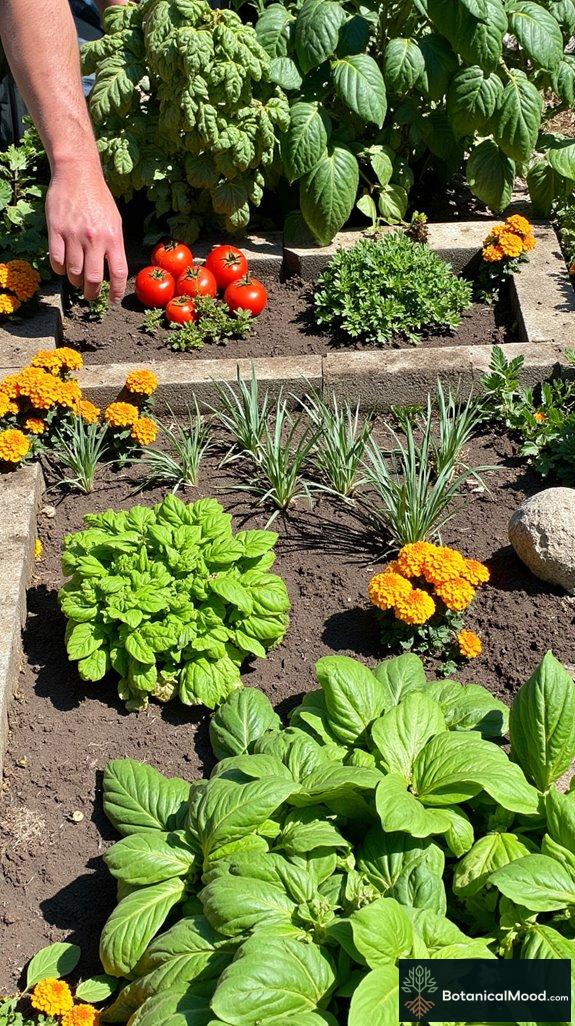
A multi-zoned cinder block garden bed is an innovative approach to gardening that maximizes space and organizes plants by their growing needs. Typically sized at 4×8 feet, this design comprises separate sections for various plant types, making it ideal for growing vegetables, herbs, and flowers.
The cinder blocks create distinct zones while providing excellent drainage and stability. To construct, stack cinder blocks in a rectangular formation, leaving open areas for planting. Fill the zones with nutrient-rich soil, guaranteeing each section meets specific plant requirements.
Selecting Plants for Multi-Zoned Beds
When selecting plants for a multi-zoned cinder block garden, consider each zone’s sunlight, moisture, and nutrient needs. Recommended plants include:
- Tomatoes
- Basil
- Lettuce
- Peppers
- Marigolds
Choose a combination of compatible species to create a visually pleasing and productive garden.
Designing Your Multi-Zoned Garden Bed
To design a successful multi-zoned cinder block garden bed, follow these tips:
- Plan zones based on plant height and spread.
- Space taller plants like tomatoes toward the back.
- Use companion plants such as basil with tomatoes for pest control.
- Rotate crops annually to maintain soil health.
When arranging plants, allow at least 12-18 inches between larger plants, while smaller ones can be spaced closer together for a fuller look.
Exploring Vertical Gardening Techniques
Vertical gardening is a fantastic way to maximize limited space. By using trellises, wall-mounted planters, or hanging pots, you can create beautiful green walls and guarantee your plants receive adequate sunlight.
Vertical gardens also enhance aesthetics and provide a serene atmosphere, making them perfect for small yards or urban settings.
Yearly Soil Amendment Routine
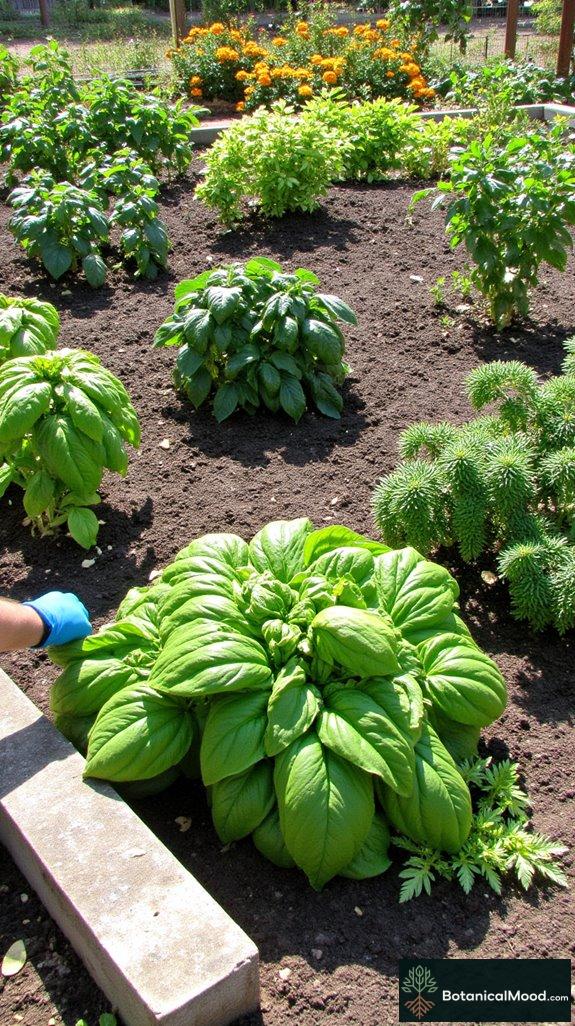
To maintain a thriving garden ecosystem, I’ve found that establishing a yearly soil amendment routine is essential for optimizing the health and productivity of my multi-zoned cinder block garden bed.
In early spring, I focus on enhancing soil health by applying rich compost from various composting methods, such as vermicomposting (using Eisenia fetida worms) and hot composting.
These techniques not only nurture beneficial microorganisms but also improve nutrient availability. Furthermore, I often incorporate organic matter like aged manure or leaf mold, ensuring my soil remains fertile and ready to support the diverse plants I love, including tomatoes (Solanum lycopersicum) and basil (Ocimum basilicum).
Summary
I’m excited about these seven cinder block garden bed designs! Each one lets me explore my creativity while growing my plants. My garden feels like a unique canvas, where I create a thriving space that showcases nature’s beauty and resilience.
I’d love to hear about your gardening experiences. What designs have you tried?
Feel free to share photos of your own garden and tell us about your design choices!
References
- https://olivegreyavenue.com/diy-raised-garden-bed/
- https://abundantminigardens.com/how-to-create-an-awesome-raised-garden-bed/
- https://scurlockfarms.com/designing-and-creating-our-dream-garden/
- https://www.youtube.com/watch?v=DNLfHO99DPE
- https://www.youtube.com/shorts/F2k1EjXQW5Y
- https://sfyl.ifas.ufl.edu/media/sfylifasufledu/orange/hort-res/docs/pdf/011-How-to-Build-a-Raised-Bed-Garden-(Concrete-Block).pdf
- https://www.covingtonnursery.com/garden-guide/how-to-create-an-easy-fast-and-economical-raised-garden-bed/