My backyard became an avian drive-thru after one desperate winter. Desperate, I tell you.
Five wreaths changed everything.
Grapevine suet base, 14 inches, packed with rendered beef suet and Ilex verticillata. Woodpeckers went feral. Downy woodpeckers specifically. Little maniacs.
Knox gelatin holds sunflower mix for finches. Six tablespoons corn syrup, science I absolutely respect. Until rain happens. Then it’s modern art.
Lard-coated pinecones work below thirty degrees. Freezing temps transform them into bird vending machines.
Dried native seed heads on wire frames. Messy. Beautiful. Zero regrets.
Rooftop pocket feeders? My landlord still doesn’t know.
Native Plant Garden Design for Backyard Bird Habitats
Three years ago, my “lawn” was basically crabgrass and shame.
Then I planted Echinacea, Rudbeckia, and panicum.
Late summer became seed-head season. Goldfinches arrived in flocks.
I stopped mowing. Neighbors side-eyed.
But now? My unkempt chaos feeds migrants.
Sustainable landscaping wins.
Biodiversity beats Bermuda grass.
Every time.
Quick Takeaways
- Make a gelatin birdseed Bundt wreath using gelatin, corn syrup, flour, and mixed seed, dried 24 hours for easy hanging.
- Build a grapevine suet wreath by packing rendered suet and native forage into a 14–16″ wreath for durable winter feeding.
- Create lard-coated pinecone fat wreaths by dipping pinecones in rendered suet and rolling in millet, sunflower hearts, and cracked corn.
- Assemble a natural foliage wreath on a grapevine base with dried conifer boughs, seed heads, cranberries, and orange slices for shelter and food.
- Use a simple jute-and-gelatin mini-wreath with seed mix for mild weather to attract finches and sparrows.
Which Wreath to Make: Temp, Birds & Time Needed
When temperatures dip below freezing and winter fat becomes essential, I choose a lard- or suet-based wreath—using 1 lb real lard or rendered suet tied to a grapevine base—because species such as downy woodpeckers (Picoides pubescens), black-capped chickadees (Poecile atricapillus), and nuthatches will rely on high-calorie fats to survive cold snaps;
conversely, when mild autumn or spring conditions prevail and I want to attract seed-eating finches and sparrows, I make a gelatin-based birdseed wreath (Proven Winners or the Native Bird Care variant) molded in a Bundt pan or cookie cutters, which yields a high-protein, non-greasy surface that suits cardinals and grosbeaks while minimizing feather fouling.
I assess seasonal preferences, time budget, materials—gelatin, corn syrup, flour, or jute and grapevine—and select durable designs for Big Bear Lake or suburban yards, balancing color palettes, native foliage, and placement to optimize visibility for target bird species.
Grapevine Suet Wreath : Durable Feeder With Native Cuttings
I start with a sturdy 14–16″ grapevine wreath as the structural spine, because its interlaced vitis (grapevine) stems give me durable anchorage for suet, native cuttings and hanging hardware. I’ll tie a divided splatter guard (from a dollar-store pan) around the center—spray-painted brown to reduce visibility—with three 50″ jute lengths, looped and braided for a secure overhead loop.
Into the crevices I pack 1 lb rendered suet or real lard (not hydrogenated substitutes), pressing native forage—American holly (Ilex opaca) sprigs, winterberry (Ilex verticillata) stems, chokecherry (Prunus virginiana) clusters, red cedar (Juniperus virginiana) sprigs and small pine cones—so the composition provides long-lasting high-energy fat, structural shelter and species-specific cues that attract downy woodpeckers (Picoides pubescens), black-capped chickadees (Poecile atricapillus) and nuthatches. These native plants are pet-safe selections that won’t harm wildlife or household animals that may come into contact with the wreath.
While the vine base, brown-painted guard and natural foliage maintain a low-contrast, woodland palette suited to Big Bear Lake’s winter edges or suburban native-plant gardens, this durable feeder offers shelter options, promotes steady bird activity, resists thaw cycles, and pairs well with Proven Winners or Wild Birds Unlimited planting palettes.
Gelatin Birdseed Bundt Wreath : High‑Protein, No‑Grease Option
Anyone seeking a high‑protein, no‑grease winter feeder will find the gelatin birdseed Bundt wreath a reliable choice, and I’ll walk you through the core concept:
I innovate with gelatin benefits by dissolving 2 packets in 1 cup warm water, adding 6 tbsp corn syrup, 1.5 cups flour and 8 cups mixed seed, then packing a sprayed Bundt pan; Proven Winners and Native Bird Care variants work.
Consider bird preferences—sparrows, finches (Fringillidae), chickadees (Poecile), and nuthatches—when choosing millet, sunflower, and safflower.
Crafting tips include drying 24 hours in a warm place, using a chopstick hole for ribbon, optimizing winter feeding efficacy.
Lard/Suet Pinecone Fat Wreath : Best for Freezing Temps
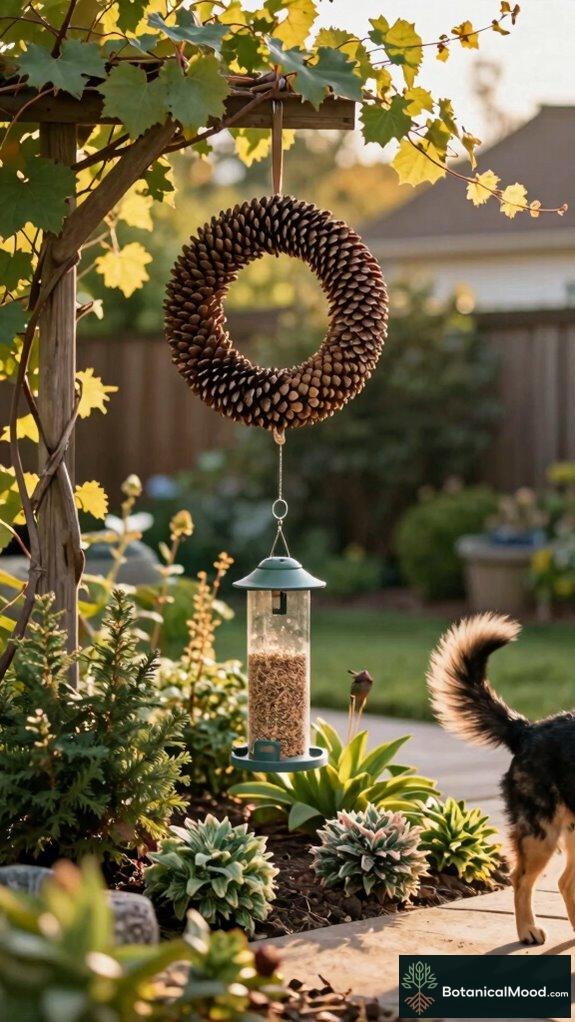
Cold-weather feeding really shines with a lard or suet pinecone wreath, so I show you how to make a dense, high-energy winter provision that birds like chickadees (Poecile spp.), nuthatches (Sitta spp.), woodpeckers (Picidae), and wintering sparrows will readily use; using 1 lb of rendered beef suet or pure leaf lard (not hydrogenated shortening), you’ll melt and temper the fat, roll large, resinous pinecones (Pinus spp.) in the warmed fat until fully coated, then press millet, sunflower hearts, and cracked corn into the tacky surface before cooling, which yields a durable wreath that holds in subfreezing conditions around 32°F and lower, resists wind-driven snow, and delivers concentrated calories for birds that need rapid fat reserves during deep cold. For extended durability, consider applying natural rose care principles like maintaining clean surfaces to prevent mold and disease in your bird feeding stations. I favor this technique for its lard benefits and practical winter feeding performance, citing field-tested attributes—dense caloric density, weather resilience, easy hanging from grapevine bases, and compatibility with native conifers—useful for innovative winter garden foraging design.
Natural Foliage Wreath : Dried Edibles, Bagel & Bark‑Butter Treats
Texture and seasonal color matter when I’m assembling a natural foliage wreath that feeds garden birds, so I start with a 14‑inch grapevine or willow base and layer dried conifer boughs—pine (Pinus spp.), spruce (Picea spp.), or cedar (Juniperus or Thuja spp.)—for structure.
Then intersperse native seed‑heads and edibles such as sunflower (Helianthus annuus) heads, millet bundles, dried cranberries and orange slices, plus millet or wheat stalks to create varied perching surfaces and visual contrast.
I bind paddle‑wire bunches of three to four plant types with 24‑gauge florist wire, tuck in oak or maple leaves for warm russet tones, and add tactile elements like pinecones and acorns for resilience. For additional sensory appeal, consider incorporating scented geranium foliage to create a multi-sensory garden experience that benefits both birds and other outdoor visitors.
Finishing with bird‑safe treats—dried bagel halves slathered in Bark Butter (or a suet alternative for subfreezing nights) secured in terra cotta pots or wired directly to the frame—so the wreath delivers layered nutrition, natural camouflage against shrub borders, and durable foraging spots for chickadees (Poecile spp.), nuthatches (Sitta spp.), and sparrows through long winter months.
When selecting dried plant materials, ensure you incorporate safe aromatic plants to complement your bird-friendly design while maintaining a garden environment suitable for all outdoor visitors.
- Select diverse dried foliage and edibles for texture.
- Use 24‑gauge wire, terra cotta pots, Bark Butter.
- Prioritize bird nutrition, resilience, native plant sources.
Rooftop Native-Plant Pockets
After wiring dried conifer boughs and sunflower heads into a 14‑inch grapevine wreath for the yard, I began applying the same layering principles to rooftop native‑plant pockets, because rooftops offer compact, high‑visibility foraging habitat and I wanted to extend shelter and seasonal food up into that microclimate.
I designed modular fabric pockets mounted on a low‑profile tray, filled with lightweight substrate, planted coastal sage (Artemisia californica), little bluestem (Schizachyrium scoparium), and native sedge (Carex spp.), paired with millet and sunflower volunteers; this rooftop gardening approach emphasizes drainage, windbreaks, thermal mass, and bird‑attracting phenology for year‑round utility.
Raised Herb Beds for Dogs
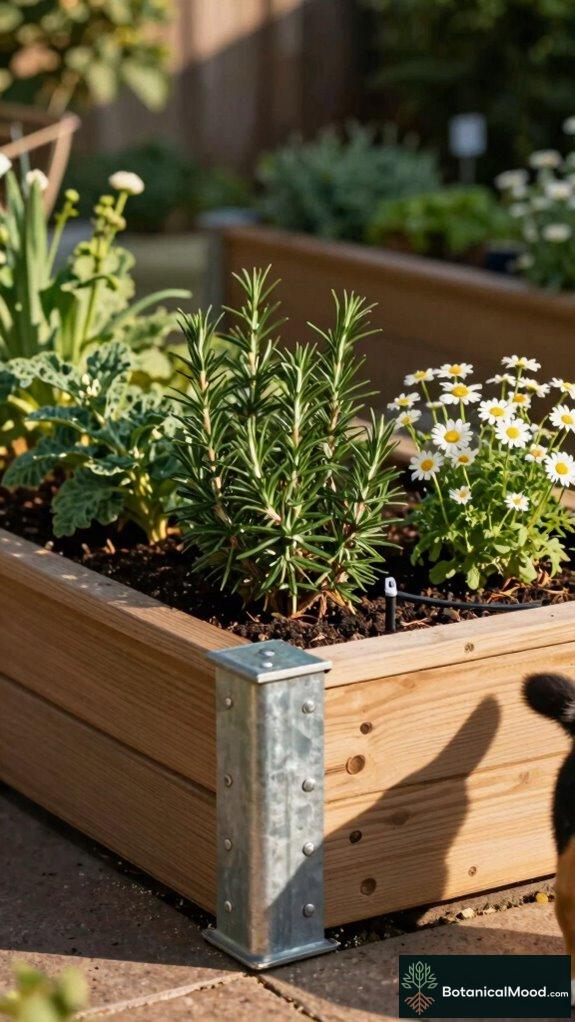
When I planned raised herb beds specifically for dogs, I prioritized scent-rich, non-toxic species, durable construction, and ergonomic height so owners and canine companions both benefit.
I built cedar frames (Western redcedar, Thuja plicata) 24″ high, filled with loam-sand mix, and selected proven dog-friendly herbs like chamomile (Matricaria chamomilla), rosemary (Salvia rosmarinus), and catnip (Nepeta cataria), balancing aroma, texture, and resilience. Selecting native plants safe for pets ensures your garden beds won’t pose accidental toxicity risks to curious dogs exploring the backyard. Before establishing herb beds, test your garden soil to eliminate potential pet pathogens that could contaminate the plants your dogs may nibble.
- Plant choice: drought-tolerant rosemary, mint (Mentha spp.) contained in pots, parsley (Petroselinum crispum).
- Construction: galvanized brackets, untreated cedar, ¾” hardware cloth.
- Maintenance: mulch, drip irrigation, seasonal pruning.
FAQ
Are These Wreaths Safe for Pets and Children to Handle?
Can they be safe with precautions? I think yes — for pet safety and child supervision I’ll avoid toxic paints, secure suet/lard access, supervise kids, store ingredients safely, and innovate with non-toxic materials and clear hanging.
How Long Do Homemade Wreaths Typically Last Outdoors?
I’d expect wreath longevity outdoors to range from weeks to a season; weather resistance depends on materials—grapevine with suet lasts longer in cold, gelatin molds degrade faster in wet/heat, so design for local conditions.
Can I Reuse or Recycle Old Wreaths or Materials?
Like a phoenix, I reuse wreath parts: I upcycle materials—grapevine bases, dried foliage, splatter guards—into new feeders, braid jute, and experiment with creative designs, saving money while inventing sturdier, more bird‑friendly decorations.
What Birds Are Most Attracted to Each Wreath Type?
Grapevine suet wreaths draw woodpeckers and nuthatches; gelatin seed wreaths tempt finches and sparrows; lard/suet rings attract grackles and jays. I note bird preferences and seasonal variations for experimental, adaptive designs.
How Do I Clean or Store Wreaths Between Seasons?
I treat wreath maintenance like tuning an instrument: I shake off debris, spot-clean with mild soap, air-dry fully, wrap in breathable paper, label boxes, and store in cool seasonal storage to preserve shape and innovate next season’s designs.
References
- http://rebeccasbirdgardensblog.blogspot.com/2012/12/diy-winter-wreath-bird-feeder.html
- https://chirpforbirds.com/how-to/how-to-make-a-bird-friendly-holiday-wreath/
- https://www.beebetternaturally.com/blog/2019/11/27/how-to-make-a-birdseed-wreath-for-the-birds
- https://www.youtube.com/watch?v=k8U4E8DJGAQ
- https://shiftingroots.com/handmade-bird-feeder-wreaths/
- https://www.wbu.com/decorate-wreath-birds/
- https://www.nativebirdcare.org/blog/bird-safe-wreaths-balls-ornaments
- https://northerngardener.org/wreath-for-the-birds/