Let’s be honest, fake grass plus dog pee equals a nose nightmare I know too well.
After my golden retriever turned my backyard into a biohazard zone, I panicked. Hose first. Enzyme cleaner next (Wysiwash actually works). Old stains? Vinegar spray, baking soda scrub, pray. I now dump zeolite infill yearly. Sanity restored.
—
Artificial Turf Landscaping Ideas for Pet-Friendly Yards
My neighbor laughed when I installed turf. “Looks like a putting green,” he said. Then his lawn died. Mine stayed green. I added curved gravel borders, native succulents, and shade sails. Drainage mattered. So did creating separate “dog zones” versus human lounging areas. Design saves noses. And friendships.
Quick Takeaways
- Rinse urine spots promptly with a garden hose to dilute ammonia and prevent staining.
- Spray a 1:1 white vinegar and water solution, wait 10–15 minutes, then rinse thoroughly.
- Sprinkle baking soda on damp turf, agitate with a stiff broom, let sit, then rinse to absorb odors.
- Top infill annually with zeolite or activated charcoal (1–3 lbs/ft²) to trap ammonia naturally.
- For persistent smells, apply an enzyme-based cleaner in the evening to biologically break down odor-causing proteins.
Quick Fix: Neutralize Fresh Pet Urine on Artificial Turf
Act quickly: when fresh pet urine hits artificial turf I reach for a garden hose and my preferred enzyme cleaner, because prompt action prevents ammonia buildup and staining while preserving infill performance and blade resilience.
I demonstrate quick solutions that maintain turf freshness, using enzyme-based products like Simple Green Outdoor Odor Eliminator or Wysiwash, applying evenly, keeping surfaces wet, and rinsing thoroughly.
I recommend zeolite or activated charcoal infill topping for odor control, weekly brushing with a stiff broom to lift fibres (Poa pratensis analogues in design thinking), and selecting pet-specific turf systems from US Turf San Diego or DFW Turf Solutions for long-term odor management. The best dog urine neutralizers work by breaking down the compounds that create persistent odors in artificial grass systems.
Deep-Clean Turf With Vinegar, Baking Soda & Water (Step-by-Step)
Having shown how I handle fresh pet urine with a hose and enzyme cleaners like Simple Green Outdoor Odor Eliminator or Wysiwash, I now explain a thorough, do-it-yourself deep clean using white vinegar, baking soda, and water that’s safe for most synthetic turf systems; this method works well for older, set-in ammonia smells and for homeowners who prefer non-chemical, readily available agents.
It complements infill options such as zeolite or activated charcoal by removing surface salts and organic residues before topping up.
I rinse turf first, spray a 1:1 vinegar application, wait 10–15 minutes, then sprinkle baking soda, agitate with a stiff broom, rinse thoroughly and air dry, repeating for stubborn patches, preserving fibers and drainage.
When to Use Enzyme Cleaners vs DIY: A Quick Decision Guide
When should you reach for an enzyme cleaner like Simple Green Outdoor Odor Eliminator or Wysiwash, and when is a vinegar-plus-baking-soda deep clean enough?
I choose enzyme solutions for persistent ammonia smells, heavy traffic zones, or infill-rich systems where enzyme effectiveness outperforms DIY treatments; products like Wysiwash (hose-attachable) and Simple Green use microbes, enzymes, contact time, and scrubbing to break down proteins. Just as winter salt and chemical buildup can damage natural surfaces, synthetic turf requires targeted odor management to maintain longevity. For routine maintenance, I follow weekly cleaning schedules with rinse-first, vinegar (1:1) and baking soda spot treatment, then brush turf fibers to restore pile height; for innovation-minded installers (e.g., US Turf San Diego), enzymes are a targeted upgrade. Garden gypsums offer an additional natural option for neutralizing persistent odors in artificial turf systems over time.
Natural Infills & Installation Tips to Cut Pet Odors (Zeolite, Charcoal)
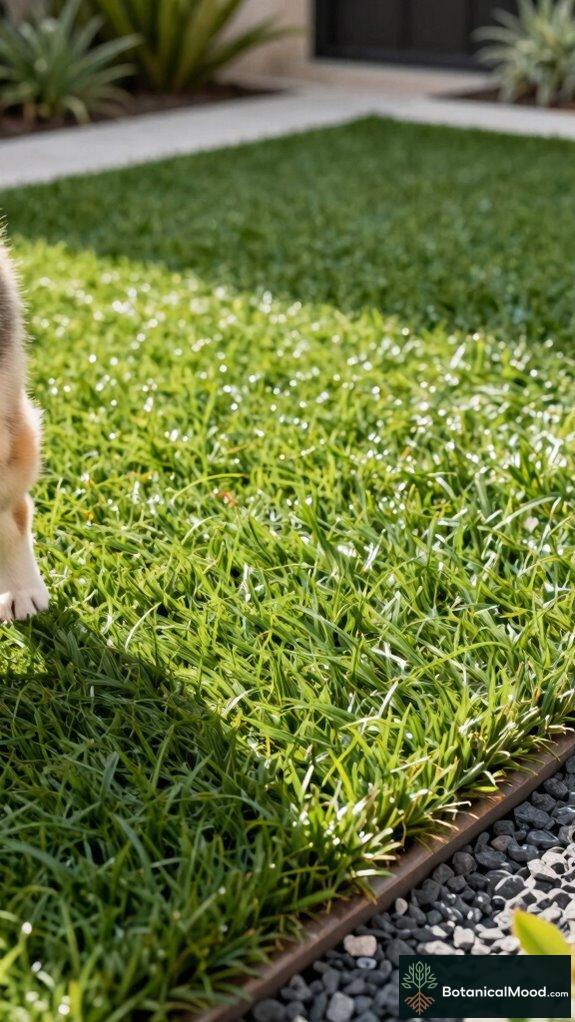
Although I don’t recommend cutting corners, choosing the right natural infill—zeolite granules or activated charcoal, for example—can dramatically reduce pet odors in artificial turf by adsorbing ammonia and volatile organic compounds at the molecular level.
So I advise installers and homeowners to treat infill selection as a design decision as much as a maintenance one.
I specify zeolite benefits like ammonium ion exchange, porosity, and longevity, recommending 1–3 lbs/ft² top-up annually for busy yards.
Activated charcoal effectiveness suits high-traffic zones as an odor sink.
Pair with graded drainage layers, permeable sub-base, and UV-stable turf fibers (polyethylene) for ideal performance.
Weekly Maintenance and Troubleshooting Persistent Pet Odors
Anyone who manages a pet-friendly lawn knows weekly maintenance is the keystone that keeps artificial turf performing and smelling acceptable.
So I’ll walk you through a practical routine that blends simple cleaning steps with targeted troubleshooting using products like enzyme-based cleaners (Simple Green, Wysiwash), natural infills (zeolite, activated charcoal), and mechanical care tools.
I inspect for hotspots using simple odor detection, note areas needing zeolite top-up (1–3 lbs/ft² yearly), remove solids, rinse, apply enzymes in the evening, brush with a stiff broom, and monitor cleaning frequency weekly.
For persistent ammonia, I rotate Wysiwash or TurFresh and consider sub-base remediation. Natural infills like zeolite work by absorbing moisture and neutralizing odors at the source, making them essential for long-term odor control in pet artificial turf systems. Incorporating diatomaceous earth into your maintenance routine can provide an additional natural layer of pest and odor control by targeting microorganisms that contribute to unpleasant smells.
Rooftop Herb Planters
I select UV-stable polypropylene troughs or galvanised steel boxes for longevity, match lightweight expanded clay or coconut coir mixes to drainage needs, and favor thyme (Thymus vulgaris), rosemary (Rosmarinus officinalis), and basil (Ocimum basilicum) for sun exposure; this planter design maximizes herb benefits like aroma, pest deterrence, and pollinator attraction. Using pet food scoops designed with pest-resistant features can help maintain the cleanliness of outdoor planting areas adjacent to pet spaces.
I specify modular layouts, neutral greys or terracotta tones, and integrate drip irrigation and root barriers for weight control.
Incorporating a functional water fountain into the rooftop herb planter design enhances the microclimatic conditions while providing hydration benefits for both herbs and visiting pollinators.
Raised Cedar Play Area
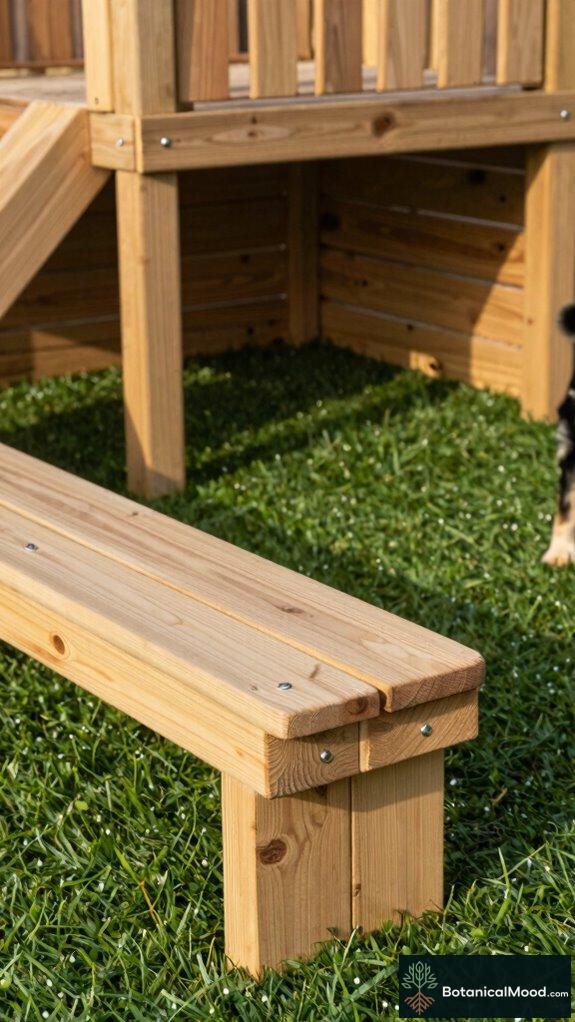
For a raised cedar play area, I’ll start by specifying Western red cedar (Thuja plicata) boards, 2x8s for the perimeter walls and 4×4 posts at 48-inch centres, because cedar’s natural rot resistance and warm honey tones suit both safety and long-term aesthetics.
I pair cedar wood with pressure‑treated base joists, UV‑stable artificial turf, and a Zeolite or activated charcoal infill to mitigate pet odors while maintaining drainage.
I design play structures that integrate shallow drainage channels, enzyme‑cleaner access points, and smooth rounded edges.
Choosing natural stain tones, stainless fasteners, and ergonomic dimensions for children, pets, and maintenance. During installation, proper ice melt spreader application around the perimeter helps ensure even distribution of pet-safe products without creating concentrated zones of chemical exposure.
To further protect the play area during winter months, incorporating pet-safe ice melts around the perimeter ensures that de-icing products won’t harm children or pets who may come into contact with treated surfaces.
FAQ
Can Artificial Turf Harbor Bacteria Harmful to Humans or Pets?
Yes — I believe artificial turf can harbor bacteria growth if neglected; I recommend proactive turf maintenance, innovative enzyme cleaners and regular rinsing to break down microbes and keep pets and people safe.
Will Vinegar Damage Turf Backing or Adhesives Over Time?
Vinegar at household strength (5–8% vinegar concentration) generally won’t harm turf backing or adhesives if rinsed promptly; I recommend careful turf maintenance, testing a small area first and avoiding prolonged soaking to protect bonds.
How Long Until Pets Stop Re-Marking Treated Spots?
Pets usually stop re-marking treated spots within days to weeks; I monitor behavioral patterns, adjust odor prevention routines, and innovate with enzyme treatments and rinses—if marking persists after two weeks, I change tactics and consult a trainer.
Can Sunlight Alone Eliminate Urine Odors Effectively?
No — I don’t think sunlight effectiveness alone removes urine odors reliably; sunlight helps reduce odor retention by drying and breaking some compounds, but innovative enzyme or infill solutions are usually needed to eliminate persistent smells.
Are Enzyme Cleaners Safe Around Edible Rooftop Herbs?
Yes — I’m careful: enzyme safety is generally high, but I rinse treated spots well and choose food-safe products so herb growth isn’t affected; I also test a small area and monitor plants for any unexpected reactions.
References
- https://usturfsandiego.com/news/how-to-remove-odors-from-artificial-grass/
- https://festivalturf.com/blog/artificial-grass-odor-removal/
- https://www.wysiwash.com/turf
- https://turfresh.com/blog/pet-waste-odor-removal/
- https://simplegreen.com/cleaning-tips/outdoors/artificial-grass-urine-odor/
- https://www.youtube.com/watch?v=eWXKAUrcHPc