My dog Baxter once ate a bee. Swollen snout. $400 vet bill. Never again.
Here’s my chaos-tested system.
Fences work. Fourteen-gauge welded wire. Powder-coated, because rust is betrayal. Double line breaks everywhere. I learned that spacing matters. Bees get dramatic about territory.
Plants help. Marigolds smell weird. Bees agree. Foxglove looks pretty. Toxic though. Maybe skip that one.
Morning walks. Evening play. When bees are basically still asleep. Baxter hates this schedule. I don’t care. He still tries to eat flowers.
Positive reinforcement? Mostly me yelling “NO.” Sometimes treats. Results vary.
Container gardens saved my sanity. Modular boxes. Moveable. Strategic. The bees own one corner. We own the rest.
It’s imperfect. Bees do what they want. But coexisting beats another emergency visit. Barely.
Effective Garden Design for Pet-and-Bee Cohabitation
Last spring, I redesigned everything. Failed twice. First layout: disaster. Second: functional.
Zoning saved us. Water features away from bee highways. Raised beds with 18-inch rabbit guard fencing. Unexpected benefit? The height stopped Baxter’s tunneling phase.
Native hedgerows became buffer zones. California lilac. Manzanita. Both pollinator magnets and visual barriers. I stole this from a Monterey nursery owner who kept goats and hives simultaneously. Respect.
Path width matters. Four feet minimum. Flight response space for conflict moments. Bark mulch, not gravel. Softer landing for frantic retreats. Both species experience these.
Sunken beds changed the game. Cooler. Less bee traffic. My tomatoes thrived. Baxter ignored them. Design as behavioral intervention. Who knew?
Quick Takeaways
- Install physical barriers like mesh fencing and elevated garden beds to prevent pets from accessing bee-active areas.
- Schedule pet outdoor activities during early morning or late evening when bees are less active.
- Use bee-repellent plants and dense planting to create botanical shields around pet zones.
- Train pets to recognize and avoid flowering plants and hive sites through positive reinforcement.
- Incorporate modular, bee-safe fencing and container systems to separate pet spaces from pollinator hotspots.
How Do Bees and Pets Typically Interact in the Garden?
Have you ever wondered how bees (Apis mellifera and native pollinators such as bumblebees Bombus spp.) and pets like dogs, cats, and small mammals interact within a typical garden setting?
Usually, bees are intensely focused on flora, probing vibrant, nectar-rich blossoms like lavender (Lavandula angustifolia) or bee balm (Monarda spp.), while pets may be curious or startled by their buzzing activity.
Bees focus on nectar-rich flowers, while pets often watch or get startled by their buzzing activity.
Dogs and cats might observe from a distance or, if untrained, chase or inadvertently disturb this natural pollination process. Providing folding dog ramps can help senior pets navigate garden spaces more safely and reduce unnecessary interactions with bee activity zones.
The interaction remains largely non-aggressive but can escalate if pets provoke bees, risking bites or stings that require swift intervention.
Gardeners can use thorny plant barriers to naturally separate these spaces and protect both pollinators and pets from unwanted encounters.
How to Recognize When Bees Are Near Your Pets
Recognizing when bees (Apis mellifera) are near your pets requires attentive observation of their behaviors and environmental cues, as bees tend to be discreet yet alert their presence through specific signs.
In garden settings like wildflower patches or apiaries, watch for sudden drone activity around flowering plants such as lavender, thyme, or borage—species known for attracting pollinators.
Notable indicators include fluctuating flight patterns, buzz sounds, and hurried movements near a specific area, signaling the presence of a hive or foraging swarm.
Being vigilant, especially during peak blooming periods, helps guarantee quick detection of bees’ proximity, enabling timely protective action for your pets.
What Are the Signs Your Pet Is at Risk of Bee Encounters?
When your pet ventures near areas rich in blooming plants, such as Lantana camara (lantanas), or frequents garden borders densely populated with Salvia spp. (sage), subtle signs may indicate an increased risk of bee encounters. Watch for paws or nose lingering too long near floral clusters, restless movement or sudden startle responses when approaching bright, nectar-rich blooms. In these environments, vigilant observation is essential. Be mindful of your pet’s behavior—agitation, focused interest in specific plant patches, or persistent sniffing can signal heightened exposure. Recognizing these signs empowers you to intervene swiftly, controlling access to high-risk zones, and safeguarding your pet against potential bee stings.
| Natural Indicators of Risk | Behavior to Watch For |
|---|---|
| Excessive sniffing near flowering bushes | Pawing or nosing at flora |
| Rapid, tense movements in garden borders | Sudden stopping or hesitation |
| Persistent curiosity towards bee-attracting plants | Restlessness or agitation after approaching flowers |
| Frequent licking or pawing at body parts | Show of discomfort or agitation |
| Increased alertness when near flowering zones | Focused, unwavering attention |
How to Create Physical Barriers to Protect Pets From Bees
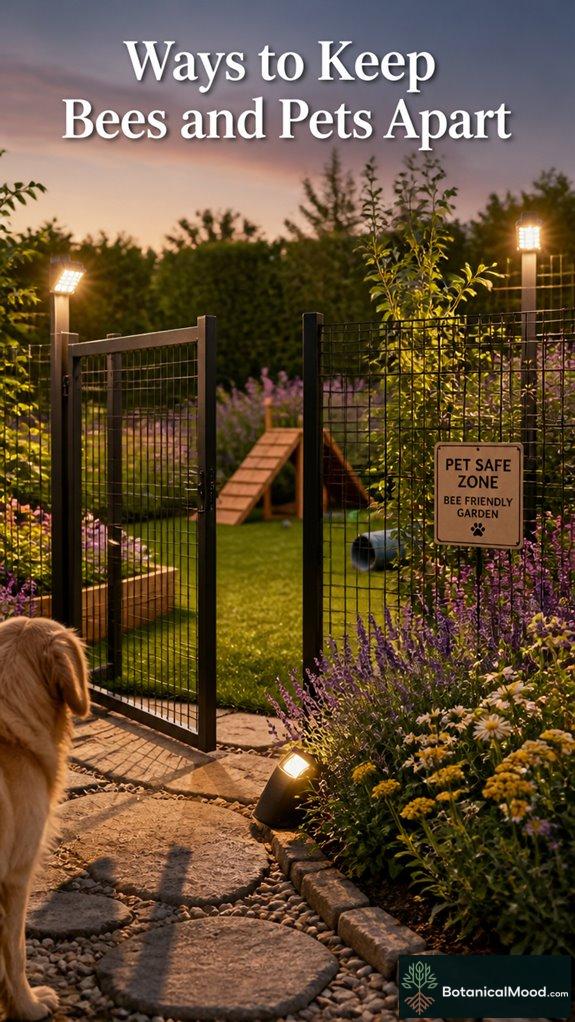
Using sturdy fencing materials such as welded wire mesh, garden netting, or durable plastic enclosures, you can create protected zones where pets can safely play away from flowering plants with high bee activity.
Elevated garden beds, planted with bee-resistant species, also serve as visual cues. Strategically positioning these barriers around common pet areas, such as patios or play zones, effectively limits bee access and minimizes dangerous interactions. Installing climbing structures in these protected zones can help keep energetic pets mentally stimulated and physically active while remaining safe from bee encounters.
For added visibility and safety, consider incorporating LED flood lights in these barrier zones to ensure pets can navigate protected areas safely during dawn and dusk hours when bee activity may be less predictable.
Choose Garden Plants That Keep Heavy Bee Activity Away
To minimize heavy bee activity in your garden, selecting plants that naturally repel or don’t attract pollinators can be highly effective. Certain species with less fragrant nectar or unappealing floral structures discourage bees.
Choose plants with less fragrant nectar to naturally reduce bee activity and keep your garden peaceful.
These choices include:
- Lavender alternatives like Russian sage (Perovskia atriplicifolia)
- Ornamental grasses such as Feather Reed Grass (Calamagrostis acutiflora)
- Aromatic herbs like rosemary (Rosmarinus officinalis)
- Shrubs with less nectar, e.g., barberry (Berberis thunbergii)
- Native plants with minimal pollinator attraction, such as junipers (Juniperus spp.)
These selections help direct bee activity away from pet zones while maintaining garden sophistication and ecological balance. For pet-friendly outdoor spaces, consider incorporating natural grass alternatives that provide durable surfaces for your pets to enjoy safely. When planning your garden layout, it’s important to verify that all plant selections are non-toxic to pets to ensure your beloved companions remain safe while enjoying outdoor spaces.
When and How to Schedule Pet Activities to Minimize Bee Encounters
Scheduling pet activities during specific times of the day can substantially reduce the likelihood of bee encounters, especially considering bees are most active during warm, sunlit hours from late morning to early afternoon (10 a.m. to 2 p.m.).
I recommend scheduling outdoor play and training sessions early in the morning or late in the evening when bees retreat to hives (Apis mellifera) and are less aggressive. Avoid peak activity times at desert gardens featuring hummingbird sage (Salvia spathacea) or lavender (Lavandula angustifolia). For additional protection, consider using ultrasonic pest repellers designed to deter insects during times when you cannot avoid peak bee activity hours.
Using shade structures, like pergolas or garden umbrellas, can further mitigate risks by limiting unnecessary pet movement during high bee activity periods. Well-designed garden edges can also help contain pets within safe zones away from flowering plants that attract bees.
Natural Ways to Repel Bees and Keep Your Pets Safe
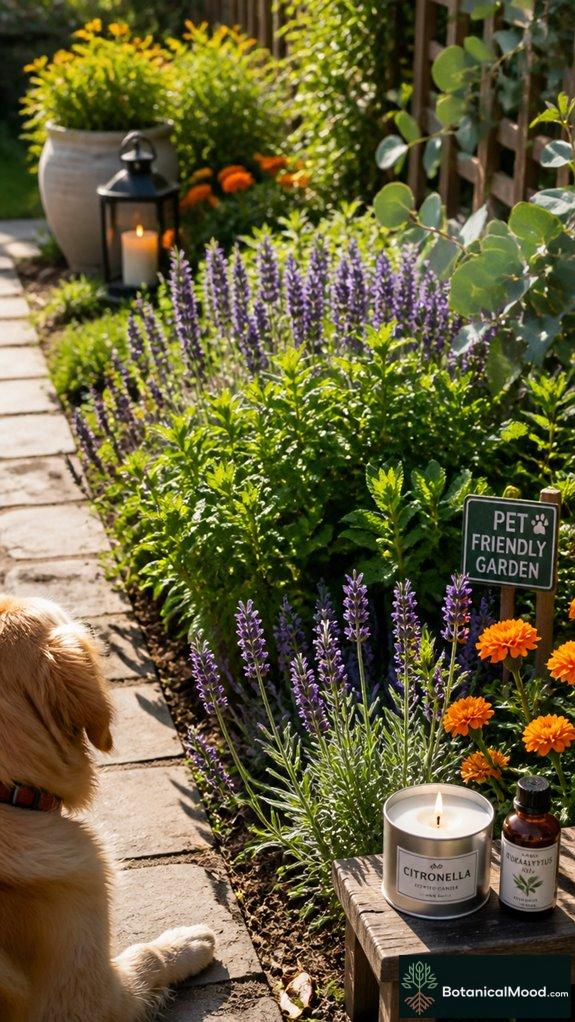
Certain plants and aromatic substances can serve as natural bee repellents, providing an eco-friendly way to safeguard pets without relying on chemical deterrents.
Lavender (Lavandula angustifolia), cedarwood (Cedrus spp.), and mint (Mentha spp.) emit scents that bees find unpleasant, creating a protective barrier around pet areas.
Eucalyptus (Eucalyptus globulus) oil, citronella (Cymbopogon nardus), and citronella candles further enhance this natural defense, when strategically placed along garden borders or outdoor seating zones.
These substances, combined with dense planting of Foxglove (Digitalis purpurea) or Marigolds (Tagetes spp.), form a formidable, botanical shield that discourages bees and guarantees pet safety in lush, thriving environments.
Training Your Pets to Avoid Buzzing Bees and Active Areas
Training pets to steer clear of buzzing bees and active areas is an essential component of integrated garden safety, especially in environments where the presence of native pollinators like Apis mellifera (honeybees) and Bombus spp. (bumblebees) is frequent.
I recommend consistent, positive reinforcement techniques—using clicker training or treats—to teach dogs and cats to recognize and avoid active flower beds or hive sites, particularly during peak activity months from late spring to early fall.
Establish clear boundaries around known pollinator zones, utilizing visual cues like barriers or scent deterrents, ensuring pets develop instinctive caution around buzzing insects, consequently safeguarding their health and maintaining ecological harmony.
Bee-Proof Garden Fencing
Implementing bee-proof garden fencing involves selecting structures that combine functionality with durability, guaranteeing that pollinators are contained within their designated zones while providing a secure environment for both plants and pets. High-tensile welded wire fencing (galvanized or powder-coated), such as a 14-gauge material, offers strength and corrosion resistance.
Implementing durable, bee-safe fencing ensures pollinator containment and pet safety with robust, weather-resistant materials.
Incorporate smooth-edged panels to prevent injurious contact, and consider electric fencing for added security. Assure proper gate design with secure latches. Use non-toxic, bee-safe paints like eco-friendly alkyds to enhance longevity.
Strategically position fencing to maximize pollination zones and pet containment, while maintaining an aesthetic flow that integrates seamlessly into diverse garden ecosystems.
- Galvanized welded wire panels (e.g., 14-gauge), resistant to rust and durable under various weather conditions.
- Smooth-edged fencing to prevent harm to both pets and pollinators.
- Electric fences with low-voltage pulse for a discreet, formidable barrier.
- Eco-friendly, bee-safe paints for weatherproofing, such as Milk Paint or Limewash.
- Strategic placement around key garden areas, optimizing pollination and safety.
Modular Container Planting Systems
Modular container planting systems offer a versatile and efficient approach to maximizing small garden spaces, patios, or urban rooftops by combining adaptability with aesthetic appeal. These systems, like the PolygonalAutoGarden or Gardenators modular inserts, enable precise positioning of herbaceous perennials (e.g., Salvia officinalis) and native plants, enhancing biodiversity and pest control.
Crafted from durable materials such as high-density polyethylene or recycled composites, they resist weathering while allowing customizable configurations. With integrated drainage and access features, these systems streamline maintenance, reduce soil compaction, and strictly control bee activity around specific zones.
This ensures safe separation for pets without sacrificing garden productivity or visual harmony.
Choosing Non-Toxic Plants
- Focus on plants with low alkaloid and irritant concentration, verified via sources like the Toxic Plants Database.
- Implement mulch layers made of non-toxic organic materials to prevent accidental ingestion.
- Use raised beds or container systems to control plant exposure and minimize pet access.
- Prioritize plants with documented safety profiles, avoiding common toxic varieties like *Nerium oleander*.
- Physical barriers such as garden fencing or edging can effectively prevent dogs from trampling or digging in flower beds where bees may be foraging.
- Additionally, consider using reflective pet collars to increase visibility and help pets avoid bee-populated areas during peak activity times.
FAQ
Are There Specific Breeds of Pets More at Risk From Bee Stings?
Yes, small, curious pets like cats and small dog breeds are more at risk because they tend to approach bees. I recommend supervising your pets outdoors and teaching them to avoid bees for their safety and yours.
How Can I Safely Remove a Bee Wasp Nest Near Pets?
Think of removing a bee or wasp nest as dismantling a ticking time bomb. I wear protective gear, call professionals, and keep pets indoors, ensuring safety and control when handling dangerous situations swiftly and confidently.
What Should I Do Immediately if My Pet Is Stung by a Bee?
If your pet is stung, act fast by removing the stinger with tweezers, applying a cold compress to reduce swelling, and watching for signs of allergic reactions. Seek veterinary care immediately if symptoms worsen or persist.
Are Certain Times of Day Safer for Pet Outdoor Activities?
Early mornings and late evenings are safer for pet outdoor activities since bees are less active then. I recommend avoiding peak daylight hours when bees forage vigorously, reducing the risk for your pets while they enjoy outdoor adventures.
Can Pet Training Prevent Bees From Attacking or Stinging?
Pet training alone can’t prevent bee attacks, but I emphasize teaching my pets calm behavior around insects and avoiding attracting bees, so they stay safe and don’t provoke stings. Proper training complements protective measures effectively.
Summary
Considering that bee encounters in gardens can lead to allergic reactions or distress for pets, implementing effective physical barriers and choosing non-attractive flora are essential strategies. Remarkably, studies show that planting certain aromatic herbs (like lavender, *Lavandula angustifolia*) can reduce bee activity around designated pet areas by up to 50%. By thoughtfully integrating bee-proof fencing, modular container plant systems, and pet training, gardeners not only safeguard their animals but also foster a harmonious coexistence within vibrant outdoor spaces.