I’ve watched squirrels outsmart me for years. Finally, I caved.
The Yankee Flipper spins them right off. It’s deeply satisfying.
Metal mesh cages from Aspects keep claws out. Brome’s weight sensors actually work.
Native plants like *Echinacea purpurea*? Game-changer for cover.
My cat now wears a bell. She hates me. Birds live. Worth it.
Best Garden Design for Bird Safety: Lessons From My Failed Butterfly Garden
Last spring, I planted a “pollinator paradise.” Total disaster.
Monarchs came. So did hawks. Open meadows turned into killing fields.
Now I cluster shrubs at edges. *Viburnum dentatum* blocks sightlines. Layered canopy gives escape routes.
Water features sit near dense cover, not middle of lawns.
Birds need edges, not amphitheaters. My redesigned garden has fewer “wow” photos. More survivors.
Quick Takeaways
- Use predator-resistant bird feeders with tamper-proof and weight-sensitive mechanisms to prevent attacks from cats and larger predators.
- Install elevated, predator-proof nesting sites and feeding stations to shield birds from ground-based threats.
- Incorporate native, seed-producing plants and dense foliage to create safe refuge and attract diverse bird species.
- Employ natural deterrents like thorny plants and reflective garden features to discourage predators and protect birds.
- Provide safe, toxin-free nesting materials and maintain clean feeding areas to support healthy, resilient bird populations.
Why Do Bird-Friendly Gardens Need Special Products?
While creating a garden that attracts and sustains native bird populations, such as the European starling (Sturnus vulgaris) or the North American Carolina chickadee (Poecile carolinensis), requires thoughtful planning, it also calls for the use of specialized products designed specifically for bird safety and wellbeing.
These include robust bird feeders with tamper-proof, predator-resistant features like metal cages and weighted bases.
Choose predator-resistant bird feeders with tamper-proof cages and weighted bases for a safer, more inviting habitat.
Additionally, toxin-free nesting materials are important to prevent accidental poisoning.
Adding non-reflective, shatterproof water sources ensures hydration without attracting predators, reinforcing a secure habitat. Natural fly repellents can also help maintain a clean environment around bird areas by reducing pest insects that might compete with or stress native birds.
Precisely selected plants, with dense foliage and native seed production, further bolster the garden’s function as an unassailable refuge.
Installing outdoor stair tread mats can also prevent birds from accidentally accessing dangerous garden areas where they might encounter hazards or become trapped.
How Do Predators Threaten Birds, and Why Are Special Products Necessary?
Predators pose a persistent and multifaceted threat to garden birds, employing strategies—from stealthy ambushes by cats (Felis catus) and raptors like Cooper’s hawks (Accipiter cooperii) to threats from invasive black rat snakes (Elaphe obsoleta)—that can decimate nests and dissuade safe foraging. These predators exploit vulnerabilities in feeding stations, nesting areas, and habitat margins. Maintaining clean water sources with pond pressure filters also reduces breeding grounds for mosquitoes and parasites that weaken bird populations. Special protective products, such as predator-proof bird feeders, secure enclosures, and robust barriers, are essential to counteract these dangers. Implementing these tools transforms your garden into a resilient sanctuary, empowering birds to thrive amidst lurking threats while maintaining ecological balance and fostering biodiversity.
What Are the Best Bird Feeders to Keep Cats Away?
Choosing the right bird feeders can markedly reduce the likelihood of cats (Felis catus) and other ground predators successfully preying on songbirds.
Heavy-duty, squirrel-proof designs, such as the Droll Yankees Yankee Flipper or the Brome Squirrel Bachter, incorporate weight-sensitive mechanisms that seal access when a cat’s paw attempts to reach the feed.
Elevated, dome-topped feeders with transparent, weather-resistant materials positioned at strategic heights—typically above three meters—limit ground access while maintaining visibility for vigilant birds.
Properly spaced perches and predator-proof fencing further enhance safety, creating a secure refuge that discourages feline predation and bolsters bird populations. Installing outdoor pet doors with proper insulation can also help protect birds by preventing cats from accessing vulnerable outdoor spaces during winter months. Complementing these feeders with thorny plants around garden perimeters adds an additional natural deterrent that discourages cats from approaching nesting and feeding areas.
Which Bird Foods Are Safe and Nutritious?
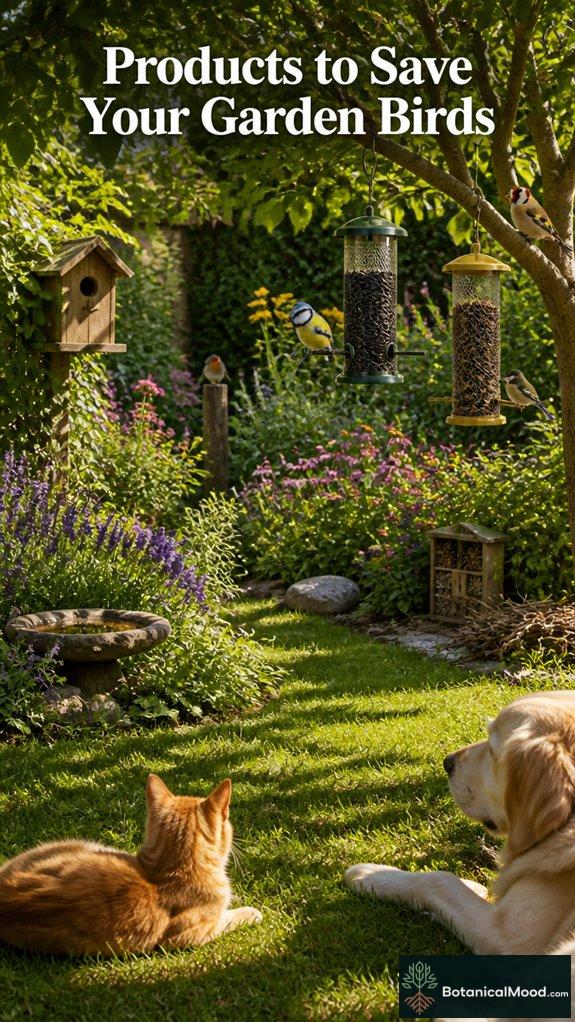
Selecting bird foods that are both safe and nutritious is essential for supporting the health and longevity of garden songbirds (Passeriformes) and other avian visitors. High-quality seeds like black oil sunflower (Helianthus annuus) provide ideal energy and essential fatty acids, attracting species such as chickadees (Poecile spp.) and nuthatches (Sitta spp.).
Safflower seeds, known for their resistance to pests, safely nourish cardinals (Cardinalis spp.) and sparrows (Passeridae). Avoid fillers like milo or filler-laden mixes, which lack nutritional value.
Peanuts (Arachis hypogaea), when unsalted and fresh, offer crucial protein.
Suet balls crafted with natural ingredients bolster winter resilience for more delicate species. Planting natural wildlife corridors alongside feeding stations creates connected pathways that encourage birds to visit and nest throughout your garden.
Creating dedicated bird-friendly areas in your garden works best when paired with natural grass alternatives that provide safe foraging grounds without harming avian visitors.
How to Cover and Protect Bird Feeders From Predators
When trying to safeguard our cherished feathered visitors from predatory threats, installing protective features around bird feeders becomes an essential step that requires careful planning and informed choices.
Protecting our birds requires thoughtful placement and durable, predator-proof feeder safeguards.
I recommend sturdy, predator-resistant cages like the Aspects Pelleted Seed Feeder with metal mesh walls, designed to withstand raccoons (Potos lotor) and squirrels (Sciuridae).
Elevated mounting brackets, such as the Droll Yankees Mount, secure feeders above ground, discouraging ground predators.
Incorporating baffles—such as the Hummzinger Octagon or Squirrel Baffle—creates an impenetrable barrier, forcing predators to abandon their efforts.
Strategic placement near dense shrubs or tall trees further reduces vulnerability, safeguarding our garden bird populations. For additional perimeter protection, coyote fence rollers can be installed to prevent larger predators from entering garden spaces where bird feeders are located.
What Deterrents and Accessories Keep Cats and Other Predators Away?
To effectively safeguard our feathered visitors from predatory cats (Felis catus) and other have-nots, employing dedicated deterrents and specialized accessories becomes indispensable in a thorough garden protection plan.
- Install motion-activated sprinklers like Orbit or Havahart to startle and repel predators with sudden water bursts.
- Use reflective deterrents such as bird-scaring tapes, Mylar balloons, or predator decoys like owls (Strigiformes) strategically placed near feeding zones.
- Encase feeders with sturdy, dome-shaped cages like Squirrel Busters, which allow birds access but deter larger predators with reinforced metal barriers.
These tools create a formidable barrier, asserting control and protecting vulnerable bird populations.
How to Position and Maintain Bird Feeders for Safety
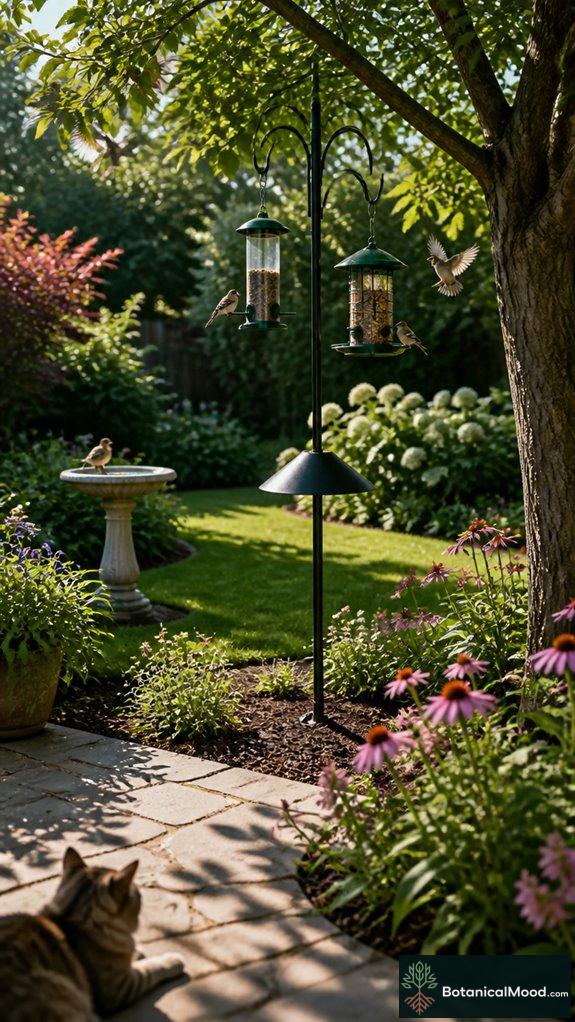
Positioning bird feeders thoughtfully is essential to ensuring the safety of avian visitors while maintaining easy access and efficient feeding. I recommend placing feeders at least 10 feet from windows and 4 feet above ground to prevent collisions and prowling predators.
Use sturdy perches and avoid areas with heavy foliage that provides cover for predators like cats or squirrels. Regularly clean feeders with a mild bleach solution to prevent disease transmission. For small mammals that share your garden space, consider providing sun shades for grazing pens to protect them from excessive heat exposure.
Incorporate predator-proof designs such as weight-activated baffles from brands like Brome or Stokes. For additional protection, consider installing a secure catio door latch system to prevent cats from accessing garden areas where birds feed. Strategic placement, combined with clean feeding stations, guarantees healthier, safer visits for species like the European Blue Tit (Cyanistes caeruleus) and House Sparrow (Passer domesticus).
Cat Collars With Safety Bells
Cat collars equipped with safety bells serve as an essential tool in protecting garden birds from potential predation, particularly from domestic cats (Felis catus) prowling through outdoor spaces. These collars emit distinct alerts, empowering responsible cat owners to mitigate hunting risks while maintaining mobility. For additional protection, consider using wall-mounted bird houses to position feeders away from ground-level cat access.
- Auditory deterrence: The safety bell’s sharp chime warns birds of approaching felines, reducing predation incidents markedly. Combining this approach with light reflecting garden features creates multiple sensory deterrents that discourage cats from entering protected bird zones.
- Enhanced visibility: Brightly colored collars improve a cat’s visibility amid dense shrubbery, offering added safety in bird-rich habitats.
- Durability and comfort: Quality collars, such as those from Breakaway or Cat Love, withstand outdoor elements ensuring ongoing protection without sacrificing pet comfort.
Vertical Wall Planters
Have you considered the transformative potential of vertical wall planters in optimizing small garden spaces or creating striking visual focal points? These innovative structures empower gardeners to maximize limited areas, incorporating space-efficient designs like modular systems by brands such as ELHO or AeroGarden.
By installing durable, weather-resistant containers made of fiber-reinforced composites or recyclable plastics, you can cultivate a lush array of native (e.g., *Asarum canadense*) and ornamental plants. When selecting plants for vertical arrangements, prioritize non-toxic plant choices to ensure the safety of visiting birds and other wildlife.
Vertical planters enable strategic placement of nectar-rich flowering species—such as *Lobelia siphilitica*—to attract insectivorous birds, enhance ecosystem health, and showcase vivid color mosaics, all while maintaining a minimal footprint.
Native Plant Selection
Selecting the right native plants is essential for creating a vibrant, resilient garden that supports local ecosystems and attracts diverse bird species.
- Choose species like *Echinacea purpurea* (purple coneflower) and *Solidago canadensis* (goldenrod) to provide nectar and seeds.
- Incorporate deciduous trees such as *Quercus rubra* (Northern red oak) to offer nesting sites and shelter.
- Use shrub varieties like *Viburnum dentatum* (northern arrowwood) for cover and insect habitats, ensuring year-round nourishment.
Prioritizing these plants sustains native insects, fosters biodiversity, and enhances the garden’s ecological resilience. Many native flowering plants are also edible flowers for pets, making them a safe choice if animals frequent your garden. When designing your garden, consider pet-friendly plant options to ensure safety for any animals that may visit or inhabit your outdoor space.
Ultimately, this attracts a wide array of birds that thrive on local flora.
FAQ
How Can I Identify Which Birds Visit My Garden?
You can identify visiting birds by observing their size, shape, colors, song, and behavior. Use a good bird guide or app, and set up binoculars to watch quietly—soon, you’ll recognize who’s stopping by your garden.
Are There Eco-Friendly Products to Attract Specific Bird Species?
Absolutely, I choose eco-friendly products like sustainable bird feeders and native plant seeds tailored for specific species, which not only attract those birds but also support their natural habitats and promote healthier, more resilient ecosystems.
What Are Natural Ways to Deter Invasive Predators?
Just like a knight defends their domain, I protect my birds naturally by installing predator guards, planting thorny bushes, and creating hiding spots, outsmarting intruders and asserting my mastery over my garden’s sanctuary.
How Often Should I Clean and Disinfect Bird Feeders?
I clean and disinfect my bird feeders weekly to prevent disease and keep predators away. Regular cleaning guarantees my feathered friends stay healthy, safe, and enthusiastic to visit, giving me a powerful way to support local garden birds continuously.
Can Certain Plants Improve Bird Safety Naturally?
Visualize your garden as a sanctuary fortress; planting native, pesticide-free flora acts as vigilant sentinels, naturally guiding safe pathways for birds, shielding them from harm, and enhancing their resilience amidst lurking threats.
Summary
By thoughtfully selecting protective products like predator-proof feeders, native plantings, and safety collars, you cultivate a sanctuary where garden birds can thrive amidst the complexities of their environment. These measures serve as the keystones in a resilient ecosystem, ensuring sustainable populations and vibrant avian activity. Just as a well-tuned symphony harmonizes diverse instruments, a thoughtfully designed garden balances aesthetic appeal with ecological responsibility, offering both beauty and refuge for our feathered visitors to flourish securely.