Who knew my pond would turn into a pea soup disaster faster than my ex disappeared?
That green nightmare taught me everything.
Now? I test pH weekly with API kits, keep it 7.0-8.0. Zero ammonia. Non-negotiable.
Learned that lesson the hard way after losing three gorgeous koi. Devastating.
10-15% water changes with Prime saved me. Dechlorinated or dead fish. Simple.
Bio-filters plus native Elodea outcompete algae naturally. No chemicals, no guilt.
UV sterilizer runs nonstop. CrystalStream keeps things actually crystal. Revolutionary concept.
Plants strategically placed. Wildlife balanced. Ecosystem thriving.
Still learning. Always learning.
Wildlife Pond Design Ideas for Small Gardens
Last spring I transformed a muddy bootprint into something magical.
Slooped edges. Varied depths. Shallows warm frogs; depths protect fish from herons.
Native flag iris, marsh marigold, water mint. All thirsty, all gorgeous.
My nephew spotted a damselfly there last week. Pure joy.
Solar fountain adds movement, prevents stagnation. Cheap, effective.
Gravel beach instead of concrete edging. Naturalistic, accessible for hedgehogs.
Logs partially submerged. Dragonflies perch, breed, mesmerize.
Unexpected complexity: too many plants reduce oxygen at night. Lost sleep researching that one.
Marginal planting baskets hide ugly liner, improve aesthetics dramatically.
No perfect formula exists. Experiment. Accept some mess.
The wildlife doesn’t judge.
Quick Takeaways
- Regularly test water parameters and perform routine water changes to prevent toxin buildup and maintain clarity.
- Use proper filtration systems, including biological and UV filters, to keep water clean and algae-free.
- Remove debris, fallen leaves, and excess organic matter promptly to reduce nutrient levels and prevent decay.
- Avoid overfeeding fish or aquatic plants to minimize waste and promote water quality.
- Incorporate live aquatic plants to naturally absorb nutrients and create a balanced, healthy pond ecosystem.
Your Complete Guide to Safe, Clear Garden Pond Water
Maintaining safe, clear water in a garden pond requires a thorough understanding of aquatic ecology, filtration systems, and water chemistry.
Power users prioritize high-efficiency biofilters, such as OASE FiltralUX or TetraPond Bio-Active, combined with UV sterilizers that eliminate algae spores and pathogens, ensuring clarity.
Precise control of pH (ideally between 6.8 and 7.4) and dissolved oxygen levels using water testing kits from brands like API empowers me to optimize aquatic health.
Incorporating beneficial bacterial inoculants accelerates the breakdown of organic debris, preventing toxic build-up. For high-traffic garden areas, silver carpet ground covers can reduce sediment runoff into your pond.
Creating thorny hedges around your pond perimeter with native hawthorn species provides wildlife habitat while protecting water quality from debris intrusion.
This strategic combination of filtration, chemistry, and ecological balance guarantees visually stunning, biologically safe pond water.
How to Test Your Pond Water for Safety and Quality
Regular testing of your pond water is fundamental to maintaining a healthy aquatic environment and ensuring that the ecosystem remains balanced and safe for both aquatic plants (macrophytes) and inhabitants like koi (Cyprinus carpio) or goldfish (Carassius auratus).
To do this effectively, I recommend utilizing digital test kits from brands like API or LaMotte, which provide accurate readings.
Focus on three key parameters:
- pH level – maintain between 7.0 and 8.0
- Ammonia and nitrite concentrations – should be zero at all times
- Nitrate levels – stay below 50 ppm
Consistent testing guarantees ideal water quality. During rainy periods, consider using clear plastic tarps to prevent excessive runoff from affecting your pond’s chemical balance.
Choosing the Best Filtration System for a Crystal-Clear Pond
Choosing the right filtration system is vital for achieving a pond with truly crystal-clear water, as it directly influences water clarity, biological stability, and overall ecosystem health.
High-capacity pond filters like OASE BioSmart and Laguna Pressure-Fipe provide mechanical and biological filtration, essential for removing debris, excess nutrients, and harmful bacteria.
UV sterilizers from brands like CrystalStream eliminate free-floating algae, preventing haze and green water. For enhanced protection against environmental elements, waterproof fabric sprays can help safeguard external pond equipment and components from weather damage.
For professional-grade control, integrated multi-stage systems that combine mechanical, biological, and UV filtration offer unmatched clarity and stability.
Selecting a system tailored to pond size, bioload, and specific aquatic plants (e.g., Nymphaea spp., lotuses) guarantees a pristine, balanced environment.
Additionally, pet-friendly liner materials should be considered when designing your filtration setup to ensure the entire pond ecosystem, including protective barriers, remains safe and durable.
How to Maintain Proper Water Levels and Balance Chemical Health
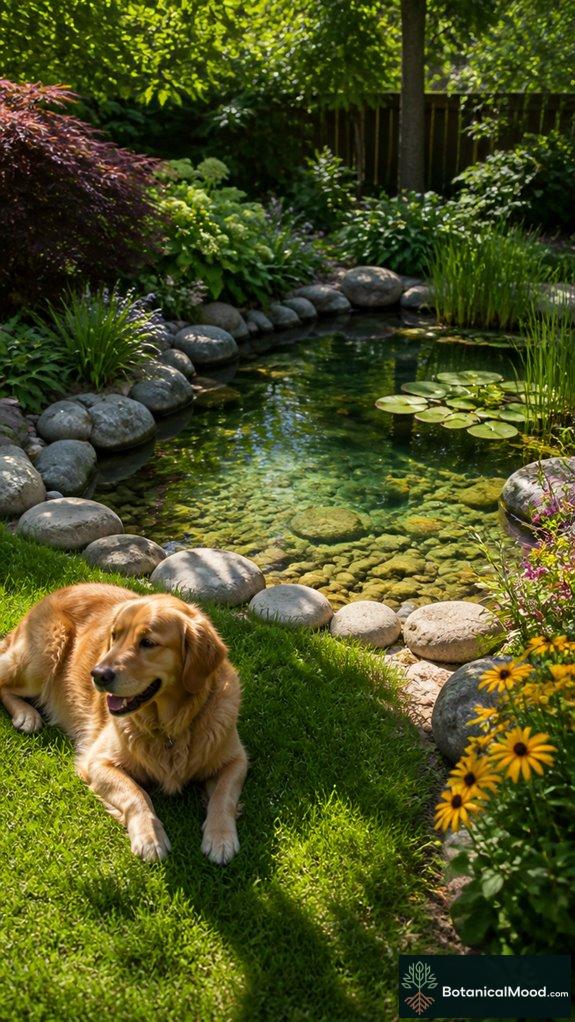
Ensuring the water level in your garden pond remains stable is essential for maintaining an ideal environment for aquatic life and preventing structural issues.
- Monitor daily fluctuations caused by evaporation, rain, or splashing, adjusting water levels with high-quality, chlorine-free sources like Aquascape’s Pond Water for consistent volume.
- Test chemical parameters weekly using a reliable test kit such as API’s pond master kit; maintain pH between 6.8-7.4 (Hydroponic, Schizothorax spp.) to sustain healthy ecosystems.
- Balance chemicals meticulously: dose beneficial bacteria (e.g., BioSafe, Seachem) to regulate ammonia, nitrites, and nitrates, ensuring ideal biological filtration for vibrant, clear water. Installing ultrasonic animal repellers around your pond can prevent wildlife from disturbing the water chemistry and damaging your carefully balanced ecosystem.
- Consider incorporating natural grass alternatives around your pond’s perimeter to reduce runoff and maintain water clarity while creating a defined landscape structure.
Performing Regular Water Changes to Keep Your Pond Healthy
Performing water changes in your garden pond is a vital maintenance practice that prevents the buildup of harmful toxins, maintains water clarity, and supports the health of aquatic plants (such as Java Fern and Anubias) and fish species like Koi (Cyprinus carpio). Regular removal of 10-15% of pond water every 1-2 weeks ensures ideal conditions, reducing nitrates, phosphates, and detritus. Use industry-standard pumps like OASE or Laguna, and premium dechlorinators such as Seachem Prime.
| Water Change Parameter | Effect/Attribute |
|---|---|
| Volume | Reduces toxin accumulation |
| Frequency | Supports ecological balance |
| Equipment | Guarantees efficiency |
| Chemical Additives | Maintains safe parameters |
| Monitoring | Prevents over- or under-maintenance |
Smart Ways to Prevent and Control Pond Algae Naturally
Algae proliferation in garden ponds can be effectively prevented and managed through natural techniques that leverage ecological balance rather than chemical interventions.
- Introducing native aquatic plants such as *Elodea canadensis* or *Ceratophyllum demersum* helps absorb excess nutrients, limiting algae growth.
- Incorporating beneficial bacteria like *EcoBoost* or *Activate* promotes microbial activity, degrading organic matter that feeds algae colonies.
- Ensuring proper hydraulic turnover with a high-quality pump, such as Oase’s *Fountain Pond Pump*, maintains oxygen levels, discouraging invasive algae species like *Spirogyra* and *Cladophora*.
- Installing shade solutions over your pond reduces sunlight exposure, which is a primary driver of excessive algae blooms during hot summers. Pairing these shade structures with thorny plant barriers around the pond perimeter can protect your aquatic ecosystem from external disturbances while maintaining aesthetic appeal.
Harnessing these methods empowers you to sustain pristine, algae-free water naturally.
Tips for Keeping Waste and Debris Out of Your Pond
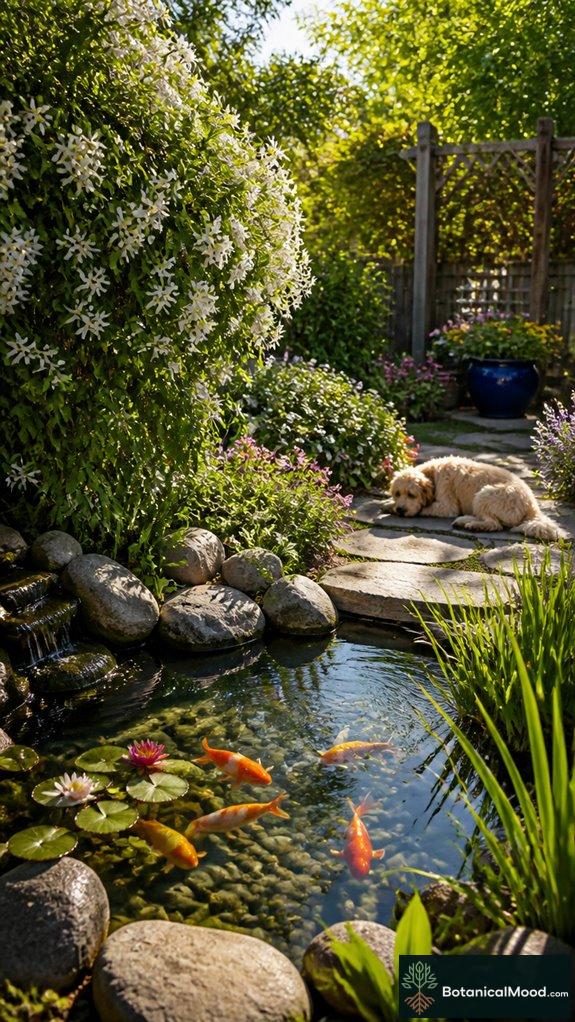
Keeping waste and debris out of your pond begins with establishing a well-designed perimeter that acts as a physical barrier. This can include installing a fine mesh skimmer net or using pond fabric liners with reinforced edges to prevent leaves, twigs, and organic matter from drifting into the water.
Creating a well-designed perimeter with barriers like mesh skimmers keeps pond debris outside the water.
Strategic placement of floating booms, like those from Aquascape or Pondmaster, can effectively trap surface debris before it sinks and decomposes.
Regular inspection of pond borders, pruning surrounding trees (Quercus spp., Salix spp.), and removing fallen debris promptly further help maintain clarity. For added greenery around your pond, consider incorporating non-toxic jasmine plants that enhance the landscape without harming aquatic life.
Similar to how predator-proof barriers protect rabbit runs from external threats, a well-constructed pond perimeter creates a protective boundary that shields your water feature from unwanted contamination.
Combining these proactive measures ensures dominant control over waste, promoting a pristine aquatic environment crucial for healthy aquatic plants and fish.
Troubleshooting Common Pond Water Problems (Cloudiness, Odors, Algae)
When pond water becomes cloudy, it often signals an imbalance in biological activity or nutrient levels that can compromise the health of aquatic life.
To troubleshoot:
- Check for excess nutrients, especially phosphates (PO4³⁻) and nitrates (NO₃⁻), often stemming from overfeeding or decaying organic matter.
- Examine water circulation and aeration, utilizing pumps like the OASE Aquarius series or aerators to prevent stagnation.
- Remove organic debris promptly, including fallen leaves (Quercus spp.) and dead plant matter, which fuel microbial overgrowth leading to cloudiness and foul odors. For outdoor pond areas, consider using natural cleaning solutions similar to those effective for maintaining small animal habitats, which can help minimize chemical buildup in your water ecosystem.
Implementing these steps restores clarity, balances the ecosystem, and sustains a vibrant pond environment. Consider adding crystal prisms to your pond area to enhance the visual appeal while light reflects naturally through the water.
Biological Pond Filters
Biological pond filters play a crucial role in maintaining a healthy aquatic ecosystem by fostering beneficial microbial activity that naturally breaks down organic waste.
These filters, often constructed from bio-media such as Seachem Matrix or Bio-Rock, provide a vast surface area for nitrifying bacteria (Nitrosomonas, Nitrobacter) to thrive, converting harmful ammonia and nitrites into less toxic nitrates.
Positioned strategically within the pond—near inflow or as part of a submerged filter system—they promote biological stability essential for fish health, especially in large, koi-rich ponds like those designed by renowned landscapers like Piet Ouldhoff. Proper maintenance ensures consistent filtration and vibrant pond clarity.
Installing thorny wildlife hedges around your pond’s perimeter can provide additional protection and aesthetic appeal while supporting local ecosystems. Creating shade structures over ponds can further support water quality by reducing algae growth and keeping fish comfortable during hot weather.
Vertical Gardening Walls
Vertical gardening walls offer a dynamic approach to maximizing limited space within outdoor environments, transforming bare surfaces into lush, living tapestries. By integrating modular systems like Tall Wall™ by GreenYard or LivingWall™ by Gardena, you can harness the potential of vertical structures to cultivate vibrant plant displays.
Vertical gardening walls transform bare surfaces into lush, vibrant displays with modular systems like Tall Wall™ and LivingWall™.
Focus on selecting hardy species such such as Hedera helix (English ivy), Fuchsia magellanica, or Pothos (Epipremnum aureum) to guarantee resilience.
Consider the microclimate—sun exposure, humidity, wind—when choosing plants, and leverage advanced irrigation systems like drip emitters to optimize water efficiency. For proper installation and maintenance of these irrigation systems, quality PVC pipe cutters ensure clean, precise connections throughout your vertical garden setup. Incorporating odor neutralizing plants can further enhance your garden environment while maintaining pleasant outdoor conditions.
Elevate your garden’s power with strategic vertical plantings that command space and enhance ecological balance.
Raised Bedding With Secure Fencing
Building raised bedding with secure fencing creates a defined, accessible garden space while effectively deterring unwanted animals and pests.
I recommend constructing beds using durable materials like cedar (Cedrus spp.) or recycled composite lumber, ensuring longevity against moisture and rot.
Secure fencing, made from sturdy galvanized steel or welded wire mesh (e.g., 14-gauge), not only protects delicate aquatic plants like Nymphaea (water lilies) but also prevents raccoons (Procyon lotor) or herons (Ardea herodias) from disturbing the pond ecosystem.
For wooden components of your fencing structure, applying outdoor wood stains provides additional protection against weathering while maintaining the aesthetic appeal of your garden installation.
Proper height and mesh gauge are essential for strength, stability, and security, creating a resilient barrier that maintains water quality and supports thriving aquatic biodiversity. Folding dog ramps can also help senior pets navigate around raised beds and pond areas safely.
FAQ
How Often Should I Add Beneficial Bacteria to My Pond?
I add beneficial bacteria once a week to my pond for ideal health, especially during warmer months. Regular addition keeps the water clear, balances nutrients, and promotes healthy bacteria growth—vital for maintaining a thriving, clean pond ecosystem.
What Natural Plants Help Improve Water Clarity and Quality?
Think of your pond as a mirror to nature’s strength; water lilies and rushes act as guardians, filtering impurities and nurturing clarity. I’ve seen their power transform murky waters into pristine, living reflections of natural resilience.
Are Chemical Treatments Safe for Pond Fish and Plants?
Chemical treatments can be risky if misused. I recommend using them cautiously, and always follow the instructions. Natural methods and beneficial bacteria are safer options that support thriving pond fish and plants without harm.
How Can I Prevent Mosquito Breeding in My Pond?
Did you know mosquito larvae mature in just five to ten days? I prevent breeding by removing debris, introducing fish that eat larvae, and regularly aerating my pond—powerful methods to keep mosquitoes at bay and protect my pond.
What Is the Best Time of Year to Perform Pond Maintenance?
The best time to perform pond maintenance is early spring or late fall when water temperatures are moderate. During these periods, I can effectively clear debris, balance nutrients, and prepare my pond for healthier, mosquito-free living all year round.
Summary
Maintaining a pristine garden pond requires diligent attention, as small adjustments can notably improve water clarity and aquatic health. Remarkably, research indicates that ponds with effective filtration and balanced ecosystems can reduce algae growth by up to 70%, underscoring the importance of proper management. By integrating high-quality biological filters, testing water parameters regularly, and implementing environmentally safe practices, you create a sustainable habitat that enhances both aesthetic appeal and ecological function, ensuring your pond remains a vibrant highlight of your garden for years to come.