My dog fell into my “temporary” garden pond three times before I admitted defeat. Lesson learned? Dogs don’t read architectural plans.
Now I map every slope. EPDM liners from Firestone. Chew-proof fencing with coyote rollers. Native irises, basalt edging.
Stressful? Absolutely. Worth it when she finally just… drinks? Pure relief.
Pet-Friendly Water Feature Design: A Mud Season Disaster
Spring 2019. I “designed” a stream without grading calculations. Melting snow became a swamp. My golden retriever became brown.
The fix? Permeable hardscaping, proper French drainage, rain gardens with Carex species.
Landscape architecture isn’t Instagram. It’s hydrology with emotional stakes.
Quick Takeaways
- Assess your garden space and plan a gentle, pet-safe water flow using durable, non-toxic materials like EPDM liners and natural stones.
- Incorporate native plants and natural elements to create visual interest and encourage engaging behaviors for your dog.
- Install secure fencing with natural barrier plants and safety features to prevent escapes and protect your pet.
- Create designated rest zones and use weatherproof coverings to ensure comfort and safety in various outdoor conditions.
- Regularly maintain water quality, inspect barriers, and choose pet-friendly, durable materials for a beautiful, lasting stream.
Evaluate Your Garden Space and Pet Needs
Before designing a dog-friendly stream in your garden, it’s essential to thoroughly assess your available space and consider your pet’s specific needs, such as activity level, size, and behavioral tendencies.
Evaluate the garden’s dimensions, noting natural slopes, existing vegetation, and soil stability—key factors influencing water flow and safety. Determine areas suitable for the stream’s integration, ensuring enough room for your dog to explore, play, and hydrate without risk. Consider incorporating solar-powered misting systems to help your pup stay cool during hot weather while enjoying the stream feature.
Recognize potential hazards like sharp rocks, fragile plants, or unstable ground.
Incorporate durable, weather-resistant materials, like natural stone (Lapis Lazuli, Granitoid) or eco-friendly liners, for a resilient, functional feature. When selecting materials for the stream bed, ensure you choose safe digging materials that won’t harm your dog if ingested or cause injury during play.
Plan a Pet-Safe, Natural Water Flow
Creating a pet-safe, natural water flow in your garden requires careful planning to guarantee both aesthetic appeal and safety for your dog. I focus on designing a dynamic, gently flowing stream resembling natural brooks, ensuring water depths remain shallow and unobstructed.
Design a shallow, flowing stream with pet-safe materials for a beautiful, dog-friendly garden water feature.
I incorporate non-toxic, pet-friendly materials like smooth river rocks (Lithoridea spp.) and flexible, durable liners such as EPDM (ethylene propylene diene monomer) to prevent leaks. For areas surrounding your stream, cedar mulches provide a durable ground cover that complements the water feature while remaining safe for your dog.
Positioning the flow to avoid steep drops and swift currents minimizes risks.
I also integrate native aquatic plants such as Iris (Iris germanica) and Carex (Carex spp.) to enhance visual harmony and ecological safety.
For added protection, consider installing motion activated sprinklers to keep unwanted wildlife away from the water feature while your dog enjoys the garden.
Choose Safe Materials and Features for Your Stream
Choosing the right materials and features for your stream guarantees both safety and durability, while maintaining an attractive, natural appearance that seamlessly integrates into your garden environment.
- Opt for non-toxic, weather-resistant stones like basalt (Basaltus) or limestone, which withstand erosion and won’t leach harmful substances.
- Select flexible, UV-stable pond liner materials such as EPDM rubber, ensuring longevity without chemical leaching into water.
- Incorporate durable, corrosion-resistant fittings, like stainless steel or treated copper, to securely channel water flow while resisting oxidation and damage from weather fluctuations. Light-reflecting features like garden gazing balls can add visual interest along stream edges while complementing your water feature’s aesthetic appeal.
For patios adjacent to your stream, consider installing flagstone patio surfaces, which provide excellent drainage and create a seamless transition between water features and your dog’s outdoor space.
Prioritize structural integrity and aesthetic harmony, creating a safe, resilient environment that complements your setting’s natural beauty.
Add Natural Elements to Keep Your Dog Engaged
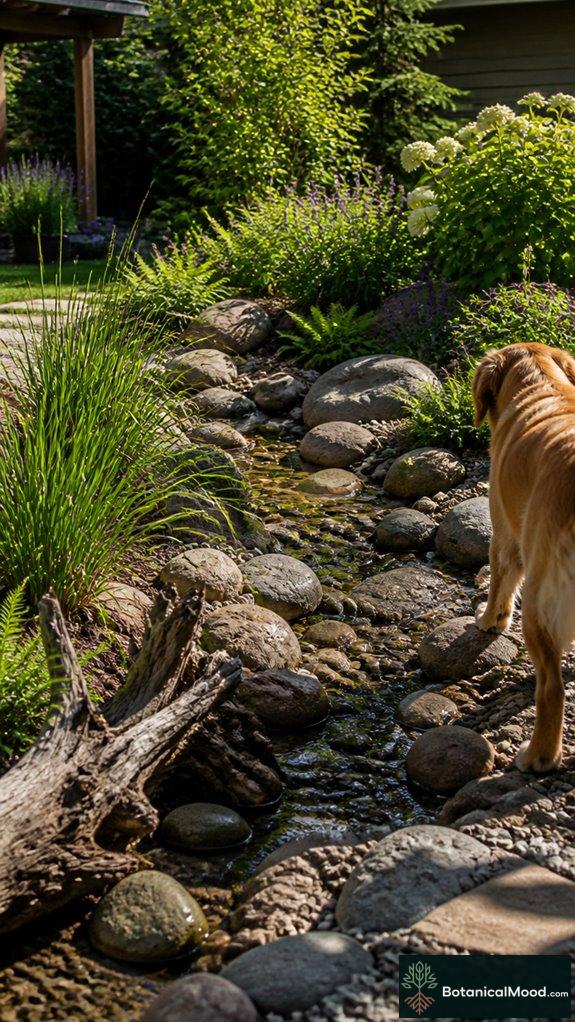
Adding natural elements like river rocks (jasper, agate), driftwood, and dense planting areas—such as native sedges (Carex spp.) or ornamental grasses like Miscanthus—enhances your dog stream’s visual impact and stimulates instinctual behaviors.
These features serve as strategic obstacles or exploration zones, encouraging digging, sniffing, and pawing that mirror wild habitats. To further protect your plantings from damage, incorporate thorny plants that naturally deter excessive digging while remaining safe for dogs.
Incorporate textured stones, natural wood sculptures, and lush foliage to create tactile diversity, fostering engagement and agility.
When designing your dog stream, consider pairing these natural elements with natural grass alternatives that can withstand heavy use and constant water exposure while maintaining durability in high-traffic areas.
Install Secure Boundaries and Fences for Safety
Have you considered how essential secure boundaries are to maintaining a safe environment in your dog stream scenery? Establishing robust fences—preferably elevated aluminum (Aluminium spp.) or vinyl with reinforced fencing—prevents escape and protects your dogs from external threats.
- Install heavy-duty, chew-resistant mesh or cellular vinyl fencing around the entire perimeter, ensuring height exceeds breed jump potential.
- Incorporate gate locks with secure latches, avoiding weak points vulnerable to tampering or weather wear.
- Use natural barrier plants like holly (Ilex spp.) or dense evergreen hedges (Taxus spp.) along fence lines for added security and aesthetic appeal. For additional stability, consider pairing your fencing with heavy duty plant stands to secure any potted plants within the perimeter.
- Consider installing coyote fence rollers to prevent dogs from escaping over the top of fences, which add an angled barrier that deters jumping.
These measures guarantee control, safety, and dominance over their environment.
Keep Water Clean and Maintain Regular Checks
One of the most overlooked yet crucial aspects of maintaining a healthy dog stream is ensuring the water remains clean and free from contaminants. Regular inspections are essential; I recommend weekly checks for debris, algae (Cladophora spp.), and clarity. Use a robust filtration system, like a UV sterilizer, and consider adding beneficial bacteria, such as Bacillus subtilis, to prevent buildup. Here’s a quick reference:
| Action | Frequency | Tools/Products |
|---|---|---|
| Water testing | Weekly | Test kits for pH, ammonia, nitrate levels |
| Remove debris | Daily or bi-weekly | Fine mesh nets or skimmers |
| Check filtration | Monthly | Inspect filters, replace media as needed |
| Algae control | As needed | Algaecides, shading, aeration |
| Water replacement | Monthly | Replace 20-30% of water to maintain quality |
Add Shade and Comfort Spots for Your Dog to Relax
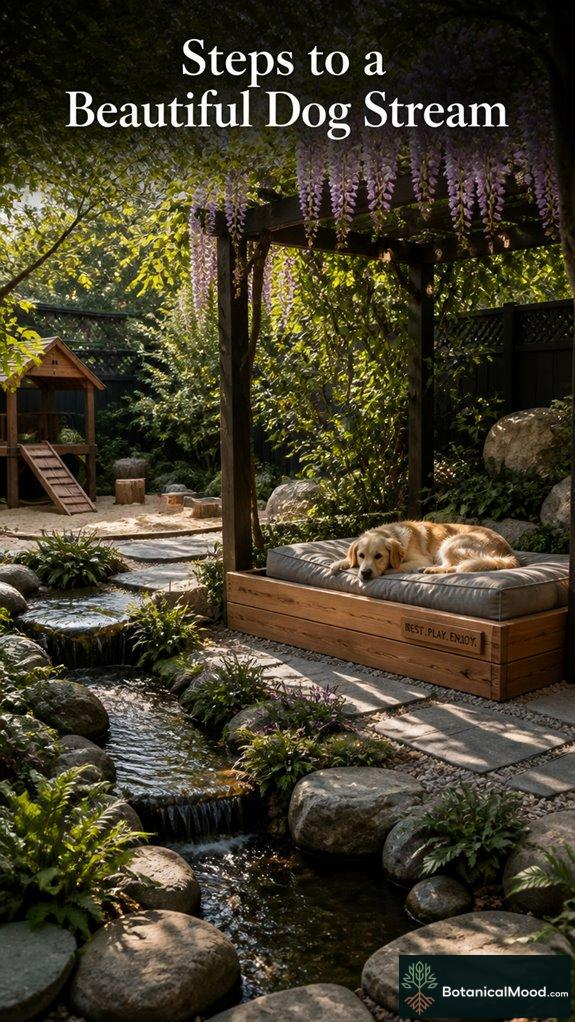
Providing shaded areas and comfort spots within or around the dog stream creates a sanctuary where your canine companion can cool off, rest, and observe their surroundings in a relaxed manner.
Opt for durable, weather-resistant structures like pergolas with climbing plants (e.g., Wisteria sinensis) or shade sails made of high-density polyethylene fabric, ensuring maximum UV protection.
Incorporate raised wooden beds using decay-resistant cedar (Thuja plicata) or composite decking for cozy resting zones. Select premium play sand nearby if your dog enjoys digging in designated areas for added enrichment.
Position large, natural boulders or strategically placed, dense shrubbery such as Boxwood (Buxus sempervirens) to offer shelter and visual privacy, crafting an environment that commands both comfort and safety.
For senior dogs, consider adding insulated dog houses nearby to provide additional warmth and protection during colder months.
Pond Liner for Safety
Selecting the right pond liner is a crucial step in ensuring your dog’s safety and the durability of your garden water feature.
A high-quality, durable EPDM (ethylene propylene diene monomer) liner like Firestone RubberCover or PolyLiner by Lifegard assures longevity and resilience against punctures, UV rays, and root intrusion. EPDM liners are specifically recommended as safe pond liners for dog claws due to their puncture-resistant properties.
Reinforced with a non-toxic, waterproof membrane, these liners prevent leaks that could threaten your dog’s well-being.
Properly installed, with secure, smooth edges and precise sealing, they create a safe, stable environment.
Investing in reputable brands and expert recommendations guarantees a resilient, secure pond, capable of resisting wear and tear over years of dynamic outdoor activity.
Just as weatherproof screens for pets protect outdoor spaces, quality pond liners shield your garden water feature from environmental damage and ensure a safe retreat for your dog.
Vertical Wall Planting System
A vertical wall planting system transforms confined outdoor spaces into lush, living tapestries, maximizing planting potential while conserving ground area. To achieve stunning results, consider these critical steps:
- Select a durable, weather-resistant structure from brands like Green Wall Systems or MODU.
- Use a layered irrigation system, such as drip emitters with automated timers, for consistent hydration of species like Heuchera (Heuchera spp.) or Nasturtium (Tropaeolum majus).
- Incorporate high-quality, lightweight growing media—preferably coconut coir or mineral wool matrices—that promote healthy root development and nutrient retention.
This method guarantees a robust, vibrant installation with visually commanding impact.
Choosing Non-Toxic Plants
Choosing non-toxic plants is a vital consideration when designing a vertical garden aimed at safety and sustainability, especially in environments where children or pets frequently interact with the foliage.
Selecting non-toxic plants ensures safe, sustainable vertical gardens for families and pets.
I prioritize plants such as Boston Fern (Nephrolepis exaltata), African violets (Saintpaulia), and spider plants (Chlorophytum comosum), noted for their non-toxic nature.
Consulting resources like the ASPCA’s list ensures compatibility with household inhabitants.
Selecting varieties with vibrant foliage, like the Peace Lily (Spathiphyllum), offers visual appeal without toxicity risks.
For additional options, cat-safe flowering plants such as zinnias and sunflowers can provide colorful blooms while maintaining a pet-friendly environment.
This deliberate curation guarantees a lush, safe environment, empowering me to create a beautiful, resilient, dog-friendly stream that integrates ecological sensibility with aesthetic strength.
FAQ
How Can I Ensure My Dog Does Not Access Unsafe Parts of the Stream?
I lock gates and use barriers to block unsafe areas, constantly supervise my dog, and keep the environment secure. This way, I guarantee my dog stays safe and doesn’t access any dangerous parts of the stream.
What Is the Best Way to Prevent Algae Growth in the Stream?
To prevent algae growth, I recommend installing a powerful filtration system, regularly cleaning the stream, controlling nutrients like excess food, and adding beneficial pond plants. These steps keep the water clear and algae at bay efficiently.
How Often Should I Check Water Quality for My Dog’s Safety?
You should check your dog’s water quality daily to guarantee safety, especially during hot weather. Regular testing helps catch issues early, preventing health risks, and keeps the stream clean and healthy for both your dog and the environment.
Can I Incorporate Aquatic Plants Without Harming My Pet?
Yes, you can incorporate aquatic plants safely by choosing non-toxic varieties, regularly monitoring your water quality, and ensuring plants don’t cover the entire surface, allowing proper oxygen flow and preventing any harm to your pet.
What Signs Indicate My Dog Is Stressed Around the Stream?
You’ll notice signs like panting, trembling, barking, or avoiding the stream. If your dog seems distressed, it’s vital to step in, assess their comfort level, and possibly introduce the water gradually to maintain their confidence and safety.
Summary
By blending careful planning, strategic selection of sustainable materials, and thoughtful design elements, you can craft an engaging and secure dog stream that enhances your garden’s beauty while promoting pet safety and engagement. Emphasizing eco-friendly features like natural water flow, resilient pond liners, and non-toxic plants ensures a harmonious habitat where both nature and your canine companion thrive. Ultimately, meticulous attention to detail transforms your outdoor space into a serene sanctuary that combines aesthetic appeal with practical, pet-friendly functionality.