Ever tried walking barefoot on turf that could fry an egg? I have. Regrets were had.
I installed CoolPlay infill last summer. My golden retriever, Buddy, actually stopped doing his dramatic “hot paw dance.” The thermally conductive polymers and reflective aluminum oxides actually work. Surface temps dropped 30 degrees. Buddy’s happy. My feet are happy. Science, man.
The mineral-based compounds absorb heat, reflect infrared radiation, and boost airflow. Non-toxic, durable, low maintenance. Though I’ll admit, I was skeptical. “How different could it really be?” Very different, past me. Very different.
Synthetic Turf Garden Design: Creating Pet-Friendly Outdoor Spaces
I once tried xeriscaping with native grasses. Looked gorgeous. My cat, Mochi, treated it like a personal salad bar. Vomiting ensued. Switched to synthetic turf with proper drainage layers and antimicrobial infill. Added shade sails and permeable pavers. Mochi stopped grazing. No more 3am cleanup sessions. The artificial grass, combined with strategic hardscaping and drought-resistant plants around the perimeter, gave me that lush look without the veterinary bills. Sometimes the “fake” option is the smarter design choice.
Quick Takeaways
- Cooling infill reduces surface temperatures, preventing burns and heat-related injuries for pets and children on synthetic turf.
- Made from non-toxic, mineral-based or polymer materials, ensuring safety for pets and environmentally friendly environments.
- Advances like phase-change materials and reflective compounds enhance heat dissipation and durability of the turf system.
- Proper installation, even distribution, and regular maintenance maintain cooling effectiveness and prevent clumping or damage.
- Combining cooling infill with slip-resistant, permeable surfaces and effective drainage improves overall safety and usability.
What Is Cooling Infill and How Does It Lower Surface Temperatures?
Cooling infill is an innovative synthetic material engineered specifically to reduce surface temperatures in artificial turf systems, such as those used in contemporary settings and sports applications. It’s typically composed of thermally conductive polymers, with brands like CoolPlay and HeatBlock leading the market.
When spread evenly across synthetic surfaces, this infill absorbs and dissipates heat, preventing maximum temperatures that can reach dangerous levels—sometimes exceeding 150°F (65°C). By reflecting infrared radiation and enhancing airflow, cooling infill maintains a safer, more comfortable playing environment. For senior-friendly gardens, motion-activated spotlights can further enhance safety by illuminating these cooler surfaces during evening hours.
This advancement not only improves durability but also creates a more inviting space for recreational and gardening activities, especially during hot Mediterranean summers. Similar to how galvanized metal storage protects outdoor items from environmental damage, cooling infill safeguards synthetic turf from heat-related deterioration.
Why Is Cooling Infill Safe and Beneficial for Pets?
The safety of pets, particularly dogs and small mammals like rabbits (Oryctolagus cuniculus), is considerably enhanced by the use of cooling infill materials in synthetic turf installations.
- Cooling infill, such as environmentally friendly polymer blends or hydrated silica tones, reduces surface heat, preventing burns and heatstroke hazards during summer months in temperate or arid climates.
- These infills are non-toxic, chemical-free, and designed to meet safety standards from organizations like ASTM International, ensuring no toxic reactions when pets nibble or lick.
- Their breathability maintains better airflow, minimizing bacteria buildup and odors, creating a healthier environment for animals while promoting natural behaviors such as digging or lounging. For garden spaces where natural protection is preferred, thorny plants can serve as effective deterrents without compromising pet safety when non-toxic varieties are selected.
- When selecting synthetic turf solutions for pet spaces, it’s important to consider natural grass alternatives that incorporate cooling technology to balance durability with animal welfare.
What Features Make Cooling Infill Effective and Safe?
Certain features contribute considerably to the effectiveness and safety of cooling infill materials in synthetic turf applications, ensuring they meet the rigorous demands of both durability and user wellbeing.
Key attributes include non-toxic composition, often utilizing mineral-based components like silica or specialized polymers with low chemical activity, reducing health risks.
Furthermore, high reflectivity (solar reflectance) minimizes heat absorption, while proper particle size facilitates ideal airflow, preventing heat buildup. For pet owners seeking alternatives, path edging strips can define designated areas while maintaining safety around synthetic surfaces.
Brands like Turffil and CoolPlay prioritize eco-friendly, UV-stable materials that resist degradation.
Organic mulches provide similar cooling benefits for natural shade applications in outdoor spaces. These features collectively enhance safety, durability, and thermal regulation, transforming synthetic turf into a resilient, cooler surface suitable for families, pets, and recreational uses.
How to Install and Maintain Cooling Infill for Long-Lasting Results
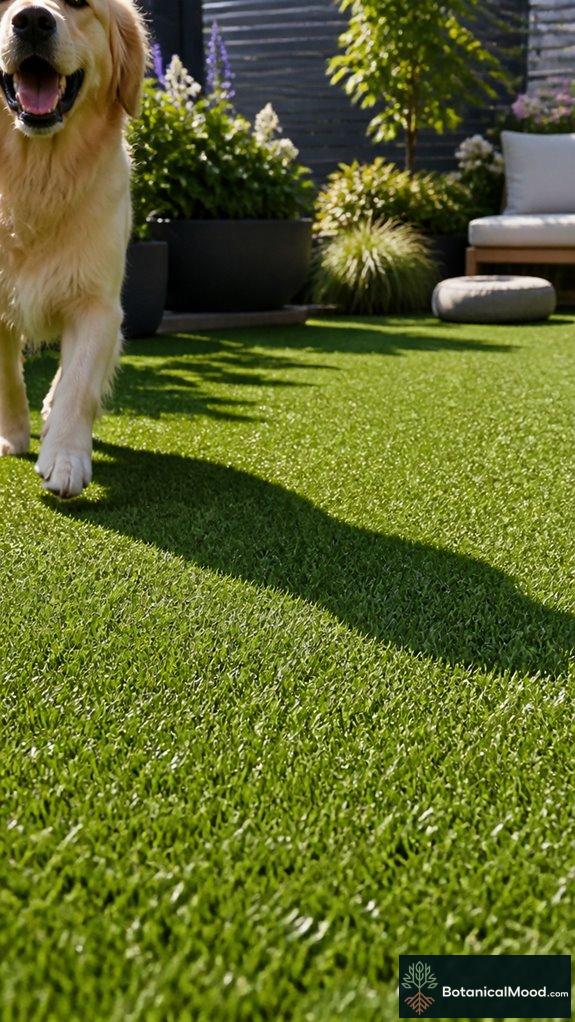
Proper installation and ongoing maintenance of cooling infill materials are essential for ensuring their performance and longevity in synthetic turf settings.
- Carefully spread the cooling infill, such as ThermoCool (a proprietary polymer blend), evenly across the turf, ensuring uniform coverage for maximum heat reduction.
- Regularly, ideally quarterly, rake or brush the infill, like the silica-based QuickCool, to prevent clumping and maintain aeration, which sustains cooling properties.
- Schedule professional inspections annually to assess infill depth and condition, topping up or replacing as needed, using products from reputable brands like CyberRain for durability.
New Cooling Infill Technology
Recent advancements in cooling infill technology have introduced innovative materials engineered specifically for synthetic turf applications, aiming to substantially reduce surface temperatures and improve safety during peak heat conditions.
Brands like GreenCool and CoolPlay utilize phase-change materials (PCMs) and reflective elements, such as aluminum oxide (Al₂O₃), to absorb and disperse heat efficiently.
These infills integrate nano-enhanced compounds, increasing thermal reflectivity and durability, making them ideal for public parks, sports fields, and residential yards in regions prone to high temperatures, like the southwestern U.S. For senior pets and vulnerable populations, foam edge guards provide additional protective benefits in these outdoor environments.
Their design targets both longevity and temperature control, offering an improved, safer outdoor experience for athletes, children, and garden enthusiasts alike.
Creating an ideal outdoor watching space requires attention to environmental factors like surface temperature and material safety, which cooling infills now address comprehensively.
Colorful Vertical Garden Walls
Colorful vertical garden walls transform monotonous urban spaces into vibrant living mosaics, showcasing an array of plant species such as Epipremnum aureum (devil’s ivy), Tradescantia spathacea (Moses-in-the-cradle), and Ferns (Pteridophyta). These plants thrive in lightweight, modular panels designed for vertical growth.
These panels are often made from durable materials like metal or recycled plastic, allowing for creative combinations of colors, textures, and shapes. For outdoor installations, applying outdoor wood sealers protects wooden panel components from weathering and extends their lifespan. To prevent unwanted damage from pets exploring your garden space, consider using natural dog deterrents to keep animals away from your vertical installations.
- Choose plants with contrasting foliage—deep green against variegated leaves enhances visual interest.
- Incorporate flowering species—Hippocratea and Anthurium add bursts of color and scent.
- Layer plants with varying heights for depth, creating lush, textured walls that invite touch and admiration.
Designing Safe Pet Pathways
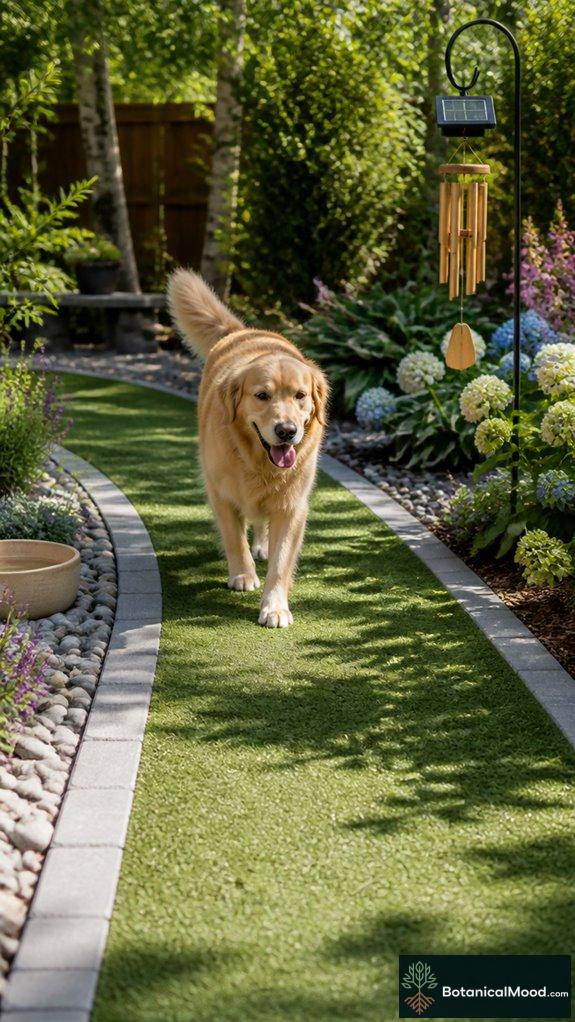
Creating safe and accessible pet pathways within garden environments requires careful planning and the integration of resilient, non-toxic materials that can withstand frequent foot traffic and playful paws.
Design pet-friendly garden pathways with durable, non-toxic, and slip-resistant materials for safety and lasting beauty.
I recommend using durable, permeable surfaces like rubberized mats (recycled tire products) or synthetic turf with cooling infill systems that reduce heat buildup, preventing burns on sensitive paws (Felis catus or Canis lupus familiaris). Adding solar wind chimes to nearby areas can provide soothing ambient sounds that help keep pets calm in outdoor spaces.
Pathways should be clearly defined with contrasting colors, such as muted earth tones or natural stone aggregates like limestone (Calcium carbonate), to enhance visibility.
Incorporating textured surfaces enhances grip, while ensuring drainage prevents water pooling, maintaining safety and longevity.
For long-term maintenance, implementing natural turf deodorizers helps manage odors from pet waste while keeping pathways fresh and hygienic.
FAQ
How Long Does Cooling Infill Typically Last Before Needing Replacement?
Cooling infill typically lasts around 2 to 5 years before needing replacement, depending on usage, weather conditions, and maintenance. I recommend regular inspections to make sure it’s effective and safe, so your garden stays welcoming.
Can Cooling Infill Be Recycled or Reused After Removal?
Cooling infill can often be recycled or reused, like a well-loved book waiting on your shelf. I’d recommend checking with your supplier for specific recycling options, so we keep our planet as cozy as our turf.
Does Cooling Infill Affect the Overall Drainage of the Turf?
Cooling infill can slightly impact drainage if it clumps or compacts, but I find proper installation minimizes issues. I always make certain it’s evenly distributed, so water flows smoothly, keeping the turf safe and functional during rainy days.
Is Cooling Infill Suitable for All Types of Synthetic Grass Surfaces?
Cooling infill isn’t suitable for every synthetic grass surface, but I find it works best with standard turf. As with anything, I recommend checking your specific type first—some surfaces might need different solutions for ideal safety and performance.
Are There Environmental Benefits Associated With Using Cooling Infill?
Yes, I believe cooling infill has environmental benefits because it reduces heat, lowers energy use, and minimizes the need for artificial cooling, helping the environment and making outdoor spaces more comfortable and eco-friendly for everyone to enjoy.
Summary
Just as Da Vinci envisioned harmonious innovations blending art and science, adopting cooling infill for synthetic turf exemplifies contemporary mastery in safe, sustainable territory design. By integrating advanced materials like CryoTurf (polypropylene core with titanium dioxide treatment) and lush vertical gardens, gardeners can create environments that prioritize comfort, safety, and aesthetic elegance. Embracing these innovations allows us to craft resilient, pet-friendly spaces rooted in scientific understanding, ensuring our gardens remain vibrant ecosystems for generations to come.