Who knew my backyard would become a swamp after one rainy Tuesday?
I learned the hard way that pet lawns need actual planning.
First, I mapped my yard’s sunlight and drainage. Found the muddy culprit fast. Chose SYNLawn EcoTek for its antimicrobial magic. Added compost, drainage pipes, the works. Stapled edges. Never making that soggy mistake again.
Now? Eco-friendly cleaners, religious waste removal, proper fencing. My dogs finally have turf that doesn’t smell like regret. Small wins, huge relief.
Proper drainage isn’t optional. It’s survival.
Pet-Friendly Landscape Design Ideas for Small Yards
Last spring, I tried modular vertical planters with native purple coneflowers. Thought they’d be decorative. Didn’t expect my terrier to treat them as obstacle course checkpoints.
The sensory garden elements backfired spectacularly. Or succeeded, depending on your dog happiness metrics. I’ve since embraced hardscaping paths between soft turf zones. Limestone chips drainage beds, raised cedar planters, drought-tolerant ornamental grasses.
The contained water feature? Abandoned. Too much tail-chasing splash trauma.
Now my urban dog run balances permeable pavers, strategic shade sails, and exactly zero things my Labrador can dismantle. Function over Pinterest perfection. Always.
Quick Takeaways
- Assess terrain, soil quality, drainage, and sun exposure; amend ground with organic matter for stability and proper drainage.
- Select pet-safe turf options with excellent drainage, secure edges, and infill to prevent odors and shifting.
- Prepare a level, well-drained surface and install turf smoothly using staples, avoiding folds or wrinkles.
- Incorporate pet-friendly native plants, green walls, and safe browsing areas for aesthetic appeal and enrichment.
- Maintain regular cleaning, odor control, and drainage system inspections to ensure a safe, odor-free, and healthy lawn.
Evaluate Your Yard and Pet Play Areas
Before initiating any lawn care project for pet safety and aesthetics, it’s vital to thoroughly evaluate your yard and designated pet play areas. Carefully assess the size, sunlight exposure, and terrain of each zone.
Evaluate your yard’s size, sunlight, and terrain to create a safe, attractive space for your pet’s play.
Note areas prone to erosion, muddy patches, or compacted soil (Latin: Solum compactum).
Identify natural pathways and potential hazards like sharp objects, toxic plants, or uneven surfaces that could harm your pet.
Measure the dimensions to make certain there’s suitable space for running and playing.
Consider existing foliage, drainage patterns, and shade sources to inform your landscaping choices.
Creating a safe, visually appealing environment tailored for your pet’s activity and comfort is essential.
Pick the Best Pet-Friendly Turf With Good Drainage
Considering soil composition and aeration levels is essential—amending compacted soil with organic matter such as compost can enhance infiltration and drainage.
For pet-friendly turf, I recommend selecting synthetic grasses like SYNLawn’s EcoTek or Chlóe (Cynodon dactylon var. dactylon) varieties that feature excellent drainage properties.
Naturally, porous substrates such as crushed granite or well-draining topsoil improve water runoff, reducing sogginess. Natural turf deodorizers can help maintain freshness in pet areas by neutralizing odors naturally.
Brands like TigerTurf offer durable, pet-safe options with antimicrobial protection.
Natural grass alternatives provide additional options for dog owners seeking sustainable and eco-friendly solutions that maintain durability while supporting pet safety.
Choosing turf with a reputation for resilience, low maintenance, and quick drainage guarantees your yard remains inviting and safe.
This choice minimizes muddy paws and maintains healthy turf growth.
Prepare Your Ground for Stable, Well-Draining Turf
To guarantee your turf remains stable and drains efficiently, preparing the ground with proper soil amendments and grading techniques is essential.
I recommend testing your soil (preferably using a kit from Kate’s Garden Supply or similar) to assess pH, organic matter, and drainage capacity. Then amending it with organic compost, vermiculite, or coarse sand (brand suggestions like Espoma or Dr. Earth). Testing for pet pathogens in soil can help ensure a safe environment for your pets to enjoy the lawn.
Proper grading ensures a gentle slope away from structures, preventing pooling.
Use a landscape rake to level and shape the soil, creating a firm, well-drained base that promotes healthy root development and minimizes erosion, setting the foundation for a resilient, pet-friendly turf. Maintaining consistent water temperature in pet bowls during colder months requires floating pond heaters to prevent ice formation and ensure your pets have access to fresh drinking water.
Step-by-Step Guide to Installing Pet Turf Safely
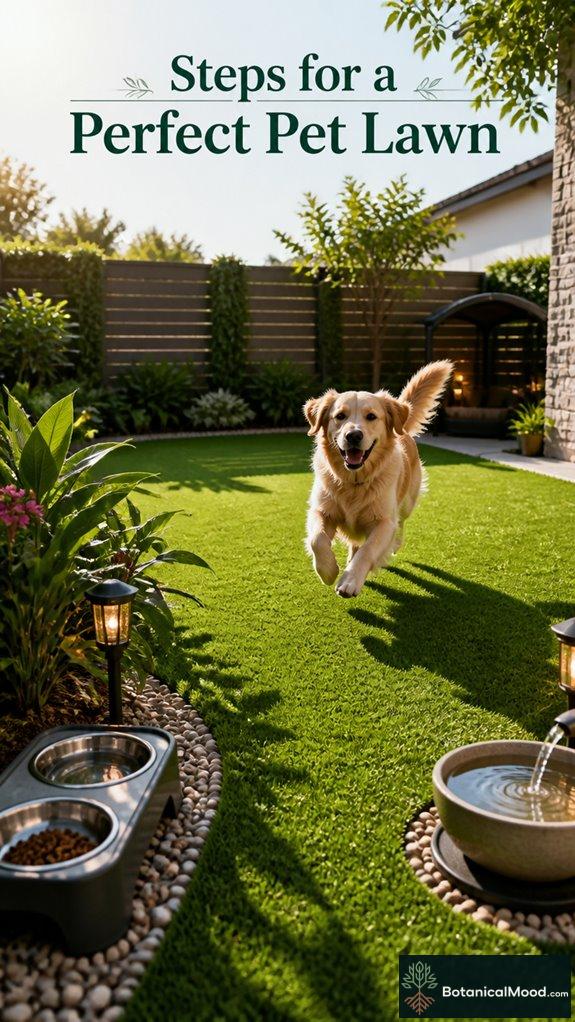
Installing pet turf safely requires careful preparation and precise execution to guarantee durability, cleanliness, and pet comfort.
I recommend starting with a level, well-drained surface—preferably a substrate of compacted gravel (Gneiss, schist, and other lithic materials)—to prevent shifting underfoot.
Unroll the turf (e.g., pet-specific brands like PetGrow or AstroTurf), ensuring no folds or wrinkles, which might cause tripping hazards.
Secure the edges with durable terrain staples spaced every 12 inches for stability.
Avoid using toxic adhesives; instead, employ infill materials like rounded silica or cork that reduce odor and provide gentle footing.
When positioning feeders and water stations, keep bird feeders away from your pet turf installation to prevent wildlife and pet conflicts in your garden.
Consider using safe garden lighting around your outdoor space to avoid disturbing nocturnal wildlife like bats while maintaining visibility for your pets.
Proper installation minimizes bacterial buildup, keeping your pet healthy and content.
Maintain Your Pet Turf for Lasting Quality and Odor Control
Maintaining your pet turf to guarantee its lasting quality and effective odor control involves a consistent, methodical approach that combines timely cleaning, proper grooming, and strategic treatment.
Regularly removing pet waste with biodegradable scoops, like the EarthRated brand, prevents bacterial buildup, while rinsing the surface with potable water reduces odors.
Gentle brushing with synthetic turf-specific brushes helps maintain texture and encourages drainage.
Applying eco-friendly enzymatic cleaners, such as Biokleen or Nature’s Miracle, breaks down organic matter, preserving vibrant color and durability.
Installing a drainage system beneath your artificial grass allows urine to flow through properly, preventing pooling and unpleasant odors from developing over time.
Consider adding retractable outdoor gates to restrict your pet’s access to areas prone to damage or contamination, creating designated zones for safer play and waste management.
This routine fosters a hygienic, inviting space that withstands wear, odors, and environmental stress, ensuring your pet’s comfort and natural beauty endure over time.
Perforated Drainage Pipes
Perforated drainage pipes play a vital role in ensuring proper water management beneath your pet turf, effectively preventing waterlogging and promoting healthy root development. I recommend installing high-quality pipes like ADS N-12 or Pipe Co. perforated pipes designed specifically for turf systems, which facilitate even water dispersal.
These pipes, typically made from durable polyethylene (PE) or polyvinyl chloride (PVC), feature tiny holes that allow excess water to escape efficiently. Winter conditions require particular attention to ensure your drainage system can handle freeze-thaw cycles and seasonal moisture fluctuations through weatherproof catio flooring considerations.
Laid within a bed of crushed gravel or coarse sand, they create a stable, drainage-efficient foundation, ensuring your pet turf remains dry, healthy, and comfortable, even during heavy rain or prolonged humidity. For multi-level pet play areas, incorporating landscape adhesives for retaining walls can further stabilize your drainage system and prevent shifting of the gravel base.
Modular Vertical Planters
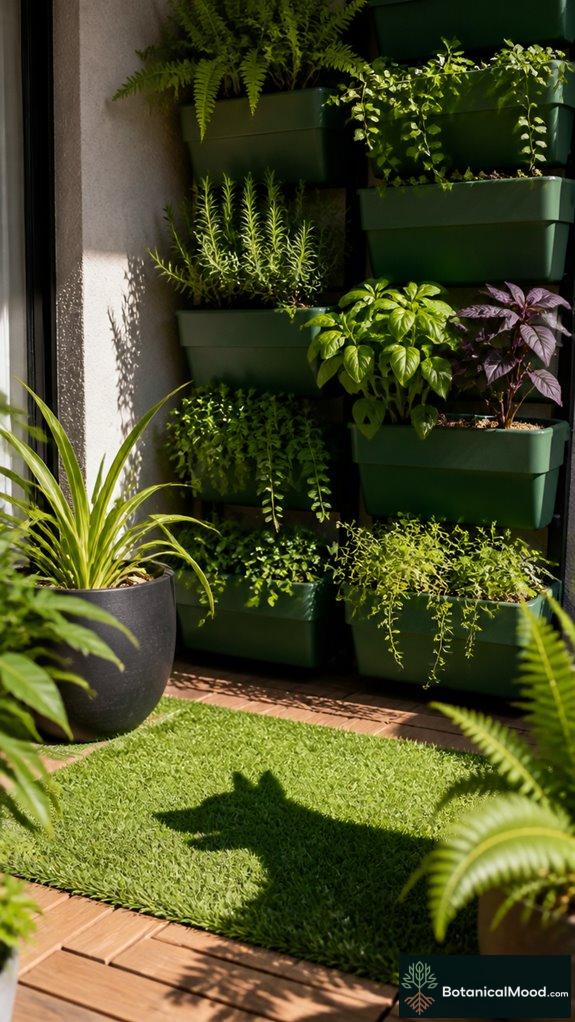
Have you ever considered how space-efficient gardening solutions can transform small or urban environments into lush, green retreats?
Modular vertical planters, like the Elho “Pure” series or Urban Leaf’s customizable systems, allow for layering diverse plant species in confined areas, maximizing visual appeal and functionality.
Modular vertical planters enable diverse plants in small spaces, boosting beauty and usability.
These structures, often built from durable, weather-resistant materials like recycled plastics or powder-coated metals, facilitate easy maintenance and scalability.
By integrating low-maintenance, pet-safe foliage—such as herbaceous perennials (Sedum species) or compact ferns (Nephrolepis)—you create vibrant green walls that enhance aesthetics and provide privacy, even in limited footprints.
This approach turns balconies or patios into thriving botanical sanctuaries.
Selecting Non-Toxic Plants
When selecting plants for a pet-friendly garden or balcony, prioritizing non-toxic varieties becomes paramount to guarantee the safety of curious animals.
I recommend choosing species such as *Cissus rhombifolia* (Grape Ivy), *Chlorophytum comosum* (Spider Plant), or *Sainingia* spp. (Snake Plant), known for their pet safety profile.
Always verify plant labels, favor reputable brands like Proven Winners or Monrovia, and avoid common toxic plants like dieffenbachia or azaleas.
Incorporating native plants like *Asarum canadense* (Wild Ginger) not only enriches biodiversity but also assures resilience against pests and disease, providing a secure environment for your pets. Utilizing greywater systems for irrigation can further enhance sustainability while maintaining safe growing conditions for your garden’s plant life.
For rabbits specifically, creating a dedicated grazing meadow with rabbit-friendly forage plants can provide natural browsing opportunities that support their dietary and behavioral needs.
FAQ
How Often Should I Water My Pet Turf?
You should water your pet turf every day, especially during hot weather, to keep it lush and hydrated. I find early mornings or late evenings work best, ensuring the grass stays healthy and your pets enjoy a soft, clean space.
Can I Use Regular Lawn Fertilizer on Pet Turf?
Sure, go ahead and use regular fertilizer, because who wouldn’t want their pet turf to turn into a lush, weed-filled jungle? Just kidding—you should pick a pet-safe fertilizer, ensuring your furry friend’s health stays top priority.
What Are Signs of Turf Damage From Pets?
You’ll notice brown patches, worn-out spots, or even foul odors if your pet damages the turf. Sometimes, the grass may seem flattened or uneven, showing signs that your furry friend’s play has taken a toll on your lawn.
How Do I Prevent Pet Odors From Forming?
To prevent pet odors, I recommend regular bathroom cleanup, washing pet bedding often, and applying enzymatic cleaners to break down smells. I also keep good ventilation and promptly address any accidents to keep your yard fresh and inviting.
Is Synthetic Turf Safe for All Pet Breeds?
I believe synthetic turf is generally safe for most pet breeds, but I recommend choosing pet-friendly options and consulting your veterinarian to guarantee it suits your specific pet’s needs and health considerations.
Summary
Creating the ideal pet-friendly lawn involves careful evaluation, strategic planning, and meticulous installation, ensuring durability, safety, and environmental harmony. By choosing sustainable, non-toxic turf like synthetic options with excellent drainage, and integrating specialized components such as perforated drainage pipes and modular vertical planters, you enhance functionality and aesthetics. Regular maintenance preserves this balance, promoting healthy growth, odor control, and resilience. Ultimately, a well-designed pet lawn reflects thoughtful choices, practical materials, and ongoing care—making your outdoor space safe, inviting, and enduring for both pets and people alike.