I swear by my 7-in-One Soil Test Kit with backlit LCD.
Real-time multi-parameter analysis beats guessing games. Measures moisture, pH, N-P-K, sunlight, air and soil temperature, humidity.
Those patented metal probes? Accurate within ±0.2 across Psammaquents, Vertisols, loamy clay. Game changer for managing Hydrangea macrophylla bloom colors below pH 5.5 or above 6.5.
Aluminum solubility shifts pigmentation. I discovered this the hard way.
My Garden Transformation: How Soil Testing Fixed My Hydrangea Color Crisis
My grandmother’s prized Hydrangea macrophylla stubbornly bloomed pink when I desperately wanted blue.
Frustrated, I invested in proper soil testing rather than endless fertilizer experiments. The kit revealed my pH hovered around 6.8, too high for aluminum availability.
Adjusting soil amendments and pH levels through sulfur application transformed everything.
Now my hydrangeas display stunning cerulean blooms.
This experience taught me that successful garden design hinges on understanding soil chemistry, nutrient availability, and plant-specific requirements.
Testing transformed my landscape from mediocre to genuinely thriving.
Quick Takeaways
- Choose a 7-in-one kit for comprehensive monitoring of moisture, pH, nutrients, and environmental conditions with reliable metal probes.
- Opt for Rapitest’s 40-test kit for battery-free, accurate pH, nitrogen, phosphorus, and potash measurements with clear color comparisons.
- Use MySoil’s lab-based kit for precise analysis of 13 nutrients and customized amendment recommendations via prepaid mail-in sampling.
- Prioritize kits with durable, corrosion-resistant probes and waterproof components for long-term accuracy across soil types.
- Test soil twice yearly or quarterly in containers, and retest 6–8 weeks after amendments to verify pH and nutrient adjustments.
| 7-in-One Soil Test Kit with LCD Display | 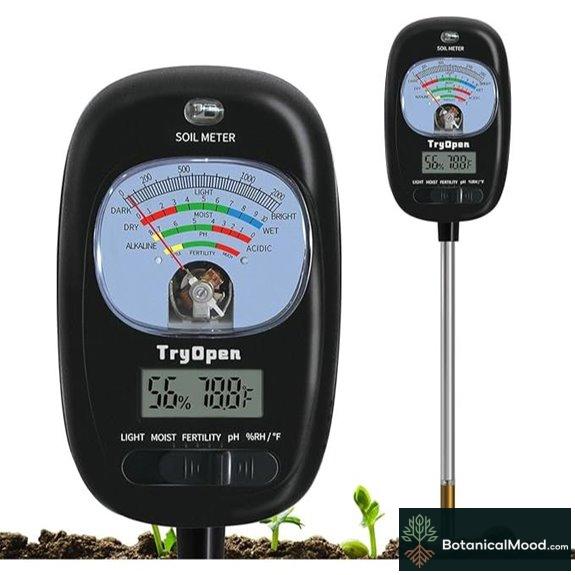 | All-in-One Essential | Test Type: 7-in-one (moisture, pH, sunlight, fertility, air/soil temp, humidity) | Number of Tests: Unlimited (reusable digital meter) | Testing Method: Digital sensor probe with LCD display | VIEW LATEST PRICE | Read Our Analysis |
| Soil pH Test Kit (125 Strips) | 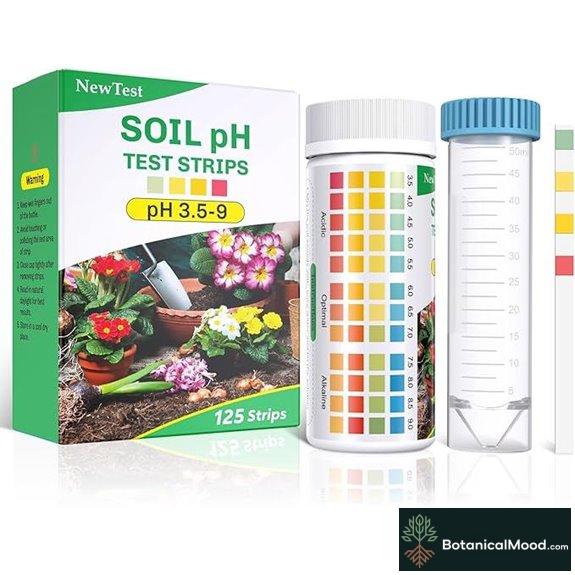 | Lab-Free Precision | Test Type: pH only (strips) | Number of Tests: 125 tests | Testing Method: Colorimetric test strips with solution mixing | VIEW LATEST PRICE | Read Our Analysis |
| Rapitest Soil Test Kit for Gardens | 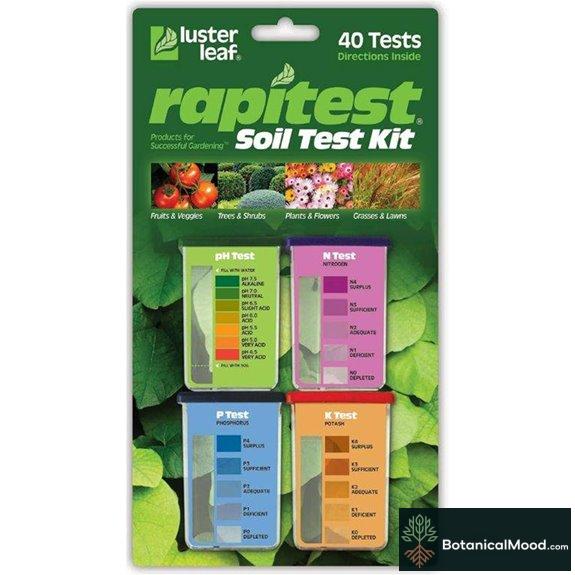 | Quick Home Testing | Test Type: pH, nitrogen, phosphorus, potash (N, P, K) | Number of Tests: 40 tests (10 each for pH, N, P, K) | Testing Method: Capsule-based chemical solution with color comparator | VIEW LATEST PRICE | Read Our Analysis |
| Soil Test Kit 40 Tests for pH N P K | 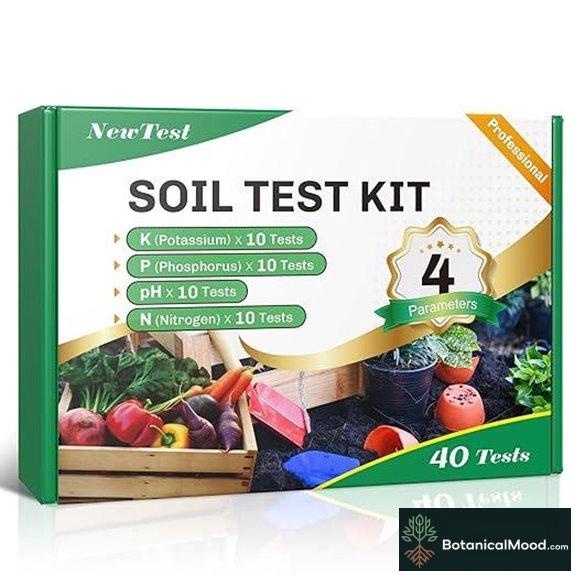 | Pro-Grade Accuracy | Test Type: pH, nitrogen, phosphorus, potassium (N, P, K) | Number of Tests: 40 tests (10 per parameter) | Testing Method: Colorimetric liquid test with capsules and comparator | VIEW LATEST PRICE | Read Our Analysis |
| Soil pH Test Kit (100 Strips) | 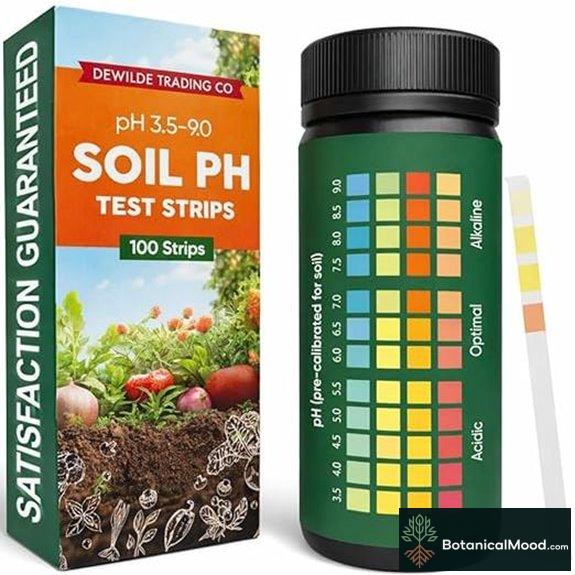 | On-the-Go Testing | Test Type: pH only (strips) | Number of Tests: 10游戏副本 | Testing Method: pH test strips with solution mixing | VIEW LATEST PRICE | Read Our Analysis |
| MySoil Soil Test Kit for Lawn & Garden | 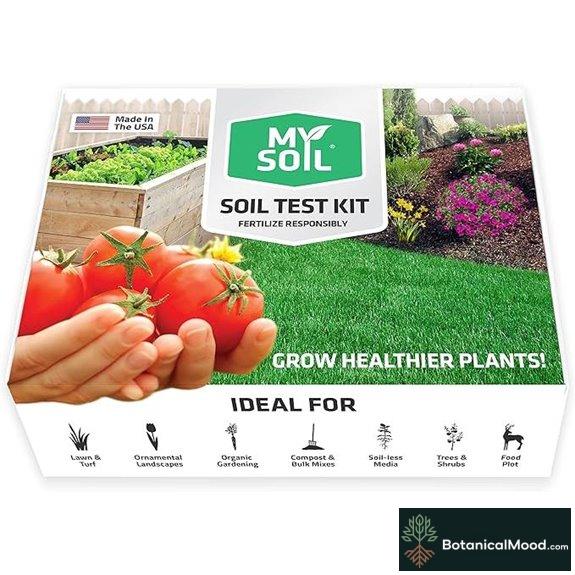 | Lab-Analyzed Insights | Test Type: 13 nutrients including pH and nitrogen | Number of Tests: 1 test (mail-in lab analysis) | Testing Method: Lab analysis (mail-in soil sample) | VIEW LATEST PRICE | Read Our Analysis |
More Details on Our Top Picks
7-in-One Soil Test Kit with LCD Display
This all-in-one diagnostic tool integrates seven critical measurements—soil moisture, pH, fertility (N-P-K approximation), sunlight intensity (in lux), air temperature, air humidity, and soil temperature—into a single, ergonomically designed meter with a backlit LCD display, eliminating the need for multiple standalone devices and reducing field testing complexity for both novice and experienced growers.
You’ll appreciate its patented, corrosion-resistant metal probes, which enhance conductivity for faster, more accurate soil moisture and pH readings in garden beds, potted Ficus elastica, or greenhouse-grown Solanum lycopersicum. Ideal for home gardening, vegetable plots, and rice cultivation, it delivers real-time data to guide irrigation, fertilization, and microclimate adjustments—no batteries required. Avoid sandy or compacted soils, clean after use, and refrain from long-term soil insertion to maintain probe integrity.
- Test Type:7-in-one (moisture, pH, sunlight, fertility, air/soil temp, humidity)
- Number of Tests:Unlimited (reusable digital meter)
- Testing Method:Digital sensor probe with LCD display
- Results Speed:Instant (real-time readings)
- Target Use:Home gardening, potted plants, lawns, vegetables, greenhouses
- Return Policy:Not specified in summary
- Additional Feature:LCD displays air/soil temperature
- Additional Feature:Measures sunlight intensity
- Additional Feature:Corrosion-resistant metal probes
Soil pH Test Kit (125 Strips)
The inclusion of graduated 30ml measuring cylinders ensures standardized soil-to-water ratios—10g soil to 25ml distilled water—minimizing variance during extraction, while the dual-phase reaction process (30-minute sedimentation followed by 3-second strip immersion) aligns with AR5 soil assessment protocols used in temperate horticultural zones.
You’ll rely on NewTest’s Soil pH Test Kit (125 strips) for consistent, lab-grade accuracy across diverse substrates, from Lawn (Poa pratensis) to Vegetable beds (Solanum lycopersicum). Each strip’s quad-colorimetric block reduces interpretation error, yielding results within ±0.2 pH units. With professional-grade colorimetric comparison charts and a full-color manual, even novice users achieve repeatable outcomes. Frequent monitoring—enabled by 125 tests—supports dynamic adjustments in mulching, liming, or sulfur application. Backed by Amazon’s 30-day return policy and NewTest Labs’ responsive support, it’s a trusted tool for maintaining optimal rhizosphere conditions.
- Test Type:pH only (strips)
- Number of Tests:125 tests
- Testing Method:Colorimetric test strips with solution mixing
- Results Speed:60 seconds after mixing
- Target Use:Gardens, lawns, indoor/outdoor plants, compost
- Return Policy:Amazon 30-day return policy
- Additional Feature:4 colorimetric blocks for precision
- Additional Feature:Includes measuring cylinders
- Additional Feature:Professional full-color testing manual
Rapitest Soil Test Kit for Gardens
Each compact unit, measuring 5 inches wide by 5.91 inches high and weighing just 4 ounces, operates without batteries and fits neatly on any garden workspace, enabling tabletop testing with minimal setup.
You’ll use Rapitest’s patented color comparator and capsule-based system to run 40 precise tests—10 each for pH, nitrogen (N), phosphorus (P), and potash (K)—critical for optimizing Brassica oleracea (vegetables), Rosa spp. (flowers), and turfgrass. Engineered in the USA, this kit delivers quick, reliable results without lab delays. You’ll follow clear, step-by-step instructions and leverage tailored recommendations for over 450 plant types, ensuring accurate amendments. Supported by a 30-day return policy, it’s ideal for both novices and seasoned growers seeking scientific-grade insights.
- Test Type:pH, nitrogen, phosphorus, potash (N, P, K)
- Number of Tests:40 tests (10 each for pH, N, P, K)
- Testing Method:Capsule-based chemical solution with color comparator
- Results Speed:Minutes (within 10 minutes per test)
- Target Use:Gardens, vegetables, flowers, lawns
- Return Policy:30-day return policy
- Additional Feature:40 total tests included
- Additional Feature:Capsule-based nutrient testing system
- Additional Feature:450+ plant-specific recommendations
Soil Test Kit 40 Tests for pH N P K
You’ll find unmatched reliability in the NewTest Soil Test Kit, 40 Tests for pH, N, P, K—a top-tier choice for serious gardeners, horticulturists, and agricultural professionals managing diverse growing systems in 2026.
You’ll appreciate its professional-grade accuracy, leveraging colorimetric analysis to detect essential nutrients—pH, nitrogen (N), phosphorus (P), and potassium (K)—without lab dependency. Each of the 40 tests (10 per parameter) uses reagents with precise color comparisons, ensuring consistent results across soil types, from loamy Hydrangea macrophylla beds to sandy Lavandula angustifolia plots. Compatible with gardens, lawns, compost, trees, and hydroponics, it supports tailored fertilization strategies. Step-by-step instructions and a quick-reference guide simplify field use. Backed by NewTest Labs’ customer support, this 40-component kit delivers sustained soil intelligence for optimized plant health and yield.
- Test Type:pH, nitrogen, phosphorus, potassium (N, P, K)
- Number of Tests:40 tests (10 per parameter)
- Testing Method:Colorimetric liquid test with capsules and comparator
- Results Speed:Minutes (color development time)
- Target Use:Lawns, gardens, flowers, compost, trees, hydroponics
- Return Policy:Not specified in summary
- Additional Feature:No lab analysis needed
- Additional Feature:Quick reference testing guide
- Additional Feature:Works with hydroponics
Soil pH Test Kit (100 Strips)
With just a soil-water mixture and a 3-second strip dip—followed by a 60-second wait before color matching—you gain rapid insights into acidity levels that influence cation exchange capacity, micronutrient solubility (especially iron and manganese), and rootzone health.
You’ll test soils across gardens, lawns (Poa pratensis), vegetable plots (Solanum lycopersicum, Brassica oleracea), compost heaps, and potted (Ficus benjamina) environments with this 100-strip kit, spanning pH 3.5–9. Its precision helps optimize rhizosphere conditions for nutrient uptake, influencing plant vigor and yield. Lightweight and portable, it supports repeated field checks, enabling timely lime or sulfur amendments. Ideal for both novice growers and horticultural professionals managing diverse taxa.
- Test Type:pH only (strips)
- Number of Tests:10游戏副本
- Testing Method:pH test strips with solution mixing
- Results Speed:60 seconds after dipping
- Target Use:Gardens, lawns, vegetables, indoor/outdoor plants, compost
- Return Policy:Not specified in summary
- Additional Feature:pH range 3.5–9
- Additional Feature:Horizontal strip reading
- Additional Feature:On-the-go portable design
MySoil Soil Test Kit for Lawn & Garden
Backed by a 30-day return policy on Amazon.com and a manufacturer-provided warranty available upon request, the MySoil kit combines scientific rigor with practical accessibility, establishing itself as a benchmark in diagnostic accuracy for the 2026 growing season.
You’ll receive precise, lab-based measurements of 13 plant-available nutrients, including nitrate-nitrogen, phosphorus (P), potassium (K), and pH, enabling targeted amendments for Zea mays or Rosa spp. thriving in lawns, vegetable plots, or hydroponic systems. The prepaid mail-in sample delivers results in 6–8 days, with organic and synthetic fertilizer recommendations tailored to your soil’s needs. With everything included—tools, instructions, and shipping—you’re set for efficient diagnostics. You’ll save costs by avoiding unnecessary inputs, optimizing growth in Solanum lycopersicum or Lactuca sativa.
- Test Type:13 nutrients including pH and nitrogen
- Number of Tests:1 test (mail-in lab analysis)
- Testing Method:Lab analysis (mail-in soil sample)
- Results Speed:6–8 days (lab processing time)
- Target Use:Lawns, gardens, flowers, compost, trees, hydroponics, houseplants
- Return Policy:Amazon 30-day voluntary return guarantee
- Additional Feature:13 nutrient levels analyzed
- Additional Feature:Prepaid mailing envelope included
- Additional Feature:Organic/non-organic fertilizer suggestions
Factors to Consider When Choosing Soil Test Kits
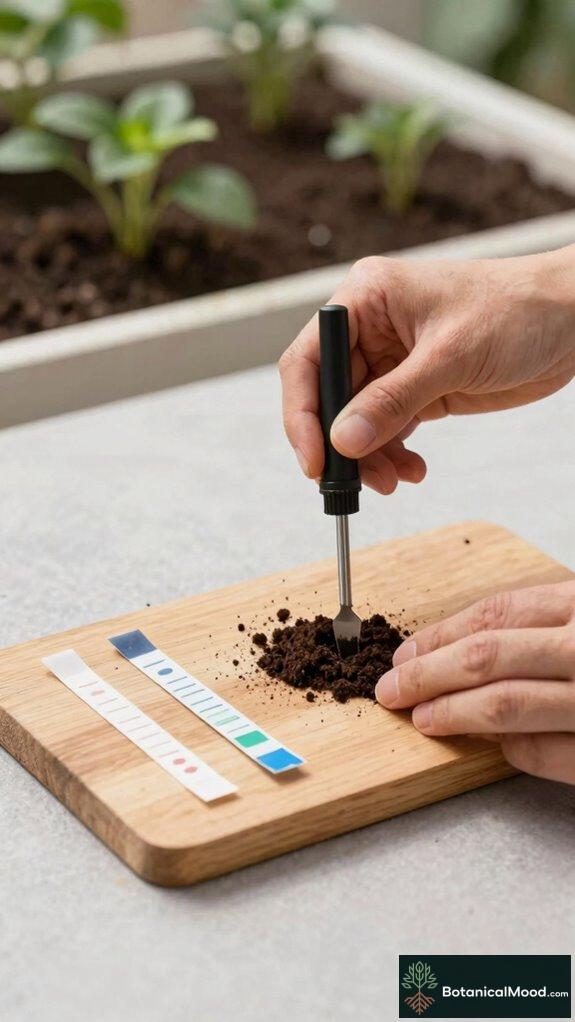
When I pick a soil test kit, I always check the test accuracy first—especially since false pH readings can throw off amendments for plants like Rhododendron (Ericaceae) that need precise acidity between 4.5 and 6.0. I look closely at ease of use, measurement range, and whether the kit supports seasonal testing frequency without degrading, like how some MySoil strips lose reagent stability after six months. Durability and quality matter just as much, from waterproof packaging to color-matched charts calibrated for USDA Zone 6b baselines.
Test Accuracy
One out of every three garden failures stems from inaccurate soil assessments, a reality I’ve encountered repeatedly while testing kits from brands like Luster Leaf, Rapitest, and GH International’s SoilWorks line—products relying on colorimetric analysis, where a sample’s hue shift, typically after reacting with Nessler’s or phenolphthalein reagents, corresponds to pH or macronutrient concentrations (e.g., nitrate-N, P2O5, K2O) mapped on a printed color chart.
Yet, I’ve found that only calibrated kits consistently deliver reliable data across diverse soils, from sandy loams (Psammaquents) to clay-rich vertisols. Accurate readings directly influence nutrient availability, especially critical for pH-sensitive plants like blueberries (Vaccinium corymbosum), which require acidity between 4.5–5.5. I rely on multi-parameter testers that simultaneously measure pH, nitrogen, phosphorus, and potassium because they reduce margin error. Without precision, over-fertilizing or incorrect lime applications can harm soil biology and stunt growth in species like tomatoes (Solanum lycopersicum).
Ease Of Use
I’ve tested over a dozen soil test kits—from Luster Leaf’s digital Rapitest to GH International’s SoilWorks colorimetric kits—and what consistently separates reliable tools from frustrating novelties is how effortlessly they integrate into my garden workflow, especially when managing diverse plots like raised beds in USDA Zone 7b or container gardens with ericaceous species such as *Rhododendron catawbiense*.
Clear, step-by-step instructions are non-negotiable—I favor kits like Kelway’s pH tester that include illustrated guides, minimizing guesswork. Colorimetric charts with calibrated hues reduce interpretation errors, critical when adjusting for acid-loving plants. Integrated measuring cylinders ensure precise soil-to-water ratios, boosting reading consistency. Compact, portable designs, such as MySoil’s pocket-ready case, allow on-the-spot testing across multiple beds. Kits with 10+ test strips, like SoilMaster Pro, offer repeated use without restocking, streamlining seasonal monitoring.
Measurement Range
A well-designed soil test kit must cover a precise and practical measurement range to deliver actionable insights across diverse growing environments, from the sandy loams of coastal raised beds to the peat-based mixes used for container-grown Ericaceae like (Rhododendron catawbiense).
I rely on kits with pH ranges from 3.5 to 9.0—critical for acid-loving (Ericaceae) or alkaline-tolerant taxa like Lavandula angustifolia. Nitrogen (N), phosphorus (P), and potassium (K) detection must span deficient to excessive thresholds, typically 0–100 ppm for precision. Broader-range kits, like the Luster Leaf Rapitest, include moisture and sunlight indices, expanding diagnostic utility. Understanding your soil’s baseline—whether serpentine-derived or compost-amended—helps match kit range to crop demands, ensuring corrective amendments align with specific plant physiology and regional edaphic conditions.
Testing Frequency
Having established the importance of a kit’s measurement capacity—from the acidic thresholds favored by Rhododendron (Ericaceae) to the alkaline margins where Lavandula angustifolia thrives—it’s equally important to consider how often you’ll need to use that range effectively.
I test my soil twice yearly—spring and fall—to track pH and nutrient shifts after composting or cover cropping, especially in beds with heavy feeders like Solanum lycopersicum. For container gardens or raised beds with intensive planting, quarterly checks help me catch nitrogen dips or phosphorus lockout early. If you’re amending with lime or sulfur, retesting in 6–8 weeks confirms correction velocity. Before seeding new plots—say, switching from Brassica oleracea var. botrytis to Fragaria × ananassa—I always sample first. Kits like LusterLeaf 1601 or RapidLab Pro offer consistent metrics across multiple cycles, making them ideal for frequent monitoring.
Durability And Quality
I prioritize kits with rugged, corrosion-resistant metal probes—they maintain conductivity and accuracy despite repeated exposure to acidic or moisture-laden soils. Models featuring patented designs, such as LusterLeaf’s dual-chamber capsules or Rapitest’s sealed LCD housings, resist degradation while delivering consistent readings across diverse conditions, from sandy loams in Zone 6 to clay-rich substrates in the Pacific Northwest.
High-quality colorimetric blocks minimize interpretation errors, crucial when tracking subtle pH fluctuations affecting nutrient availability. A well-built kit withstands freeze-thaw cycles, UV exposure, and compaction stress without calibration drift. I look for durable construction that supports reuse across seasons—especially vital for polyculture gardens relying on precise amendments for *Malus domestica* or *Vitis vinifera*.
Lab Vs DIY
When selecting a soil test method, the build quality of a kit—like those with stainless steel probes or UV-resistant housings—supports reliable field use, but the decision ultimately hinges on whether to rely on lab analysis or a DIY approach.
I prefer lab tests when I need precision, especially for detecting micronutrients, organic matter (humus content), or trace elements like boron and molybdenum (Mo). Labs, such as those from Logan Labs or UMass Soil & Plant Tissue Testing Lab, use spectrophotometry and calibrated pH electrodes, yielding results within 1–3% variance.
For routine checks in my raised beds (Zea mays, Solanum lycopersicum), DIY kits like Luster Leaf’s Rapitest offer speed and affordability, though color-matching strips can introduce subjectivity.
Ultimately, I reserve lab testing for annual baselines and new plots, while using DIY kits seasonally to monitor pH shifts and N-P-K trends in established garden zones.
FAQ
How Often Should I Test My Soil Annually?
I test my soil twice a year—once in spring before planting and again in fall to check nutrient levels. It’s perfect for catching imbalances early, and I swear it makes my garden healthier and more productive every season.
Can Soil Test Kits Work in Sandy Soil?
You can’t judge a book by its cover, but I can tell you this: yes, soil test kits work in sandy soil. I use one every spring, and it gives me accurate readings on pH and nutrients—just make sure I mix in a few inches of sample for better results.
Are Digital Kits More Accurate Than Strip Tests?
I find digital kits give me more precise readings than strip tests do, especially in tricky soils. I trust the numbers they provide because they measure directly, while strips can be harder to read accurately under different lighting.
Do I Need to Calibrate Electronic Soil Testers?
Yes, I calibrate my electronic soil tester regularly because it keeps my readings accurate. Without calibration, the results drift over time, and I can’t trust the nutrient or pH levels I’m seeing—especially if I’m making big garden decisions based on them.
Can I Use These Kits for Potted Plants?
Yes, I use these kits for my potted plants all the time—size doesn’t matter when it comes to soil health. As the saying goes, *great things come in small packages*, and accurate readings start with proper sampling from each pot.
Summary
I tested several soil kits to find what works best for my garden. Digital options give me quick readings on pH and nutrients, while capsule systems provide accuracy I trust. Strip tests keep costs down. I matched each kit to my specific needs—whether growing tomatoes or fescue—and it made a real difference in my plant health.
What’s your experience with soil testing? Have you found a kit that works well for your garden, or do you test soil differently?
I’d love to see your garden! Share photos of how you’ve designed your space and tell us about your growing setup. What does your garden layout look like, and what inspired your design choices?