Creating an edible garden is a bit like hosting a dinner party in your backyard—everyone’s invited, especially those salsa-loving tomatoes and aromatic basil that just can’t resist crashing the show!
I’ve blended my vibrant heirloom tomatoes and fragrant herbs with splashy edible flowers. You know, just to get the garden gossip flowing.
Oh, and vertical gardening? Talk about instant drama! It maximizes space and makes my plot look like the hottest hangout in town.
Sure, plant selection can feel like a real relationship commitment. What if the nasturtiums don’t get along with the calendula?
Trust me, there’s joy in this uncertainty—it’s like a botanical episode of “Survivor”!
Designing a Garden: My Cheeky Twist on Planting
Last summer, I decided to spice things up by layering my garden with flowers and veggies. Just a hop and skip from my kitchen, a cascade of color emerged! I can still remember the perfect moment when my daughter squealed as she discovered a hidden patch of cherry tomatoes amidst a sea of nasturtiums. Who knew that food could be this whimsical? I went ahead and paired marigolds with squash, fearing ambush at first. Looking back, those marigolds turned out to be the real besties of the garden. They kept pests at bay like an expert bouncer. Balancing beauty and practicality not only enhanced the garden’s vibe but made it a sanctuary of taste and cheer. Who knew learning could be so visually delicious?
Quick Takeaways
- Combine vibrant fruits, vegetables, and edible flowers like nasturtiums for visual appeal and culinary use in your garden.
- Utilize companion planting to enhance productivity while creating a harmonious and aesthetically pleasing garden layout.
- Incorporate structural plants like kale alongside colorful blooms to add depth and interest to your edible garden.
- Maximize space with vertical gardening techniques and tiered planting beds for both beauty and efficiency.
- Emphasize sustainability through practices like composting and rainwater harvesting to nurture your garden’s health and beauty.
The Beauty of Edible Landscapes

When I step into an edible garden, I’m often struck by the harmony that exists between functionality and beauty, where each plant not only serves a purpose but also contributes to the overall aesthetic of the scenery.
The vibrant colors of heirloom tomatoes against lush, fragrant basil create a stunning visual tapestry, while the delicate blooms of nasturtiums attract pollinators.
Heirloom tomatoes and fragrant basil weave a vibrant tapestry, drawing in delicate blooms that enchant both the eyes and the senses.
Combining textures, such as the soft leaves of kale with the spiky form of chives, further enhances the allure.
This enchanting balance often inspires my passion for gardening, as I witness firsthand how nature can both nourish and delight the senses. Incorporating companion planting strategies not only maximizes the productivity of the garden but also creates a visually pleasing arrangement of plants.
Selecting the Right Plants for Visual Appeal

Crafting a visually appealing edible garden requires a thoughtful selection of plants that not only fulfill culinary purposes but also create an enchanting setting.
Consider incorporating vibrant vegetables, like purple basil and rainbow chard, alongside fragrant herbs such as rosemary and thyme. The deep greens of kale contrast beautifully with the bright blossoms of edible flowers like nasturtiums and calendula.
Layering textures through foliage—think feathery dill beside broad-leafed zucchini—adds depth. When designing this tapestry, I often reflect on cultivating beauty and utility, which inspires the heart of Botanical Mood, a passion for transforming ordinary spaces into edible landscape works of living artistry.
Designing With Space Efficiency in Mind

Maximizing every square foot in an edible garden reveals the potential to cultivate a diverse array of plants, ensuring beauty, utility, and sustainability coexist harmoniously. I often find that vertical gardening or layering plants not only saves space but also creates inviting visuals. Incorporating trellises for climbing beans or using tiered planting beds helps to amplify my garden’s productivity while maintaining aesthetic appeal. Moreover, integrating sustainable urban gardening techniques enhances both the ecological footprint and the visual charm of the garden space. Companion planting enriches soil and repels pests, creating a symbiotic relationship amidst my flowers. By embracing space efficiency, I’ve crafted a garden that’s not just productive but also a joyful sanctuary. That’s the spirit behind Botanical Mood—a living, breathing celebration of nature.
Creating Harmony With Color and Texture
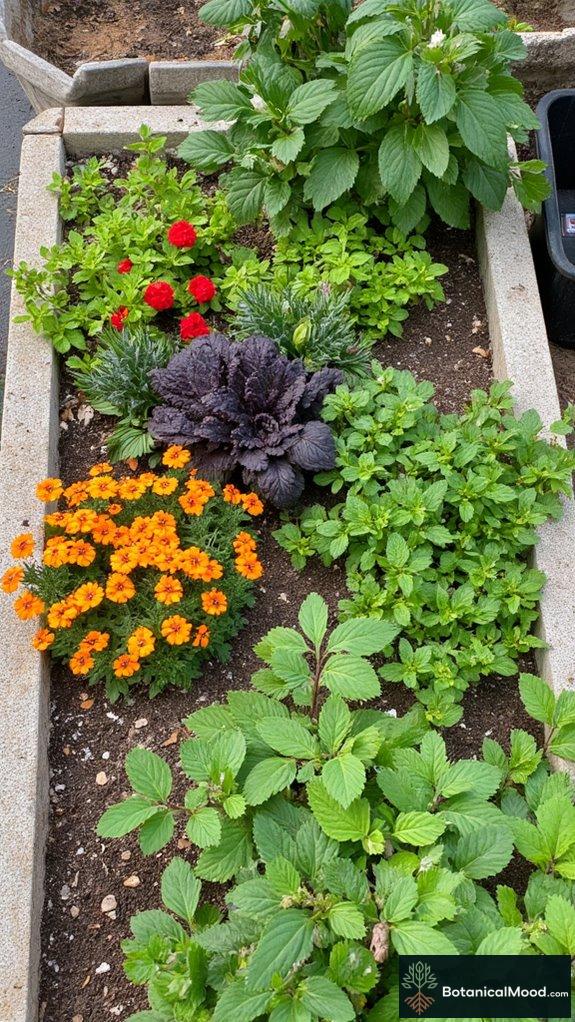
As the seasons shift and new growth emerges, I find that the interplay of color and texture in my edible garden can create an enchanting atmosphere that draws me in and elevates my spirits.
Merging vibrant hues with intriguing textures transforms the space into a sanctuary.
- Combine leafy greens with colorful flowers like nasturtiums.
- Use herbs with contrasting foliage, such as purple basil alongside bright mint.
- Incorporate structural plants, like kale, for depth.
- Select containers with varying surface finishes to create visual interest.
This harmony not only delights the eye but also inspires my passion for cultivating beauty and nourishment. Additionally, implementing regenerative planting techniques can enhance soil health and promote the resilience of your garden ecosystem.
Attracting Pollinators and Beneficial Insects

To cultivate a thriving edible garden, I’ve discovered that attracting pollinators and beneficial insects is essential for enhancing both growth and biodiversity. My garden becomes a sanctuary, filled with buzzing friends like bees and butterflies, who not only beautify the space but also play critical roles in pollination.
Here’s a quick guide to plants that invite these allies:
| Pollinator | Attracting Plants |
|---|---|
| Bees | Lavender, Sunflowers, Clover |
| Butterflies | Anise, Milkweed, Coneflower |
| Ladybugs | Dill, Fennel, Marigold |
| Hoverflies | Alyssum, Yarrow, Caraway |
| Lacewings | Nasturtium, Cosmos, Chervil |
Sustainable Practices for Thriving Edible Gardens

Cultivating a successful edible garden means embracing sustainable practices that not only benefit the soil but enhance plant growth and yield.
I’ve found that integrating these methods creates a harmonious balance, fostering a vibrant ecosystem in my garden.
- Composting kitchen scraps enriches soil health.
- Rainwater harvesting conserves resources effortlessly.
- Crop rotation minimizes pest issues and nutrient depletion.
- Planting native species attracts beneficial insects naturally.
As I nurture my garden with these practices, I can truly feel the connection to the land, creating a space that’s not only productive but also beautiful, intertwining nature’s artistry with my own.
Case Study: Unique Garden Design

Unique garden designs transform physical spaces into thriving ecosystems that reflect both functionality and aesthetics.
In my experience, tailoring layouts to specific site conditions—like unusual yard shapes and mature trees—creates harmony. Sunny corners become perfect homes for pumpkins, while L-shaped raised beds maximize planting areas, integrating trellises for climbing berries and inviting seating for enjoyment. The initial walkthrough conducted with clients helps identify unique opportunities for growth in their gardens.
I utilize sustainable materials such as redwood and guarantee pest prevention for longevity. This thoughtful blend of edible plants and ornamental features not only enhances beauty but also fosters biodiversity, offering a vibrant haven that nourishes both body and soul.
It’s all about celebrating the artistry of nature while cultivating food.
Ornamental-Food Crop Integration Layout

While creating a harmonious garden space, integrating ornamental plants with food crops opens up a world of beauty and functionality. I love the idea of blending aesthetics with practicality, so I focus on certain aspects:
- Choose edible plants with vibrant leaves and attractive flowers.
- Group plants with similar care needs for simpler maintenance.
- Utilize vertical space with trellises, adding dimension and interest.
- Position frequently harvested edibles near kitchen access for convenience.
I’ve found that incorporating these strategies not only enhances biodiversity but creates a visually stunning environment, embodying the spirit of sustainability that I cherish.
Meet the Garden’s Creator

Sara Gasbarra, hailing from the United States, has a deep-rooted passion for garden design, fueled by her culinary collaborations with chefs that emphasized the significance of integrating edible plants into urban environments.
To achieve her garden vision, Gasbarra meticulously planned the design process, beginning with site assessments and consultations with local chefs. She focused on creating functional yet beautiful culinary settings that harmoniously blend aesthetics and usability, ensuring the garden met both culinary and ecological needs.
The final garden design utilized innovative tools from brands like Fiskars for precision planting and accessories like vertical gardening systems from Verdura.
Collaborating with horticulturists, Gasbarra implemented a variety of edible plants, reflecting her commitment to sustainable gardening practices and enhancing biodiversity.
Iconic Edible Flowering Species

Iconic edible flowering species offer an exquisite blend of beauty and utility, transforming ordinary gardens into vibrant culinary havens.
Nasturtium, with its peppery leaves and bright blooms, adds a fantastic kick to salads, while calendula’s saffron-like petals bring color and flavor.
Nasturtium’s peppery leaves and vibrant blooms beautifully elevate salads, while calendula’s saffron-like petals infuse color and flavor.
The delicate taste of rose petals elevates desserts, and chive flowers provide a lovely onion hint to salads. Sunflowers, both cheerful and edible, create colorful dishes.
Meanwhile, squash blossoms, prized for their delicate nature, delight in various cuisines.
These flowers, beautifully integrated within my garden, remind me of the harmonious joy that comes with creating a culinary paradise.
References
- https://www.tenthacrefarm.com/see-how-easily-you-can-create-an-edible-landscape/
- https://fieldreport.caes.uga.edu/news/grow-food-with-style-edible-landscaping-blends-beauty-and-bounty/
- https://www.gardencentermag.com/article/vegetables-garden-centers-edible-landscape/
- https://ipm.cahnr.uconn.edu/sustainable-edible-landscapes/
- https://raleighrealty.com/blog/gardening-statistics-trends
- https://www.newfoundfoodscapes.com/blog/case-study-lafayette
- https://attra.ncat.org/publication/community-forest-gardens-case-studies/
- https://yavapailandscaping.com/create-edible-landscape-landscape-design-services/
- https://plewsgardendesign.co.uk/easy-maintenance-edible-gardens/
- https://ucanr.edu/blog/coastal-gardener/article/edible-landscaping
- https://www.gardentech.com/blog/gardening-and-healthy-living/mixing-edible-and-ornamentals-in-your-landscape
- https://www.ecolandscaping.org/02/designing-ecological-landscapes/edible-landscaping/mixing-it-up-can-edibles-and-ornamentals-get-along-in-a-designed-garden/
- https://www.ralstonarchitects.com/edible-landscape-design/
- https://www.plowzandmowz.com/blog/edible-landscapes-for-food-and-beauty/
- https://www.thegardenglove.com/ornamental-edibles/
- https://www.gardeners.com/how-to/garden-designer-edibles-chef-backyard/9674.html
- https://en.wikipedia.org/wiki/Jamie_Durie
- https://thecookscook.com/columns/the-cooks-garden/venturing-edible-landscaping/
- https://www.mcnallyrobinson.com/9789625932934/rosalind-creasy/the-edible-flower-garden
- https://gardenbetty.com/edible-flowers/
- https://gardenerspath.com/plants/flowers/edible-flowers/
- https://bouqs.com/blog/edible-flowers/
- https://gardentherapy.ca/ten-edible-flowers/
- https://www.gardenia.net/guide/edible-flowers-for-your-garden