
Small Space Garden Magic: How to Transform Tiny Planters?
Want to turn your tiny planters into a jungle? Trust me, it’s easier than it sounds!
I mean, who knew that stacking pots would lead to a vertical garden?
I’ve played around with quirky containers like rustic wood and chic ceramics, making my small space bloom.
The secret? Premium potting soil sprinkled with perlite and worm castings. Just imagine the jealous looks from neighbors!
Got sunlight? I cram my pots by a sunny wall. With a little ingenuity, there’s a world of tiny garden magic waiting for you.
And yes, the best part? No green thumb needed.
My Vertical Garden Journey: A Design Revelation
A couple of summers ago, I embarked on a quest to beautify my balcony space. Armed with an assortment of planters, I quickly learned that layering them was my secret weapon. One morning, while sipping coffee, I was struck by my rainbow of flowers cascading down!
Can you picture it? That burst of color transformed my mundane space into a vibrant retreat. While friends debated whether I was channeling my inner horticulturist or simply avoiding home chores, I just basked in the compliments.
I realized that garden design isn’t just about aesthetics; it’s about creating your personal oasis. Embrace pots, textures, and a bit of whimsy to craft your narrative!
Quick Takeaways
- Opt for vertical planters to maximize space and allow climbing plants to flourish, enhancing your garden’s depth and beauty.
- Use diverse container types and modern minimalist designs to create a harmonious aesthetic that complements your small garden.
- Improve soil quality with high-quality potting mixes and amendments like perlite to promote healthy growth in tiny planters.
- Strategically position containers for optimal sunlight exposure, ensuring plants receive 6-8 hours of sunlight daily for ideal growth.
- Implement crop rotation and companion planting to maximize yields and maintain soil health in your compact garden space.
Embrace Vertical Gardening for Small Spaces

When it comes to maximizing space in a small garden, vertical gardening can be a game changer.
Using vertical planters, I’ve transformed my limited space into a lush, green oasis. Climbing plants, like the enchanting Trachelospermum jasminoides (star jasmine) and vibrant Phaseolus coccineus (scarlet runner beans), thrive on trellises, cascading beautifully down and creating depth.
Transforming limited spaces with vertical planters brings lush greenery and depth, as climbing plants thrive and cascade beautifully.
These planters not only elevate flora but also provide structure and design. Creating a vertical herb garden can further enhance small spaces by adding both greenery and utility.
Incorporating various textures and colors can enhance the overall aesthetic, allowing a harmonious blend of nature and elegance.
With careful selection and arrangement, I’ve truly captured the essence of a thriving garden, maximizing every inch available.
Choosing the Right Containers: Style Meets Function
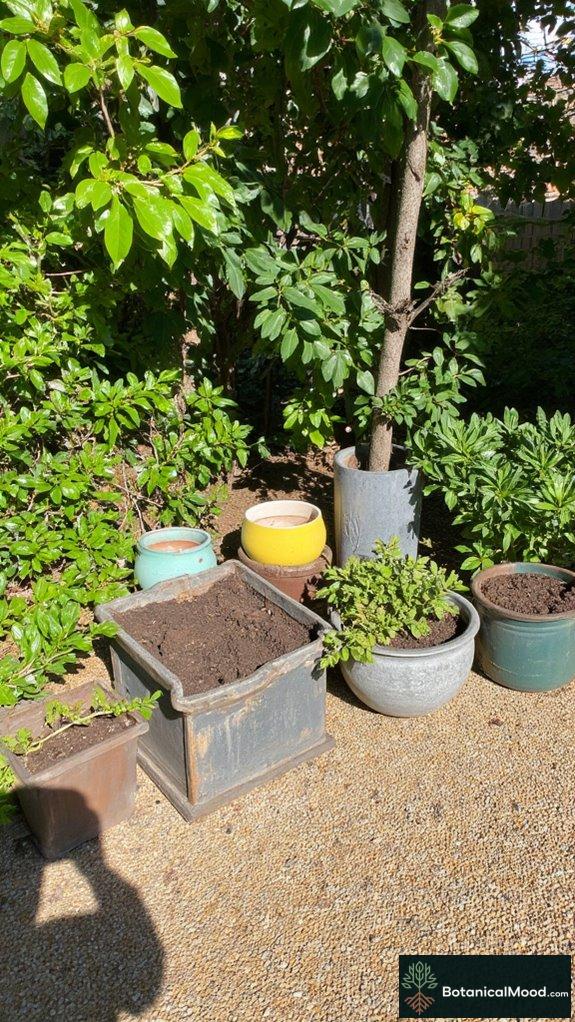
Choosing the right containers for your garden can truly elevate your space, as each pot not only serves a practical purpose but also contributes to the overall aesthetic of your environment. Incorporating modern minimalist garden composition can enhance the harmony between your plant selections and container styles.
| Container Type | Material | Color Theme |
|---|---|---|
| Modern Planters | Designer Ceramics | Seasonal Brights |
| Functional Shapes | Eco-Friendly Wood | Earthy Tones |
| Upcycled Ideas | Reclaimed Metals | Vintage Pastels |
Incorporating modern container styles and functional planter shapes helps me curate the perfect plant aesthetic themes, keeping sustainability in mind through eco-friendly planters that reflect my personal style.
The Best Soil Mix for Container Herb and Vegetable Gardens

The foundation of a thriving container herb and vegetable garden lies in the soil mix, which can greatly impact plant growth and yield.
The soil mix is essential for a successful container herb and vegetable garden, influencing both growth and yield.
For successful herb cultivation, I always opt for a blend that combines high-quality potting soil with various soil amendments.
Incorporating elements like perlite, coconut coir, and worm castings not only improves drainage but also enhances nutrient retention.
Brands like Miracle-Gro and FoxFarm offer excellent mixes tailored for container gardening.
Emphasizing Drainage and Moisture Control

Creating a container garden that flourishes often means prioritizing drainage and moisture control, especially if you’re working with limited space.
I always start by ensuring proper drainage solutions, like using pots with adequate holes or placing stones at the bottom. These methods prevent water buildup, which can drown your greenery.
Moreover, incorporating a moisture retention medium, like coconut coir or vermiculite, can help retain just the right amount of water, promoting root health for herbs like Basil (Ocimum basilicum) and vegetables such as peppers (Capsicum annuum).
Mastering these techniques allows me to maintain vibrant, thriving plants, even in compact environments.
Optimizing Sunlight: Placement Tips for Container Gardens
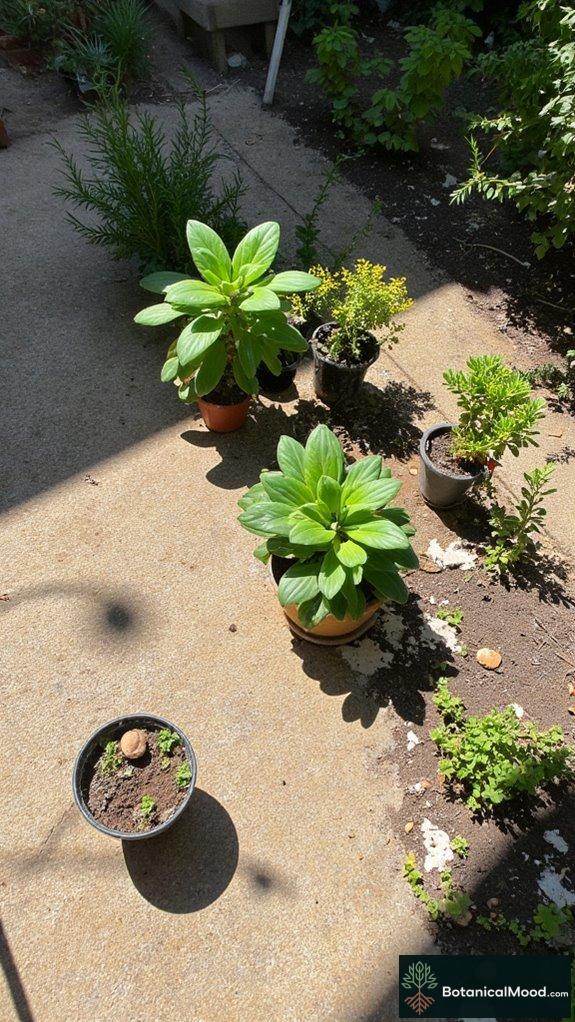
Maximizing sunlight is crucial for the success of any container garden, and I’ve found that strategic placement can make all the difference.
To enhance growth, I like to monitor sunlight angles throughout the day, noting how light intensity shifts. Placing containers where they receive ideal exposure, typically 6-8 hours of sunlight, is key.
I often position my pots near south-facing walls, which reflect heat and light. Don’t forget to rotate your plants regularly to verify they’re evenly bathed in sunlight.
This mindful approach makes nurturing your garden feel like a powerful partnership with nature, maximizing both beauty and productivity in my limited space.
Designing With Elevation: Adding Visual Depth

While planning my small space garden, I’ve come to realize that incorporating elevation can dramatically enhance its visual depth and overall appeal. By utilizing elevated aesthetics, I create intriguing layers in my design.
I arrange various heights through tiered stands or hanging planters, introducing layered plantings that draw the eye upward.
For example, positioning trailing plants like *Tradescantia zebrina* above vibrant centerpieces such as *Petunia x hybrida* not only adds complexity but also guarantees every plant gets adequate light.
This strategy enriches the garden’s texture and overall success, making it a space of beauty and control that embodies my vision and passion.
Implementing the “Musical Chairs” Technique for Fresh Arrangements
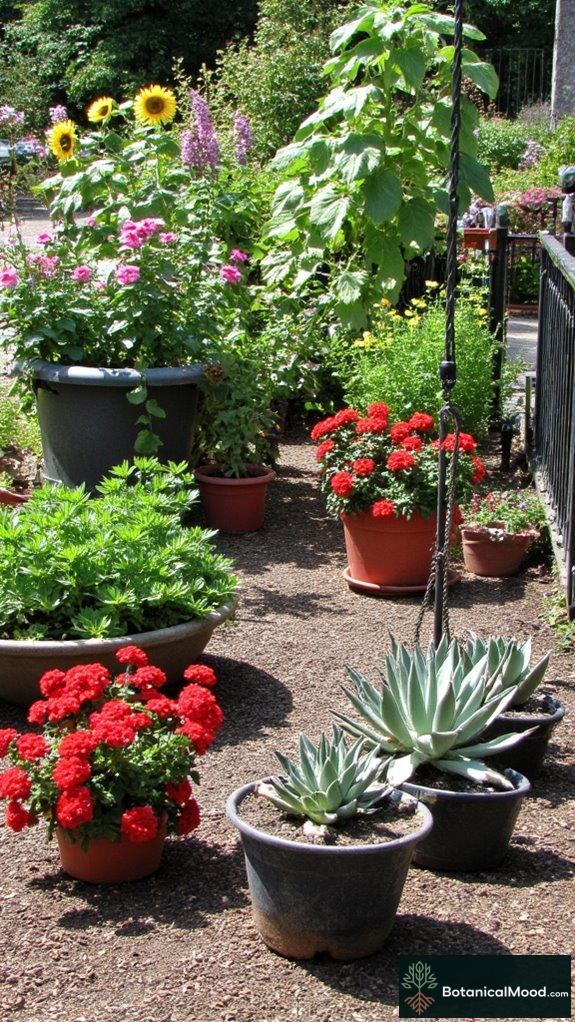
In my pursuit of a vibrant small space garden, I’ve discovered the transformative “Musical Chairs” technique, a dynamic method for revitalizing arrangements and cultivating a sense of liveliness within the confines of limited square footage. By simply rotating my musical planters, I create creative arrangements that surprise and delight.
Here’s how I categorize my planters for easy rotation:
| Planter Type | Ideal Plants |
|---|---|
| Tall Planters | Sunflowers (Helianthus annuus) |
| Medium Planters | Herbs (Ocimum basilicum) |
| Colorful Pots | Petunias (Petunia × hybrida) |
| Hanging Planters | Strawberries (Fragaria × ananassa) |
| Succulent Pots | Aloe (Aloe vera) |
With each swap, my garden breathes new life.
Companion Planting: Maximize Space and Yields

Companion planting opens up a world of possibilities for maximizing yields and making the most of my limited garden space, as it enables a harmonious relationship between plants that can benefit immensely from one another.
I’ve discovered the magic of herb companions like basil (Ocimum basilicum) with tomatoes (Solanum lycopersicum), enhancing flavors and boosting pest management.
Thoughtful vegetable pairings promote nutrient sharing and growth synergy, while seasonal pairings guarantee soil compatibility. Incorporating companion flowers like marigolds (Tagetes spp.) adds beauty and complexity.
Thoughtfully pairing vegetables fosters nutrient sharing and growth synergy, while seasonal companions ensure soil fertility and harmony in the garden.
Embracing crop rotation not only maintains soil health but also enriches my garden’s overall essence, allowing me to create a thriving and aesthetically pleasing space.
Succession Planting for Continuous Harvests
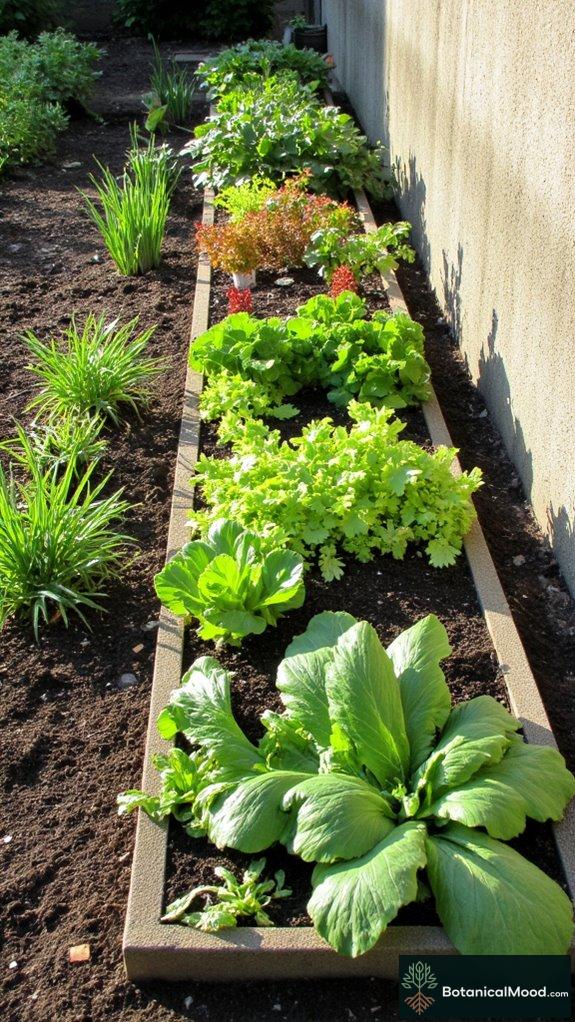
How can I guarantee that my small space garden yields a continuous bounty throughout the growing season?
By practicing succession planting, I can make every inch count. I start with timely planting of fast-growing crops like radishes (Raphanus sativus) and lettuce (Lactuca sativa), followed by a rotation into slower growers like carrots (Daucus carota).
This crop rotation keeps nutrients replenished and pests at bay, ensuring a vibrant garden. I often schedule plantings every few weeks, so there’s always something ready for harvest.
With careful timing and planning, my tiny plot transforms into a lush, productive haven, delivering fresh produce in waves.
Combining Aesthetics and Utility in Plant Selection

Creating a beautiful and productive garden doesn’t have to mean sacrificing aesthetics for practicality. By selecting plants that offer both visual appeal and utility, you can achieve an aesthetic balance that enhances your space. Consider incorporating a variety of textures and colors, promoting plant diversity while ensuring each plant serves a purpose.
Here’s a simple guide to help you balance beauty and usefulness:
| Plant Type | Aesthetic Appeal | Utility |
|---|---|---|
| Herbs (e.g., Basil) | Lush green leaves | Culinary uses, fragrance |
| Succulents (e.g., Aloe) | Unique shapes and colors | Air purification, medicinal properties |
| Edible Flowers (e.g., Nasturtium) | Colorful blooms | Salad garnish, additional nutrients |
| Vegetables (e.g., Bell Peppers) | Vibrant hues | Culinary uses, nutritional value |
Consider how each selection contributes to your garden’s identity!
Seasonal Considerations for Urban Container Gardens

As the seasons shift, the opportunity to revitalize my urban container garden arises with each changing temperature and daylight pattern. I carefully select seasonal crops suited for my climate, understanding the significance of climate adaptations to thrive throughout the seasonal cycles.
When planning, I consider humidity effects and temperature variations, adjusting watering habits accordingly. Effective pest management becomes essential as I anticipate weather patterns, while implementing frost protection measures to safeguard delicate plants.
During plant dormancy, I embrace seasonal decor, creating visual interest with ornamental items. Each choice enriches my garden, revealing the magic within even the smallest spaces.
Vertical Herb and Veggie Stacking
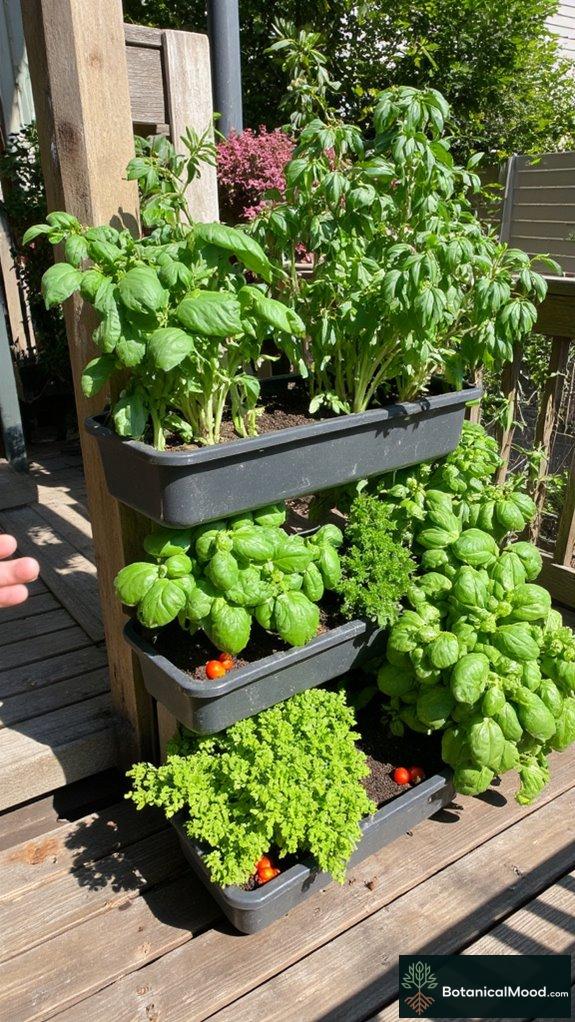
Vertical gardening transforms even the tiniest outdoor spaces into a lush sanctuary, and I find it an enchanting blend of functionality and aesthetic appeal.
By utilizing vertical spacing, I can cultivate delicious herb varieties like basil (Ocimum basilicum), parsley (Petroselinum crispum), and thyme (Thymus vulgaris) alongside petite vegetables such as cherry tomatoes (Solanum lycopersicum) and spinach (Spinacia oleracea).
Utilizing vertical gardening allows me to grow flavorful herbs and compact vegetables in even the smallest spaces.
Stacking planters guarantees efficient use of space, allowing me to grow up to 90 plants in just one unit.
Proper soil management and strategic plant selection help prevent overcrowding, assuring each tier remains a thriving, productive garden, brimming with flavor and freshness.
Efficient Multi-Level Planter Scheme
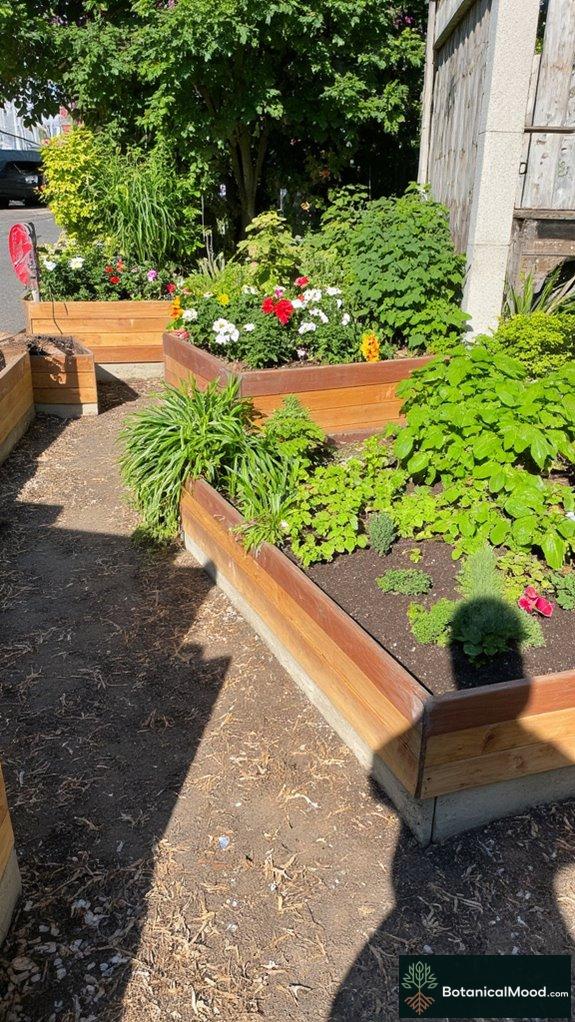
After establishing a thriving vertical garden, the next exciting step involves implementing an efficient multi-level planter scheme that maximizes planting potential without sacrificing beauty or accessibility.
Creating these stunning, layered plantings enhances structural stability, and elevates your gardening game. Here’s what I recommend:
- Use rot-resistant lumber like cedar for durability.
- Incorporate angled supports to maintain the planter’s strength.
- Group plants based on sunlight or moisture needs to optimize growth.
These strategies not only create an appealing visual display but also cater to your precise gardening goals, making every inch of your space count!
Meet the Creative Gardener

Lindsey Taylor, hailing from Asheville, North Carolina, transformed her small urban space into a vibrant garden after finding solace in nature during difficult times, wishing to create her own green sanctuary.
To design her oasis, Lindsey researched various gardening techniques, consulted books like “The Garden Primer,” and enlisted help from local experts. She sketched multiple layouts and chose a mix of vertical gardening and container gardening to maximize her limited space.
Lindsey utilized tools from brands like Fiskars and Black+Decker, employing her trusty trowel and pruner. She added decorative elements like ceramic pots from Terra Cotta and consulted horticulturist David W. for plant choices, ensuring a thriving ecosystem.
Compact Container Gardening Techniques

Compact container gardening techniques open up a world of possibilities for urban dwellers and those with limited outdoor spaces.
This allows the creation of vibrant green oases right on balconies or patios.
Summary
I love transforming tiny planters into vibrant spaces. With a little creativity, vertical gardening becomes easy, and I can use stylish containers to make the most of my small area. Even small herbs like basil and chives bring joy and flavor to my life.
I’d love to hear about your own experiences with small space gardening. What creative ideas have you tried?
Feel free to share pictures of your garden and tell us how you designed it!
References
- https://www.parkseed.com/blogs/park-seed-blog/small-space-container-gardening-your-guide-to-growing-big-in-tiny-spaces
- https://www.shrubhub.com/blog/container-gardening-101-growing-big-impact-in-small-spaces.php
- https://extension.umn.edu/news/container-gardening-small-spaces-big-beauty-tiny-places
- https://www.johnson.k-state.edu/programs/lawn-garden/agent-articles-fact-sheets-and-more/agent-articles/vegetables/Container Gardens vs Traditional Gardens.html
- https://www.finegardening.com/article/small-space-gardening-make-the-most-of-a-small-space
- https://beautifuleatsandthings.com/2024/07/10/small-space-container-gardening-for-beginners/
- https://www.finegardening.com/article/the-elements-of-great-garden-container-design-simplified
- https://utianews.tennessee.edu/grow-your-garden-in-a-small-space-with-containers/
- https://www.marlygarden.com/blogs/news/everything-you-need-to-know-about-stackable-planters
- https://www.youtube.com/watch?v=6MrRiqtS3hs
- https://www.youtube.com/watch?v=eaS0w3Srwd4
- https://journeywithjill.net/gardening/2021/04/06/how-to-grow-in-a-greenstalk-vertical-planter/
- https://www.youtube.com/watch?v=xnOVR07GG3M
- https://growingthehomegarden.com/how-to-build-raised-multi-leveled-planter-garden-box/
- https://chrislovesjulia.com/build-tiered-garden-planter-box/
- https://www.thisoldhouse.com/house-one/22278247/3-tiered-planter
- https://www.youtube.com/watch?v=iijr-Uh_9Rk
- https://www.youtube.com/watch?v=k9ZqpA_qHjY
- https://www.youtube.com/watch?v=ScQW5E4vLN4
- https://www.thecountrychiccottage.net/diy-tiered-planter-pots-with-patio/
- https://byjema.com/blogs/byjema-univers-inspiration/plant-in-multiple-levels
- https://growinginthegarden.com/garden-outside-the-box-creative-container-gardening-ideas/
- https://www.swansonsnursery.com/blog/setting-up-your-container-garden-tips-for-apartment-dwellers-and-smallspaces
- https://www.stonegableblog.com/everything-you-need-to-know-about-container-gardening/
- https://www.yougrowgirl.com/resources/container-gardening-guide/
- https://www.chelseagreen.com/2023/how-much-food-can-be-grown-in-a-small-space/
- https://oregonstate.edu/stories/no-yard-no-problem-grow-thriving-container-garden


