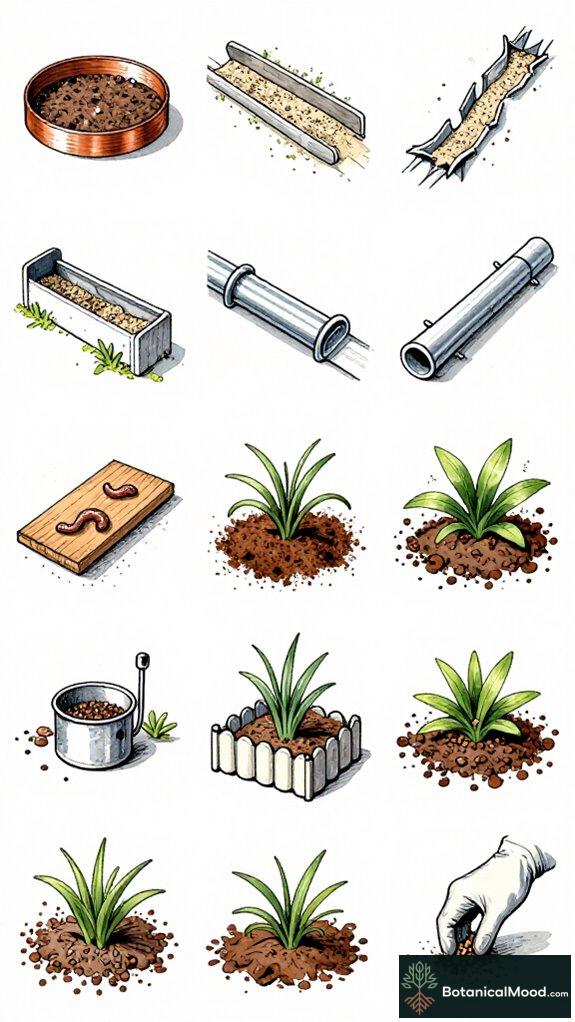
7 Ways to Stop Slugs Without Poison
Slugs ate my strawberries. I declared war.
No poison, just pure spite.
I ringed beds with copper tape, sharp enough to make them rethink life choices. Beer traps became their dive bars. I even bought nematodes, aka microscopic assassins. My garden? A fortress. My pride? Intact. Mostly.
—
H2: Natural Slug Control and Garden Path Design
Last summer, I redesigned my cottage garden paths using crushed gravel and raised wooden edges. Suddenly, slug access dropped by half. Permeable paving, companion planting with aromatic herbs, and strategic rock mulch transformed my nightmare into something almost manageable. Who knew hardscaping doubled as pest control?
Quick Takeaways
- Use iron-phosphate baits (ferric phosphate) placed along bed edges and under mulch for pet-safe slug control.
- Set beer traps: sink shallow jars filled with cheap lager, replace weekly and dispose contents hygienically.
- Install copper tape or vertical flashing around pots and raised beds to create an effective physical barrier.
- Apply diatomaceous earth, crushed eggshells, or coffee grounds as abrasive rings and replenish after rain.
- Reduce habitat and moisture: morning-only base watering, remove debris, improve drainage, and encourage slug predators.
Use Iron‑Phosphate Baits Safely Around Pets and Kids
When I recommend iron‑phosphate baits like Sluggo, Sluggo Plus, or Worry Free Slug and Snail Bait, I focus on practical placement and dosage so children and pets remain safe while you protect tender plants.
These cereal‑based mini‑pellets contain ferric phosphate, work as a stomach poison that causes slugs and snails to stop feeding and die within 5–7 days, and are approved for organic gardens.
I place pellets along edges, under mulch, and in shallow stations to limit exposure, monitor rates per label, and combine with copper tape, habitat reduction, and nematodes (Steinernema spp.) as pet friendly alternatives that preserve soil biology and design intent. For pet-friendly gardens, consider incorporating aromatic plants that naturally deter pests while creating a sensory-rich environment. For additional protection in pet-friendly gardens, diatomaceous earth offers a mechanical pest control option that works safely around children and animals while maintaining your garden’s natural ecosystem.
Set Beer Traps for Slugs That You Can Empty Easily
A simple beer trap, sunk flush to the soil and baited with a few inches of ordinary lager or ale, is one of the most reliable non‑poison methods I use to cut slug pressure around young bedding plants and brassicas. I’ll show you how to set them so emptying is quick and sanitary.
- Use shallow recyclable pots or jam jars sunk level with the soil, placed near hosta (Hosta spp.) and Brassica seedlings.
- Pour cheap lager, replace weekly to maintain attraction.
- Empty into sealed bag, rinse container — easy beer trap methods, clean up tips.
- Rotate locations to reduce collateral catches.
Make a Copper‑Tape Barrier to Stop Slugs on Pots and Beds
After you’ve emptied beer traps and rinsed jars, I often turn to copper tape as a tidy, pet‑safe barrier for pots and raised beds, because it gives predictable protection without poisons.
I cut copper tape strips to fit terracotta pots, cedar planters, and the wooden rims of raised beds, overlapping ends to maintain a continuous slug barrier; the copper reacts with slug slime, creating a mild shock that deters (Arion spp., Deroceras reticulatum).
For durability I choose UV‑stabilized tape, press firmly, inspect oxidization over weeks, and replace sections near soil contact, integrating aesthetics—copper warm tones—into design while keeping solutions practical and scalable.
Sprinkle Diatomaceous Earth or Crushed Eggshells Around Plants
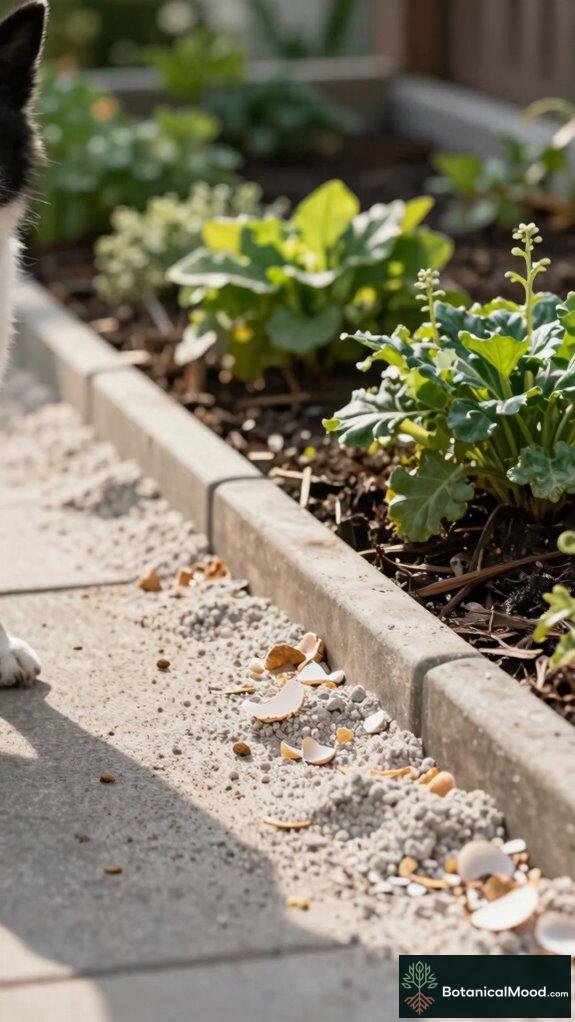
Diatomaceous earth or finely crushed eggshells make a simple, low‑tech barrier I often use around young bedding plants and the rims of raised beds.
I recommend them for gardeners seeking an inert, nonchemical deterrent that’s safe for kids and pets; I apply diatomaceous earth as a pale powder line and crushed eggshells as a coarser, white grit to create texture and abrasion that bothers slugs (Gastropoda), especially after heavy dew when moisture reactivates activity.
- Apply a 1–2 inch ring of diatomaceous earth.
- Mix crushed eggshells with mulch for stability.
- Replenish after rain or irrigation events.
- Combine with copper tape for layered defense.
Mix a Garlic + Chilli Spray to Repel Slugs From Leaves
When I want a quick, plant‑safe deterrent for slugs and garden snails (Gastropoda), I mix a simple garlic-and-chilli spray that combines strongly aromatic Allium sativum (garlic) with capsaicin‑bearing chilli powder or flakes, a few drops of washing‑up liquid to help the solution cling to leaves, and water at a mild dilution so it won’t scorch foliage; the result is an inexpensive, broadly accessible repellent that I apply to the undersides of leaves on tender annuals, brassicas (Brassica oleracea), and young seedlings in raised beds, containers, or allotments, avoiding direct sun immediately after spraying to reduce phytotoxic risk and reapplying after heavy rain or every 7–10 days for ongoing protection. For additional barrier protection, I often combine this spray with copper tape solutions placed around pot rims to create a multi-layered defence against slug damage.
I prefer natural ingredients, using a mortar or blender to macerate two to three cloves and half a teaspoon of chilli, straining into a spray bottle for targeted spray application; this keeps my lettuces, young pansies, and kale healthy without synthetic pesticides, letting me experiment with concentrations and observe efficacy while protecting beneficial fauna.
Reduce Slug Habitat: Cut Moisture and Hideouts to Prevent Reinfestation
If I want to prevent slug reinfestation, I start by cutting the moisture and eliminating the cool, dark hideouts that cover crops like lettuces, brassicas (Brassica oleracea), and tender seedlings favor, because slugs (Gastropoda) need damp microclimates to feed and reproduce.
I water at the plant base in the morning, thin dense groundcovers, trim overhanging branches that cast prolonged shade, and improve surface drainage with grit, coarse sand, or a shallow gravel mulch to encourage rapid evaporation.
- Place gravel mulch around beds for moisture control and quick drying.
- Replace dense mulch with coarse compost to reduce hiding spots.
- Create raised beds (timber, composite) with compacted subsoil for drainage.
- Install simple surface grading, french drains, or permeable paths to move water away.
Use Biological Controls (Nematodes, Predators) and Hand‑Pick Slugs
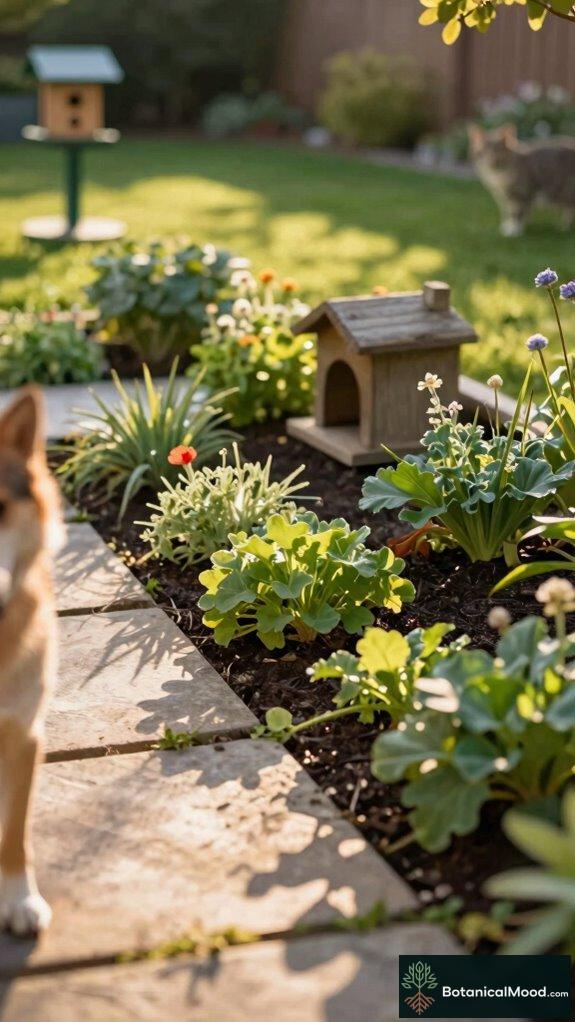
I recommend combining targeted biological controls like nematodes with habitat‑friendly predator attraction and regular hand‑picking to cut slug numbers without pesticides. I outline practical steps that balance biological benefits with scalable tactics for innovative organic gardeners.
I introduce nematode effectiveness (Phasmarhabditis hermaphrodita) for subterranean slug control, noting limited surface reach and higher cost per area. I advise timed applications, cool moist soil, and reputable brands.
I describe predator encouragement—bird feeders, toad shelters, (Rana spp.), hedgerow planting—and precise hand picking methods. This includes gloves, evening searches, and soapy water disposal, integrating design, color, and structural elements to optimize results.
Rooftop Raised Bed Plan
Building on the biological controls and hand‑picking strategies we’ve used to reduce slug pressure, I’m planning a rooftop raised bed system that combines lightweight structural materials, targeted plant choices, and integrated pest‑management features to keep slugs at bay while maximizing productivity and aesthetics.
- Use cedar frames, foam core panels for weight limits, and galvanized brackets to meet rooftop gardening load constraints.
- Install 2–3 inch copper tape and diatomaceous earth perimeter channels to deter slugs around raised bed construction.
- Select drought‑tolerant herbs (Rosmarinus officinalis, Thymus vulgaris) and Lamiaceae companions to reduce moisture.
- Integrate drip irrigation, well‑draining soil mixes, and modular planters for maintenance and visual coherence.
Install Cat-Safe Slug Barriers
I’m going to lay out cat‑safe slug barriers that balance effectiveness, rooftop weight limits, and pet safety, specifying materials like 2–3 inch copper tape for raised bed rims, diatomaceous earth (food‑grade, silica‑based) in shallow perimeter channels, and modular plastic or galvanized flashing to create vertical breaks that deter slugs without endangering cats.
I recommend 2–3 inch copper tape (oxidizes over months), food‑grade diatomaceous earth applied sparingly in channels, and lightweight PVC or galvanized flashing to form vertical barriers;
combine with coffee grounds, wooden board traps, or commercial iron phosphate baits (Sluggo) for integrated slug prevention and cat safe barriers.
FAQ
Can I Protect Seedlings Without Harming Beneficial Insects?
Yes — I protect seedlings using natural repellents like coffee grounds and copper tape, plus companion planting (chives, rosemary). I innovate with traps and morning watering to deter slugs yet preserve beneficial insects and pollinators.
How Often Should I Reapply Coffee Grounds or Copper Tape?
Like a clock, I refresh coffee ground frequency every 7–14 days, and I inspect copper tape maintenance monthly, reapplying or cleaning strips as they tarnish or gap to keep my barrier innovative and reliable.
Do These Methods Work on Slugs in Potted Indoor Plants?
Yes — I’ve used slug traps and indoor barriers successfully; I’ll combine coffee grounds, copper tape on pot rims, and small beer or board traps near plants, innovating placement to protect roots and keep slugs out.
Will Slug Control Harm Earthworms or Soil Microbes?
Mostly no — I avoid harming earthworms or microbes by favoring natural slug deterrents and organic gardening practices like copper barriers, coffee grounds, nematodes, and iron phosphate; I monitor soil health and adjust methods innovatively.
Can I Combine Multiple Non‑Poison Methods Safely?
Like assembling a smart toolkit, I can combine non toxic barriers and natural repellents safely; I’ll stagger methods (barriers, coffee, nematodes, traps), monitor effects, and tweak placement to innovate without harming soil life.
References
- https://sweetlifeandlemons.com/how-to-get-rid-of-slugs-in-your-garden-the-natural-way/
- https://mygardenlife.com/garden-tips/how-to-get-rid-of-slugs-in-the-garden
- https://www.youtube.com/watch?v=S7GYY_DTOKI
- https://pnwhandbooks.org/insect/ipm/slug
- https://www.attainable-sustainable.net/slippery-slimy-slugs/
- https://www.youtube.com/shorts/kP4t2hRkc8M