If you're looking to create a cottage garden that attracts butterflies, I recommend incorporating classic layouts with curved pathways and raised beds filled with wildflowers. Use butterfly borders with perennials, and strategically place pollinator-friendly plants throughout your garden. Adding secret nooks and hidden corners will enhance the experience, inviting exploration. By choosing vibrant flowers and native plants, you'll not only beautify your space but also support local ecosystems. There's so much more to outdoor gardening aesthetics waiting to be uncovered.
Quick Takeaways
- Incorporate vibrant perennials like coneflowers and bee balm to attract butterflies in sunny garden spots.
- Create curved pathways using flagstone or old bricks for an enchanting exploration experience.
- Utilize rustic trellises and arbors to provide climbing plants and shelter for butterflies.
- Design butterfly borders with diverse plant groupings to ensure seasonal nectar sources.
- Include secret nooks with pollinator-friendly plants to enhance intimacy and support local ecosystems.
The Classic English Cottage Layout

When you step into a classic English cottage garden, it feels as if you've entered a world where beauty and nature harmoniously coexist. The classic design here embraces structured elegance with formal hedges, creating distinct areas that invite exploration. Symmetry and balance are key, enhancing the visual appeal. Curves and straight lines can create structured appearances, guiding your journey with brick or stone pavers that lead to charming arbors draped in climbing roses, adding layers of texture. This layout reflects historical garden layout cultural influences, showcasing how cultural heritage shapes the design of garden spaces.
Curved Pathways for Natural Flow

Curved pathways can transform a garden into an enchanting journey, guiding visitors through a scenery that feels both inviting and serene. These paths integrate seamlessly into the surroundings, enhancing garden aesthetics by creating a natural flow. Using materials like flagstone and old bricks, I craft pathways that not only provide stability but also visual interest, concealing and revealing unique views. Unlike straight paths, curved pathways offer a leisurely experience, inviting exploration and fostering a relaxed ambiance. As I designed my own garden, I aimed for a cohesive look, ensuring every curve contributes to the overall beauty and charm of the space. Curving paths are typical in traditional informal or cottage garden styles, offering a slower, more contemplative experience while concealing and revealing views. Additionally, incorporating shade plants along these winding routes can enhance the woodland atmosphere and provide a refuge from the sun.
Raised Beds With Wildflower Mix

Creating an inviting habitat for butterflies often starts with well-planned raised beds filled with a wildflower mix that appeals to these beautiful creatures.
The raised bed benefits are numerous, from improved soil drainage to easier maintenance. I recommend selecting diverse wildflower varieties, such as milkweed and zinnias, to provide nectar and habitat for caterpillars. Native plants are particularly beneficial as they are adapted to local ecosystems and attract a wider variety of pollinators.
Position your beds in full sun and maintain average moisture for vibrant growth. Incorporating a mix of annuals and perennials guarantees continuous blooms.
Butterfly Borders With Perennials

Butterfly borders thrive in sunny spots, where vibrant perennials work together to create a stunning visual display that attracts both butterflies and the admiration of garden visitors.
To design an irresistible butterfly border, consider these essentials:
- Nectar Sources: Coneflowers and bee balm lure adult butterflies with their bountiful blooms.
- Butterfly Hostplants: Milkweed serves as a crucial nursery for monarch caterpillars, ensuring the lifecycle continues.
- Seasonal Diversity: Planting perennials that bloom throughout the year keeps butterflies returning, enhancing the garden's allure. Additionally, incorporating bee-friendly plants can further enrich the pollinator-friendly garden ecosystem.
Secret Nooks and Hidden Corners

As I explore the enchanting world of cottage gardens, I find that the charm of secret nooks and hidden corners offers a delightful contrast to the vibrant butterfly borders brimming with perennials.
These secluded spaces, often tucked under trees or against walls, create intimate retreats for reflection and tranquility.
Choosing tall plants, like sunflowers or climbing roses, can enhance these secret gardens, forming natural barriers that invite exploration.
Adding rustic benches or elegant arbors fosters a sense of romance, while pebble pathways lead you through these magical hideaways.
It's in these hidden corners that I truly connect with nature's beauty, inspiring my passion for Botanical Mood. Incorporating pollinator-friendly plants in these areas not only beautifies the space but also supports local ecosystems.
Colorful Annual Flower Displays

While exploring the vibrant palette of annual flowers, I find that their ability to transform any garden into a breathtaking display is truly remarkable.
To create stunning annual flower combinations, consider these potent elements:
Consider vibrant annual flower combinations that not only beautify your garden but also attract and nurture local pollinators.
- Zinnias for their butterfly nectar sources, attracting myriad pollinators.
- Tall verbena providing open blooms that beckon butterflies from afar.
- Scarlet milkweed essential for monarchs, ensuring a thriving ecosystem.
These choices not only enhance visual appeal but also foster a sanctuary for butterflies.
At Botanical Mood, I've curated these ideas to inspire your garden's potential, turning it into a colorful retreat for both you and nature.
Vertical Gardening for Space Efficiency
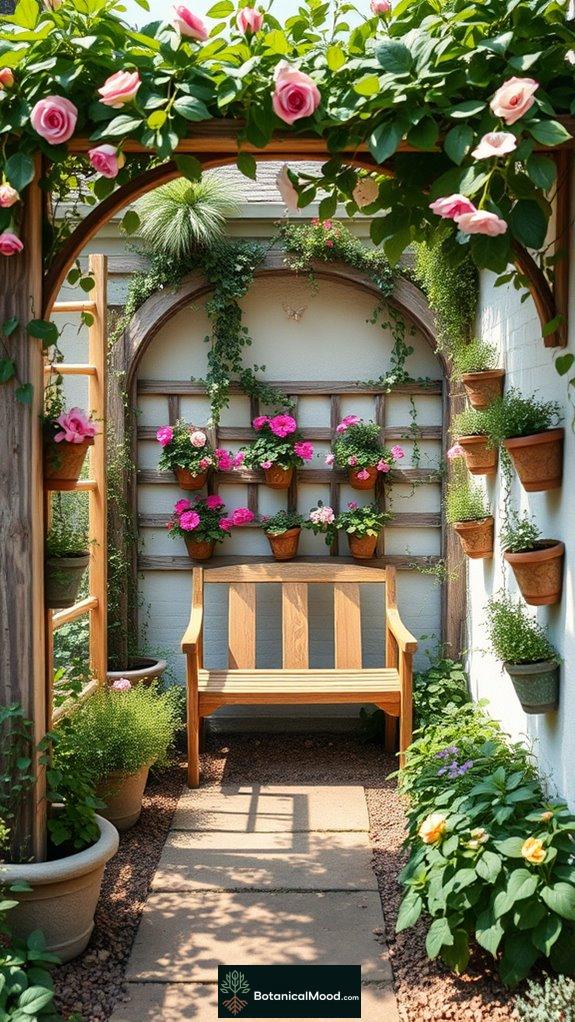
When you're looking to maximize your gardening space, vertical gardening offers an innovative solution that transforms ordinary walls and structures into lush, green displays.
By employing various vertical gardening techniques, I've turned empty corners into productive areas, proving that even the smallest spaces can thrive. Trellises support climbing vegetables, while wall-mounted systems create living art.
Urban gardening solutions like pallet gardens and recycled bottle planters not only save space but also enhance aesthetic appeal.
With these methods, I've discovered that vertical gardens can yield more produce, require less water, and elevate the beauty of my outdoor sanctuary.
Pollinator-Friendly Plant Groupings

Creating a pollinator-friendly garden not only enhances the beauty of your outdoor space, but it also plays an essential role in supporting the ecosystem.
By carefully selecting plant groupings, you can attract diverse pollinators and witness their fascinating behaviors.
- Coneflowers and Black-eyed Susans: Their vibrant colors and nectar preferences draw butterflies and bees alike.
- Bee Balm and Milkweed: These provide essential sustenance for hummingbirds and monarchs, ensuring a thriving environment.
- Sunflowers: A striking addition, they offer both pollen and nectar, making your garden a haven for pollinators while embodying the spirit of Botanical Mood.
Water Features to Attract Butterflies

Water features can transform your garden into a vibrant sanctuary, attracting butterflies with their alluring presence.
Consider adding butterfly watering stations, where shallow containers filled with sand or gravel provide moisture for these delicate creatures.
A thoughtfully designed pond, complete with aquatic plants and landing pads, can enhance your butterfly habitat. Fountains and waterfalls not only create soothing sounds but also draw butterflies in droves.
Strategically place these elements near nectar-rich flowers, and incorporate rocks or branches for easy access.
Herb Spirals for Fragrance and Function

Herb spirals stand out as an innovative way to enhance both the fragrance and functionality of your garden.
- Microclimate creation: Each spiral zone supports diverse herb selection, ensuring ideal growth.
- Vertical growing: Stacking herbs increases planting space, making the most of limited areas.
- Fragrance explosion: Culinary herbs like rosemary, mint, and thyme attract butterflies while enriching the air with their delightful scents.
These spirals not only beautify your cottage garden but also create a sustainable ecosystem.
As I developed Botanical Mood, I envisioned spaces that celebrate nature's allure through functional designs like these.
Rustic Trellises and Arbors

Trellises and arbors can transform a cottage garden into an enchanting haven, offering both structure and beauty.
With rustic charm, these elements anchor the surroundings, showcasing exquisite trellis designs that invite climbing roses, clematis, and honeysuckle to flourish.
Rustic trellises create a charming anchor, inviting vibrant climbing roses, clematis, and honeysuckle to thrive in your garden.
Wrought iron arbors provide durability and elegance, while wooden structures add warmth but require careful maintenance.
Arched designs create romantic pathways, and criss-cross patterns support denser plants, enhancing visual interest.
Incorporating these features not only defines garden spaces but also attracts butterflies and bees, enriching the ecosystem.
At Botanical Mood, I endeavor to inspire others to create these alluring sanctuaries.
Meadow Style for a Natural Look

Creating a meadow-style garden can transform your outdoor space into a serene and enchanting retreat, especially when you seek a natural look that harmonizes with the surrounding scenery.
To accomplish this, consider these essential elements:
- Native plants like Blue Grama Grass enrich biodiversity and attract pollinators.
- Gently winding pathways of stone or grass enhance access and visual appeal.
- Seasonal blooms guarantee vibrant color throughout the year.
With these meadow maintenance tips, you'll experience the native plant benefits, fostering a harmonious ecosystem while celebrating nature's beauty in your garden.
Container Gardening for Small Spaces

While it might seem challenging to cultivate a lush garden in a small space, container gardening offers a flexible and visually appealing solution that turns even the tiniest balconies or patios into vibrant oases.
Choosing compact plants is essential; they allow me to maximize my space while reaping rewards.
I love incorporating vertical solutions, like trellises with climbing varieties, which draw the eye upward and create depth.
Mixing edible herbs with pollinator-friendly flowers enhances both my garden's beauty and functionality.
With careful soil management and strategic placement, I can create an ever-changing setting that supports biodiversity and attracts butterflies, just as I envisioned for Botanical Mood.
Edible Flowers and Butterfly Combos

Incorporating edible flowers into a cottage garden not only enhances the beauty of the space but also invites a delightful array of butterflies.
Enhancing a cottage garden with edible flowers invites beauty and a charming array of butterflies.
The synergy of edible flower combinations with butterfly-friendly plants creates a vibrant ecosystem.
Here are three powerful combos to evaluate:
- Nasturtium and Butterfly Weed: Peppery nasturtiums attract butterflies while adding zest to salads.
- Marigold and Cardinal Flower: Bright marigolds entice pollinators, enhancing the garden's visual appeal.
- Bee Balm and Viburnum: The minty bee balm lures butterflies, while viburnum provides habitat for birds.
These combinations yield remarkable butterfly garden benefits, creating a flourishing environment.
Seasonal Blooms for Year-Round Appeal

Seasonal blooms can transform a garden into a lush, ever-changing scenery that captivates the eye and invites wildlife, especially butterflies, throughout the year.
By embracing seasonal planting, I create a vibrant butterfly habitat that flourishes in every season.
In spring, I adore the vibrant red blooms of Brakelights® Red Yucca and the delicate white flowers of Renaissance Spirea.
Summer bursts with the hardy EveryDayLily™ Yellow Punch Daylily and the striking Sombrero Salsa Red Coneflower.
As fall arrives, the late blooms of Dark Knight Bluebeard and Goldsturm Black-Eyed Susan guarantee my garden remains alive with color and activity.
This diverse mix keeps my garden thriving.
Pollinator-Friendly Garden Arrangement

Creating a pollinator-friendly garden arrangement is an essential step in fostering an inviting habitat for butterflies and other pollinators.
To achieve this, consider these strategies:
- Embrace Native Plant Benefits: Incorporate native species that thrive in your area and attract diverse pollinators.
- Plant in Drifts: Group plants together for easy access, enhancing pollinator preferences.
- Layer for Visual Appeal: Arrange plants in varying heights, creating an enchanting scenery that invites exploration.
Cottage Garden Butterfly Pathways

As you wander through a cottage garden, pathways can transform a simple stroll into an enchanting journey, guiding you to discover the beauty of nature.
Choosing the right pathway materials, like natural stone or inviting wood chips, enhances the charm while creating a butterfly habitat. Meandering paths spark curiosity, inviting exploration among vibrant blooms.
Incorporating seating areas or butterfly-friendly spots can enrich your experience, allowing you to pause and appreciate nature's wonders.
At Botanical Mood, I believe that a thoughtfully designed garden fosters a deeper connection with the environment, making every visit a celebration of life's beauty.
Butterfly-Attracting Flower Placement

Butterflies are drawn to specific flowers, making their placement within your cottage garden a key factor in attracting these delicate creatures.
To entice various butterfly species, prioritize flowers based on their nectar preferences:
- Buddleia – A magnet for butterflies, despite its invasive nature.
- Lavender and Roses – Classic choices that offer essential nectar.
- Purple Coneflower – Large, nectar-rich blooms that beckon butterflies.
Strategic Plant Placement Benefits

When I think about the benefits of strategic plant placement in a cottage garden, I realize how it can transform not just the garden's appearance but also its overall health.
Through strategic planting, I create a vibrant tapestry that enhances biodiversity. Mixing various species not only protects against pests but also invites beneficial insects like bees and butterflies, enriching my ecosystem.
Layering plants optimizes space while maintaining visual interest, ensuring my garden thrives season after season.
Questions and Answers
What Are the Best Plants for Attracting Specific Butterfly Species?
I've found that specific butterfly plants like milkweed and lantana serve as essential nectar sources. By incorporating these into your garden, you'll not only attract butterflies but also create a vibrant ecosystem that thrives.
How Can I Maintain My Cottage Garden for Butterfly Health?
To maintain my cottage garden for butterfly health, I prioritize water management and companion planting. I guarantee plants receive adequate water while promoting beneficial relationships, creating a thriving environment where butterflies flourish and thrive.
What Is the Ideal Soil Type for a Butterfly-Friendly Garden?
For a butterfly-friendly garden, I focus on sandy clay loam or loam. They provide excellent soil drainage and nutrient balance, ensuring my plants thrive and attract those beautiful butterflies to my space.
How Do I Plan My Garden Layout for Seasonal Changes?
As I plan my garden layout, I embrace seasonal shifts, considering garden zones. I envision vibrant blooms in spring, rich greens in summer, and warm tones in fall, creating a dynamic, ever-changing scenery that captivates all year.
Are There Any Pests That Can Harm Butterflies in the Garden?
Absolutely, pests can harm butterflies in my garden. I focus on organic gardening, avoiding pesticide use, and prefer hand-picking pests. Attracting beneficial insects helps maintain balance, ensuring my butterflies thrive without chemical interference.
References
- https://www.bellantonilandscape.com/blog/2017/10/classic-elements-traditional-english-garden/
- https://alittledelightful.com/cottage-garden-layouts-stepwise-guide-and-ideas-for-you/
- https://www.finegardening.com/article/defining-the-new-american-cottage-garden
- https://www.snazzylittlethings.com/beginners-guide-to-cottage-garden-design/
- https://www.gardendesign.com/english/
- https://yardzen.com/yzblog/garden-path-landscape-design
- https://jackikellum.com/down-my-garden-path-elements-of-a-cottage-garden/
- https://comfycottage.home.blog/2024/05/04/15-cottage-garden-path-ideas/
- https://www.gardendesign.com/cottage/ideas.html
- https://greatbasinseeds.com/product/butterfly-flower-mix/