Ever walked through a rainforest and thought, “Wow, I really need this in my backyard”?
Well, I did, and guess what? I’ve pulled together ten stunning rainforest canopy designs that would make Mother Nature herself a tad jealous.
Imagine towering palms and vibrant undergrowth dancing together. Sounds like a party, right? I built a tiny version of this in my garden.
However, I learned that nature has its quirks—like bugs that love the place just as much as I do. But it’s all worth it for that lush, vibrant feel.
Think your garden’s ready for a lush makeover?
The Day My Garden Became a Jungle Oasis
One summer afternoon, I decided to create a little sanctuary inspired by those dreamy rainforest canopies. I bought jagged rocks and a water feature that, let’s face it, looked like a glorified fish tank at first.
But with patience, my backyard transformed into a vibrant oasis. Coconut palms towered next to texture-rich ferns. Meanwhile, the water feature? It became a lively hangout for birds, who apparently connect with my backyard better than I do with my neighbors.
So, if you’re feeling stuck, maybe give that space a tiny jungle vibe. Perennials, shrubs, and a quirky water feature might just spark joy (and a few unexpected visitors). Trust me; it’s worth the adventure.
Quick Takeaways
- Multi-tiered garden canopies integrate diverse plant layers, supporting biodiversity and creating stunning visual aesthetics in outdoor spaces.
- Architectural arbors mimic natural liana structures, providing elegant shaded retreats while enhancing vertical gardening opportunities.
- Employing diverse foliage and textures elevates garden designs by contrasting bold and delicate plants, enriching sensory experiences.
- Immersive pathways within garden canopies encourage exploration while integrating native flora for a serene ambiance.
- Sustainable practices, such as using native plants and recycled materials, enhance garden architecture while supporting ecological harmony and biodiversity.
Multi-Tiered Garden Canopy: Elevating Layers of Life

Creating a multi-tiered garden canopy can elevate your outdoor space into a vibrant tapestry of life, where each layer contributes to an ecosystem teeming with biodiversity.
By integrating multi-tiered flora, you achieve a dynamic design that not only enhances elevation aesthetics but also fosters environmental balance.
Imagine lush canopies of tall trees shading delicate undergrowth, creating microclimates that support various plant species.
Envision vibrant canopies of towering trees enveloping nurtured undergrowth, crafting diverse microclimates for flourishing plant species.
Emphasize diversity with towering palms, fruit-laden trees, and ornamental shrubs, ensuring each layer is purposeful.
This elaborate layering exemplifies power in design, inviting nature’s beauty while cultivating an atmosphere of serenity and energy.
Incorporating layered tropical structures into your design can further enrich the habitat for wildlife and help maintain ecological harmony.
Explore these transformative designs with Botanical Mood.
Uniting Textures: Diverse Foliage for Visual Appeal

While exploring the vast, enchanting possibilities of garden design, uniting diverse foliage can create a striking visual appeal that captivates onlookers and nurtures the surrounding ecosystem.
The right foliage combinations and textural contrasts transform any setting into a lush sanctuary, stimulating the senses.
- Bold fronds of ferns paired with the delicate leaves of coleus
- Variegated hostas beside deep green elephant ears
- Brightly colored bromeliads alongside textured moss
- Flamboyant crotons juxtaposed against understated vines
These elements harmonize beautifully, embodying the power of nature’s design.
At Botanical Mood, I celebrate these bold choices that elevate our green spaces profoundly.
Winding Paths: Immersive Experiences in Garden Design

Winding paths beckon exploration, inviting us to meander through beautifully designed vistas that engage the senses and foster a sense of peace. These guiding pathways intertwine with lush greenery, creating an enchanting experience of nature immersion that captivates the soul.
Winding paths invite exploration, weaving through lush greenery to create a serene, immersive experience in nature’s embrace.
As I navigate through complex routes adorned with native flora, textures, and colors intensify the journey, transforming a simple stroll into a sensory odyssey.
I’ve incorporated elements from style leaders in garden architecture, ensuring each curve and corner draws you deeper into this verdant domain, sparking inspiration for your own botanical endeavors.
By embracing the concept of tranquil outdoor living spaces, you can further enhance the serene atmosphere of your garden design.
Discover the power of intentional garden design.
Architectural Arbors: Mimicking Nature’s Liana Structures

Incorporating architectural arbors into garden settings can transform outdoor spaces into enchanting retreats, as these structures often mirror the elaborate beauty of nature’s liana. By employing liana inspired designs and organic material usage, we create a seamless connection between our living spaces and the natural world.
These arbors enhance vertical gardening opportunities.
They provide elegant shade and shelter for intimate gatherings.
Their organic materials promote an eco-friendly ambiance.
Their complex designs create stunning focal points in any scenery.
With each carefully crafted arbor, I’m reminded of nature’s artistry, inspiring a deeper appreciation for our vibrant world.
Serenity Through Water: Integrating Dynamic Water Features

As I explore the tranquil allure of garden design, it’s evident that dynamic water features serve not just as decorative elements but as essential components for cultivating a serene environment.
Innovative installations, such as recirculating streams or elegantly cascading waterfalls, create enchanting water soundscapes that echo throughout the garden.
These features invite reflection, with calm, reflective surfaces that mirror the lush foliage surrounding them. Choosing a variety of textures enhances the overall sensory experience, while strategically placed stones and native plants maintain ecological harmony.
Moreover, integrating these water features within the landscape significantly contributes to sustainable water management, ensuring that they are both aesthetically pleasing and environmentally responsible.
In my garden designs, I prioritize these elements to achieve a breathtaking, cohesive aesthetic that evokes peace and power.
Elevated Living: Treetop Home Concepts for Eco-Friendly Gardens

The lush heights of the rainforest canopy inspire innovative garden architecture that elevates both the aesthetic and environmental value of outdoor spaces.
Treetop living redefines luxury with eco-conscious designs that capture the essence of nature, ensuring sustainable harmony.
- Embrace organic materials for a seamless blend with the scenery.
- Utilize innovative structures like treehouses and elevated platforms.
- Incorporate native flora to promote biodiversity and local ecosystems.
- Opt for renewable energy sources to power your elevated retreat.
Natural Pathways: Rustic Materials for Authentic Charm

Natural pathways crafted from rustic materials evoke a sense of authentic charm that transforms an ordinary garden into an enchanting retreat.
Envision wandering along rugged stone or reclaimed wooden trails, where each step inspires connection to nature. These rustic pathways integrate seamlessly with the scenery, radiating organic beauty through their natural materials.
Utilizing aged timber, gravel, or flagstone creates varied textures that draw the eye and invite exploration.
Such design choices encourage sustainable gardening and reflect harmony with the environment. My passion for creating spaces like this inspired Botanical Mood, hoping to share my appreciation for the transformative power of rustic pathway elegance.
Microclimate Mastery: Creating Comfort in Tropical Gardens

Creating a harmonious oasis in tropical gardens often hinges on mastering microclimates, as these subtle variations in temperature and humidity can greatly influence plant health and overall comfort.
Effective microclimate management isn’t just an option—it’s essential.
- Utilize shade structures to protect delicate species from harsh sunlight
- Implement water features to enhance humidity and provide cooling effects
- Select resilient plants that thrive in specific microclimates for ideal growth
- Incorporate windbreaks to regulate temperature and protect plants from damaging gusts
With these strategies, you’ll assert your control over the environment and cultivate an impeccably designed tropical paradise.
Dramatic Lighting: Enhancing Canopy Beauty After Dark

While harnessing the enchanting allure of tropical gardens, I’ve found that dramatic lighting transforms the canopy into a mesmerizing spectacle after dark.
By strategically placing ambient illumination, I highlight the complex textures and layered foliage above, creating an ethereal atmosphere.
Strategically placed ambient lighting unveils the intricate textures of foliage, weaving an enchanting and ethereal atmosphere.
The interplay of lights and shadows crafts dynamic shadow patterns, enhancing the visual drama, and inviting exploration.
I favor soft LED downlights, which guarantee energy efficiency while casting a gentle glow that accentuates natural beauty.
As I immerse myself in this vivid playground, I realize that thoughtful illumination not only elevates the design but also cultivates an experience that resonates deeply with visitors.
Sustainable Practices: Adapting Rainforest Aesthetics for the Future
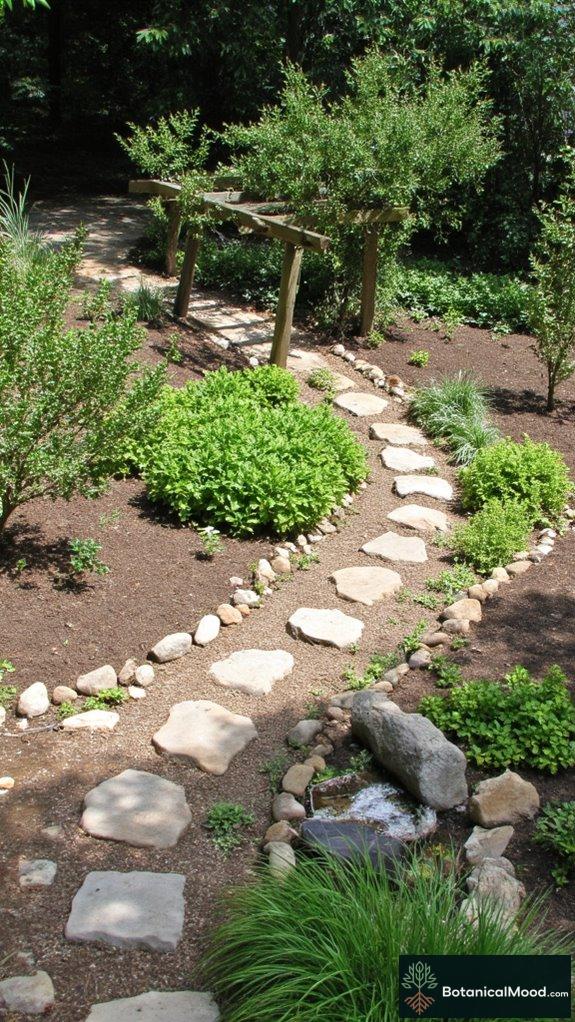
Adapting rainforest aesthetics for the future necessitates a thoughtful consideration of sustainable practices that honor both the environment and the artistry of garden design.
By implementing these principles, we can begin to intertwine beauty with responsibility:
- Incorporate native plants to bolster local biodiversity and enhance rainforest conservation
- Use recycled materials in structures and furnishings, promoting an ecological design ethos
- Embrace permaculture techniques to create self-sustaining ecosystems that nourish the land
- Utilize rainwater harvesting systems to minimize environmental impact while serving functional needs
Each decision we make reflects a commitment to preserve nature’s splendor and elevate our outdoor spaces.
Canopy Exploration Techniques
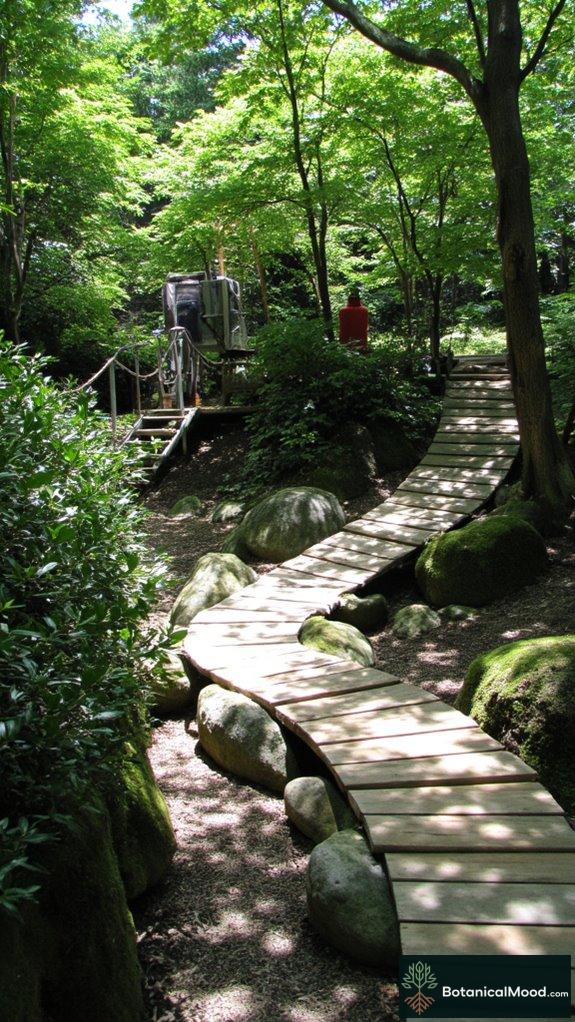
As we explore the elaborate beauty of the rainforest canopy, it becomes evident that leveraging innovative exploration techniques is essential for understanding this complex ecosystem.
Canopy access through rope techniques, such as the Single Rope Technique (SRT), has transformed our ability to ascend while recognizing limitations. Interestingly, the canopy layer acts as the power source of the rainforest via photosynthesis, emphasizing its crucial role in supporting diverse ecological niches.
Strategically engineered canopy walkways and platforms, like those in Shei-Pa National Park, provide stability for researchers while minimizing ecological disturbance. Moreover, crane systems facilitate thorough studies of upper microhabitats, and pioneering aerial methods, including Lidar technology, allow us to map unseen structures.
Each technique, a demonstration of human ingenuity, enhances our connection to this breathtaking environment.
Vertical Garden Plant Arrangement

The elaborate beauty of the rainforest canopy inspires many garden designs, particularly vertical gardens that emulate its layered structures.
Creating compelling vertical garden ecosystems involves meticulous arrangements that enhance both functionality and aesthetics.
- Optimize wall space with A-frame and panel trellises.
- Choose resilient, drought-tolerant plants for diverse growth.
- Utilize modular planter systems for scalability.
- Incorporate cascading gutters to elevate vertical garden aesthetics.
Such arrangements not only maximize tight spaces but also create vibrant visual displays.
Exotic Plant Layering Techniques

Layering exotic plants in a garden is akin to composing a symphony, each layer contributing to a harmonious whole that delights the senses.
| Layer | Plant Examples | Benefits |
|---|---|---|
| Upper Layer | Golden Cane Palms, Frangipanis | Provides shade and height |
| Mid Layer | Heliconias, Bird of Paradise | Adds color and exotic textures |
| Lower Layer | Philodendrons, Crotons | Utilizes microclimates |
Sustainable layering guarantees biodiversity and beauty, while balancing sun and shade placements enhances growth. The interplay of lush foliage and colors captivates, transforming any outdoor space into a striking visual masterpiece worthy of admiration.
Decoration With Tropical Forest Canopy Structures

Incorporating tropical forest canopy structures into garden design can transform outdoor spaces into serene oasis-like havens, where the interplay of shade and light creates an inviting atmosphere.
- Mimics the three-dimensional geometry of natural canopies, enhancing light filtration.
- Utilizes sustainable materials like bamboo, promoting eco-conscious design.
- Integrates organic forms for visual coherence, reflecting canopy aesthetics.
- Creates dappled lighting effects that enrich biodiversity and foster a tranquil environment.
These elements serve as remarkable decorative inspiration, pushing the boundaries of traditional gardening.
This ensures your space becomes a powerful sanctuary of nature’s beauty and tranquility.
Design Innovator and Eco-Advocate

The garden is owned by El Battouty, hailing from California. She developed a passion for eco-conscious gardening after witnessing the environmental degradation in her community and aimed to create a sustainable green space.
To design her garden, El Battouty set out on a thorough design process, combining traditional Indigenous practices with modern sustainable techniques. Collaborating with Miinikaan experts, she emphasized native plant species and integrated water-efficient systems to promote ecological resilience while enhancing local biodiversity.
In creating her garden, El Battouty utilized tools like Carbon Conscience for material selection and terrain analysis. Accessories included recycled planters sourced from local artisans, while horticulturists specializing in native flora guided the planting, ensuring harmony with the surrounding environment.
Renowned Landscape Architects and Brands

As I explore the world of renowned terrain architects and their innovative approaches to rainforest canopy design, it becomes evident that these visionaries are reshaping our understanding of how green spaces can thrive in harmony with nature.
Roberto Burle Marx exemplifies Brazilian artistry through layered environments that embrace native vegetation, while Studio MK27’s Canopy House showcases minimal impacts via elevated columns, marrying structure and ecosystem.
Fernando Wong captivates with immersive designs like the Levin Sculpture Garden, where outdoor rooms connect residents to the canopy.
This commitment to environmental harmony drives these architects, crafting dynamic spaces that echo the rainforest’s inherent beauty.
Share Your Own Garden
Embracing rainforest canopy designs has transformed my garden into a vibrant ecosystem. Layers of greenery interact with light and shadow, creating inviting spaces. Water features add a sense of peace, making it a sanctuary that deepens my connection to nature.
I’d love to hear about your experiences with garden designs! What have you tried that worked well?
Share your own garden creations with me! I’d love to see pictures and hear about your design process.
References
- https://rhinolands.com/post/designing-tropical-gardens/
- https://www.wallpaper.com/architecture/residential/canopy-house-studio-mk27-brazil
- https://www.monrovia.com/be-inspired/tropical-garden-design-ideas.html
- https://www.youtube.com/watch?v=iBzIIaebwM0
- https://www.houzz.ie/magazine/garden-design-how-to-create-a-lush-jungle-style-haven-stsetivw-vs~55365501
- https://news.mongabay.com/2006/11/canopy-research-is-key-to-understanding-rainforests/
- https://treefoundation.org/education/canopy-methods/
- https://www.ll.mit.edu/r-d/projects/finding-people-under-rainforest-roof-lidar
- https://aceer.org/reaching-for-the-treetops-canopy-walkway-systems/
- https://nationalzoo.si.edu/center-conservation-sustainability/news/heights-unseen-hidden-world-tropical-rainforests