My chickens turned their beaks up at store-bought greens. Rude, honestly.
So I planted kale, chard, and ‘Winter Density’ lettuce last August. The little divas now feast homegrown through January.
Cold frames saved me time. Cost matters. So does compost. They’re happy. I’m smug. Worth it.
—
Winter Chicken Garden Design: Layout Lessons from My Frozen Failures
I once planted everything in one corner. Big mistake. One heavy frost. Total wipeout. Devastating.
Now I scatter cold-hardy plantings across zones. Multiple varieties. Different exposures. Resilience through redundancy.
Raised beds drain better. Cloches extend seasons. Four o’clock shade helps spinach bolt slower. Chickens get variety. I sleep easier.
Quick Takeaways
- Plant hardy greens like kale, Swiss chard, spinach, and winter lettuce to ensure year-round chicken forage.
- Prepare soil with organic compost and mulch to promote healthy winter growth for greens.
- Cover greens with row covers, cold frames, or low tunnels for protection against frost and temperature drops.
- Position plants in well-drained, elevated beds to prevent root rot and improve winter resilience.
- Include safe, non-toxic plants in accessible areas to provide nutritious greens without risking chicken health.
What Are the Best Hardy Greens to Grow for Chickens in Winter?
When selecting hardy greens to support my chickens during the colder months, I prioritize varieties that thrive despite frost and low temperatures, ensuring a continuous nutrient supply.
Kale (Brassica oleracea var. acephala), especially varieties like Winterbor or Dinosaur, provides robust leaves that withstand early frosts.
Spinach (Spinacia oleracea), particularly Bloomsdale or New Zealand, remains tender yet resilient through winter.
Swiss chard (Beta vulgaris subsp. cicla) with its vibrant stems and dark leaves adapts well to cold.
These greens, grown under protective cover or in cold frames, offer nutritional value, flavor, and essentiality, supporting my flock year-round through the winter months. Similar to how natural grass alternatives create durable surfaces for active animals, hardy winter greens provide reliable foraging options that withstand the demands of seasonal use. Creating enriching foraging spaces with winter greens encourages natural grazing behaviors and keeps chickens engaged during the dormant season.
How Do I Prepare My Garden for Winter Greens?
Preparing your garden for winter greens involves more than just planting; it requires strategic planning to protect delicate seedlings and promote healthy growth despite harsh conditions. I recommend clearing debris, removing spent plants, and enriching the soil with organic compost like worm castings or aged manure to guarantee nutrient density.
Mulching with straw, shredded leaves, or wood chips helps insulate roots and conserve moisture. Cover sensitive areas with row covers, cold frames, or low tunnels—products from brands like Gardener’s Supply or Exaco—creating a microclimate that shields plants from freezing temperatures and wind. For added protection, consider incorporating pet-safe succulents into your winter garden design, as they provide both aesthetic appeal and resilience in cold conditions. Similarly, heated water bowls can help prevent water sources from freezing in extreme cold conditions, ensuring your garden setup remains functional throughout winter.
This thoughtful groundwork sets the stage for resilient winter greens to thrive.
Top Tips for Planting and Growing Hardy Greens in Cold Weather
Planting hardy greens in cold weather requires understanding their specific needs for resilience and growth under low temperatures. I find that selecting varieties like curly kale (Brassica oleracea var. acephala), Swiss chard (Beta vulgaris subsp. cicla), or hardy lettuce such as ‘Winter Density’ (Lactuca sativa var. longifolia) guarantees success.
Using well-drained, slightly raised beds with organic compost, like Coast of Maine’s Sea Crop Fertilizer, provides best nutrients. Covering plants with straw mulch or cold frames helps maintain moisture and temperature stability.
I also recommend planting during late summer or early fall, allowing greens to establish before the frost sets in, guaranteeing a continuous supply through winter.
How to Feed and Maintain Your Chickens’ Winter Green Diet
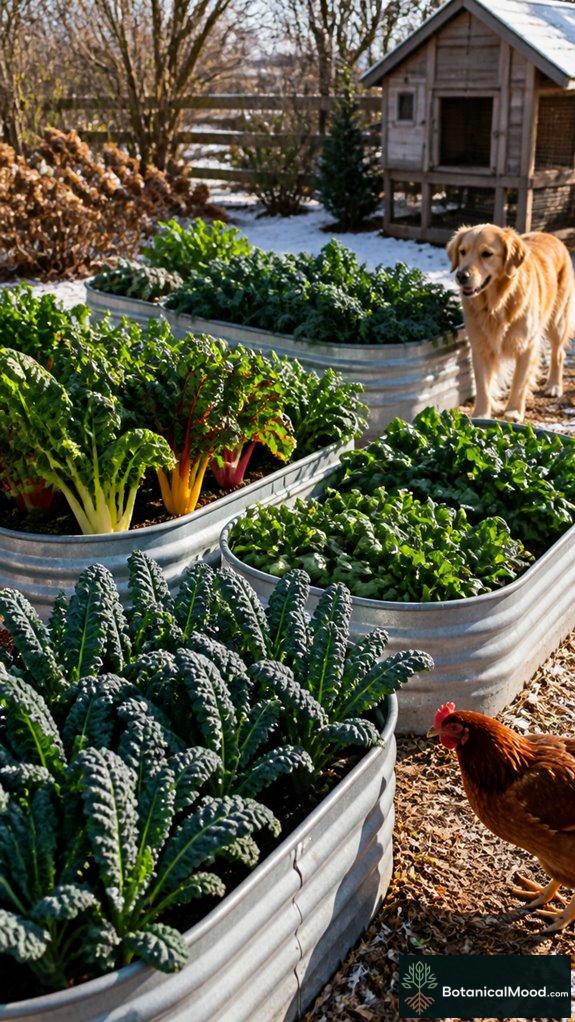
Keeping your hens well-nourished during the winter months hinges on providing a consistent supply of nutrient-dense greens, which are crucial for maintaining their health, egg production, and immunity when outdoor forage becomes scarce.
I recommend offering a mixture of hardy winter greens such as kale (Brassica oleracea var. acephala), spinach (Spinacia oleracea), and chard (Beta vulgaris), preferably grown from organic seeds or purchased fresh from local suppliers like Johnny’s Selected Seeds. Growing these greens in galvanized raised garden beds provides protection from ground pathogens while keeping delicate plants accessible during harsh winter weather.
Supplement their diet with sprouted grains or specialized poultry greens blends to ensure essential vitamins, minerals, and antioxidants. These nutrients are critical for resilience against winter stressors.
When designing your chicken run’s layout, consider incorporating safe garden flooring to protect their feet and improve drainage during wet winter conditions.
Regularly monitor their droppings and overall vigor to maintain peak health.
Troubleshooting Common Problems When Growing Winter Greens
Many common issues that arise when growing winter greens, such as kale (Brassica oleracea var. acephala), spinach (Spinacia oleracea), and chard (Beta vulgaris), stem from environmental stressors, improper cultural practices, or pests that thrive in colder conditions.
- Frost damage occurs when temperatures plunge unexpectedly, causing leaf tissue to cell-collapse and discolor. Proper insulation and shelter can help protect your greens during severe cold snaps.
- Pests like aphids (Aphidoidea) and caterpillars (Lepidoptera larvae) exploit weakened plants, spreading disease.
- Poor soil drainage leads to root rot, especially in heavy clay soils during winter rains.
- Insufficient sunlight hampers photosynthesis, resulting in elongated, pale, or slow-growing greens.
- Strategic placement using garden design principles ensures your winter greens receive optimal growing conditions while complementing your overall landscape layout.
Seed-Starting Trays
Starting seeds in trays is a crucial step to guaranteeing a robust early start for winter greens such as kale (Brassica oleracea var. acephala), spinach (Spinacia oleracea), and chard (Beta vulgaris).
I prefer sturdy seed-starting trays like those from Proptek or Jiffy, with perforated drainage to prevent overwatering. Filling them with high-quality, well-draining seed-starting mix from Espoma Organic or Miracle-Gro kickstarts germination.
I space seeds carefully, according to packet instructions, and keep trays in a warm, bright spot—ideally under grow lights for consistent warmth and light. For gardeners with low vision, auditory garden features can enhance the seed-starting experience by providing audio cues for watering and light cycles. Consider using weatherproof flooring options if your seed trays are located in an outdoor catio or covered garden area to protect your workspace during winter months.
This meticulous attention ensures strong, healthy seedlings ready for transplant, boosting winter greens’ resilience in colder months.
Vertical Garden Wall Installations
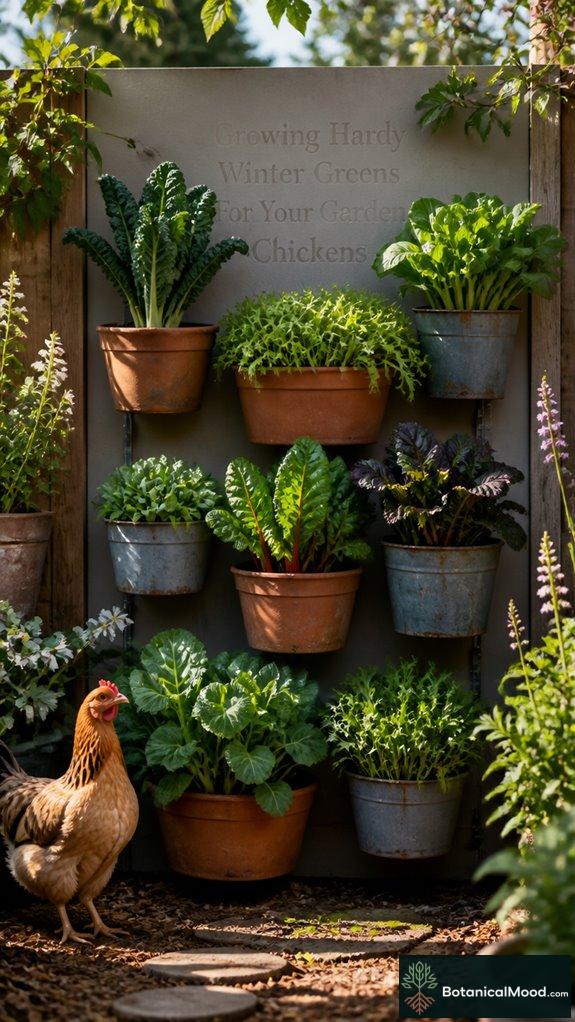
Installing a vertical garden wall offers an innovative way to maximize space and extend the season for hardy winter greens, especially in urban environments or areas with limited ground plot.
Using modular systems like the Garden Tower or AeroGarden, you can cultivate *Brassica oleracea* (kale), *Allium fistulosum* (bunching onion), or *Spinacia oleracea* (spinach) year-round. When selecting plants for your vertical garden, it’s important to avoid toxic varieties and instead choose non-toxic plant options that are safe if your chickens access the area.
Consider using insulated panels designed for cold climates or installing drip irrigation to maintain consistent moisture.
Select vibrant containers in muted greys, deep greens, or rustic terracotta to complement winter scenery.
Ensure your vertical garden wall is secured with ground anchor pins to prevent shifting or collapse during harsh winter weather conditions.
This setup fosters an engaging, productive environment, bringing lush harvests directly to your shoulder-height gardening space.
Designing Safe Garden Zones
Creating safe garden zones begins with deliberate planning that defines specific areas for planting, pathways, and recreational use, guaranteeing both functionality and protection for gardeners and visitors. I carefully consider spatial relationships between hardy winter greens (such as Brassica oleracea var. acephala) and chicken zones, separating them by Low fences like welded wire or electric barriers to prevent accidental intrusion. Pathways with permeable materials like gravel or wood chips facilitate movement and drainage. While shaded shelters made of durable materials like cedar provide refuge from winter winds. For additional garden protection, consider incorporating thorny defensive plants around perimeter areas to create a natural barrier against unwanted intrusion. Thoughtful placement ensures safety, minimizes disturbance, and creates a harmonious environment where activities coexist, promoting both productivity and peace of mind. Installing artificial grass surfaces in high-traffic chicken areas helps manage moisture and odor while providing a comfortable, durable groundcover that withstands heavy use and weather exposure.
FAQ
Can Chickens Eat All Types of Winter Greens Safely?
Yes, chickens can eat most winter greens safely, but I always make sure to introduce new plants gradually, avoiding anything toxic like arugula or rhubarb leaves, so my flock stays healthy and happy during winter.
How Often Should I Harvest Winter Greens for My Chickens?
I recommend harvesting winter greens every few days, but watch your chickens’ reactions—if they start enthusiastically pecking and seem excited, you’re harvesting just right. Keep a close eye; they love fresh greens!
Are There Any Pests That Target Winter Greens in Cold Weather?
Yes, pests like aphids and cabbage worms can still target winter greens even in cold weather. I keep an eye out for these visitors and use natural methods like neem oil or handpicking to protect my greens for your chickens.
What Specific Nutrients Do Winter Greens Provide to Chickens?
Winter greens offer chickens essential nutrients like vitamins A, C, E, and K, along with calcium, iron, and fiber. These nutrients boost their immune systems, improve digestion, and keep them healthy during the cold months.
How Can I Extend the Growing Season of My Winter Greens?
To extend your winter greens, I recommend using cold frames or row covers to protect against harsh weather, and planting varieties known for winter resilience. These steps keep your greens thriving longer, fulfilling your chickens’ needs all season.
Summary
By integrating resilient greens like wild mustard (Brassica juncea var. rugosa), winter kale (Brassica oleracea var. acephala), and Chinese cabbage (Brassica rapa subsp. Pekinensis), garden designs can subtly promote a sustainable, self-sufficient environment for your poultry, even amidst the chilly months. Thoughtfully prepared soil beds, strategic planting timing, and mindful care guarantee these hardy greens flourish, providing continuous nourishment that benefits both your garden ecosystem and your chickens’ health—proving resilience and harmony are attainable with intentional effort.