Dreamy cottage gardens, am I right? They’re like Pinterest came to life and slapped a floral filter on it—seriously, who can resist?
I remember strolling through my neighbor’s yard, inhaling that heady blend of lavender and climbing roses. It honestly felt like I was wandering into a Jane Austen novel—minus the gentlemen in waistcoats.
And let’s talk planting levels—an informal mess that somehow looks curated. You just throw in some heirloom seeds from Burpee and voilà! You’ve got wildlife popping by for a tasty treat. Sure, I could cozy up in one of those charming little nooks, but first, who wants to help me keep the deer away?
My First Blooming Chaos: Designing a Garden Haven
Once, I attempted a garden makeover that almost led to a sitcom plot. Armed with a packet of heirloom seeds, I figured I was the next Martha Stewart. My hands were in the soil, and I was totally channeling my inner horticulturist.
But, plot twist! The squirrels threw my carefully laid plans into disarray—who knew they had a penchant for tomatoes? This experience taught me that garden design is like life: unpredictable yet rewarding. Embracing that beautifully chaotic journey led me to stunning landscapes, embracing native plants and perennials, while attracting delightful pollinators.
Quick Takeaways
- Cottage gardens feature vibrant, whimsical arrangements with classic blooms like lavender and climbing roses, creating a nostalgic floral landscape.
- Designers like Gertrude Jekyll and Vita Sackville-West influenced the use of color and informal planting styles, enhancing the garden’s romantic atmosphere.
- Multilevel planting adds energy and texture, blending various plant heights to create visual interest and a lush, immersive experience.
- Incorporating edible plants and herbs contributes to garden beauty, while also providing culinary benefits and attracting local wildlife.
- Creating cozy garden rooms with seating and ambient lighting fosters intimacy and invites exploration of the charming floral scenery.
The Allure of Nostalgic Floral Aesthetics

What’s it about cottage gardens that draws us in with a sense of nostalgia and charm?
Perhaps it’s their vibrant, whimsical arrangements, featuring classic blooms like lavender, daisies, and climbing roses, that evoke memories of simpler times.
I find inspiration from renowned garden designers like Gertrude Jekyll, who artfully blended colors and textures. These gardens celebrate plants’ diverse beauty, with intimate paths amidst lush greenery, inviting free exploration.
Brands like Burpee offer heirloom seeds that connect us to the past. By creating my own cottage garden, I treasure this liberation, cultivating not just flowers, but cherished memories that resonate with my heart and spirit’s longing for charm. Incorporating shabby chic garden borders can enhance the vintage appeal even further, creating that signature cottage feel.
Embracing Informal Multilevel Planting

Cottage gardens thrive on charm and eclectic beauty, and one of their most enchanting features is the informal multilevel planting that brings energy and movement to their design.
I love layering plant heights—think tall sunflowers next to low lavender. This creates visual interest, inviting exploration. Renowned gardeners like Gertrude Jekyll embraced this style, blending vibrant blooms with lush foliage.
Incorporating a variety of colors from peonies to foxgloves, we can create a symphony of textures that sings of freedom. Additionally, using native plant palettes allows us to ensure that our gardens are not only beautiful but also sustainable and beneficial to local wildlife.
As I built Botanical Mood, I aimed to inspire fellow gardeners to find their unique expression through such liberating design choices.
Integrating Edible Elements for Seasonal Charm

How can we elevate our cottage gardens beyond mere aesthetics? By integrating edible elements, we infuse seasonal charm and vibrancy into our spaces. Envision the thrill of harvesting fresh ingredients just steps from your door.
- Consider fragrant herbs like basil, rosemary, and lavender, which not only taste amazing but also attract pollinators.
- Incorporate colorful berries, such as strawberries and blueberries, providing visual delight and nutritious snacks.
- Plant heirloom tomatoes, their unique shapes and hues add charisma while enhancing our culinary creations.
Through practices inspired by renowned gardeners like Monty Don, let’s celebrate beauty and utility—creating a garden that truly nourishes our lives.
Creating Intimate Garden Rooms
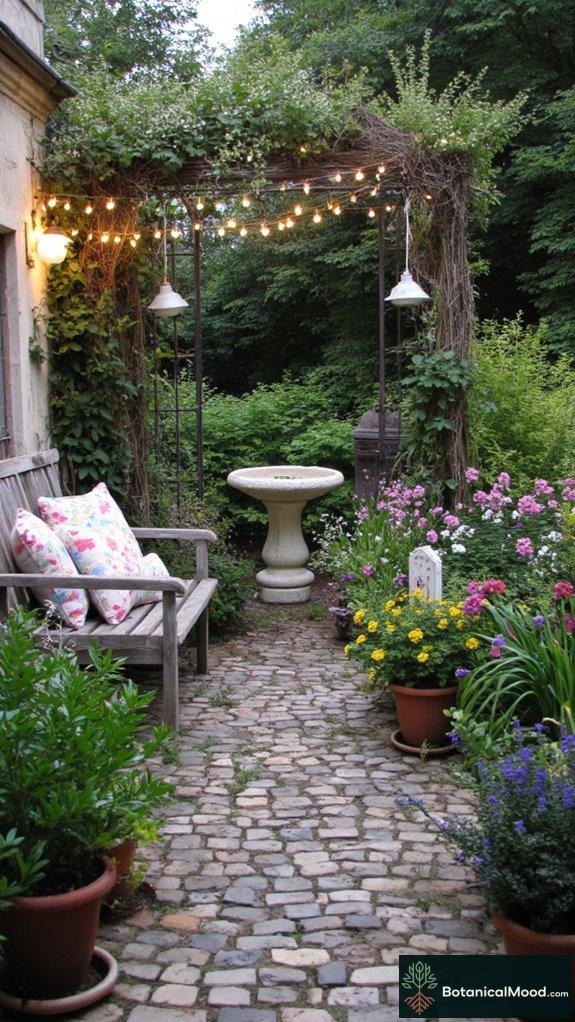
Creating intimate garden rooms transforms our outdoor spaces into personal retreats that captivate and inspire. These secluded areas offer a perfect blend of tranquility and beauty, allowing us to escape from the world.
| Element | Description |
|---|---|
| Seating | Cozy benches or vintage chairs |
| Lighting | Twinkling fairy lights or lanterns |
| Plant Selection | Fragrant herbs, colorful perennials |
| Decorative Items | Whimsical sculptures or vintage pots |
Inspired by designers like Monty Don, I incorporate layers of color and texture for a lush experience. I created Botanical Mood to share this essential pursuit of beauty and connection with nature.
Vertical Interest With Climbing Plants

As I explore the possibilities of vertical gardening, I’m continually amazed by how climbing plants can transform even the smallest spaces into vibrant green sanctuaries.
These beauties not only add height and dimension but also evoke a sense of wonder that’s liberating.
I love incorporating:
- Clematis for a stunning splash of color
- Wisteria to create enchanting, fragrant drapes
- Sweet peas for delightful, whimsical accents
Inspired by gardeners like Monty Don, I’ve learned that these climbers invite nature into our lives, enhancing our spaces and encouraging a deeper connection with greenery—something I cherish through my journey on Botanical Mood.
Blending Tradition With Sustainable Practices

In the world of gardening, blending tradition with sustainable practices feels like marrying time-honored techniques with modern eco-consciousness. It’s all about cultivating beauty while respecting our planet. I often turn to beloved figures like Gertrude Jekyll for inspiration; her designs harmonized native plants and timeless charm.
| Traditional Practices | Sustainable Practices |
|---|---|
| Heirloom seeds | Organic composting |
| Seasonal planting | Water conservation techniques |
| Natural pest control | Native plant selection |
| Companion planting | Permaculture principles |
| Hand tools | Regenerative practices |
As I created Botanical Mood, this balance truly became essential.
Cottage Garden Winding Pathways

Winding pathways beckon us to explore the delightful intricacies of a cottage garden, guiding us through unexpected scenes and inviting us to linger in each charming corner.
They create a journey full of surprise, enhance our experience, and embody the whimsical character of these gardens.
- Gentle, curving paths mimic nature’s flow, inviting tranquility. Wavy paths can be particularly effective in creating an informal journey that encourages leisurely strolling.
- Natural materials like reclaimed bricks or gravel blend perfectly with blooms.
- Lining paths with fragrant lavender captivates our senses.
As I designed my garden, I embraced these principles to cultivate a space that celebrates beauty, inspiring others through Botanical Mood’s vision for enchanting environments.
Floral Color Palette Selection

Choosing a floral color palette is one of the most exciting aspects of garden design, especially when crafting a cottage garden that feels cohesive and alive. When I select colors, I often think of renowned gardeners like Gertrude Jekyll, who championed harmonious combinations.
| Flower Type | Color | Season |
|---|---|---|
| English Roses | Soft pink | Late Spring |
| Delphiniums | Sky blue | Summer |
| Asters | Lavender | Early Fall |
This vibrant blend of hues creates an enchanting atmosphere, liberating the spirit and inviting joyful discoveries.
Curved Beds of Wildflowers

Curved beds of wildflowers can transform an ordinary garden into a mesmerizing setting, reminiscent of the enchanting designs by master gardener Gertrude Jekyll. These beds bring a soft, flowing aesthetic that invites harmony and serenity. Adding vertical interest through the inclusion of various plant heights can further enhance the beauty and biodiversity of the space.
Here are a few benefits you can experience:
- They create dynamic, eye-catching layouts and enhance curb appeal.
- Curves utilize space efficiently, fitting more plants into irregular areas.
- Layering wildflowers with varying heights adds texture and depth.
In designing my own space, I felt empowered by the liberation that nature’s rhythm offered, leading me to create Botanical Mood—a sanctuary celebrating beauty in our gardens.
Charming Flower-filled Arbors

Flower-filled arbors serve as enchanting entrances to any garden, offering both visual delight and a sense of welcoming charm.
I’ve often admired how these structures, rooted in history, effortlessly enhance my garden’s atmosphere and property value. Garden arbors add cottage-style charm and provide shade while enhancing the beauty of outdoor spaces.
Imagine sweet peas climbing alongside elegant wisteria or vibrant roses, creating a lush canopy overhead.
When positioned thoughtfully, arbors invite you into serene garden paths, providing shaded retreats.
Inspired by renowned designers, I’ve discovered that selecting diverse climbers, like clematis, can enrich your garden’s palette, ensuring a lively bloom cycle.
Embracing flower-filled arbors is a beautiful way to elevate any outdoor space.
How To Design Romantic Vintage Floral Landscape Inspiration

When envisioning a romantic vintage floral view, it’s essential to blend whimsy with structure to evoke a timeless charm and inviting atmosphere.
- Choose harmonious plant colors and textures that resonate with your space.
- Create winding pathways using natural materials to guide exploration.
- Layer plant heights for depth, incorporating height with hollyhocks, mid-size lavender, and low dianthus. A cottage garden is characterized by its informal style and dense, mixed plantings.
These elements echo the sensibilities of like renowned gardener Gertrude Jekyll.
By fusing beauty with practicality, as I often explore on Botanical Mood, you can cultivate a garden that enchants the senses and invites liberation.
Your vintage scenery can bloom into a sanctuary alive with charm.
Meet the Cottage Garden Creator
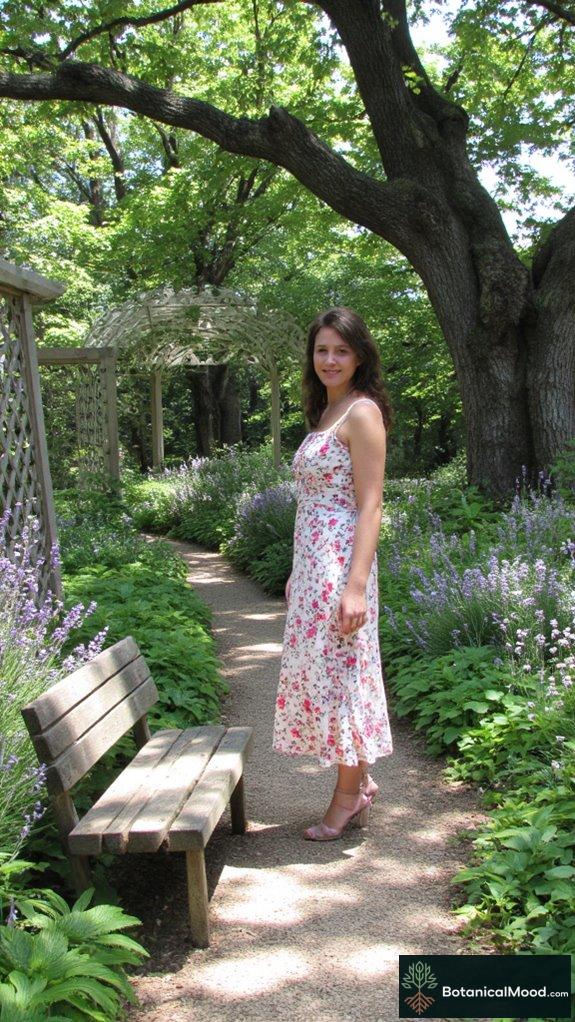
Meet the Cottage Garden Creator, Jekyll, an inspired garden designer from the USA who aspired to create a sanctuary that beautifully blends nature with artistic expression, reflecting her lifelong passion for horticulture.
To bring her vision to life, the owner meticulously planned the layout, drawing inspiration from the renowned British horticulturist Gertrude Jekyll. She integrated asymmetrical designs and selected a rich palette of flowers, combining both colorful blooms and lush foliage to create an immersive experience that changes with the seasons. Gertrude Jekyll was also known for her innovative use of ‘borrowed scenery’, which greatly influenced the owner’s design choices.
The garden’s creation involved using tools from brands like Fiskars and Gardena for planting and garden maintenance. Accessories such as decorative trellises and benches from local artisans supplemented the lush plantings.
Incorporating advice from contemporary horticulturists like Chris Beardshaw guaranteed a continuation of Jekyll’s celebrated gardening philosophies.
Renowned Garden Design Visionaries

The world of garden design is vibrant and diverse, filled with visionaries who have skillfully transformed environments into enchanting domains. Each of these designers, like Gertrude Jekyll and William Robinson, pioneered styles that embraced both formality and natural beauty. In the 18th century, designers like Capability Brown helped to redefine landscape architecture by focusing on the natural scenery design of vast estates.
| Designer | Key Concept | Signature Element |
|---|---|---|
| Gertrude Jekyll | Arts and Crafts | Blend of formal and natural |
| William Robinson | Informal planting | Native plants, relaxed styles |
| William Kent | Natural scenery design | Organic, open spaces |
| Vita Sackville-West | Thematic garden rooms | Color-themed compositions |
| Brenda Colvin | Ecological awareness | Simplistic, sustainable design |
At Botanical Mood, I celebrate these diverse influences that liberate our spaces.
Garden Design FAQ
What Are the Best Plants for Attracting Pollinators in Cottage Gardens?
I love planting lavender, echinacea, and foxgloves in my garden; they really attract bees and butterflies. Don’t forget sunflowers and bee balm too! These vibrant blooms bring life and joy to any space I create.
How Can I Maintain a Cottage Garden Throughout Different Seasons?
To maintain my cottage garden through seasons, I regularly tweak plant selection, embrace seasonal pruning, and enrich soil. I cultivate vibrant blooms in spring, lush foliage in summer, rich tones in autumn, and winter’s serene beauty.
Are There Specific Soil Types Ideal for Cottage Gardening?
I’ve found that loamy, well-drained soil with organic matter is perfect for cottage gardening. It supports diverse plants and promotes healthy growth. Experimenting with soil types lets us reveal nature’s beauty in our gardens.
What Gardening Tools Are Essential for Creating a Cottage Garden?
Did you know 60% of gardeners report better mental health from their activities? For my cottage garden, I always grab a trowel, pruning shears, a spade, and gloves—essential tools that make planting a joyfully liberating experience.
Can Cottage Gardens Thrive in Urban Environments?
Absolutely, cottage gardens can thrive in urban environments! I’ve seen amazing transformations where limited space blooms with rich colors and textures, proving that creativity and passion can cultivate beauty, even amidst concrete and steel.
Share Your Own Garden
When I create my cottage garden, I’m not just planting flowers; I’m crafting a nostalgic retreat. Mixing edible and ornamental plants boosts biodiversity and attracts pollinators, making my floral oasis even more enchanting. It’s a beautiful way to find peace right outside my door.
I’d love to hear about your own gardening experiences. What have you planted in your garden that brings you joy?
Feel free to share some pictures of your garden and tell us how you designed it. Let’s inspire each other!
References
- https://en.wikipedia.org/wiki/Cottage_garden
- https://www.embassylandscape.com/blog/english-cottage-gardens-the-original-rambunctious-garden
- https://thegardenhistory.blog/2021/05/08/the-cottage-garden-and-its-origins/
- https://www.cottage-garden.org/history.htm
- https://www.finegardening.com/article/defining-the-new-american-cottage-garden
- https://urban-earth.co.uk/cottage-garden-path-ideas/
- https://www.heyhoneysuckle.com/blog/my-ideas-for-a-charming-cottage-garden-path-and-my-best-tips
- https://www.gardeningetc.com/design/cottage-garden-path-ideas
- https://www.2thesunnyside.com/beautiful-garden-path-ideas/
- https://newbury-home.com/how-to-design-and-create-charming-cottage-garden-pathways/