I learned the hard way that dogs don’t respect landscaping dreams. After my golden retriever destroyed three “pet-safe” gardens, I finally got smart.
Lamb’s Ear: velvet. Boston Fern: feathery chaos. River Birch: papery satisfaction.
My rescue pit mix, Bruce, tested every texture personally. Smart irrigation? Non-negotiable. Rubber mulch? Saves paws.
Some dogs eat rocks. Mine preferred ferns. Gardening’s compromise, honestly.
Pet-Friendly Garden Design Mistakes That Cost Me My Sanity
Last summer, I installed ornate metal edging.
Sharp. Decorative. Veterinary emergency waiting to happen.
Bruce sliced his paw within hours. I cried, paid $340, then ripped it out at midnight using my car’s tire iron.
Now I use recessed concrete borders. Invisible to zoomies. Durable against 70-pound “I forgot how to brake” moments.
Weather-resistant composite decking bridges my tactile zones. Rain or shine, zero splinters. My neighbor built with cedar; warped in six months.
Native pollinator plants buffer the perimeter. Coneflower, black-eyed susan, butterfly weed. Bruce ignores them. Bees thrive. I feel slightly less guilty about my carbon footprint.
The complexity? Every dog’s different. My sister’s husky ignores plants entirely. Her destructive obsession is vinyl siding.
Garden design requires knowing your specific animal’s chaos profile. No universal solution exists.
I monitor soil moisture obsessively now. Sensors ping my phone. Bruce thinks the gentle sprinkler mist is personally attacking him.
Victory smells like wet dog and rosemary.
Quick Takeaways
- Select pet-safe, textured plants like Lamb’s Ear and Boston Fern to encourage tactile exploration and safe interaction.
- Position textured plants near pathways and resting areas for easy and engaging pet access.
- Use durable, weather-resistant materials for garden features to ensure safety and longevity.
- Incorporate raised beds and tactile zones to promote safe, immersive sensory experiences for pets.
- Integrate smart irrigation and soil sensors to maintain optimal plant health and environmental safety.
Why Tactile Plants Are Great for Your Pet’s Sensory & Safety Needs
Tactile plants play an essential role in designing pet-friendly sensory gardens by providing engaging textures that cater to a pet’s innate curiosity and need for physical exploration. These plants, such as Lamb’s Ear (Stachys byzantina) and soft-berried evergreen shrubs, encourage safe interaction, enriching sensory experience while minimizing hazards.
Their versatility allows for strategic placement along pathways and play zones, stimulating tactile discovery and mental engagement. Incorporating textured foliage enhances spatial definition, promotes physical activity, and guarantees safety by avoiding thorny or toxic species.
Thoughtful selection and placement of these plants create a dynamic environment where pets thrive physically and mentally, fostering robust well-being.
How to Choose Pet-Friendly Plants With Fun Textures
When selecting plants for a pet-friendly sensory garden, prioritizing those with interesting and varied textures guarantees safe, stimulating exploration.
Opt for rub-resistant, velvety leaves like Lamb’s Ear (Stachys byzantina) or soft, fur-like foliage such as Boston Fern (Nephrolepis exaltata).
Incorporate tactile plants with rugged bark, like River Birch (Betula nigra), to provide contrasting sensory cues. Thorny plant species should be avoided entirely in spaces designed for pet interaction and safety.
For areas where pets may dig or wander, consider using pet deterrent mats alongside your plantings to protect vulnerable flower beds.
Avoid thorny, spiky species or toxic plants such as Lily of the Valley (Convallaria majalis), focusing instead on textured, chew-safe options that enhance interaction while ensuring safety and durability.
Designing a Tactile Plant Layout Your Pet Will Love
Creating an engaging tactile plant layout for your pet involves thoughtful consideration of placement, variety, and accessibility to maximize safe exploration and sensory stimulation.
Strategically position textured plants—like rough-leaved Lamb’s Ear (Stachys byzantina) or soft, velvety Heliotrope (Heliotropium arborescens)—near pathways and resting areas to encourage interaction.
Use contrasting textures and vibrant foliage colors, such as variegated Hosta (Hosta spp.) or spiky ornamental grasses like Pampas (Cortaderia selloana), ensuring plants are reachable without causing harm.
Elevate tactile experiences by integrating raised beds or low-lying borders, creating an immersive environment where your pet can confidently explore diverse sensory textures.
Safe Materials to Pair With Your Tactile Plants
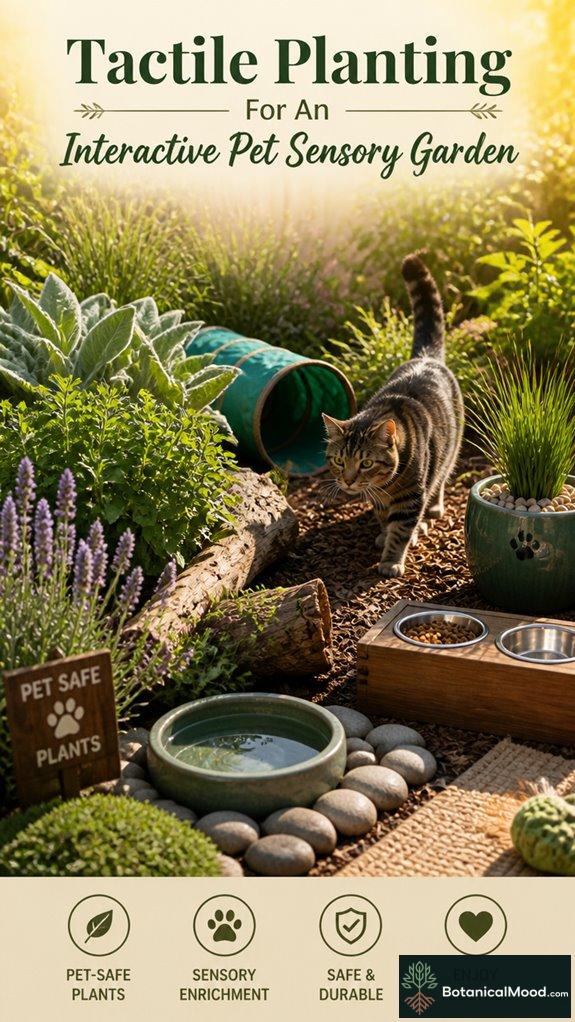
When positioning garden elements, consider positioning feeders strategically to prevent cats from using the sensory garden as a hunting ground, ensuring pets can safely explore without predator interference.
These materials optimize safety, durability, and sensory engagement in your garden.
Tips for Introducing Your Pet to the Sensory Garden
Introducing your pet to a sensory garden requires careful planning and gradual acclimation to create a safe and engaging environment.
Start by selecting pet-friendly, non-toxic plants with contrasting textures—such as Matthiola incana (stock) or Salvia splendens (scarlet sage)—to stimulate tactile curiosity.
Use controlled exposure, allowing your pet to explore at their own pace, initially on leashes to guarantee safety.
Highlight sensory-rich elements like rough bark or soft moss, and avoid overwhelming scents or hazards like sharp thorns. Outdoor stair tread mats can help prevent your pet from accessing restricted garden areas like elevated pathways or steep transitions.
Consider using raised beds to further protect your sensitive plants and create defined boundaries for your pet’s exploration area.
Consistent, gentle guidance fosters confidence and curiosity, transforming the garden into an interactive space where your pet’s senses are invigorated without risk.
Maintaining and Refreshing Your Sensory Garden for Pet Play
Regular maintenance and thoughtful revitalizing are essential to keep your pet’s sensory garden stimulating, safe, and inviting for ongoing exploration.
- Regularly prune (Prunus domestica) and trim overgrown plants, ensuring pathways remain clear and tactile elements accessible.
- Refresh aromatic herbs like lavender (Lavandula angustifolia) and mint (Mentha spp.) to maintain strong scents that engage and inspire.
- Replace or repair textured surfaces and sensory stations with weather-resistant materials such as rubber mulch or textured stones, preserving durability and safety. During winter months, consider adding floating pond heaters to any water features in your garden to ensure your pets can safely access water year-round.
- Consider installing dog-friendly willow fencing around your sensory garden to create secure boundaries while maintaining the natural aesthetic your pet enjoys exploring.
Consistent care preserves the garden’s sensory richness, fosters tactile curiosity, and enhances the mental and physical well-being of your pet over years of dedicated cultivation.
Durable Textured Plant Mats
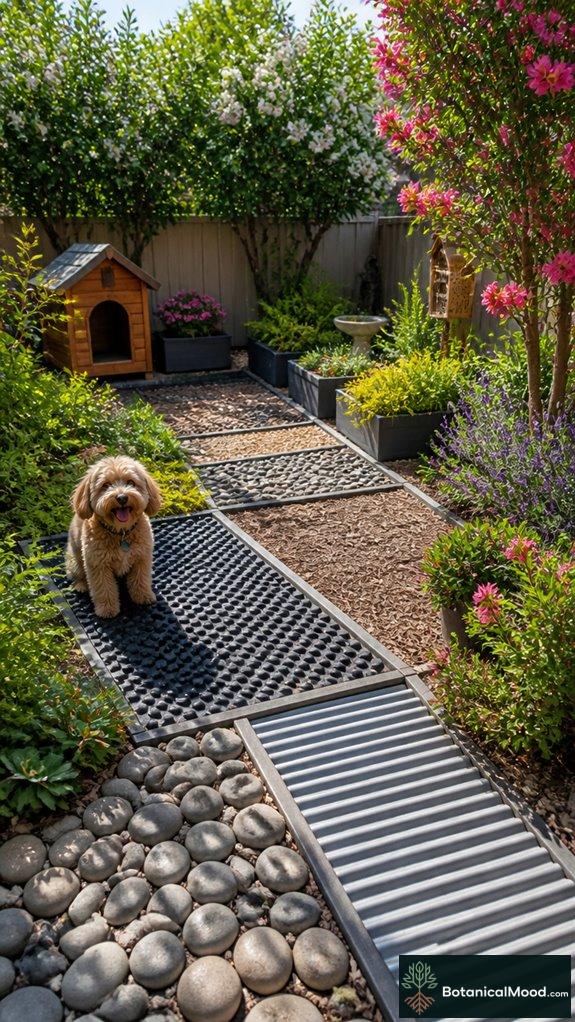
Durable textured plant mats serve as essential components in creating a resilient and engaging sensory garden for pets, especially when designed with weather-resistant materials like rubber, textured stones, and corrugated plastics. These mats provide a platform that withstands harsh conditions while offering tactile diversity, from ridged and bumpy surfaces to soft, felted textures, stimulating exploration. Consider products like RhinoBond’s rubber mats, textured flagstones, or recycled polypropylene for durability and safety. For added pet safety and visual interest, incorporating hawthorn trees around garden perimeters creates natural barriers while enhancing the wildlife-friendly environment. Proper protection of these garden installations requires outdoor wood stain application to surrounding wooden structures. Visualize a garden where these mats:
| Material | Tactile Attribute |
|---|---|
| Rubber (e.g., RhinoBond) | Firm, grippy |
| Textured Stones | Rough, natural |
| Corrugated Plastic | Ribbed, flexible |
| Recycled Plastics | Smooth, resilient |
Smart Watering Systems
Would you like to guarantee your pet’s sensory garden remains vibrant and sustainable even during dry spells or inconsistent rainfall? Implementing a smart watering system allows for precise, efficient hydration, promoting the best plant health and longevity. Consider pairing your watering system with weatherproof flooring options to protect the garden infrastructure during winter months. WiFi soil moisture sensors provide real-time data on soil hydration, enabling your smart system to make automatic adjustments based on actual ground conditions.
- Use weather-dependent controllers like Rachio 3 or Orbit B-Hyve for adaptive schedules.
- Integrate moisture sensors (e.g., Vegetronix VH400) to monitor soil hydration levels.
- Connect with mobile apps for real-time adjustments and centralized control.
Placement of Pet-Safe Plants
Have you considered how strategic placement impacts the safety and accessibility of pet-safe plants within your sensory garden? Positioning species like Nepeta cataria (catnip), Tiarella cordifolia (foamflower), or Parthenocissus tricuspidata (Boston ivy) in low-traffic, shaded zones minimizes accidental ingestion risks.
Elevated beds or designated tactile zones ensure pets engage safely, preventing interference with delicate root systems or flowering structures. Incorporate durable, non-toxic plants near pathways for easy access, while avoiding sharp, toxic species such as Nerium oleander (oleander). Vertical structures like weather-resistant scratching posts can be integrated alongside planted areas to encourage natural behaviors while protecting delicate vegetation from damage.
Smart soil sensors can monitor moisture levels and nutrient content in designated planting areas, helping you maintain optimal growing conditions for pet-safe plants throughout the season. Thoughtful placement enhances sensory engagement, promotes safety, and aligns with garden design principles rooted in ecological harmony and pet welfare.
FAQ
Can Tactile Plants Help Alleviate Pet Anxiety or Stress?
Yes, tactile plants can help reduce pet anxiety and stress by providing calming sensory experiences. I’ve seen pets become more relaxed and engaged when they interact with textured, soothing plants in a specially designed sensory garden.
Are There Specific Sensory Plants for Different Types of Pets?
I’ve found that specific sensory plants do cater to different pets, like catnip for cats or valerian for dogs, providing targeted comfort and stimulation that can truly empower your pet’s well-being through thoughtful, tailored planting choices.
How Do Seasonal Changes Affect Tactile Plant Textures?
Seasonal changes notably transform tactile plant textures, making surfaces rougher or smoother, and altering their temperature. I love adjusting my garden to guarantee continuous sensory engagement for pets, keeping their experience dynamic, exciting, and beneficial year-round.
What Are Common Mistakes to Avoid in Pet Sensory Garden Design?
Avoid cluttering the space and choosing plants that aren’t durable or safe for pets. I recommend selecting resilient, non-toxic textures, ensuring easy navigation, and planning for seasonal changes to keep the garden engaging and secure for your pets.
How Can I Attract Beneficial Insects to Enhance Sensory Experiences?
You can attract beneficial insects by planting native, nectar-rich flowers and providing shelter with leaves or small shrubs. I recommend avoiding pesticides to guarantee these helpful creatures thrive, creating a dynamic, naturally pest-resistant environment that amplifies sensory richness.
Summary
Have you considered how a thoughtfully designed tactile plant garden can transform your pet’s outdoor experience? By selecting pet-safe species such as *Lippia* (Lippia citriodora), incorporating durable textured mats, and utilizing smart irrigation systems like Rachio, you create an engaging, safe, and sensory-rich environment. Isn’t it rewarding to craft a space that nurtures your pet’s curiosity while ensuring their safety? With strategic planning and thoughtful materials, your pet’s sensory garden becomes an enduring sanctuary of discovery.