Tag: garden tips

  • 5 Tips for Multi-Tiered Espalier Fruit Trees

    5 Tips for Multi-Tiered Espalier Fruit Trees

    Ever wondered why my espalier fruit trees look like fancy wall art? Trust me, it wasn’t always this pretty.

    I learned the hard way that not all fruit trees want to be supermodels against a wall. After my first ‘Cox Orange Pippin’ (Malus domestica) decided to play rebel, I got smarter. Now I’m that weird gardener who talks to their ‘Stella’ cherry trees while training them.

    Spacing is crucial – I give them 18-24 inches of personal space (if only my neighbors understood this concept). My trellis game is strong, and I’ve become best friends with marigolds for pest control. Who knew flowers could be such excellent bodyguards?

    Sometimes I catch myself staring at my perfectly tiered trees, feeling like a proud parent. Though let’s be honest, it’s mostly luck and stubbornness.

    How My Failed Rose Garden Led to Espalier Success

    Before discovering espalier, I had this ambitious rose garden that turned into a thorny nightmare. One day, while nursing my battle wounds from pruning gone wrong, I spotted my neighbor’s amazing espaliered pear tree. That’s when it clicked – vertical gardening wasn’t just space-efficient, it was actually easier on my back! I transformed my cramped side yard into a living fence of apple and cherry trees (Prunus avium). Added bonus: the structured design created this amazing backdrop for my herb garden, with thyme and sage (Salvia officinalis) thriving in the dappled shade.

    Quick Takeaways

    • Choose disease-resistant fruit tree varieties like ‘Cox Orange Pippin’ (apple) and ‘Bartlett’ (pear) for a successful espalier setup.
    • Construct planting beds that are at least 4-6 feet wide and 8-10 feet long for optimal spacing and access.
    • Install sturdy trellises at 45-degree angles early to support the trees and ensure efficient growth.
    • Maintain soil health through regular compost additions and test for nutrient needs to support thriving plants.
    • Use companion plants like lavender and marigold to deter pests and enhance the overall health of your fruit trees.

    Selecting the Right Fruit Varieties

    espalier fruit tree planting

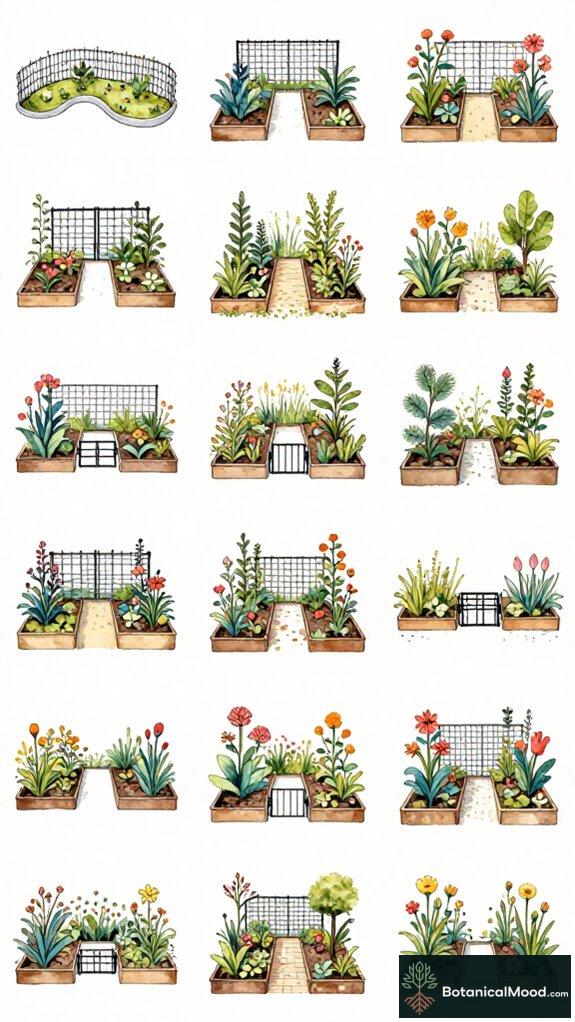
    Multi-tiered espalier fruit tree planting beds offer a visually appealing and space-efficient way to cultivate various fruit varieties. These beds typically measure 4-6 feet long and 2-3 feet wide, arranged in rows or staggered patterns for aesthetic appeal.

    Multi-tiered espalier fruit tree planting beds provide an attractive, space-saving solution for growing diverse fruit varieties.

    Constructed from materials such as treated wood, stone, or composite boards, the beds can be elevated to promote drainage. The design integrates a trellis system that supports the fruit trees as they grow laterally, creating a structured silhouette. Plants used often include apples, pears, and cherries, intentionally selected for their adaptability to pruning techniques.

    When choosing plants for your espalier bed, consider varieties that respond well to training and pruning:

    • Apple Trees (e.g., ‘Cox Orange Pippin’)
    • Pear Trees (e.g., ‘Bartlett’)
    • Cherry Trees (e.g., ‘Stella’)
    • Plum Trees (e.g., ‘Damson’)
    • Fig Trees (e.g., ‘Brown Turkey’)

    Choosing disease-resistant varieties enhances your success. Additionally, opting for trees that thrive in a tropical forest canopy environment can support healthier growth and yield.

    Designing Your Espalier Planting Bed

    Design your espalier bed to maximize sunlight and airflow.

    Consider these tips:

    1. Layout: Position taller trees towards the north and shorter ones towards the south.
    2. Spacing: Space plants 18-24 inches apart to allow for growth and maintenance.
    3. Trellis Support: Install a sturdy trellis early to guide the trees as they grow.
    4. Access: Guarantee there’s access to tend to the plants easily.

    Remember to prune regularly for shape and airflow, promoting healthy fruit production.

    Garden Maintenance and Soil Health

    Incorporating compost and organic fertilizers improves soil structure, supporting healthy root systems.

    Regular mulching conserves moisture and suppresses weeds. Stay vigilant against pests and diseases to maintain vibrant, productive plants in your espalier garden.

    Planning Your Espalier Design

    espalier fruit tree design

    Espalier fruit trees are a wonderful way to maximize space while creating an artful garden feature. A typical planting bed for these trees should measure at least 4-6 feet wide and 8-10 feet long, ideally situated against a wall or fence for support.

    Using sturdy materials like treated wood or stone, construct a raised bed with good drainage. The layout can feature multiple tiers that allow for careful organization and easy access to each plant. In the planting bed, dwarf or semi-dwarf fruit trees like apples, pears, and plums work well, as they’re easier to train into an espalier shape.

    Choosing Plants for Your Bed

    When selecting plants for your espalier, consider the following:

    • Apple: Versatile and hardy.
    • Pear: Requires less space, flavorful fruit.
    • Peach: Offers beautiful blossoms and sweet fruit.
    • Fig: Thrives in warm climates, adds a unique touch.
    • Citrus: Great for Mediterranean climates, fragrant foliage.

    Designing Your Espalier Planting Bed

    To design an efficient espalier bed, follow these tips:

    1. Layout: Plan your tiered system, guaranteeing even spacing (8-12 inches apart).
    2. Support Structure: Install a trellis or wire for training.
    3. Plant Orientation: Position taller varieties on the upper tier.
    4. Sunlight Access: Confirm each plant receives adequate sunlight.
    5. Watering: Integrate a drip irrigation system for convenience.

    Additionally, regularly prune and train your trees for ideal growth and fruit production. Incorporating companion planting strategies can also enhance the overall health and productivity of your espalier garden.

    Maintaining Your Garden Environment

    Beyond espalier structures, consider companion planting for biodiversity in your garden.

    Adding herbs and flowers like marigolds or basil can enhance pest control and attract beneficial pollinators, creating a thriving ecosystem around your fruit trees.

    Proper Pruning Techniques

    elegant multi tiered planting beds

    Multi-tiered planting beds are elegant, space-efficient structures ideal for growing a variety of fruits, herbs, and flowers. Typically, they consist of stacked levels, each approximately 2 to 3 feet wide, with heights varying from 1 to 3 feet.

    Constructed using treated wood or stone, these beds allow for excellent drainage and accessibility. Arrange them in a terraced, staggered pattern to create a visually appealing look. Utilize rich soil and add organic matter for enhanced fertility.

    Choosing Plants for Multi-Tiered Beds

    When selecting plants for your multi-tiered bed, consider their height, sunlight needs, and root structure. Ideal plants include:

    • Apple trees
    • Pear trees
    • Blueberries
    • Strawberries
    • Raspberries

    Designing Your Multi-Tiered Bed

    To design your multi-tiered planting bed:

    1. Assess sunlight exposure and drainage.
    2. Create a scale diagram for layout.
    3. Space taller plants (like apple trees) at the back level.
    4. Place medium-sized plants (like blueberries) in the middle.
    5. Reserve the front for ground covers (like strawberries).

    Pro Tip: Use companion planting strategies to maximize health and yield by pairing compatible species that deter pests and promote growth.

    Enhancing Soil Health for Plant Growth

    Maintaining soil health is essential for a thriving multi-tiered garden. Regularly amend soil with organic compost to improve nutrient availability and microbial activity. Additionally, incorporating soil amendments can help to create a more balanced nutrient profile.

    Rotate your crops and leave resting periods to sustain fertility, ensuring a bountiful harvest season after season.

    Ensuring Adequate Support Structures

    multi tiered fruit planting

    A multi-tiered planting bed is an innovative structure designed to cultivate a variety of plants, particularly espalier fruit trees. Typically constructed in a rectangular layout, it should measure at least 4 feet by 8 feet. Use materials like treated wood or stone for durability.

    Create tiered levels using soil mounds or raised supports to maximize sunlight exposure and drainage. Ascertain each tier is at least 1 foot apart for proper air circulation. Select plants suited for a vertical garden, mixing varieties like apples, pears, and figs for a diverse fruit yield.

    Create tiered levels for optimal sunlight and drainage, ensuring each is spaced 1 foot apart for airflow while mixing diverse fruit varieties.

    Selecting Plants for Your Bed

    When selecting plants, consider their growth habits and compatibility. Ideal choices for multi-tiered beds include:

    • Apple trees (Malus domestica)
    • Pear trees (Pyrus communis)
    • Fig trees (Ficus carica)
    • Cherry trees (Prunus avium)

    Designing Your Multi-Tiered Bed

    To design your planting bed effectively, follow these tips:

    1. Sketch a Layout: Create a blueprint of your tiers and plant arrangements.
    2. Space Plants Wisely: Allow at least 2-3 feet between taller and shorter plants to prevent overshadowing.
    3. Layer Plants: Place slow-growing plants in front of quicker-growing varieties.
    4. Support Structures: Use trellises or wires to guide fruit trees horizontally.

    Pro Tip: Use companion planting to enhance growth and reduce pests! Incorporating companion planting strategies can significantly improve fruit tree health by fostering beneficial relationships between plants.

    Fertilizing Your Garden Properly

    Applying fertilizer effectively guarantees your plants receive essential nutrients. Organic options like compost enhance soil health, while synthetic fertilizers should be used cautiously to avoid chemical buildup.

    Always test your soil to determine its nutrient needs before application, guaranteeing a thriving environment for your multi-tiered planting bed.

    Managing Soil and Watering Needs

    espalier fruit tree design

    Creating a multi-tiered espalier fruit tree bed is an artistic and space-efficient venture suitable for small gardens. Typically sized about 4 feet wide and at least 8 feet long, these beds are arranged in a zig-zag layout or in tiers to maximize sunlight exposure.

    Constructing this bed requires durable materials such as treated wood or recycled composite for the side borders and sturdy trellis supports for vine training. Soil should be a well-drained mix of organic compost and loamy soil, aiding nutrient retention and drainage.

    Selecting Plants for Your Espalier Bed

    When selecting plants for this type of bed, choose varieties that thrive in your climate and complement each other. Here are some excellent options:

    • Espalier Apple Trees
    • Pear Trees (e.g., ‘Bartlett’)
    • Fig Trees
    • Blueberries
    • Grapevines

    Designing Your Espalier Planting Bed

    To design an effective planting bed, follow these guidelines:

    • Plan your layout: Reflect on sunlight and wind patterns.
    • Spacing: Space fruit trees 2-3 feet apart, ensuring airflow.
    • Trellis Alignment: Position trellises at 45-degree angles for ideal support.
    • Vertical Layers: Incorporate varying heights for visual appeal.

    Pro Tips: Use companion plants like lavender or marigold to deter pests while providing aesthetic interest.

    Ponder integrating vertical gardening techniques alongside your espalier bed. Using wall-mounted planters can save even more space and add vibrant greenery, enhancing your home’s aesthetics.

    This approach pairs well with companion planting to improve yield and pest management within your garden.

    Bed Preparation for Seasonal Growth

    soil amendment for growth

    Bed preparation involves more than simply planting; it sets the stage for robust seasonal growth that nourishes both the plants and the gardener’s spirit.

    Let’s begin by amending the soil. I recommend mixing in organic matter such as compost or well-rotted manure, which enriches the soil and boosts nutrient availability for my fruits.

    Seasonal timing is critical; I usually prepare my beds in early spring, ensuring the frost has passed.

    To enhance drainage and aeration, I incorporate perlite or coarse sand.

    FAQ

    Can I Espalier Non-Fruit Trees Alongside My Fruit Trees?

    Absolutely, I’ve seen non-fruit trees alongside fruit trees work beautifully. Just keep compatibility concerns in mind for growth and light. The aesthetic benefits can be stunning, creating a harmonious and inviting garden space for everyone.

    How Long Does It Take for Espalier Trees to Produce Fruit?

    It usually takes about three to five years for espalier trees to bear fruit. With diligent tree maintenance, that timeline can feel like a journey, filled with anticipation and the promise of shared harvests ahead.

    What Pests Are Most Common With Espalier Fruit Trees?

    I often encounter aphids and spider mites on my espalier fruit trees. Effective pest control and disease management are essential. By staying vigilant, I can protect my trees and serve my garden wonderfully.

    Is It Necessary to Fertilize My Espalier Fruit Trees?

    Yes, it’s necessary to fertilize my espalier fruit trees. I focus on the right fertilizer timing, ensuring soil quality remains high. Healthy trees give back more fruit, which I love sharing with friends and family!

    Can I Grow Espalier Trees in Containers?

    Absolutely, I can grow espalier trees in containers! I’ve found smaller tree sizes work best. Container gardening allows me to maximize space while still serving up a beautiful and productive garden to share with others.

    Summary

    I cultivate my multi-tiered espalier plums and apples with careful precision. Each branch requires thoughtful pruning and support, creating a living framework that’s both functional and beautiful. This method maximizes space while ensuring abundant harvests in my garden.

    Have you tried espalier techniques in your garden? Share your successes, challenges, and lessons learned while training fruit trees against walls or trellises.

    We’d love to see your espalier projects! Post photos of your trained fruit trees, including details about your design choices and support systems. What inspired your layout, and how has it evolved over time?

  • Smart Sustainability: Drought-Defying Gardens That Thrive Anywhere

    Smart Sustainability: Drought-Defying Gardens That Thrive Anywhere

    Why does gardening have to be so complicated?

    Let me tell you about my journey to creating drought-defying gardens.

    I threw out the idea of traditional lawns and embraced xeriscaping instead. Who knew that using cacti like Echinocactus grusonii and Agave americana could make me feel like the ultimate gardening hero?

    With drip irrigation—bless those little hoses!—and organic mulch that holds moisture like a champion, I crafted a vibrant oasis. It’s like a party for pollinators, and I’m the host!

    But hey, who am I kidding? Droughts are tricky. Yet, with some creativity, you can thrive!

    Designing Gardens That Actually Grow: My Personal Encounter with Drought-Resilient Landscapes

    A few summers ago, I faced a garden crisis. My plants were drooping, begging for water. I decided to take a leap of faith and attended a workshop on garden design that focused on sustainable techniques. There, I learned about layering plants, incorporating rain gardens, and using native species.

    Transforming my backyard into a drought-defying paradise was tough, but every plant contributed to the greater good—promoting biodiversity. Each time I saw bees buzzing around, I felt like I was revolutionizing the horticultural world.

    Now, I marvel at how my garden flourishes, even when the sun blares down. Who knew smart sustainability could be this life-changing?

    Quick Takeaways

    • Xeriscaping utilizes native, drought-resistant plants to create sustainable gardens that thrive in various climates and support local biodiversity.
    • Efficient irrigation techniques, such as drip systems and rainwater harvesting, optimize water use and maintain healthy plant growth.
    • Mulching with organic materials retains moisture and suppresses weeds, improving the overall health of drought-tolerant gardens.
    • Grouping plants by water requirements enhances irrigation efficiency and ensures that each plant receives the necessary moisture.
    • Resourceful tools and local nurseries provide essential support for developing resilient gardens that flourish with minimal water.

    Understanding Xeriscaping and Its Benefits

    sustainable drought tolerant landscaping techniques

    When I first explored the world of gardening, I was captivated by the concept of xeriscaping, which involves designing terrains that thrive in arid conditions, maximizing water efficiency and minimizing maintenance.

    The xeriscaping principles emphasize strategic planning, incorporating native plants, efficient irrigation methods, and soil enhancement to create sustainable, drought-tolerant landscaping.

    I learned to appreciate how using materials like gravel or mulch conserves moisture while allowing vibrant colors and textures to flourish, showcasing nature’s artistry. Additionally, incorporating native desert plants supports local wildlife and promotes biodiversity, creating a balanced ecosystem.

    Choosing the Right Drought-Resistant Plants

    drought resistant garden selection tips

    How do you select drought-resistant plants that not only endure harsh conditions but also add beauty and interest to your scenery?

    I start by exploring native species, as they naturally thrive in our local climate and exhibit incredible climate adaptability. For instance, Agastache foeniculum, commonly known as anise hyssop, not only attracts pollinators but also withstands dry spells.

    I also recommend incorporating succulents like Echeveria or Sedum, which offer vibrant colors and unique textures. Creating a drought-resistant native plant garden layout enhances the aesthetic while conserving water.

    Combining these plants with ornamental grasses, such as Panicum virgatum (switchgrass), can create striking contrasts.

    Focusing on these elements enhances the aesthetic while conserving water. This thoughtful selection guarantees your garden not only survives but flourishes, embodying the spirit of Smart Sustainability.

    It’s a demonstration of resilience and beauty.

    Efficient Irrigation Techniques for Water Conservation

    efficient water conservation techniques

    As I explore the art of cultivating a thriving garden under water-scarce conditions, efficient irrigation techniques become essential for conserving every precious drop.

    Employing drip systems, for instance, delivers water directly to the plant roots, minimizing evaporation and runoff while maximizing efficiency. These systems not only reduce water usage considerably but also help maintain healthy soil moisture levels, essential for robust growth.

    Drip systems provide efficient irrigation by targeting plant roots directly, conserving water and enhancing soil moisture for optimal growth.

    Rainwater harvesting is another powerful tool at our disposal. By capturing and storing rainwater, I can provide my garden with a sustainable irrigation source that thrives even in dry spells.

    Utilizing these methods not only champions sustainability but profoundly blends beauty and practicality, creating an environment that flourishes and inspires, all while respecting nature’s limitations.

    The Role of Mulching in Xeriscape Design

    mulching promotes garden health

    The integrity of a garden thrives on multiple layers of thoughtful design, and mulching plays an essential part in nurturing xeriscape environments.

    Selecting the right mulch types—like organic materials such as shredded bark, wood chips, or even gravel—ensures effective moisture retention. These layers not only reduce evaporation but also suppress weeds that might compete for limited resources.

    I’ve seen how a thick layer of mulch in my own garden dramatically enhances the soil’s ability to retain precious water, allowing hardy plants like Agave americana and Sedum spp. to flourish even in the scorching sun.

    Soil Preparation for Maximum Moisture Retention

    soil preparation for moisture

    Preparing the soil for maximum moisture retention is essential if we want our xeriscape gardens to truly thrive in arid conditions. Start by testing your soil’s pH and structure; this foundational step empowers you to choose the right soil amendments.

    Incorporate organic matter like aged compost (Humus) or well-rotted manure, which considerably enhance moisture retention, creating a sponge-like environment.

    I often mix in water-retentive gels or natural fibers, such as coconut coir (Cocos nucifera), that deeply embed moisture within the soil matrix.

    Creating Visual Interest in Drought-Defying Gardens

    drought resistant garden aesthetics

    Gardens can be strikingly beautiful, even in the face of drought. By incorporating colorful contrasts, such as the fiery reds of Sedum spurium paired with the cool greens of Lavandula angustifolia, we create an eye-catching display that defies arid conditions.

    Textured layers add depth, enticing viewers to explore. For instance, the spiky forms of Agave americana juxtaposed with the soft, cascading petals of Santolina chamaecyparissus can evoke a sense of dynamic movement.

    In my pursuit of crafting powerful vistas, I find inspiration in native flora that thrives under harsh conditions, showcasing resilience.

    As I curate each drought-defying garden, I’m reminded that aesthetics and sustainability can coexist, making the vista an enduring expression of beauty, even amid challenges.

    Planning Your Xeriscape Layout and Plant Grouping

    xeriscape plant grouping strategy

    When I consider the layout of a xeriscape, I often envision a harmonious blend of functionality and aesthetic appeal, ensuring that each element complements the overall design. Planning your xeriscape effectively involves strategic garden zoning and careful plant placement. By grouping plants with similar water needs, I create a sustainable haven that thrives with minimal resources.

    Here’s a table to visualize effective plant groupings:

    Plant Type Water Needs Ideal Placement
    Succulents (Echeveria) Low Sun-drenched borders
    Native Grasses (Muhlenbergia) Moderate Middle zones
    Perennials (Lavandula) Low Front arrangements
    Groundcovers (Thymus) Very Low Understory areas
    Shrubs (Rudbeckia) Moderate to Low Focal points

    This structured approach not only beautifies but fortifies resilience in my garden designs.

    Maintenance Strategies for Sustainable Landscaping

    sustainable landscaping maintenance strategies

    While many might assume that xeriscaping requires little attention, I believe that effective maintenance strategies are essential for ensuring the longevity and sustainability of these drought-defying gardens.

    Implementing proper drainage solutions is critical; heavy rains can saturate your scenery, so let’s incorporate a dry creek bed or rain garden to direct excess water away from sensitive plants.

    Regular garden maintenance, including seasonal pruning of native shrubs such as Salvia (Salvia spp.) and ornamental grasses like Miscanthus (Miscanthus sinensis), preserves not just shape but health, enabling each specimen to thrive.

    I encourage the use of organic mulch to retain moisture and suppress weeds, enhancing the aesthetic appeal.

    Embracing these practices elevates your garden into a resilient masterpiece, thriving amid challenges while echoing nature’s ingenuity.

    Sustainable Garden Planning

    sustainable garden planning strategies

    Creating a sustainable garden requires a thoughtful approach that encompasses both beauty and function, allowing us to nurture our plants while respecting the environment.

    To begin, I strategically plan my vegetable garden, integrating native species like Echinacea purpurea and Asclepias tuberosa, which not only thrive in local conditions but also attract pollinators.

    I prioritize companion planting, pairing tomatoes (Solanum lycopersicum) with basil (Ocimum basilicum) to enhance flavor and deter pests.

    I’m also mindful of sun exposure and soil quality, choosing the perfect location to maximize growth.

    Utilizing organic mulch helps retain moisture while enriching the soil.

    Water-Wise Desert Garden Design

    sustainable desert garden design

    Designing a water-wise desert garden not only fosters a sustainable scenery but also enhances the visual harmony of arid environments. By carefully selecting desert plants (such as Agave americana or Echinocactus grusonii) that require minimal water, I guarantee a terrain that thrives even in extreme conditions.

    Here are some key elements to reflect upon:

    • Grouping plants by similar water requirements optimizes efficiency and encourages climate adaptation.
    • Testing and amending soil elevates nutrient absorption and overall plant resilience. Additionally, implementing drip irrigation systems ensures efficient water delivery while conserving resources.
    • Utilizing vertical gardening expands planting opportunities, allowing diverse textures and colors to bloom.

    This vibrant approach redefines desert gardening, making it more than just survival; it’s a striking portrayal of nature’s beauty in harmony with limited resources.

    Irrigation-Efficient Garden Layout

    irrigation efficiency in gardening

    Achieving irrigation efficiency in garden layouts fundamentally enhances both plant health and resource conservation, especially in environments where water is a precious commodity. By strategically organizing plant placement, I group species with similar water needs into tailored irrigation zones, ensuring optimal water usage and reducing waste.

    Irrigation efficiency is key to nurturing plant health and conserving precious water resources in sustainable gardening.

    For instance, I segregate drought-tolerant plants (like Salvia spp.) from shade-loving varieties (such as Hosta spp.), creating distinct zones that prevent over- or under-watering.

    The right irrigation layout, whether employing end-fed tubing or center-fed designs, adapts to each garden’s unique contours, enhancing efficiency. Careful attention to soil types and topography further refines my approach.

    Ultimately, these thoughtful choices nurture a thriving ecosystem while conserving invaluable water resources, all essential in my quest for sustainable gardening excellence.

    Meet the Garden Visionary

    sustainable drought resistant garden design

    From San Diego, California, the visionary garden designer, Johnson, cultivated her passion for sustainable gardens after witnessing the adverse effects of drought in her community, motivating her to create lasting ecological spaces.

    Through a meticulous design process, Johnson incorporated xeriscaping principles, selecting native plants and efficient irrigation systems. Collaborating with local horticulturists, she guaranteed her garden not only beautified the area but also contributed to the biodiversity and resilience of the local ecosystem.

    To bring her vision to life, Johnson utilized tools like drip irrigation systems from Rain Bird and organic compost from Miracle-Gro.

    Furthermore, she sourced drought-tolerant plants from local nurseries and employed decorative accessories such as natural mulch from Gardener’s Supply Company to enhance her garden’s functionality and aesthetic appeal.

    Iconic Botanical Gardens Nationwide

    iconic u s botanical gardens

    The beauty and diversity of botanical gardens across the United States offer a vibrant demonstration to nature’s resilience and artistry.

    Consider these iconic gardens, each an illustration of the splendor of plant life:

    • Longwood Gardens, Pennsylvania: Spanning over 1,100 acres, it boasts 10,000 species and the largest green wall in America.
    • United States Botanic Garden, D.C.: Known for its museum exhibits and multisensory experiences, it ignites passion for conservation.
    • New York Botanical Garden, New York: As a hub for art and science, it showcases themed displays that celebrate natural beauty.

    These urban gardens inspire challenges to traditional gardening norms, encouraging innovative, drought-resistant designs that unite aesthetic with practicality—essential in today’s changing climate.

    References