My tomato plant once yeeted itself off a fifth-floor balcony. Devastating.
That tragedy taught me: weight matters. I now swear by fiberstone and reinforced concrete—wide, heavy, stubborn against city winds. Anchors help. So does Simpson Strong-Tie hardware. Walls? Your best friend.
Modular systems interconnected. Strategic placement. Done right, your urban jungle survives. Mostly.
H2 Best Wind-Resistant Planter Materials for Rooftop Gardens and Balcony Design
Last spring I tested hypertufa versus cheap plastic on my Brooklyn fire escape. Plastic lasted three gusty days before cartwheeling into traffic. The hypertufa? Stubborn as my landlord about rent increases.
Fiberglass composite and weatherproof resin perform admirably too—lighter than concrete but deceptively stable. I learned this consulting a landscape architect friend who designs green roofs for commercial buildings. Material density plus base width equals survival. Sometimes complexity wins. My current setup uses interconnected modular planters with concrete ballast. Zero casualties. Yet.
Quick Takeaways
- Use wide-based, heavy materials like concrete, ceramic, or fiberstone to prevent tipping in windy urban settings.
- Secure larger pots with wall hooks, anchors, or external weights such as water reservoirs for added stability.
- Incorporate gravel, sand, or reinforced concrete fill at the base to increase weight and improve stability.
- Position pots near walls or existing structures to reduce wind impact and provide natural support.
- Regularly inspect and reinforce planters with supports, cross-bracing, or corrosion-resistant hardware to maintain stability.
Choose Heavy, Stable Bases to Prevent Tipping
Have you ever experienced the unsettling wobble of a top-heavy plant pot teetering on a narrow balcony or rooftop garden? Power begins with a stable foundation.
Choose bases made from dense materials like cast iron, concrete, or thick ceramic—brands like Lechuza or Bloem offer premium options. Heavier, wider bases with a low center of gravity provide instant stability, preventing tipping when winds pick up or containers are bumped.
Incorporate stabilizing elements such as gravel or sand at the bottom, ensuring your plants withstand urban gusts and vibrations. Consider how sand layers in garden spaces create the same foundation principle used in specialized landscape features designed for outdoor durability. A secure base transforms your garden into a formidable display of resilience and control, commanding the space with effortless authority.
Use Weatherproof Materials for Long-Lasting Stability
To guarantee your urban garden pots maintain their stability over time, selecting weatherproof materials is fundamental. Strong, durable choices like fiber-reinforced polymer (FRP), hypertufa, galvanized steel, or high-grade polyethylene provide resilience against rain, snow, and UV radiation, ensuring longevity even in exposed city environments. Similar to how weatherproof kennel covers protect against extreme conditions, quality pot materials create a protective barrier that extends your gardening investment’s lifespan. Proper insulation techniques, such as those used in cold weather protection, can also be adapted to shield potted plants from harsh seasonal changes.
- Opt for reinforced concrete with sealants for added weather resistance.
- Use UV-stabilized plastics like polypropylene for ultimate durability.
- Select powder-coated or galvanized metals to resist corrosion.
- Incorporate composite materials blending natural aesthetics with weatherproof strength.
Choosing the right materials empowers your design, guaranteeing stability amid shifting urban climates.
Secure Your Planters With Anchors or Weights
Securing your urban garden planters is essential to prevent tipping, toppling, or accidental displacement caused by wind gusts, uneven surfaces, or the heavy weight of mature plants (e.g., Ficus benjamina).
Using anchors like steel stakes, ground screws, or specialized device systems such as GardenGeek’s pot anchors provides robust stability.
Applying external weights—concrete blocks, water-filled reservoirs, or weighted bases—further reinforces safety against high winds or imbalanced soil.
These methods, often combined, ensure critical control over planter position, particularly in high traffic or exposed locations.
Proper anchoring not only preserves aesthetic integrity but also actively safeguards surrounding structures and pedestrians from potential hazards.
Position Pots Near Walls or Support Structures
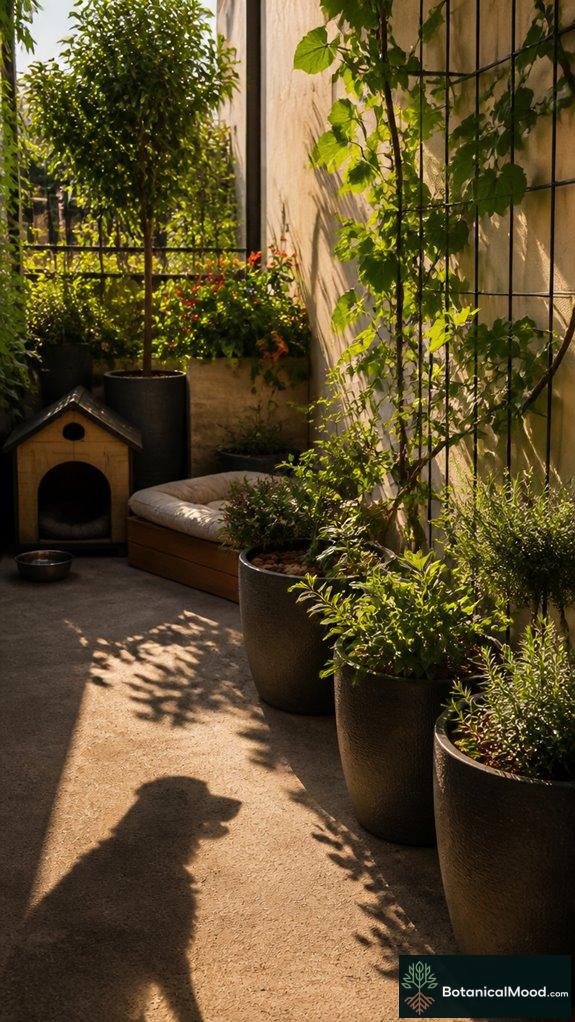
Positioning your urban garden pots close to walls or sturdy support structures offers multiple stability advantages, especially in environments subject to wind gusts, pedestrian activity, or uneven surfaces. Nearby walls provide natural barriers against lateral movement, reducing the risk of tipping.
Supporting structures like fence panels, trellises (Clematis spp.), or building facades create a solid anchor point for heavier containers, such as those made from fireproof ceramics or composite materials like Fiberstone. When selecting plants for your urban containers, consider incorporating dog-friendly flower options to ensure safety if you have pets in your household. For senior pets that spend time in outdoor garden spaces, cozy insulated shelters can provide comfortable rest areas during garden activities.
- Use corners of buildings for wind breaks
- Secure larger pots to wall hooks or brackets
- Arrange planters along exterior walls for added resistance
- Incorporate support trellises for climbing plants and stability
Select Sizes and Shapes That Handle Wind Conditions
Choosing pots of appropriate sizes and shapes is essential for withstanding wind conditions in urban gardens. Heavy, wide-based containers like reinforced ceramic or concrete planters—such as those from Marine Enterprises or The Pond Guy—provide stability against gusts reaching up to 30 mph, which are common in city environments.
Tall, narrow shapes, like slender terracotta urns, are susceptible to tipping and should be avoided unless weighted with internal ballast. Opt for chunky, square or rectangular designs that distribute weight evenly.
Materials like fiberstone or resin simulate natural textures but maintain sturdiness. These materials ensure your urban foliage remains firm against relentless wind forces.
Add Anti-Slip Pads to Keep Pots in Place
To prevent pots from shifting or tipping over in windy urban environments, adding anti-slip pads—such as rubber or silicone feet—can be a highly effective solution.
These pads provide essential grip on surfaces like concrete, brick, or wooden decks, securing heavy ceramic or terracotta planters (e.g., Japanese-style Yoshino pots).
Anti-slip pads ensure heavy planters stay put on concrete, brick, or wooden surfaces, preventing accidental tipping in windy urban settings.
Select high-quality, UV-resistant materials that endure exposure to sun and rain, preventing deterioration over time.
Brands like SlipDoctors or Gorilla Grip offer durable options.
Ensuring proper adhesion and positioning, these pads allow confident placement of large, cherished specimens like Fatsia japonica or mature succulents.
Movement in gardens can provide enrichment, so adding garden spinners near your potted plants can create visual interest while keeping your containers stable.
For additional stability and comfort, consider using smooth stone pathways as a base foundation for your potted plants.
This empowers you to maintain a stable, resilient urban garden.
Regularly Inspect and Reinforce Planter Stability
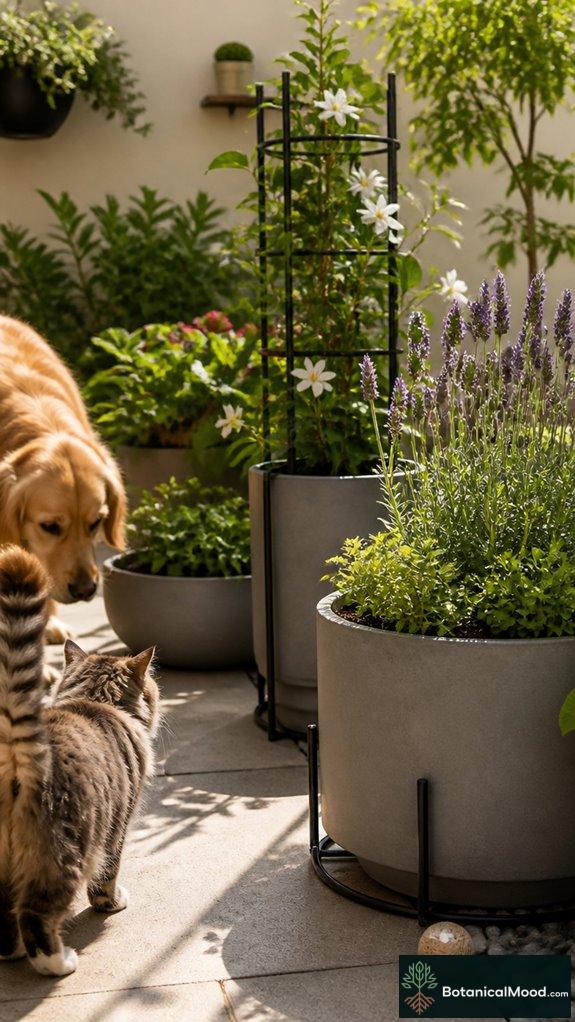
Routine inspections of your urban garden planters are essential to maintaining their stability and preventing potential accidents caused by shifting or toppling.
Regularly evaluate the base conditions, ensuring containers like heavy terracotta or concrete pots on uneven surfaces remain secure, especially in windy environments or during storms.
Check for loosening of mounting brackets, drainage holes, or cracks in materials such as glazed ceramics or fibreglass.
Reinforce unstable footwear with cross-bracing or additional supports, and tighten hardware using corrosion-resistant connectors from brands like Simpson Strong-Tie.
These proactive measures guarantee stability, enabling your garden’s visual impact and health to thrive without risking structural failure or property damage.
Don’t Overload Your Planters Beyond Their Capacity
Overloading your planters can compromise their structural integrity and pose safety hazards, especially in densely populated urban environments where wind, rain, and vibrations from nearby infrastructure, like subway tunnels or high-rise buildings, exert continual stress.
Overloaded planters risk structural failure and safety hazards amid urban wind, rain, and vibrations.
- Use lightweight soil mixes such as expanded clay (Leca) or coconut coir (Cocos nucifera) to reduce weight.
- Limit plant quantity based on root systems like *Ficus lyrata* (fiddle leaf fig), avoiding root-bound stress.
- Choose durable materials like cast stone or fiberglass that resist pressure from overgrown foliage.
- Regularly monitor moisture levels to prevent excessive watering, which adds unnecessary weight and risks collapse.
Use Modular or Interconnected Planters for Extra Support
Integrating modular or interconnected planters into an urban garden setup can considerably enhance stability and support for larger plant specimens, especially when dealing with the confined and often unpredictable conditions of city environments.
Utilizing systems like GardenTech’s (ModuPlan) or Renson’s (LinkGrow) interconnected modules creates a structural framework that distributes weight more evenly, reducing risk of toppling. These configurations support heavy perennials like (Vitis vinifera) or (Ficus lyrata) by anchoring individual units, while their shared connections prevent shifting due to wind or uneven terrain.
For professional-grade stability, combining these with robust materials like composite resin or galvanized steel ensures longevity, strength, and a visually cohesive urban setting.
Concrete Fill for Stability
A straightforward yet highly effective method to enhance stability in urban garden pots involves filling their bases with concrete.
By pouring a dense, fast-setting mix like Quikrete or Sakrete into the bottom, you drastically increase weight and resistance to tipping forces from wind or uneven terrain.
- Use rebar or mesh for reinforcement to prevent cracks.
- Confirm the concrete covers drainage outlets to maintain proper flow.
- Opt for a mix with additional gravel for added durability.
- Incorporate anchors or hooks for securing larger or portable planters.
This approach transforms lightweight containers into formidable fixtures capable of withstanding harsh urban conditions and heavy plant loads. For pet owners, installing pet-safe railing covers on nearby balconies prevents curious animals from accessing your elevated garden space. Consider pairing stable pots with planter pot covers to protect soil from pets and debris while maintaining your garden’s integrity.
Vertical Wall Planters
Vertical wall planters offer an innovative and space-efficient solution for urban gardening, transforming blank walls into lush, vibrant living scenery.
These systems, like the WallFarm series or Elho’s cultured wall modules, provide optimized microclimates for diverse plant species such as (Nepenthes) and (Ficus lyrata).
They enable precise light, water, and nutrient management, which are essential for plant stability and health.
Using sturdy mounting brackets and high-quality grow media like coco coir or mineral wool, builders maximize stability while minimizing the risk of dislodgement. For pet-friendly gardens, incorporating pond pressure filters ensures that water sources remain clean and safe for animals that may drink from nearby areas.
Vertical planters empower urban gardeners to create robust, visually striking displays—an effective strategy to dominate limited space while achieving botanical dominance. Natural pest management helps protect these garden systems from unwanted wildlife that may damage plants or contaminate growing areas.
Selecting Non-Toxic Plants
- Select plants with proven non-toxicity from trusted sources like the ASPCA or Poison Control Center.
- Prioritize hardy, low-maintenance species suited for container environments to maximize stability and longevity.
- Opt for native plants such as Artemisia tridentata or *Echinacea purpurea* (coneflower) to enhance ecological harmony.
- Consider pesticide-free options, choosing organic fertilizers like compost or fish emulsion to maintain purity and safety.
- Integrate pergola shade structures above container gardens to protect sensitive plants from excessive heat while supporting pet comfort in urban spaces.
FAQ
How Can I Prevent Pests From Damaging My Urban Garden Pots?
I keep pests at bay by regularly inspecting my plants, using natural repellents like neem oil, and encouraging beneficial insects. Consistent monitoring and preventive measures help me maintain a healthy, pest-free urban garden effortlessly.
What Are Eco-Friendly Options for Securing Garden Pots?
You can secure your garden pots eco-friendly by using bamboo stakes or recycled materials, tying them gently but firmly, and avoiding harmful chemicals. I prefer natural solutions—they’re sustainable, effective, and keep your garden green and powerful.
How Do I Choose the Best Plants for Limited Sunlight?
You should select shade-tolerant plants like ferns or hostas, focusing on those thriving with limited sunlight. I recommend researching specific plants suited to your space’s light conditions, ensuring your garden flourishes despite the shade.
What Maintenance Is Needed to Keep Pots Stable Over Winter?
Like a fortress standing tall against winter’s storm, I anchor my pots with extra weight, check their stability regularly, and guarantee they’re protected from harsh conditions. You should do the same to keep your garden thriving.
How Can I Create a Portable Urban Garden Setup?
You need lightweight, durable containers with sturdy handles, and a compact layout for portability. I recommend using rolling plant carts or stackable pots, so you can move your urban garden effortlessly whenever needed, with maximum control and flexibility.
Summary
Creating a stable urban garden with pots is like assembling a delicate mosaic—each piece must fit precisely to guarantee resilience against wind and weather. By selecting heavy bases, weatherproof materials, and secure anchoring methods, you enhance structural stability while harmonizing with your aesthetic vision. Understanding the importance of support structures, such as wall-mounted planters or interconnected modules, allows for versatile, long-lasting garden setups. Just as a seasoned artist chooses durable materials, urban gardeners must balance form and function to cultivate thriving, enduring green spaces.