Ever tried painting a chicken coop without turning it into a pet‑toxic nightmare?
I’m all about pet‑safe, low‑VOC finishes—think GREENGUARD Gold or EcoCert certified. I reach for colors from ECOS, Benjamin Moore Natura, and Real Milk Paint because they cling, breathe, and fight mildew like a champ.
First, I scrub, patch with natural filler, and test moisture (no one wants a soggy mess). Then I prime with breathable coats from Clare or Natural Earth, followed by light, multiple topcoats. It’s a bit of a dance, but the coop ends up looking fresh and feeling safe for my feathered friends.
Do you ever wonder why some paints crack while others stay smooth? I’ve learned the hard way that quality matters—especially when you’re balancing durability with pet health. Still, there’s always a twist: humidity, wood type, and even the coop’s orientation can throw a curveball.
If you keep at it, you’ll pick up practical tricks, quirky nuances, and maybe a few more sarcastic jokes about “designer coops.”
Garden Design Tips for Pet‑Friendly Outdoor Spaces
When I turned my backyard into a pet‑friendly garden, I started with a low‑maintenance, drought‑tolerant palette: lavender, rosemary, and thyme—perfect for chickens and bees alike. I laid a permeable path of reclaimed pavers, which kept the soil dry yet allowed rain to seep through, preventing puddles that could attract pests.
I added a raised herb bed using reclaimed cedar, planting catnip and mint for the cats, while the chickens loved the fresh greens. A small water feature, filtered with a UV‑light system, gave the birds a splash zone without the risk of stagnant water.
Balancing aesthetics with functionality isn’t easy—soil pH, shade, and animal traffic all play a role. Yet, watching the chickens peck at the herbs while the cats lounge nearby feels like a miniature, harmonious ecosystem. The key? Choose native, non‑toxic plants, keep pathways clean, and always test new materials for pet safety.
Quick Takeaways
-Choose zero-VOC or low-toxicity, pet-safe exterior paints with GREENGUARD Gold or EcoCert certifications for poultry environments.
-Prep thoroughly: clean surfaces, repair cracks with natural wood filler, and verify moisture levels before priming.
-Select breathable primers (e.g., Clare or Natural Earth) and use synthetic brushes or airless sprayers for even coverage.
-Apply multiple light topcoats with low-VOC, food-safe polymers compatible with brands like ECOS and Real Milk Paint.
-Maintain with regular inspections, note recoat intervals, and avoid high-contact “peck zones” to protect flock welfare.
Choose Pet-Safe Paints: Criteria, Certifications, and Top Brands
Choosing pet-safe paints requires careful evaluation of criteria, certifications, and leading brands to guarantee the coop remains a healthy, durable haven for chickens (Gallus gallus domesticus) and other companions.
I guide you through objective benchmarks—VOC levels, durability, washability, wood rot resistance, and safety data sheets—so innovation stays practical.
Top brands like ECOS Pet Dwellings Paint, Benjamin Moore Natura, Sherwin-Williams Harmony, and Real Milk Paint provide zero-VOC or low-toxicity options, with GREENGUARD Gold or EcoCert certifications.
Consider color stability, breathable film, and mildew resistance for long-term coop health while honoring animal welfare and environmental stewardship.
Pick Surface-Ready Colors for Coops
Coop owners often favor surface-ready palettes that balance visibility, durability, and peck resistance, so I look for colors that maintain their integrity under sun, rain, and chicken traffic while still guiding humans to clean, safe spaces. When selecting finishes, non-toxic exterior paints specifically formulated for pet environments ensure that your flock remains protected from harmful chemical exposure during and after application.
| Color Readiness | Practical Notes |
|---|---|
| Barn Red (ECOS) | High adhesion; peck-friendly glare control; long-lasting in outdoor environments |
| Sage Green (Benjamin Moore Natura) | Zero-VOC; complements foliage; reduces stress signals for flocks |
| Scarlet (Real Milk Paint) | Bold visibility; breathable finish; needs sealing for moisture control |
Prep Surfaces and Apply Pet-Friendly Finishes
Before you begin painting, I prep every surface meticulously, beginning with a thorough cleaning to remove dust, cobwebs, and chicken-friendly residues. Then, I repair cracks with a natural wood filler and smooth the grain to guarantee even adhesion for zero-VOC coats from ECOS or Natura to Real Milk Paint.
I test for moisture, moisture meters in hand, and choose primers like Clare or Natural Earth to assure breathability. Then, I apply coatings with a synthetic brush or airless sprayer for flawless even laydown.
I document color trials in barn-red, scarlet, and bayberry greens, aligning finish sheen (egg shell, satin) with coop function.
Seal and Protect With Durable, Safe Topcoats
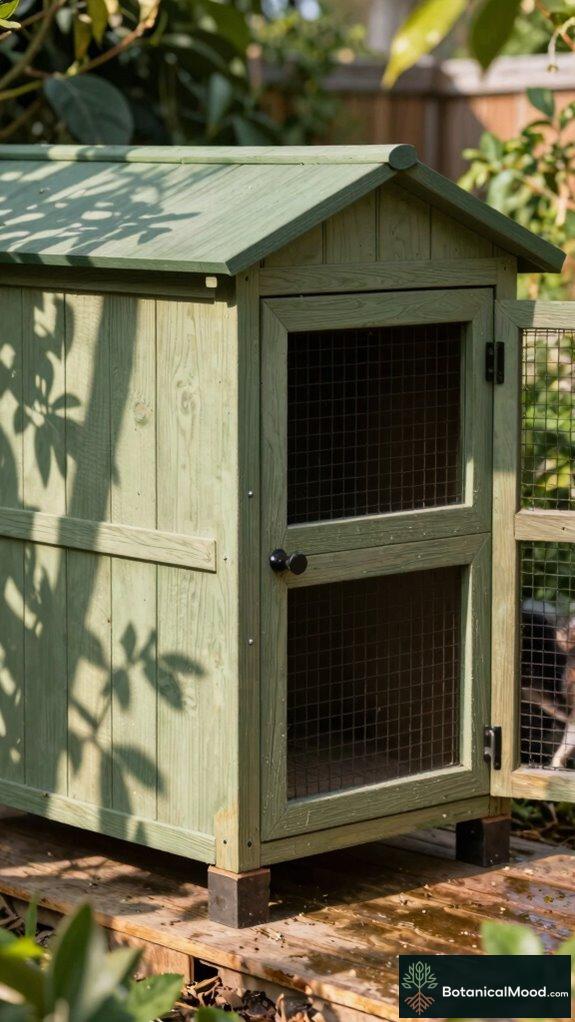
A durable, safe topcoat finishes the transformation by sealing in color and defending the coop from moisture, feathered traffic, and the elements, while remaining unobtrusive to the birds’ pecking habits. I choose low-VOC, food-safe polymers compatible with ECOS, Real Milk Paint, and Behr Barn Red blends, ensuring long-term resilience under sunlit, rainy, and frosty conditions observed in Maine (University of Maine data). For cat shelving projects, outdoor wood sealers provide comparable protection while accommodating feline activity and environmental durability. Weatherproof wood glues also contribute to structural integrity in outdoor cat scratching installations. I document application steps, drying times, and maintenance cycles, noting that Tung oil or satin/semi-gloss finishes offer scrub resistance, while antimicrobial additives should be evaluated for safety. Proper ventilation, tool selection, and color strategy safeguard flock welfare.
- Topcoat selection: zero-VOC, durable, non-toxic
- Compatibility: water-based vs. solvent-based, brand notes
- Application: coats, drying, curing, testing
- Maintenance: inspection, recoat intervals, cleaning
- Color strategy: peck avoidance, visibility, color limits
Maintain Vibrant, Pet-Safe Coop Colors
As colors fade from sunlit days to slate-gray evenings, I keep coop hues vibrant by using zero-VOC, pet-safe paints that stand up to poultry traffic and seasonal moisture, choosing ECOS or Real Milk Paint as the core for color and breathability while avoiding peck-trigger red zones on high-contact surfaces. The right paint brush sets ensure even application and prevent bristle shedding that could harm your flock. Quality brush sets for coops specifically designed for pet-safe projects deliver superior coverage and durability compared to standard brushes. This approach blends innovation, safety, and durable aesthetics for vibrant, humane coops.
Coop Painting Workflow Specifics

I conduct the coop painting workflow by sequencing preparation, priming, color selection, and coating with a disciplined, pet-safe system that centers zero-VOC and breathable finishes. This method aligns with professional standards (ECOS, Real Milk Paint) and university guidance (Maine, Lichtenwalner).
- Preparation checklist: surface cleaning, sanding, and weather-window assessment
- Priming: stain-blocking, breathable acrylic or milk-paint base, defect sealing
- Color strategy: barn red, scarlet, mustard; peck-resistant accents (Bayberry Green)
- Coating: multiple light coats, eggshell or satin, cured ventilation
- Safety validation: VOC testing, breaker intervals, wildlife observation, documented results
Non-Toxic Sealants for Coops
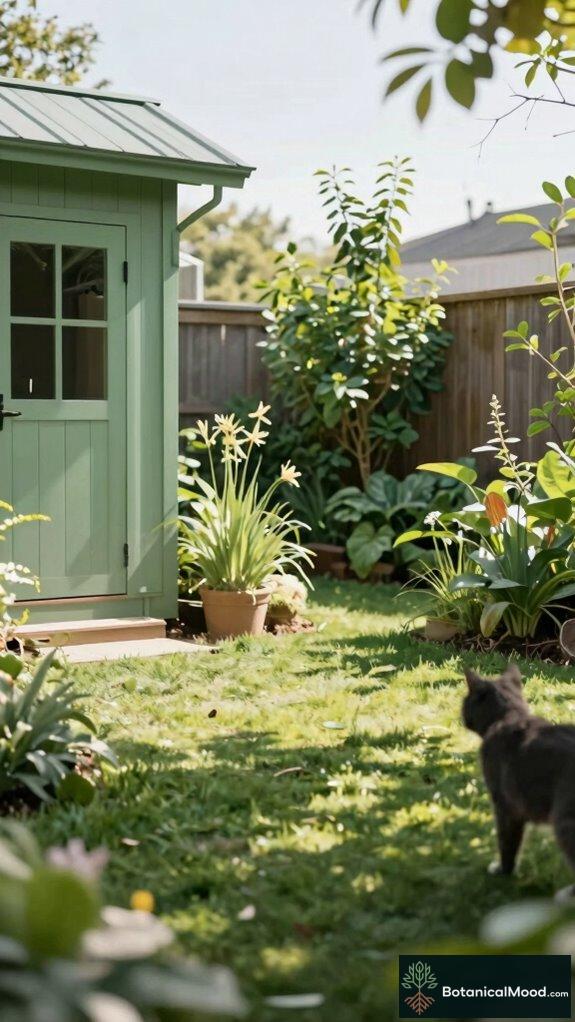
Non-toxic sealants offer an essential line of defense for coop interiors, protecting wood from moisture and rot while keeping fumes well below risky levels for chickens and humans alike.
I emphasize zero-VOC formulations, durable film-forming polymers, and breathable matrices from ECOS, Real Milk Paint, and AFM Safecoat, calibrated for poultry environments and seasonal humidity shifts.
We consider topcoats like Tung oil derivatives, hemp-seed waxes, and dairy-protein enamels, noting compatibility with milk paint bases (Lustre, Eggshell) and GREENGUARD Gold certs.
Practical testing includes moisture meters, UV resistance, and hens’ peck-safety, ensuring long-term structural integrity and humane aesthetics.
FAQ
How to Test Paint for Accidental Ingestion by Poultry?
I test paint for accidental ingestion by poultry by placing a small, labeled swatch in a clean coop area and observing pecking behavior for 48 hours, checking for any signs of distress, and ensuring coatings remain intact and safe.
Are There Color-Fast Options That Resist Pecking and Fading?
Color-fast, peck-resistant options exist: ECOS, Natura, Sherwin-Williams Harmony, Real Milk Paint, and Clare offer zero-VOC, durable finishes that resist fading. I’d choose a barn-red or green with a satin/semi-gloss topcoat for longevity. Enthralling resilience ahead.
Which Application Method Minimizes Fumes Near Birds and Nests?
I minimize fumes by using an airless sprayer with ECOS or Real Milk Paint, applying in a well-ventilated, wind-protected area, and sealing surfaces with a pet-safe topcoat; I prioritize low-VOC products and quick-curing formats.
Can Painters Use DIY Recipes Without Compromising Pet Safety?
Yes, I can; I’d avoid DIY recipes, sticking to proven, pet-safe paints like ECOS, Natura, or Real Milk Paint, and I’d test small areas first, ensuring zero-VOC formulas, proper curing, and thorough ventilation for bird safety.
Do Any Finishes Require Ventilation or Curing Times Beyond 24 Hours?
Yes, some finishes need longer curing times; I recommend ventilating well and waiting 3–7 days for full cure, depending on product. During cure, avoid pecking zones and guarantee consistent airflow to prevent moisture buildup.
References
- https://www.purepaintlab.com/en-us/products/chicken-safe-coop-paint
- https://ecospaints.net/browse-all/eggshell-pet-dwellings-paint
- https://www.paintzen.com/blog/pet-friendly-paints
- https://www.backyardchickens.com/threads/what-is-the-best-paint-to-use-for-chicken-coop-that-wont-harm-my-chickens.762505/
- https://www.mychemicalfreehouse.net/2023/06/the-best-paints-sealers-for-chicken-coops-non-toxic-bird-safe.html
- https://shop.naturalearthpaint.ca/blogs/nep-blog/non-toxic-paint-for-animals
- https://certapro.com/residential-painting/pet-friendly-paint-how-to-choose-non-toxic-finishes-that-resist-scratches-odors/