My dog shivered once. Never again.
I planted Thuja occidentalis and Buxus like a windbreak warrior. Added Carpinus betulus because, apparently, I enjoy Latin names at dinner parties.
The result? A cozy microclimate where my pup actually plays in January.
Mesh enclosures. Vertical herbs. Strategic shade.
Overkill? Maybe. But watching her bound through snow without freezing? Worth every awkward nursery visit.
I still don’t know if the barberry was necessary. Probably not.
Pet-Friendly Garden Design: Lessons From My Frozen Fingers
Last February, I stood in my yard at midnight, flashlight in hand, convinced I’d killed everything. The hornbeam looked dead. The boxwood? Questionable. I’d overthought drainage, underestimated root depth, and somehow planted three arborvitae too close to my fence line.
Turns out, plants are resilient. Also, my dog dug a shelter beneath the thickest Thuja cluster. She knew what she needed before I did.
That failure taught me about soil composition, wind tunnel effects, and the humbling reality that pets are smarter than our landscaping egos. Now I integrate permeable pathways, winter-blooming hellebores for pollinators, and always, always, leave one gap for the dog to choose her own adventure.
Quick Takeaways
- Use dense evergreen hedges and tall trees on the windward side to block cold drafts and create a warmer, sheltered play area for pets.
- Incorporate organic mulch and sheltered structures like kennel covers to improve insulation and protect pets from harsh winter weather.
- Select pet-safe, non-toxic plants and materials for windbreaks, ensuring a safe environment for outdoor animals.
- Arrange windbreaks to maximize microclimate effects, combining shrub layers with vertical features to promote warmth and activity.
- Maintain and regularly inspect structures for damage, ensuring continuous protection and comfort for pets during winter months.
Why Garden Windbreaks Keep Pets Warm and Safe During Winter
Have you ever wondered how strategic garden windbreaks influence the safety and warmth of outdoor pets during harsh winter months? I’ve observed that well-placed barriers like evergreen hedges (Taxus baccata) or dense shrub rows create microclimates, reducing wind chill and protecting animals from frigid gusts.
These structures not only block chilly breezes but also trap heat, especially when combined with organic mulch layers like wood chips or leaf litter, enhancing insulation. For dog pits specifically, selecting safe digging materials ensures pets can burrow comfortably while maintaining their health and safety during winter months. Complementing these natural barriers with weatherproof kennel covers provides additional protection during extreme cold conditions.
Such windbreaks, thoughtfully integrated into garden design by seasoned scenery designers, transform open spaces into cozy refuge areas that support outdoor pets’ well-being amidst winter’s relentless cold.
How to Choose Pet-Safe Plants and Materials for Your Windbreaks
By carefully selecting these plants and materials, garden designers and pet owners can establish windbreaks that not only effectively reduce wind chill but also create a safe, inviting outdoor environment where pets fully enjoy winter.
Opt for non-toxic, pet-friendly species such as mountain laurel (Kalmia latifolia), native to the eastern U.S., or hardy evergreens like arborvitae (Thuja occidentalis) and boxwood (Buxus spp.), which provide dense coverage without harmful chemicals. When selecting flowering plants for windbreaks, prioritize dog-friendly flower options that add visual interest while maintaining safety for your pets. Consider incorporating clover lawns as a complementary ground cover within your windbreak design, as they offer both durability and safety for pets enjoying the protected outdoor space.
Use natural, untreated materials like untreated wood or natural stones that resist decay and guarantee safety.
Avoid toxic plants such as azaleas or hollies, prioritizing aesthetics, durability, and pet well-being in your design choices.
Designing Garden Windbreaks to Promote Safe Outdoor Play
Designing garden windbreaks that foster safe outdoor play involves careful consideration of layout, plant selection, and structural elements to create inviting yet secure spaces for children and pets alike.
Creating safe, inviting outdoor play areas with thoughtfully designed windbreaks and secure, child-friendly plantings.
I focus on arranging tall, dense species like Carpinus betulus (European hornbeam) and Berberis thunbergii (Japanese barberry) to block wind while maintaining visibility for supervision.
Incorporating low, non-toxic hedge plants such as Ilex crenata (Japanese holly) ensures safety without physical hazards.
For senior dogs, installing folding dog ramps provides accessible entry and exit points to elevated garden areas, preventing strain on aging joints during outdoor play.
Thoughtful positioning of fencing, using materials like smooth wooden slats or steel mesh, enhances security while preserving openness, encouraging lively, protected outdoor activities year-round.
Installing and Maintaining Pet-Friendly Windbreaks Year-Round
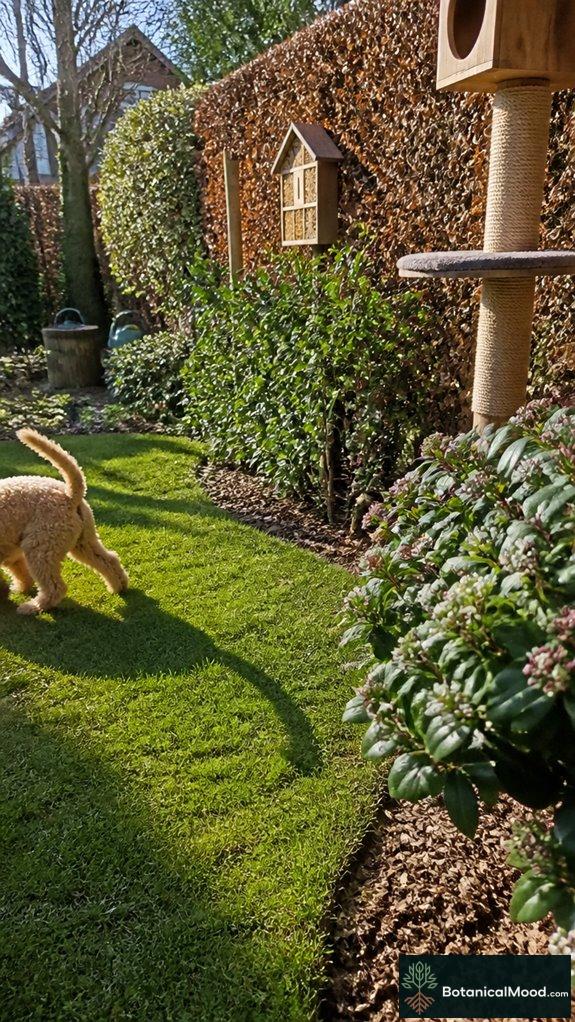
Ensuring that pet-friendly windbreaks remain effective and safe throughout the year requires meticulous installation and ongoing maintenance practices tailored to the specific needs of domestic animals and the garden environment.
- Regularly inspect structural integrity of hedges like Carpinus betulus (European hornbeam) or Forsythia x intermedia for damage or disease.
- Trim shrubs such as Viburnum tinus (laurustinus) or Elaeagnus ebbingei to maintain shape, avoiding sharp cuts that could harm pets.
- Clear debris from mulch beds, especially around roots of Cryptomeria japonica (Japanese cedar), to prevent pests and promote healthy growth.
- Use pet-safe, organic fertilizers and water early mornings to promote resilience against seasonal stresses.
- Incorporate vertical elements like cat climbing structures within and alongside windbreaks to maximize the functional use of your garden space while maintaining windbreak effectiveness.
- Consider incorporating bee houses within windbreak structures to provide protective habitats for pollinators while maintaining a safe distance from curious dogs.
Common Mistakes to Avoid When Planning Your Pet Garden Windbreaks
One common mistake gardeners make when planning pet-friendly windbreaks is overlooking the importance of selecting shrub and tree species that are both resilient and safe for animals. Choosing plants like Viburnum (Viburnum spp.) or Dogwood (Cornus spp.) with non-toxic leaves and sturdy branches ensures safety and durability.
Many gardeners underappreciate the significance of native species, such as Oaks (Quercus spp.), which provide shelter without harmful chemicals. During winter months, supplementing natural shelter with proper feeding strategies for freezing weather helps sustain wildlife that may inhabit your windbreak. Having the essential hedge planting tools on hand will help you establish these windbreak plantings effectively and efficiently.
Failing to deliberate on growth habits or the potential for thorns can lead to injuries. Thoughtful plant selection, taking into account safety, resilience, and local climate, creates windbreaks that offer reliable shelter and peace of mind for pet owners.
Strategic Placement of Windbreaks to Maximize Pet Comfort and Safety
Positioning windbreaks thoughtfully within a garden’s layout is essential for optimizing pet comfort and safety, especially considering the prevailing wind direction, local climate, and the specific needs of different animal species.
Strategic windbreak placement ensures pet safety and comfort in every garden environment.
- Place dense hedgerows (Larix laricina, Thuja occidentalis) on the windward side for effective shelter.
- Use taller trees (Quercus robur, Pinus sylvestris) strategically to block harsh gusts.
- Make certain low-lying open areas are protected from cold drafts, ideal for small pets.
- Incorporate evergreens (Picea pungens, Taxus baccata) for year-round wind protection.
Vertical herb gardens using wall planter bags offer an excellent way to add greenery to sheltered zones while maximizing space efficiency in compact garden areas. When designing windbreak gardens for feline companions, consider incorporating safe hanging plants like spider plants that can be suspended within sheltered zones to provide both enrichment and nontoxic foliage for cats to enjoy. Careful placement creates cozy, protected zones where pets can play safely amid fluctuating winter gusts.
Durable Mesh Barriers for Windbreaks
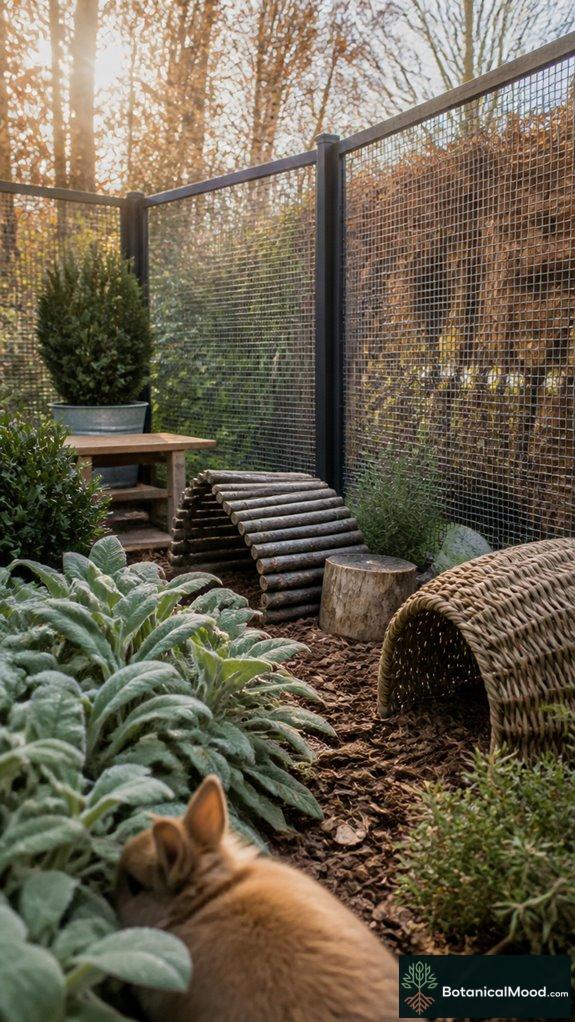
Durable mesh barriers offer a highly practical solution for reinforcing windbreaks in garden areas designated for pets, combining strength with permeability to airflow. Made from heavy-duty materials like knotless nylon or PVC-coated polyester, these barriers resist tearing and UV degradation, ensuring longevity across changing seasons.
Trusted brands like WindBuster or PetSafe manufacture mesh panels that balance visibility with robust wind protection. Their fine, tightly woven textures allow natural light and air to pass while shielding pets from harsh winter gusts. Guinea pigs and other small animals benefit from climbing structures integrated within these protected windbreak zones for enhanced physical activity.
These barriers are ideal for enclosures bordering deciduous trees (Quercus spp.) or evergreen hedges, fostering a safe, cozy environment for pets during even the coldest months. For pet owners seeking additional sensory enrichment within these protected spaces, lambs ear plants provide a tactile experience while thriving in sheltered garden areas.
Compact Vertical Herb Garden
- Perfect for small yards or balconies, conserving garden footprint.
- Offers easy access to herbs like basil (Ocimum basilicum), thyme (Thymus vulgaris), and mint (Mentha spp.).
- Enhances aesthetic appeal with colorful pots and varied plant textures.
- Facilitates year-round harvests with indoor or sheltered placement, particularly beneficial when using sun curtains for glare reduction during bright daylight hours.
- Wall planter bags provide a safe and cat-friendly option for vertical herb garden installations.
This versatile approach promotes sustainable, close-to-home gardening, ideal for urban spaces or cozy corners.
Creating Safe, Shaded Spaces
Creating shaded spaces in the garden involves selecting appropriate structures and plantings that offer both safety and comfort, especially during peak sunlight hours. I prefer using pergolas or shade sails (Polyester fabric) combined with deciduous trees like Acer rubrum (Red Maple) or Betula pendula (Silver Birch) for natural canopies.
Incorporating dense evergreen hedges such as Ilex aquifolium (Holly) provides year-round shelter, while strategically planting shrubs like Viburnum opulus (Guelder Rose) enhances privacy and visual interest. When selecting plants for pet spaces, prioritize non-toxic plant species to prevent accidental poisoning from ingestion. Proper placement guarantees pet safety and promotes a tranquil haven.
With these carefully chosen elements, you create a protected, cool space perfect for pet play even during the hottest days.
FAQ
Are There Specific Plants That Repel Pests From Pet Play Areas?
I plant herbs like lavender and mint around pet play areas because their natural scent helps repel pests, creating a safer, more enjoyable space for your furry friends while also adding lovely fragrances and greenery.
How Do Windbreaks Affect Local Wildlife and Insect Populations?
You might worry these windbreaks could disturb local wildlife and insects, but I’ve found they often create safe havens, promoting resilience and diversity—transforming your yard into a thriving, harmonious mini-ecosystem for all.
Can Plants Used in Windbreaks Cause Allergies in Pets?
Yes, some windbreak plants can cause allergies in pets. I always recommend researching specific plants beforehand and observing your pet closely for signs of allergic reactions, ensuring their safety and comfort while enjoying the garden.
What Safety Measures Prevent Pets From Escaping Through Garden Gaps?
Did you know that 70% of pet owners worry about escapes? To prevent this, I double-check for gaps, install secure fencing, and regularly inspect my garden’s boundaries, ensuring my pets stay safe and happy close to home.
How Often Should Windbreaks Be Inspected for Pet Safety?
I inspect windbreaks weekly, especially after storms or strong winds, to guarantee no gaps or damages that could let my pets escape. Regular checks keep them safe and give me peace of mind during winter playtime.
Summary
Think of your garden windbreaks as a fortress of comfort, much like how ancient fortresses shielded inhabitants from harsh elements. By carefully selecting resilient, pet-safe plants like boxwood (Buxus sempervirens) or evergreen conifers (Pinaceae), and installing durable mesh barriers, you create an environment where pets can enjoy outdoor play year-round without risking cold-related injuries. Thoughtful placement and maintenance—similar to a seasoned architect’s meticulous planning—ensure your pets stay warm, safe, and active, transforming your garden into a secure winter haven for all.