Last winter, my catio collapsed under three feet of snow. Rookie mistake. I cried. My cats judged me.
Now? I obsess over load capacity. Galvanized steel piping, diagonal bracing, the whole thing. Brands like Palram and ShelterLogic actually matter. Lightweight shovels live by the door. Calcium chloride, not salt. My cats finally respect me. Maybe.
Winter Catio Garden Design Ideas for Cat Owners
After the rebuild, I discovered catnip survives frost. Barely. I hung planters with catnip (Nepeta cataria) and stubborn basil (Ocimum basilicum) using weather-resistant straps from Gorilla Gear. The cats went feral for it. Vertical gardening saved floor space. Mulch insulation helped. My “lush sanctuary” looked half-dead, but they loved it. Small wins.
Quick Takeaways
- Assess and reinforce the structural supports to withstand snow loads and prevent collapse or damage.
- Install weatherproof covers and insulation to keep the interior dry, warm, and protected from snow and ice.
- Ensure proper roof slopes for effective snow runoff and regularly clear accumulated snow from the structure.
- Use sturdy, weather-resistant straps and anchors to secure the catio against heavy winds and shifting snow.
- Incorporate non-toxic, hardy plants and environmental features that remain safe and resilient during winter conditions.
Assess Your Catio’s Snow Load Capacity for Winter Safety
To make certain your catio remains safe throughout the winter months, it’s essential to evaluate its snow load capacity carefully before snowfall begins. I recommend inspecting structural elements like pergolas, lattice panels, and roof supports, considering typical snow accumulation in your region—usually 4-8 inches for moderate climates and up to 20 inches in high-altitude areas like the Rockies.
Use sturdy materials such as pressure-treated cedar or powder-coated steel frames to minimize stress. Confirm the roof’s slope facilitates snow runoff, preventing excess weight. Consider installing pool drain adapters to redirect melting snow and water away from structural weak points during thaw cycles.
Regularly check for signs of strain, especially after heavy snowfalls, and reinforce weak points, safeguarding your feline’s outdoor haven all winter.
Install Weatherproof Covers to Keep Snow Out
Snow accumulation can quickly compromise the structural integrity and comfort of your catio, especially during heavy winter storms that blanket outdoor spaces in white. Installing weatherproof covers, such as Polycarbonate or heavy-duty vinyl, creates a barrier against snow and ice intrusion while allowing sunlight to filter through. Consider pairing these covers with LED flood lights to maintain visibility and create a welcoming environment for your cats during darker winter months.
Brands like Palram or ShelterLogic offer durable, UV-resistant options that can be tailored to your catio’s dimensions. These covers also help prevent moisture buildup, mold, and freeze-thaw damage to framing materials like cedar (Cedrus spp.) or wrought iron. For added enrichment during winter months, you might consider incorporating rabbit-friendly grazing zones alongside your catio design to provide your outdoor pets with diverse environmental experiences.
Ensuring your catio is properly protected helps your feline friends stay safe, warm, and dry despite the winter weather outside.
Strengthen Your Catio’s Frame for Heavy Snow
Reinforcing your catio’s frame is essential for withstanding the substantial weight of heavy snow accumulation, which can exert significant pressure on structural components, causing deformations or collapses if left unprepared.
Using galvanized steel (Fe) piping or heavy-duty pressure-treated wood (Pinus spp.) ensures durability under the added load.
Additional diagonal bracing with stainless steel (Fe-Cr-Ni) wire, like T-Anchor or Turnbuckles, distributes weight evenly.
Secure all joints with corrosion-resistant fasteners, such as galvanized bolts, nuts, and washers.
Regularly inspect for signs of stress or deformation, especially after snowfalls, and consider adding extra support beams in areas prone to heavy accumulation.
Insulate Your Catio to Maintain Warm Temperatures
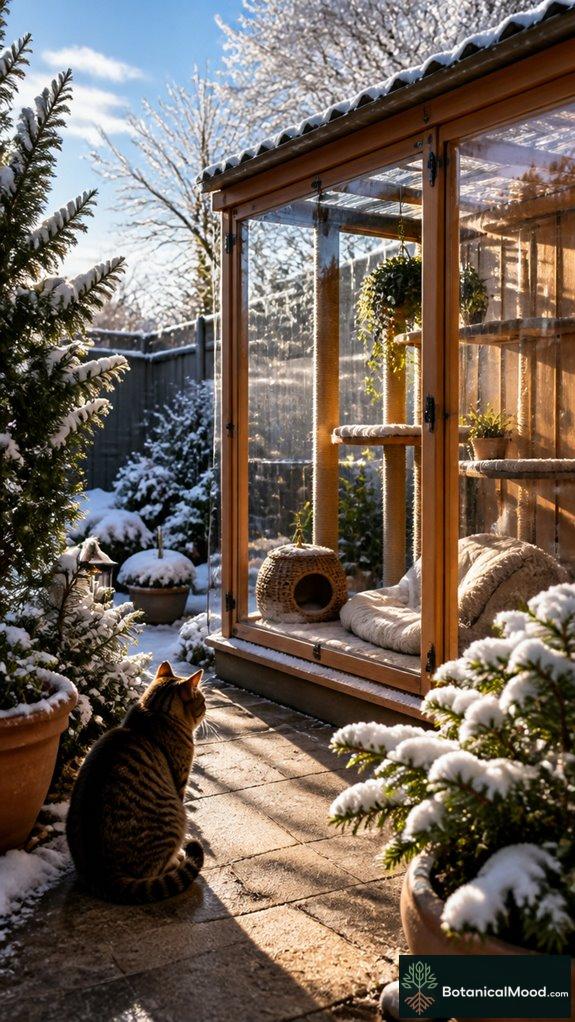
Maintaining a comfortably heated environment within your catio during cold winter months often requires effective insulation, especially when external temperatures drop well below freezing. Using materials like foam board or reflective insulation barriers such as Radiant Barrier foil can notably reduce heat loss through walls and ceilings. Covering openings with weather-resistant, transparent materials like plexiglass or polycarbonate panels preserves warmth while maintaining visibility. Furthermore, wrapping the frame with insulated blankets or heated cables can help retain internal temperature, creating a cozy refuge for your cats despite harsh conditions outside. Incorporating solar-powered heating elements can provide sustainable warmth while reducing energy costs during winter months. Similar to how climbing structures provide enrichment for active pets, proper environmental design ensures your feline friends remain comfortable and engaged during winter months. Proper insulation keeps warmth in, offering your feline friends a safe, inviting outdoor space during winter chills.
Keep Snow Clear to Prevent Excess Buildup
When winter storms arrive with heavy snowfall, it’s essential to keep pathways and access points to your catio clear of accumulating ice and snow to guarantee safety and usability.
Regularly shoveling and removing snow with lightweight tools like collapsible snow shovels from brands such as Snow Joe (SJ625E) helps prevent excess buildup, which could obstruct entry or cause structural strain.
Applying de-icing products like ice-melt (calcium chloride) ensures the surface remains safe and slip-resistant. For catios with outdoor access areas, consider using natural ground covers that can help with traction and drainage during winter weather.
Incorporating vertical catio engineering principles into your enclosure design helps distribute snow load more effectively across the structure’s framework.
Monitoring weather forecasts from local meteorological services allows early intervention, avoiding dangerous ice dams or snow collapse, and guarantees your feline friends can access their outdoor space securely during the winter months.
Choose Durable Materials Designed for Winter Conditions
Have you considered the importance of selecting materials specifically engineered to withstand harsh winter conditions when constructing or refurbishing a catio?
Opting for durable, weather-resistant options like powder-coated steel (CrNi alloy) or composite lumber, such as Trex or Fiberon, ensures longevity against snow, ice, and fluctuating temperatures. Stainless steel hardware and treated cedar (Thuja plicata) resist corrosion and rot, while UV-stabilized polycarbonate panels offer transparency and resilience.
These choices reduce maintenance, preventing cracking, warping, or decay in winter’s brutal embrace. For senior cats, consider adding insulated shelter options to provide additional warmth and comfort during the coldest months. When treating walkways around your catio, use pet-safe ice melts to prevent slipping hazards while keeping your cats safe from toxic chemicals. They provide your feline friends a safe, secure space that endures seasonal challenges with minimal damage.
Seal Gaps and Protect Against Water Damage From Melting Snow
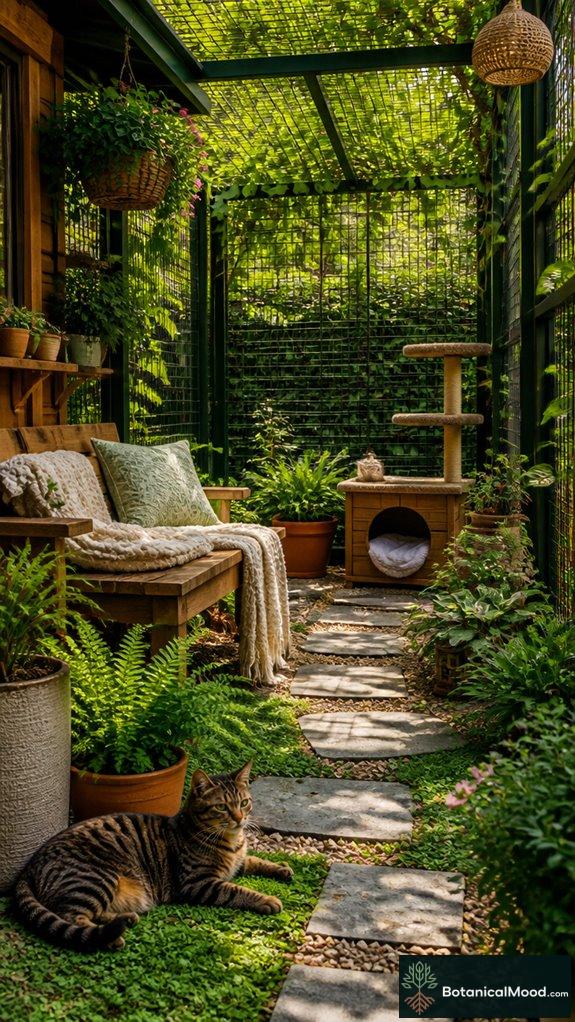
Sealing gaps and addressing potential water infiltration is essential to preserving the structural integrity of your catio during winter. Carefully inspect the enclosure’s joints, seams, and entry points, using weatherproof sealants like exterior-grade silicone or polyurethane caulk (e.g., GE Silicone II).
Pay special attention to corners where melting snow might seep in through small openings. Applying sealants along flashing, around door frames, and any cracks creates an effective barrier against water intrusion, preventing wood rot and rusting of structural supports.
Regular checks after storms ensure seals remain intact, maintaining a dry, secure space where your cats can safely enjoy the winter months.
Snow-Resistant Enclosure Straps
To guarantee your catio remains secure and functional during heavy snowfall, installing snow-resistant enclosure straps is a practical solution that promotes stability and safety. These straps, often made from weather-resistant materials like reinforced nylon or stainless steel, tether the structure firmly to sturdy anchor points.
Preventing shifting under the weight of snow or ice accumulation is crucial. Brands like Yardcraft and Gorilla Gear offer specialized models designed for harsh winter conditions, ensuring longevity and protection.
Properly installed, they help maintain the integrity of your enclosure, especially when winds gust and snow drifts threaten to destabilize delicate or lightweight elements. These straps provide peace of mind during winter storms.
Hanging Gardens in Small Spaces
In small outdoor spaces where traditional ground-level planting areas are limited, hanging gardens offer an innovative solution that maximizes vertical space and enhances aesthetic appeal. They evoke a sense of intimacy and bring vibrant life closer to eye level, creating a lush, calming environment.
- Bright, colorful plants like petunias (Petunia × hybrida) spill over planters, enchanting the senses
- Aromatic herbs such as basil (Ocimum basilicum) and mint (Mentha spp.) fill the air with soothing fragrances
- Succulents like sedum (Sedum spp.) add texture, resilience, and visual interest
- Window boxes with trailing geraniums (Pelargonium spp.) create inviting, sensory-rich atmospheres
- Vertical wall planters foster an oasis where cats and humans can relax amid thriving greenery
- Outdoor stair tread mats help protect hanging gardens and elevated planters by preventing pets from accessing areas where delicate plants are displayed.
- Outdoor audio speakers can enhance the sensory experience of your hanging garden by providing ambient sound that complements the visual and aromatic elements of your space.
Selecting Non-Toxic Plants
Choosing the right plants for a catio is an essential step in ensuring your feline friends stay safe and healthy. I recommend selecting non-toxic options like catnip (Nepeta cataria), which encourages playful behavior without harm, or hardy herbs such as basil (Ocimum basilicum) and parsley (Petroselinum crispum), which thrive with minimal maintenance and add vibrant greenery. For added garden protection, consider incorporating thorny plants that deter unwanted access while remaining safe for cats. Avoid plants like lilies (Lilium spp.) and aloe vera (Aloe barbadensis), known for their toxicity. Opt for durable, weather-resistant varieties that withstand snow, ensuring your catio remains lush and secure during winter. Installing AI pet cameras allows you to monitor your cats’ interaction with plants and their overall catio environment in real-time.
Thoughtful plant choices foster a safe environment and create a natural, inviting space for your cats year-round.
FAQ
How Often Should I Check My Catio During a Snowstorm?
You should check your catio every few hours during a snowstorm. I recommend monitoring it more frequently if snow piles up or if you’re concerned about insulation. Staying attentive keeps your kitty safe and comfortable outside.
Are There Specific Types of Snow That Are More Damaging?
Heavy, wet snow can be more damaging to your catio than light, dry snow because it adds weight and stress to structures. I watch out for potential damage after storms and reinforce where needed to keep my cats safe.
Can Insulation Affect My Cat’s Health in Winter?
Insulation can be safe if it’s non-toxic and properly installed. I worry it might affect your cat’s health, but when chosen carefully, it keeps them warm without risks. I care about your cat’s comfort and safety.
What Are Signs My Catio Is Compromised by Snow?
You’ll notice your cat pavilion’s insulation affected if snow enters, drips inside, or the area feels colder than usual. Watch for your cat hesitating to enter, shivering, or seeking warmth, signaling your catio’s compromise.
Should I Modify Ventilation for Winter Weather Conditions?
Yes, I modify ventilation in winter; I add weatherproof vents to prevent drafts while maintaining airflow. For instance, last year, I sealed gaps and installed adjustable vents, ensuring my cat remained warm and comfortable without sacrificing fresh air.
Summary
By implementing appropriate structural reinforcements, weatherproofing measures, and thoughtful plant choices, you can create a resilient, inviting catio that withstands even the harshest snowfalls. Envision a space where insulated walls, secure covers, and durable straps work in harmony with non-toxic, lush greenery such as Nephrolepis exaltata (Boston Fern) or Vaccinium corymbosum (Highbush Blueberry), transforming winter’s challenge into an opportunity for cozy, safe outdoor sanctuary with functional beauty and enduring comfort.