Gravel garden pathways—who knew DIY could be this satisfying?
I always envisioned the perfect winding path in my garden, but wow, the struggle was real!
After a few catastrophes with too-small stones and uninvited puddles, I learned that selecting the right gravel makes all the difference. Smooth surfaces call for those cute, tiny stones, while the big rocks—well, they’re for drainage and to show off, right?
So, grab some edging materials, like timber or trendy bricks, add a few stepping stones, and voilà! It’s like my garden threw a party just for me. Are you ready to join the fun?
The Art of Creating a Lasting Impression in Garden Design
Last summer, I hosted a garden party. Picture this: friends mingling on my meticulously designed gravel pathway, sipping drinks, while I slyly took all the credit—after all, I was the ‘landscape architect’ bowing to their compliments!
But real talk—getting that pathway right wasn’t a cakewalk. I battled with color choices that matched my perennials and nearly had a meltdown over landscape edging. I remembered how the right gravel could transform a drab space into a charming retreat, allowing the flowers to shine. Talk about creating a welcoming vibe! So, if you’re feeling stuck, just breathe—your backyard beauty is just a stone’s throw away!
Quick Takeaways
- Design your gravel pathway with gentle curves using garden hoses for a natural flow in your garden layout.
- Combine different gravel sizes for texture, using smaller stones for walking and larger ones for drainage and visual interest.
- Incorporate borders made of brick or timber to define your pathway’s edges and add a refined look to the design.
- Consider enhancing the pathway with vibrant flower beds or decorative stones to create a lush and inviting atmosphere.
- Utilize geotextile fabric under the gravel to prevent soil mixing and ensure long-lasting path stability.
Benefits of Gravel Garden Paths

Gravel paths offer numerous benefits, from their permeability, allowing rainwater to naturally filter into the ground, to their versatility in design, accommodating various styles and colors. They create a welcoming ambiance, guiding visitors through vibrant flower beds or serene seating areas. Not to mention, maintaining a gravel path requires minimal effort, making it an eco-friendly choice. Additionally, incorporating curved pathways into your garden design can enhance the organic flow and harmony of the entire space. At Botanical Mood, I’ve experienced how well-placed gravel truly enhances a garden’s character, making every step feel intentional and meaningful.
Essential Planning and Measurements

Before laying down that stunning gravel path, careful planning and accurate measurements are paramount to achieving a harmonious balance in your garden design. I often find joy in mapping out my pathways, ensuring they flow naturally with existing elements.
Here’s a helpful table to guide you in planning:
| Measurement Stage | Recommended Action | Tools Needed |
|---|---|---|
| Path Width | Determine ideal width | Measuring tape |
| Total Length | Measure the path’s total length | Yardstick |
| Base Depth | Assess depth for gravel | Shovel |
| Borders | Plan edging materials | Rake, border stones |
| Drainage Solutions | Evaluate drainage needs | Level, shovel |
Selecting the Right Gravel
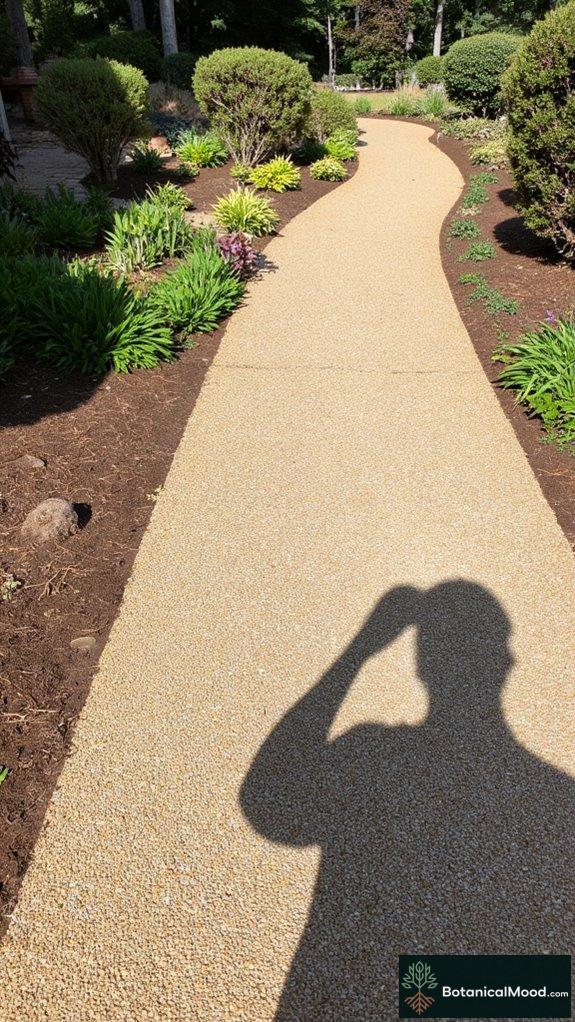
Choosing the right gravel for your garden pathway can elevate the aesthetic charm of your outdoor space while providing practical benefits such as excellent drainage and durability.
Here are some key considerations to keep in mind:
- Gravel Size: Smaller stones (1/4” – 1/2”) create a smooth surface, while larger gravel (3/4” – 1”) offers better drainage.
- Color Harmony: Select colors that complement your existing surroundings, enhancing the beauty of your plants.
- Texture: Consider whether you prefer polished or rough textures for a unique visual appeal.
- Availability: Locally sourced gravel often reduces costs while minimizing environmental impact.
Incorporating rainwater harvesting into your garden design can provide essential moisture to your gravel pathways.
Creative Path Designs and Layouts

Creating a garden path isn’t just about practicality; it’s also an opportunity to express your personal style and enhance the overall aesthetic of your outdoor space.
Consider curvilinear designs that hug the surroundings, or angular paths that create a modern appeal. Incorporate decorative gravel borders, using contrasting colors like sleek black lava rock alongside warm golden pebbles.
I find mixing textures—smooth river rocks with jagged granite—adds visual interest. Think about planting fragrant herbs or colorful blooms alongside your path, inviting visitors in unexpectedly.
These creative touches not only serve your guests but also reflect the beauty and thoughtfulness behind your garden design.
Step-by-Step Installation Guide

Installing a gravel garden pathway can be a fulfilling project that transforms your outdoor space, and here’s a straightforward step-by-step guide to help you through the process.
- Choose Your Pathway Design: Decide on the shape and width that suits your garden’s aesthetic.
- Mark the Area: Use stakes and string to outline the designated pathway size.
- Excavate the Soil: Remove sod and soil to a depth of about 3-4 inches, ensuring a firm base.
- Add Gravel: Pour and level your chosen gravel material evenly, compacting it for stability.
Happy gardening!
Maintenance Tips for Lasting Beauty

While it’s satisfying to install a gravel garden pathway, maintaining its beauty over time is equally vital for retaining that fresh, inviting appeal. Regular raking helps redistribute stones evenly, preventing unsightly dips and keeping the surface smooth.
I also recommend periodically adding a fresh layer of gravel, selecting the same type to preserve that cohesive look.
Removing weeds promptly, using a non-toxic herbicide, guarantees elegance without harming the ecosystem.
Lastly, consider using garden fabric underneath; it’s an investment that shields against unwanted growth.
Additionally, incorporating creative brick ideas for garden path edging can enhance the visual appeal and structure of your pathway.
These practices not only enhance the beauty of your pathway but truly elevate the garden’s charm for everyone to enjoy.
Incorporating Decorative Features
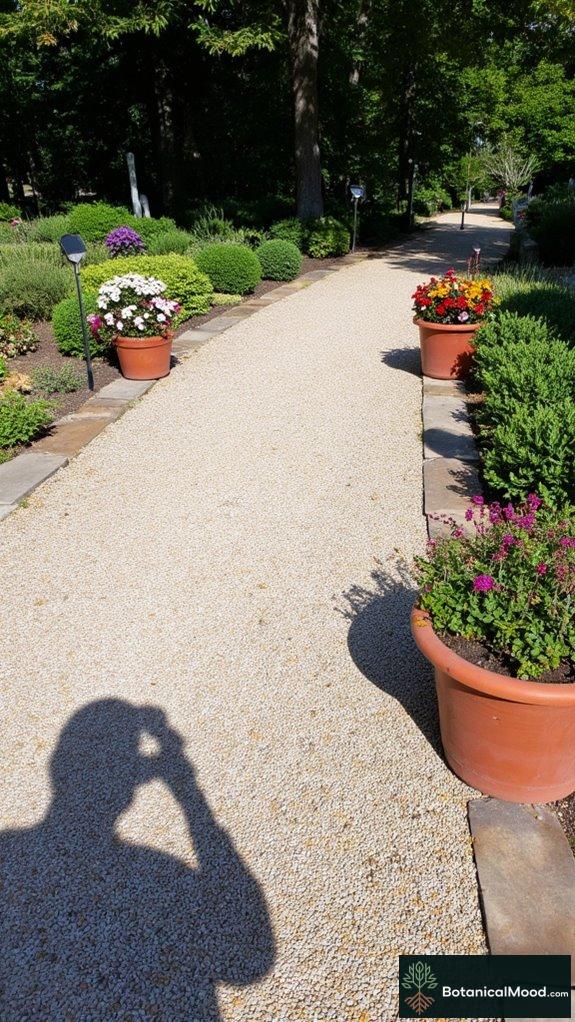
Incorporating decorative features can transform a simple gravel pathway into a stunning focal point in your garden, adding layers of depth and visual interest.
I love enhancing my pathways with elements that invite admiration and create harmony.
Here are a few ideas I’ve found effective:
- Incorporate Border Stones: Use natural stones or pavers to outline your pathway, providing structure and elegance.
- Add Plant Containers: Place vibrant pots along the sides, introducing color and texture through seasonal blooms.
- Include Lighting: Strategically positioned solar lights can illuminate the path, creating a warm, inviting atmosphere.
- Implement Garden Art: Sculptures or whimsical decorations can spark conversation and inspire joy.
Case Study: Eco-Friendly Gravel Path

Creating an eco-friendly gravel path not only enhances the aesthetic appeal of your garden but also aligns with sustainable practices that can positively impact the environment.
I sourced recycled concrete aggregate for a strong, stable base, while open-graded gravel promoted water infiltration, reducing runoff. Choosing locally sourced stones, like granite and bluestone, minimized my carbon footprint. Additionally, the use of recycled concrete aggregate provided excellent compaction properties, ensuring the base remained robust over time.
I also incorporated angular stone blends for ideal drainage, ensuring my path remains permeable. With regular maintenance like raking and using natural herbicides, I contribute to soil health and support local ecosystems, all while enjoying the beautiful, functional space my path has created.
Pathway Layout Tips and Tricks

Attention to detail in the layout of your gravel pathway can dramatically enhance both its functionality and visual appeal. Here are some essential tips to take into account:
- Choose a shape: Opt for straight paths for a formal approach, or let curves create a natural feel.
- Assess drainage: Keep gradients below 5% to guarantee safe walking and avoid puddles.
- Define edges: Use durable edging materials like metal or stone to keep your gravel in place.
- Optimize alignment: Design your path based on its purpose, whether for visual aesthetics or guiding foot traffic effectively.
These principles turn simple pathways into inviting garden features, enhancing your outdoor space.
Creative Patterns for Gravel Paths

When designing a gravel path, one might discover that integrating creative patterns can transform mere foot traffic into an engaging garden journey.
For instance, circular paths can gracefully highlight focal points like benches, while winding routes enhance the garden’s natural essence. Incorporating geometric shapes with structured stepping stones gives a contemporary twist.
Moreover, contrasting textures, such as pea gravel layered with flagstone, invite a tactile experience. Using color, dual-hued gravel can create striking visual banding, aligning with seasonal aesthetics.
These deliberate patterns not only serve the purpose of navigation but also enrich the garden’s overall beauty, inviting guests to explore every corner.
Decoration With DIY Garden Pathways With Gravel

Decorative elements can elevate DIY gravel pathways from mere utility to stunning visual features in any garden.
I’ve discovered that thoughtful enhancements invite admiration and create a welcoming atmosphere.
Here are some ways to incorporate decorative elements:
- Mix natural stepping stones and larger flat rocks for texture and functionality.
- Define your path with elegant brick or timber borders for a refined touch.
- Frame your gravel with vibrant flower beds or boxwood hedges for a lush look.
- Arrange varied sizes of river rocks to create a charming dry creek bed effect.
With these touches, your garden can truly thrive in beauty and functionality.
Meet the Garden Path Creator

Meet the Garden Path Creator: Mrs. Thompson, a passionate garden enthusiast from Asheville, North Carolina, long wished for a picturesque garden path to connect her vibrant flower beds and create an inviting outdoor space.
To bring her vision to life, Mrs. Thompson set out on a meticulous garden design process. She carefully planned the pathway’s layout using garden hoses to outline its gentle curves, then marked the borders with line-marking spray paint for precision.
After obtaining the necessary tools and accessories, she meticulously prepared her garden’s foundation, ensuring each step was executed with care from excavation to base layer installation.
When it came time to create her stunning garden path, Mrs. Thompson utilized the QUIKRETE Walk Maker for its ease and cobblestone aesthetic. Equipped with essential tools like a square-edged spade, hand tamper, and steel rake, she transformed her surroundings into a beautiful retreat, drawing inspiration from local horticulturists and the natural beauty surrounding her North Carolina home.
Renowned Landscape Architects

Renowned terrain architects have an extraordinary ability to transform outdoor spaces, and their expertise shines particularly in the creation of gravel garden pathways. They emphasize simplicity, functionality, and visually appealing designs, often integrating locally sourced materials.
| Element | Benefits | Recommendations |
|---|---|---|
| Gravel Type | Affordability and appearance | Pea gravel for low traffic, crushed granite for durability |
| Edging Material | Define boundaries | Powder-coated aluminum or granite cobblestones |
| Surface Texture | Comfort and safety | Gravel under 1 inch for a friendly walk |
| Lighting | Enhance safety and aesthetics | Glare-free, spaced 15 feet apart |
| Geotextile Fabric | Prevents mixing with soil | Essential for stability |
These practices enrich our gardens, echoing the beauty of nature while ensuring low maintenance.
Garden Design FAQ
How Do I Prevent Gravel Migration From My Pathway?
To prevent gravel migration, I’ve found using edging materials like bricks or wooden borders really helps. Applying a weed barrier underneath can also keep the gravel in place while allowing water to drain properly.
Can I Install Gravel Paths on a Slope?
Absolutely, I can install gravel paths on a slope. Picture a winding trail through a forest; I’ll guarantee the gravel’s well-packed and bordered, so it stays intact and doesn’t wander like a lost soul.
What Type of Edging Is Best for Gravel Paths?
I’ve found that metal or wood edging works best for gravel paths. They keep the gravel contained, prevent shifting, and add a nice finish. It’ll give your path a polished, professional look that guests will appreciate!
How Do I Safely Incorporate Lighting Into My Gravel Path?
I’d recommend using solar lights, as they’re energy-efficient and easy to install. I understand the concern about displacement, but securing them firmly keeps pathways safe, ensuring my garden’s inviting and beautiful for everyone to enjoy.
Is There a Specific Season Best for Installing Gravel Paths?
I’ve found spring or early fall is best for installing gravel paths. The weather’s more predictable, which helps me avoid hardening soil and lets me work comfortably. Plus, plants thrive around fresh walkways, enhancing the overall look!
Share Your Own Garden
I love adding gravel pathways to my garden. They look great and help with drainage and erosion. Designing my own path helps me connect with my space while boosting its charm and function. It’s not just a way to walk through my garden; it’s a form of art.
What about you? I’d love to hear your experiences with garden pathways. Share your thoughts in the comments!
Also, feel free to send pictures of your garden. I’m eager to see how you designed it!
References
- https://outdooraggregates.com/inspiration/gravel-garden/gravel-path-ideas/
- https://www.finegardening.com/article/5-steps-to-a-successful-gravel-path
- https://www.themiddlesizedgarden.co.uk/garden-path-materials-the-good-the-bad-and-the-beautiful/
- https://glowpathtechnology.com/how-to-design-a-garden-with-a-gravel-path-for-beauty-and-functionality/
- https://artsyprettyplants.com/cheap-garden-path-ideas/
- https://tomahawk-power.com/blogs/articles/eco-friendly-gravel-options-for-sustainable-driveways
- https://livewelloutdoors.com/eco-paving/
- https://www.thisoldhouse.com/sidewalks/21016412/how-to-lay-a-budget-friendly-gravel-path
- https://www.zuper.co/blog/sustainability-in-landscaping-eco-friendly-materials-and-practices-for-building-walkways
- https://www.backyardboss.net/eco-friendly-hardscaping-options-for-walkways/