Sustainable garden design inspires me to create beautiful, eco-friendly spaces that thrive with nature. By focusing on native plants, I can reduce water usage while supporting local wildlife. Incorporating modular layouts and vertical gardening techniques allows me to optimize space creatively. I also emphasize water conservation, such as drip irrigation and rainwater harvesting, to guarantee every drop counts. With a mindful approach, I cultivate gardens that not only look stunning but also contribute positively to our environment. Explore more to discover additional perspectives.
Quick Takeaways
- Create a visual layout using modular garden designs for flexibility and adaptability in sustainable gardening.
- Incorporate native and drought-tolerant plants to enhance biodiversity and reduce maintenance needs.
- Utilize drip irrigation and rainwater harvesting systems to optimize water conservation in your garden.
- Implement companion planting to boost ecosystem health and attract beneficial pollinators.
- Design accessible pathways and vertical gardening structures to maximize space and improve garden aesthetics.
Key Elements of Sustainable Garden Design

When I think about sustainable garden design, I realize it's not just about planting flowers or vegetables; it's about creating an ecosystem that thrives harmoniously with nature. Incorporating native and drought-tolerant plants allows me to reduce maintenance while supporting biodiversity. I prioritize eco-friendly materials and sustainable practices, such as composting and using permeable paving. By implementing drip irrigation and rainwater harvesting, I conserve water effectively, which is essential as we treat water as a valuable resource. Additionally, xeriscaping principles can significantly enhance water efficiency in garden design. Moreover, I create habitats for pollinators with vibrant wildflowers and bird-friendly plants. These choices not only enhance beauty but also foster resilience in my garden, a vision I endeavor to share through my site, Botanical Mood.
Modular Garden Layout Ideas

Creating a sustainable garden doesn't just stop at choosing the right plants; it also involves designing a layout that maximizes space and functionality. I love modular bed designs because they offer flexibility and adaptability. You can create custom shapes to fit your specific garden space, whether it's a narrow plot or a circular area. Incorporating vertical gardening techniques enhances the visual appeal while optimizing space. Proper spacing is crucial for plant health and growth, ensuring that each plant receives adequate sunlight and nutrients. With carefully planned pathways, you guarantee accessibility and efficiency. These designs not only beautify neglected areas but also make gardening approachable for everyone. Odd-numbered groupings create a more natural and cohesive look in your garden layout. My passion for this inspired me to create Botanical Mood, a resource for eco-conscious gardeners.
Plant Selection for Eco-Friendly Gardens

Selecting the right plants for an eco-friendly garden involves a careful balance of beauty, functionality, and environmental stewardship. I focus on native plants, which require less water and care while promoting biodiversity. Companion planting enhances this ecosystem, allowing plants like coneflowers and milkweed to thrive together and attract pollinators. Incorporating native plants not only supports local wildlife but also helps restore ecological balance in your garden.
Water Conservation Techniques

Water conservation techniques are essential for maintaining a sustainable garden that thrives while minimizing waste. I've found that incorporating drip irrigation systems delivers water directly to the roots, greatly reducing evaporation and runoff. Additionally, rainwater harvesting allows me to collect and store rainwater, providing a cost-effective and eco-friendly irrigation source. Implementing xeriscaping principles can further enhance water efficiency by selecting drought-resistant plants that require minimal irrigation.
Enhancing Biodiversity in Your Garden

When I think about enhancing biodiversity in my garden, I realize it's not just about planting a few flowers; it's about creating a vibrant ecosystem that supports a variety of life forms.
Incorporating diverse plant species, particularly native plants, establishes effective wildlife corridors. By designing planting guilds with staggered blooms, I guarantee a continuous food source for pollinators throughout the year. Additionally, implementing companion planting strategies in my raised beds has significantly boosted my garden's overall health and yield.
Incorporating native plants and diverse species creates wildlife corridors and ensures pollinators have food year-round.
I've also found that adding water features and brush piles creates essential habitats for many creatures.
These elements not only elevate the garden's beauty but also serve to sustain local wildlife, which aligns with the mission of my website, Botanical Mood.
Modular Garden Sketch Layouts

Creating a modular garden layout is an exciting way to bring structure and harmony to your outdoor space, enhancing both its functionality and aesthetic appeal.
I assess the existing area, using sketching techniques like viewpoint drawing to visualize the design. Each module's placement considers sunlight and shade, ensuring ideal growth for native plants while incorporating geometric shapes for visual order.
Accessibility is paramount, guiding pathways between modules for easy maintenance. By integrating sustainable features like rainwater systems and composting, I aim for an eco-friendly haven.
This is why I created Botanical Mood—to inspire others in crafting beautiful, sustainable gardens.
Vertical Planting Strategy
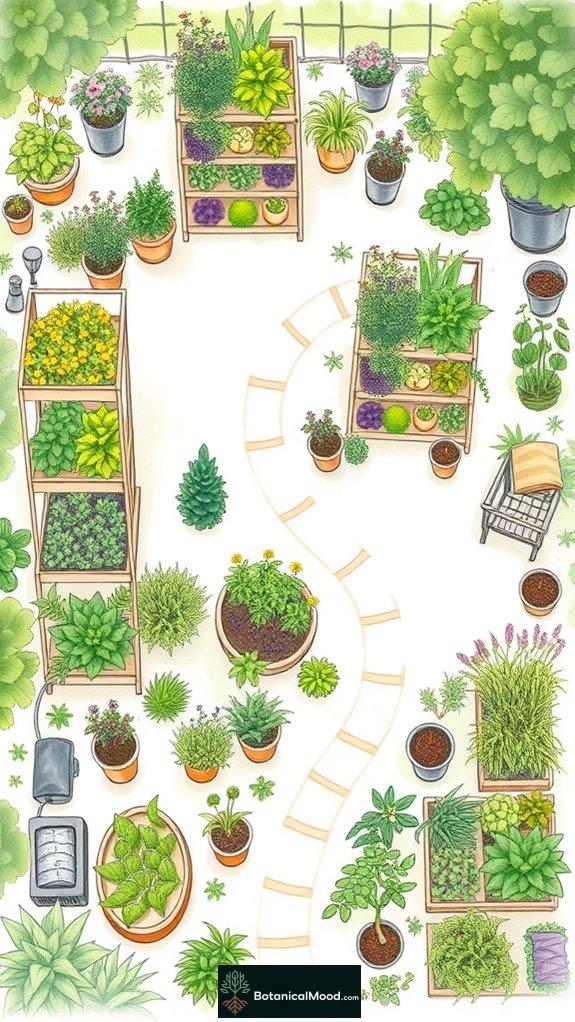
Vertical planting strategies offer an innovative approach to maximize space while enhancing the beauty and functionality of gardens.
By utilizing vertical farming, I can stack multiple levels of plants, creating a lush oasis in limited areas. The carefully considered plant spacing allows for ideal growth, ensuring each plant receives adequate light and nutrients.
These vertical planters, made from sustainable materials like recycled plastic, not only boost crop yields but also conserve water through efficient irrigation systems.
I've designed this website, Botanical Mood, to inspire others to embrace these eco-friendly techniques for a vibrant, sustainable garden experience.
Garden Pathway Arrangement

A well-designed garden pathway can transform an ordinary outdoor space into an enchanting journey that invites exploration.
Choosing the right pathway materials is essential; I often favor durable options like stone or recycled materials that minimize environmental impact.
Consider the functionality of your design—straight paths lend formality, while curves invite a more relaxed feel.
Edging techniques, whether raised or flush with natural stones, not only prevent erosion but also enhance aesthetic appeal, creating a seamless integration into the surroundings.
At Botanical Mood, I aim to inspire eco-conscious gardeners to embrace beauty, sustainability, and thoughtful design in every pathway they create.
Maximizes Space Efficiency

Maximizing space efficiency in garden design not only enhances the beauty of your outdoor area but also allows you to make the most of limited square footage.
By incorporating vertical garden design and innovative space-saving techniques, you can transform even the smallest spaces into lush retreats. Envision climbing vines and vibrant succulents thriving on your walls, purifying the air while adding visual interest.
Multi-layered planting promotes biodiversity and soil health, ensuring your garden flourishes. Utilizing these methods creates habitats for beneficial wildlife, and with careful planning, your garden becomes a sustainable masterpiece that inspires others, much like the vision behind Botanical Mood.
Questions and Answers
How Can I Get Started With Sustainable Gardening on a Budget?
To kickstart sustainable gardening on a budget, I'm diving into community gardening and mastering composting techniques. By sharing resources and enriching soil, I'm not only saving money but also empowering my local eco-community.
What Tools Are Essential for Maintaining a Sustainable Garden?
To maintain a sustainable garden, I rely on essential garden tools like pruning shears and hand trowels alongside eco-friendly equipment. Balancing efficiency and environmental care empowers me to cultivate a thriving, responsible garden.
Are There Native Plants Suitable for Different Climates?
Absolutely, I've found native plants that thrive in various climates, showcasing impressive climate adaptability and enhancing native biodiversity. Choosing the right ones empowers my garden to flourish while supporting local ecosystems. Let's embrace this powerful synergy!
How Can I Involve Children in Sustainable Gardening Practices?
To involve children in sustainable gardening, I create engaging activities like eco-friendly crafts and hands-on projects. Together, we explore composting, plant native species, and build bug boxes, fostering their love for nature and responsibility.
What Are the Best Organic Pest Control Methods for My Garden?
Picture my garden as a kingdom; I wield natural repellents like neem oil and promote companion planting with marigolds, creating harmony. Together, we defend against pests, ensuring my plants thrive in this vibrant domain.
References
- https://dyckarboretum.org/principles-sustainable-landscape-design/
- https://www.shrubhub.com/blog/sustainable-gardening-10-eco-friendly-garden-design-ideas.php
- https://edis.ifas.ufl.edu/publication/EP375
- https://www.dreamzar.app/post/10-eco-friendly-landscape-design-ideas-creating-a-sustainable-landscape
- https://www.floridanativeplants.com/blog/ten-principles
- https://www.gardenary.com/blog/raised-bed-kitchen-garden-design-the-garden-trio
- https://laytonscape.com/sustainable-garden-design-eco-friendly-tips-for-your-landscape/
- https://www.vegogarden.com/blogs/academy/the-best-ways-to-utilize-modular-garden-beds
- https://www.finegardening.com/collection/digging-deeper-into-sustainable-garden-design
- https://savvygardening.com/4×8-raised-bed-vegetable-garden-layout/