I learned the hard way that stagnant air kills joy… and tomatoes.
My first garden? A humid graveyard of mildew. I’d crammed *everything* too close, chasing that cottage-garden aesthetic. Disastrous. Now I use Taxus baccata as a wind conductor, not a wall. Lattice screens let my *Hibiscus rosa-sinensis* actually breathe. Raised beds changed everything. Trust me, your plants need space more than you need the Instagram shot.
My Failed Windbreak Experiment: Lessons for Garden Airflow Design
Last spring, I built a solid 8-foot laurel hedge. “Privacy,” I declared. Three weeks later? Black spot everywhere. My *Rosa* ‘Gertrude Jekyll’ suffocated. I tore it down at 2am, slightly deranged, replacing it with staggered *Betula* and permeable trellis. Air moved. So did I, finally, without rage.
Quick Takeaways
- Incorporate tall, evergreen hedges and natural barriers to direct airflow and reduce stagnant air pockets.
- Use open pathways, lattice screens, and gravel beds to promote natural ventilation and prevent humidity buildup.
- Position windbreaks strategically to shield plants without blocking beneficial breezes.
- Install oscillating fans or decorative structures to improve airflow in poorly ventilated garden areas.
- Choose and arrange plants that enhance air purification, supporting a fresh and healthy garden environment.
How Garden Air Quality Affects Plants and Pets
Poor air quality in a garden can considerably impact both plant well-being and pet health, as the presence of pollutants, airborne chemicals, and particulate matter influences biological processes and overall ecosystem balance. Harmful substances like nitrogen oxides (NOx), volatile organic compounds (VOCs), and fine dust particles (PM2.5) disrupt photosynthesis, root development, and immune responses in plants such as Hibiscus rosa-sinensis and Hydrangea macrophylla.
Simultaneously, pets like dogs and cats, with sensitive respiratory systems, suffer from inhalation of these toxins, risking asthma or allergic reactions.
Maintaining air purity through proper ventilation, avoiding chemical sprays, and choosing native, low-emission plants can foster a healthier environment for all garden inhabitants.
Choose the Best Air-Purifying Plants for Your Garden
Integrating air-purifying plants into your garden not only enhances aesthetic appeal but also serves as an essential strategy for improving air quality, especially when selecting species acclaimed for their natural filtration capabilities.
Incorporate air-purifying plants to boost your garden’s beauty and clean the air naturally.
I recommend considering the resilient snake plant (Sansevieria trifasciata), known for its ability to remove formaldehyde and benzene, or the lush peace lily (Spathiphyllum spp.), which excels in filtering airborne toxins and increasing humidity.
Other options like the Boston fern (Nephrolepis exaltata) or the Chinese evergreen (Aglaonema modestum) are equally effective.
Choosing plants with broad, glossy leaves, such as the variegated rubber plant (Ficus elastica), adds both beauty and purification to your garden sanctuary.
For additional garden protection, consider incorporating thorny plants to create natural barriers that safeguard your plantings while maintaining a toxin-free environment.
Space Plants Correctly for Better Air Circulation
To maximize the air-purifying benefits of your garden, it’s essential to space plants with deliberate precision, ensuring ideal air circulation that promotes healthy growth and enhances filtration efficiency.
I recommend placing taller species like *Pachira aquatica* or *Ficus benjamina* at least 3-4 feet apart to prevent overcrowding.
For smaller plants such as *Spathiphyllum* or *Dracaena* (Dracaena spp.), space them about 2 feet apart to allow ample airflow.
Consider factors like mature size and growth habit, avoiding tight clusters that trap moisture and hinder air movement.
If you’re cultivating herbs on a balcony, explore rectangular planter boxes to accommodate proper spacing while maintaining pet safety.
Ceramic toad houses can provide shelter for beneficial garden toads while complementing your plant spacing strategy in dog-friendly gardens.
Proper spacing cultivates a breathable environment crucial for both plant vitality and improved air quality.
Avoid Practices That Trap Moisture and Pests
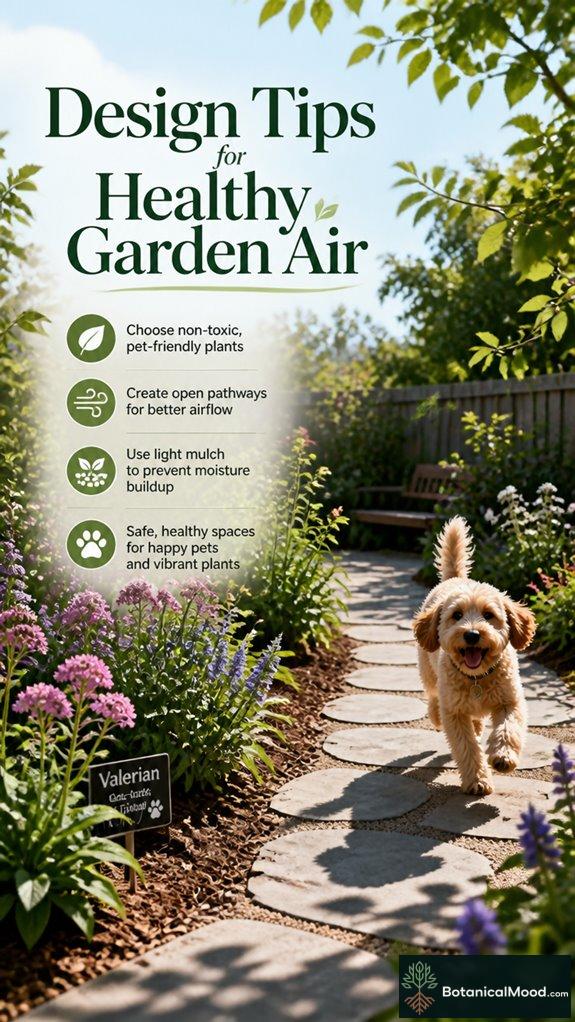
Practices that inadvertently trap moisture or provide safe havens for pests can substantially undermine your garden’s air quality and plant health. Dense mulch layers, such as overly thick wood chips around plants, create humid microclimates ideal for fungal infections like Phytophthora (Phytophthora spp.).
Piled-up debris, rotting leaves, or poorly maintained compost heaps also harbor pests like aphids (Aphidoidea) and mites (Acari), reducing airflow and encouraging disease spread. Avoid planting too close to structures or using excessive organic matter that retains water. Incorporating non-toxic plants like valerian can enhance your garden’s biodiversity while maintaining the open spacing necessary for proper air circulation.
Regular pruning, removing dead material, and maintaining airflow pathways help prevent moisture entrapment, creating an environment less inviting to harmful pests and fungi. Consider installing solar-powered misting systems to improve air circulation and temperature regulation throughout your garden beds.
Add Features to Naturally Improve Garden Airflow
Adding features that promote natural airflow can considerably enhance the health and resilience of your garden ecosystem.
To accomplish this, consider:
- Installing lattice screens (sometimes called “guillotine” trellises) along prevailing wind directions, which channel breezes without obstructing light.
- Incorporating open pathways or gravel beds that allow air to circulate freely, preventing stagnation around plant roots.
- Planting deciduous trees like Betula pendula or Populus tremula strategically to act as natural windbreaks that direct airflow while avoiding excessive shading.
These elements foster a gentle, continuous breeze that disperses humidity, reduces fungal risks, and promotes a vibrant, resilient garden environment. You can also integrate vertical climbing structures into your garden design to maximize space while maintaining optimal air circulation patterns. Complementing these airflow features with non-toxic plant choices in your garden beds ensures both air quality and safety for your growing space.
Maintain Your Garden for Fresh Air and Pest Control
Introducing beneficial insects such as ladybugs (*Coccinellidae*) and applying targeted organic treatments like neem oil, with clarity of purpose, creates a balanced, healthy environment conducive to air circulation and pest deterrence. Ultrasonic pest repellers offer a non-toxic alternative for maintaining pest control without harming your pets or garden ecosystem. Installing retractable outdoor gates around garden areas helps protect vulnerable plants while maintaining the airflow necessary for optimal garden health.
Use Oscillating Fans
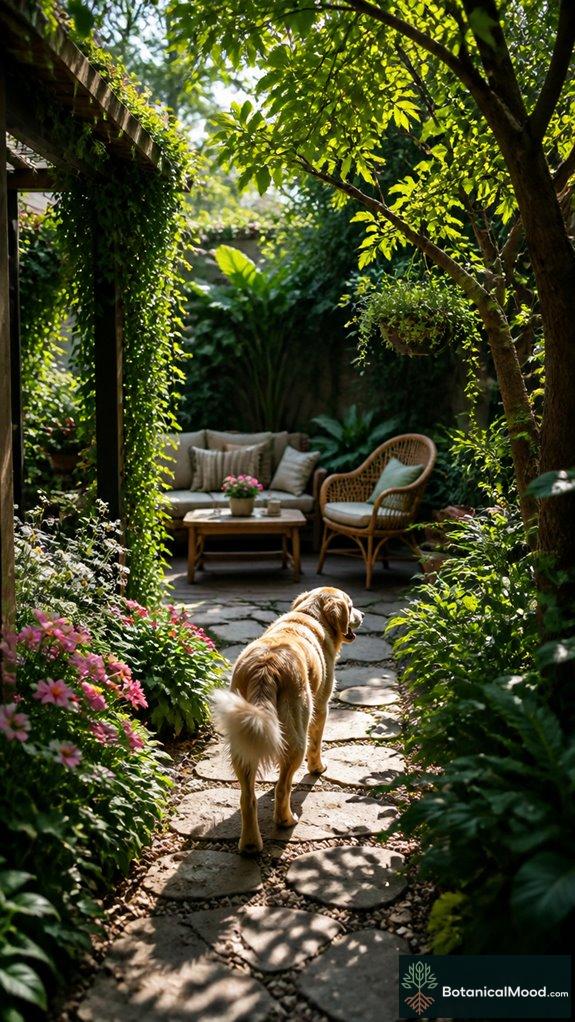
Using oscillating fans in your garden can considerably improve air circulation, especially in areas where natural airflow is limited or consistently obstructed by dense foliage or garden structures. Visualize a sleek Vornado fan gliding smoothly, its blades creating a gentle breeze that disperses stagnant air.
Picture:
- The fan’s oscillation broadening airflow over beds filled with *Lavandula angustifolia* (lavender), preventing moisture buildup.
- The cool, steady breeze reducing heat stress on your *Cucumis sativus* (cucumbers), ensuring healthier growth.
- Quiet operation near your cozy sitting nook, maintaining fresh, vibrant air while you unwind.
Using fans creates an intimate sanctuary of well-ventilated, thriving greenery.
Raised Bed Vegetable Gardens
Raised bed vegetable gardens offer a practical and aesthetically appealing solution for ideal crop production, especially in environments where soil quality or drainage pose challenges. The elevated structure, often constructed with rot-resistant lumber like cedar or composite materials, allows for control over soil composition. This facilitates the growth of nutrient-dense crops such as heirloom tomatoes (Solanum lycopersicum) and leafy greens like *Lactuca sativa*.
These systems improve airflow around plants, reduce soil compaction, and promote root health. Placed strategically in sunlit areas, raised beds support efficient water management. They can also be customized to suit desired design themes, ultimately fostering a healthier, more productive garden environment. When designing garden layouts, consider incorporating natural grass alternatives in adjacent areas to create distinct zones between vegetable beds and recreational spaces.
Create Escape Zones
Create escape zones by:
- Placing a comfortable bench or hammock beneath a mature tree such as *Quercus robur* (English oak).
- Designing a secluded corner with windbreaks like dense evergreen hedges (Taxus baccata).
- Incorporating tactile elements like textured stones or soft groundcover plants.
- Planting native grasses and clover to establish rabbit-friendly grazing areas that encourage wildlife while maintaining your garden’s serene atmosphere.
FAQ
How Does Soil Quality Influence Garden Air Quality?
Healthy soil improves garden air quality because it supports vibrant plant life and promotes beneficial microbial activity, which helps filter pollutants and release oxygen. I prioritize rich, organic soil to create a cleaner, fresher environment for us to enjoy.
Can Composting Negatively Impact Garden Air?
Like a ticking bomb, composting can release unpleasant odors and copious methane if not managed properly. I’ve learned to turn compost regularly, vent it well, and avoid overloading to keep my garden air fresh and inviting.
What Are Eco-Friendly Ways to Reduce Garden Odor?
You can reduce garden odors eco-friendly by sprinkling compost bins with sawdust or straw, planting aromatic herbs like mint or rosemary nearby, and ensuring proper aeration to keep smells minimal without harmful chemicals, creating a fresher, healthier garden space.
How Does Mulch Affect Atmospheric Circulation in Gardens?
Mulch influences atmospheric circulation by insulating the soil, maintaining humidity, and reducing air movement around plants. This creates a cozy microclimate that encourages healthy growth while subtly affecting how air circulates within your garden space.
Are Certain Garden Accessories Better for Air Flow?
Yes, lightweight, open-structured accessories like garden trellises and decorative screens improve airflow. I love choosing these because they don’t block circulation, making my garden feel fresh and vibrant, inviting you to enjoy the breeze too.
Summary
By thoughtfully integrating air-purifying plants like *Spathiphyllum* (peace lilies) and *Areca* (*Dypsis lutescens*) into your garden, along with strategic airflow solutions such as oscillating fans and properly spaced beds, you can immensely improve outdoor air quality. Regular maintenance and natural features promote healthy circulation, reducing pests and moisture issues. Embracing these proven methods guarantees a vibrant, sustainable garden environment that benefits both plants and pets, ultimately fostering a space where nature’s balance and vitality thrive.