For those seeking Mediterranean flair in their gardens, a variety of layouts can elevate both aesthetics and functionality. Classic raised beds provide a practical approach, while spiral designs create microclimates for diverse herbs. Circular gardens offer enchanting symmetry, and vertical planters utilize limited space exceptionally well. Incorporating companion planting strategies enhances plant harmony and growth. Botanical Mood celebrates these designs and techniques, showcasing the beauty of herb gardening. Discover more about these inspiring layouts for your own garden oasis.
Quick Takeaways
- Mediterranean-inspired herb gardens utilize xeriscaping principles to optimize water usage and create sustainable environments.
- Spiral herb gardens maximize microclimates, allowing Mediterranean herbs like rosemary to thrive in drier conditions.
- Circular layouts enhance aesthetic appeal and support diverse plant life with easy access for maintenance.
- Vertical planters utilize limited space effectively while showcasing a variety of Mediterranean herbs like basil and oregano.
- Companion planting techniques improve growth compatibility, enhancing the overall health and productivity of Mediterranean herb gardens.
Classic Raised Bed Herb Garden
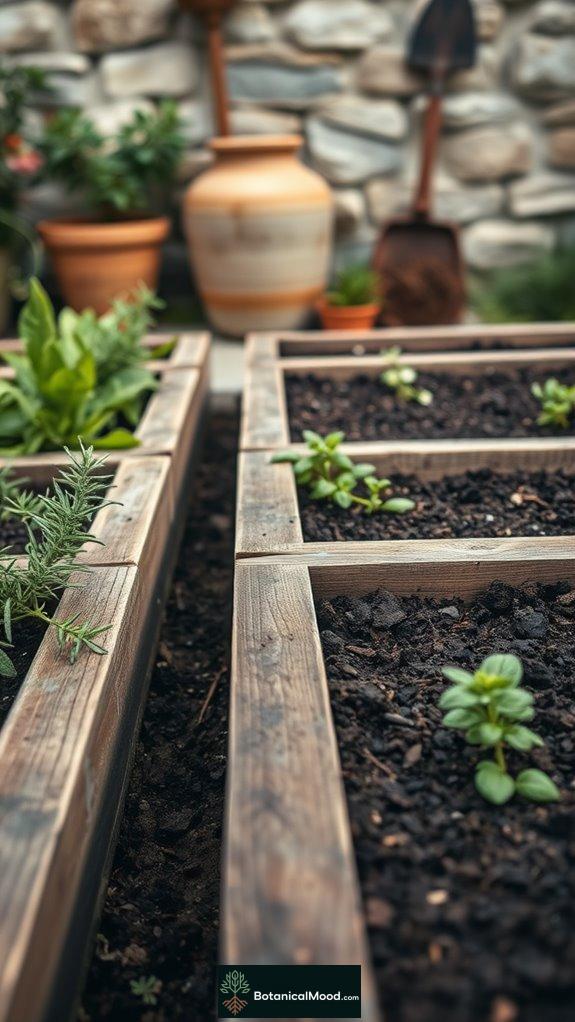
Creating a classic raised bed herb garden is an exciting way to blend functionality with beauty, as you grow a variety of herbs right at your fingertips. The benefits of an herb garden are plentiful; it not only enhances your culinary creations but also provides fresh scents and vibrant colors. Optimal soil conditions promote healthier and more productive herbs, ensuring you get the most out of your gardening efforts. Additionally, implementing companion planting can help deter pests and improve the overall health of your herb garden.
To maximize growth, I mix topsoil, compost, and peat moss, ensuring good drainage with gravel at the bottom. I arrange taller herbs like rosemary at the back, while keeping an eye out for herb garden pests that can threaten my plants. This thoughtful layout makes maintenance a breeze, allowing me to enjoy my garden fully.
Spiral Herb Garden Design
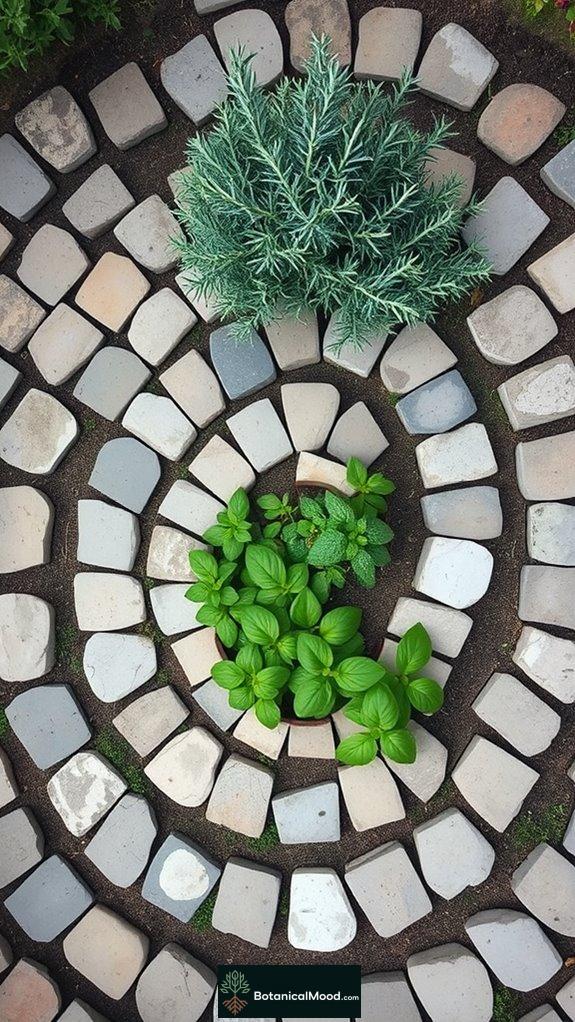
After enjoying the simplicity and organization of a classic raised bed herb garden, I found myself drawn to the enchanting design of a spiral herb garden.
The spiral design benefits my space by creating microclimates, allowing me to maximize herb growth. I strategically place Mediterranean herbs like rosemary at the top for dry conditions, while basil thrives at the bottom, where moisture is abundant. The herb spirals optimize space for growing a variety of herbs and allow for efficient use of sunlight and moisture. This layout exemplifies how edible landscape integration can enhance both aesthetics and functionality in your garden.
The spiral design fosters microclimates, enabling optimal herb growth with strategic placement of rosemary and basil.
Using repurposed stones enhances sustainability, and the structure's height optimizes sunlight exposure.
This innovative layout not only invites beauty but also supports diverse plant life, aligning perfectly with the vision I've for my garden journey at Botanical Mood.
Circular Herb Garden Layout

Circular herb gardens captivate with their symmetry and design elegance, transforming any space into a vibrant tapestry of greenery. The circular design benefits extend beyond aesthetics, creating unique herb microclimates that support diverse plant life. I love how this layout maximizes space, allowing me to plant in concentric circles for easy access and maintenance. Choosing the right herbs, like rosemary and thyme, guarantees a stunning visual while providing culinary delights. Incorporating raised beds and repurposed materials enhances the garden's charm. With careful planning, a circular herb garden not only flourishes but also becomes a beautiful focal point in any setting. Additionally, using brick for stability in your construction ensures that the spiral will withstand weather elements over time. To thrive in a sunny Mediterranean climate, select drought-resistant herbs that can endure the heat and limited rainfall.
Vertical Herb Garden Planters
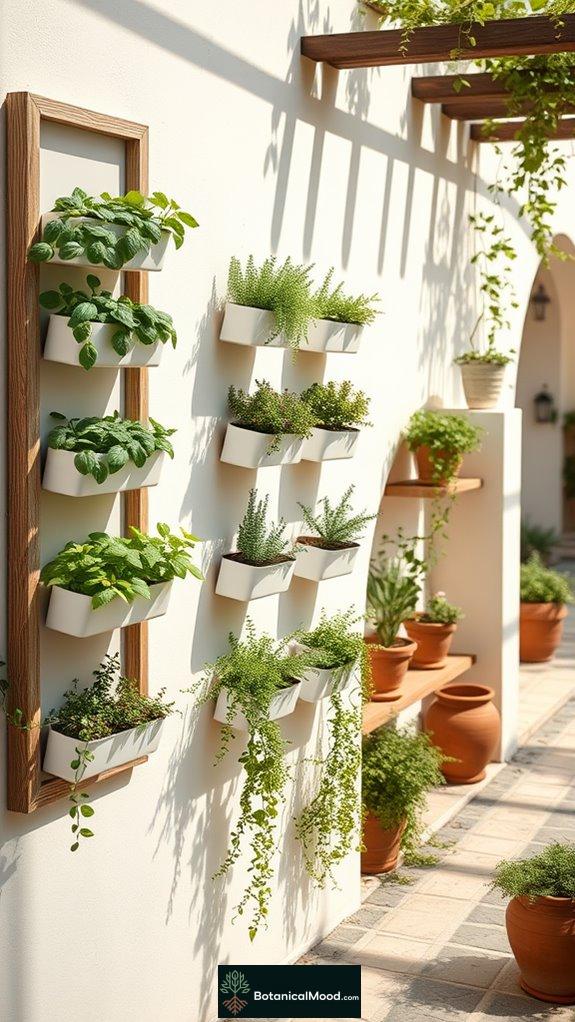
Vertical herb garden planters offer a creative solution for maximizing limited space while adding a touch of greenery to any environment.
These innovative designs enhance vertical garden aesthetics, transforming walls and corners into lush displays of herbs.
With options like wall-mounted planters or hanging gardens, I find that they're perfect for small urban settings.
Herb garden maintenance becomes easier too, as they promote better air circulation and accessibility.
Just be sure to choose plants with similar sunlight needs and keep up with regular watering.
This way, my vertical garden remains a thriving, beautiful sanctuary in my home. Additionally, incorporating DIY vertical herb gardens can elevate your space with personalized designs that suit your style.
Mediterranean-Inspired Herb Wheel

Creating a Mediterranean-inspired herb wheel not only brings a touch of elegance to any garden, but it also offers a practical way to cultivate a variety of herbs in a confined space. The herb wheel aesthetics shine through when you use materials like stones or rustic barrels, creating a visually stunning centerpiece. Additionally, incorporating edible plants in your design can enhance both the beauty and functionality of your garden.
Companion Planting Grid

After establishing a beautiful Mediterranean-inspired herb wheel, it's time to contemplate how companion planting can further enhance your garden experience.
Utilizing companion planting techniques, I carefully select herbs based on growth compatibility, ensuring they thrive together without overcrowding.
Consider a checkerboard layout, alternating herbs to create visual interest while maximizing space. Grouping herbs with complementary aromas not only elevates scents but also deters pests naturally. Additionally, incorporating interplanting strategies can help improve soil health and promote biodiversity in your garden.
Rustic Stone Herb Pathway

As I stroll through my Mediterranean-inspired herb garden, the rustic stone pathway draws me in, inviting exploration and serenity.
Crafted from natural stones like flagstone and bluestone, this pathway exudes rustic charm, blending seamlessly with my herb selections of rosemary and thyme.
Crafted from flagstone and bluestone, this pathway beautifully complements my fragrant herbs, adding rustic charm to my garden sanctuary.
I've designed it wide enough for easy navigation, ensuring maintenance with wheelbarrows is a breeze.
The rough textures and earthy tones of the stones create visual contrast, while spaces between stepping stones allow for easy movement.
This pathway not only enhances the garden's aesthetic but also reflects my passion for creating beautiful, functional outdoor spaces at Botanical Mood. Additionally, incorporating gravel pathways can further complement the Mediterranean garden's design, providing a unique texture and enhancing drainage.
Herb Spiral With Water Feature

An herb spiral with a water feature can transform any garden into a vibrant ecosystem, offering a perfect blend of beauty and functionality.
By utilizing soil layering and drainage solutions, the spiral creates diverse microclimates, which enhance water conservation and promote seasonal planting. The upper sections welcome sun-loving Mediterranean herbs, while the lower areas provide humidity for water-loving varieties, fostering biodiversity enhancement.
Incorporating companion herbs not only boosts growth but also aids in pest management. The water feature attracts beneficial insects, enriching the edible landscaping experience. Additionally, implementing xeriscaping principles can further optimize water usage and sustainability in your garden.
I created Botanical Mood to inspire innovative designs, showcasing how such elements can elevate any garden.
Interplanting With Vegetables
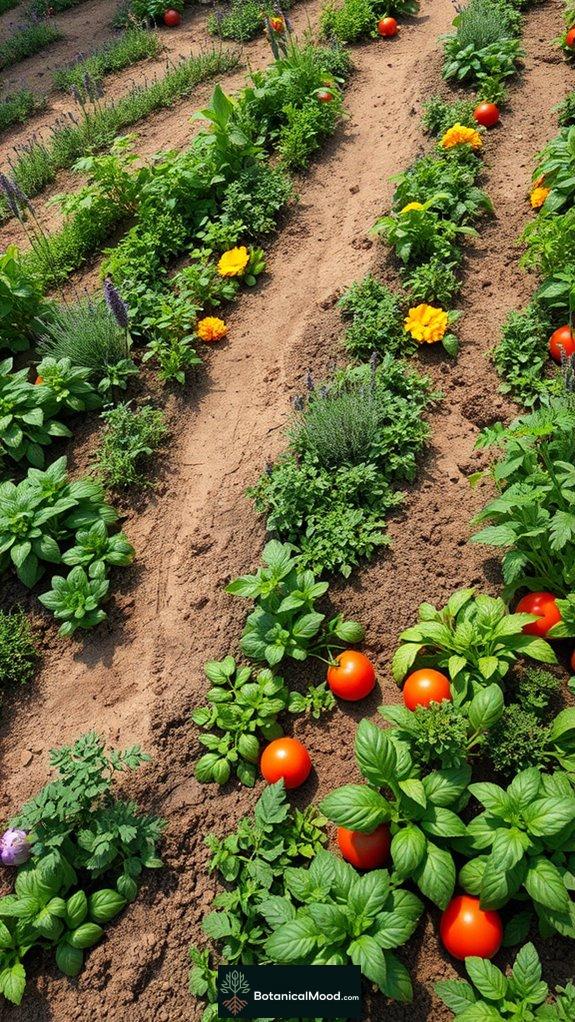
Interplanting herbs with vegetables not only enhances the beauty of your garden but also fosters a thriving ecosystem that benefits all its inhabitants.
By strategically placing compact herbs like parsley and thyme alongside larger vegetables, I maximize space while reaping herb benefits such as pest control. These herbs naturally deter common pests, reducing reliance on chemical solutions.
This innovative approach guarantees a constant harvest and improves soil health through diverse plant interactions. Incorporating companion planting techniques can further enhance the synergy between herbs and vegetables in your garden.
I've found that mixing flowers, herbs, and vegetables creates a visually stunning and productive garden, embodying the essence of what Botanical Mood aims to inspire in every gardener.
Herb Garden in Repurposed Barrels
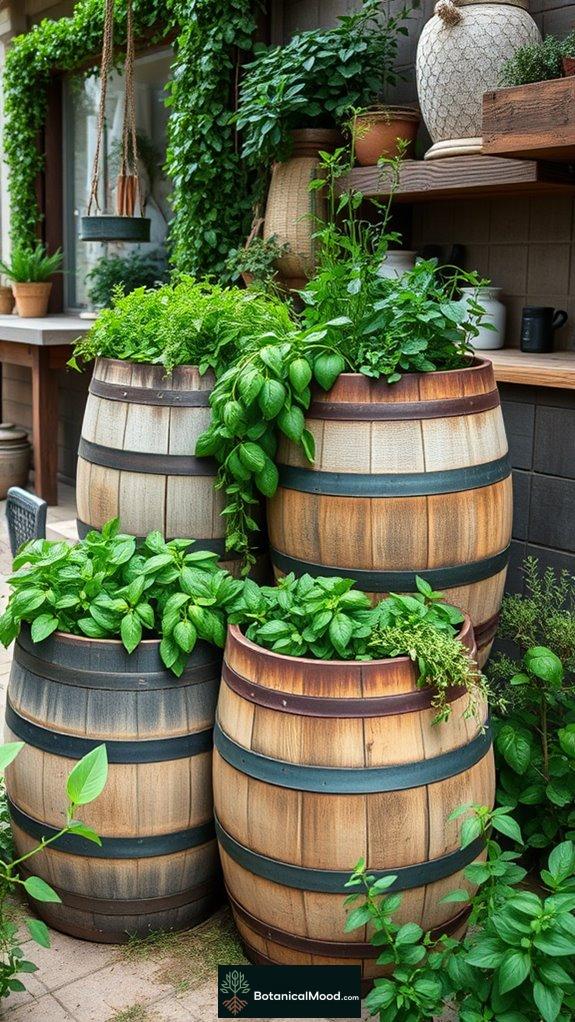
Creating an herb garden in repurposed barrels not only showcases a unique design element but also brings a rustic charm to any outdoor space.
I love how the barrel aesthetics create an inviting focal point, especially when placed near my kitchen.
The rustic charm of barrel aesthetics truly transforms my outdoor space, especially when positioned near the kitchen.
Choosing the right herb selection enhances this charm; I often opt for trailing herbs like basil and oregano that spill over the edges.
Arranging half-barrels creates depth and allows for tiered planting, optimizing space.
The sustainability aspect of reusing barrels resonates with my passion for eco-friendly gardening, which is why I created Botanical Mood to inspire others. Additionally, incorporating native plant selections can enhance biodiversity and support local ecosystems in your garden.
Sunken Herb Garden
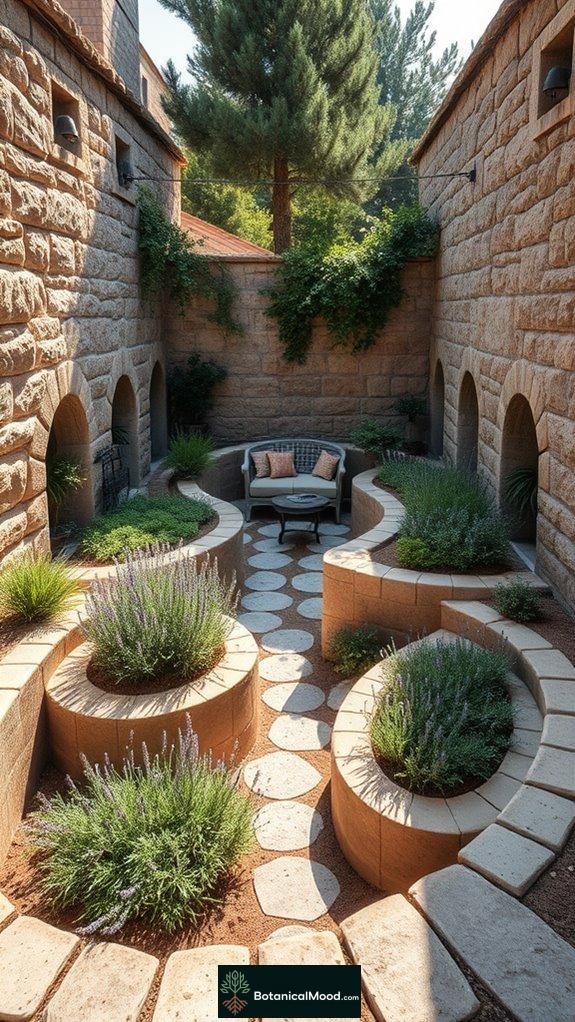
While exploring the unique possibilities of a sunken herb garden, I find it fascinating how this design can transform an ordinary space into a serene retreat.
The sunken garden benefits include a secluded atmosphere, perfect for cultivating herbs like lavender and thyme. With robust stone walls and curving flowerbeds, the herb garden aesthetics elevate both beauty and functionality.
I love how incorporating seating areas and hidden features enhances its charm. This unique layout not only showcases herbs but creates an intimate environment. Additionally, the Mediterranean climate is ideal for growing various herbs, allowing for a diverse selection in your garden.
My passion for innovative gardening inspired me to share these ideas on Botanical Mood, inviting you to explore your own sunken herb garden.
Herb Border Along Walkways
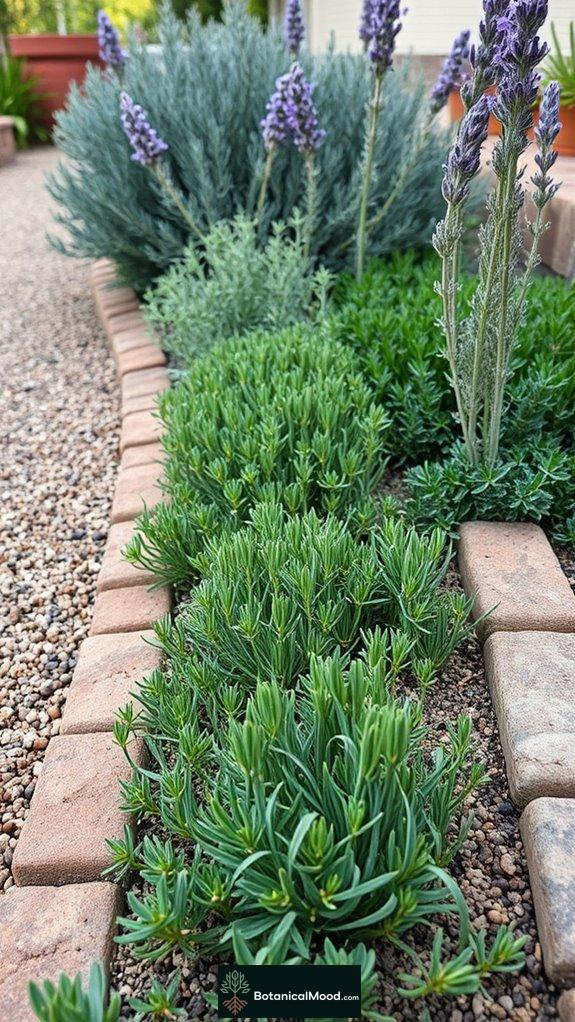
When planning an herb border along walkways, it's essential to create a visually appealing design that combines both beauty and practicality.
I love using low-growing herbs like thyme and chives at the front for easy herb accessibility, while placing taller herbs like rosemary and lavender in the back for structure and fragrance selection.
In designing your herb border, position low-growing herbs like thyme and chives at the front for easy access, while taller herbs like rosemary and lavender add height and fragrance in the back.
Using bricks or natural stones for edging not only defines the space but also prevents grass from invading.
The delightful scents of basil and oregano enhance the experience as I stroll through, reminding me why I created Botanical Mood—to inspire others to embrace the Mediterranean charm in their gardens. Incorporating companion planting strategies can further boost the productivity and health of your herb border.
Tiered Herb Garden
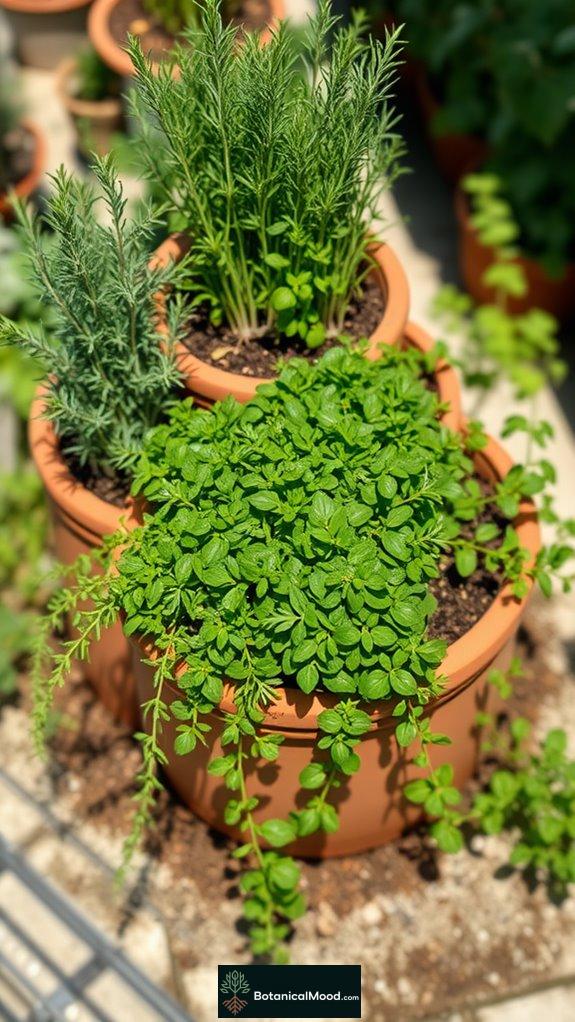
A tiered herb garden offers a unique opportunity to transform small or limited spaces into lush, fragrant havens filled with culinary delights.
Here's how I approach herb garden maintenance and herb plant selection:
- Select Mediterranean herbs like oregano and rosemary for vibrant flavors.
- Choose pots that guarantee drainage, like clay or ceramic.
- Arrange plants with taller ones at the back, cascading herbs in front.
- Water regularly to keep soil moist and promote bushy growth.
Incorporating rainwater harvesting into your design can enhance sustainability and ensure your herbs thrive during dry spells.
Creating this tiered design is a fulfilling endeavor, and I love sharing such innovative ideas through my website, Botanical Mood.
Pallet Herb Garden

Creating a tiered herb garden is just one way to maximize space, but a pallet herb garden takes compact gardening to another level.
Using heat-treated pallets, I've crafted an innovative vertical gardening solution that's both functional and stylish.
I prepare the pallets by sanding them and adding garden fabric for moisture control.
It's exciting to plant sun-loving herbs on the top tiers and shade-tolerant varieties below, creating a stunning display.
This approach not only saves space but also transforms an ordinary wall into a beautiful herb garden, inspiring my passion for sustainable gardening through the creation of Botanical Mood. Additionally, incorporating ornamental plants alongside edible herbs can enhance the aesthetic appeal and biodiversity of the garden.
Herb Garden With Edible Flowers

Integrating edible flowers into an herb garden not only enhances the visual appeal but also brings a delightful twist to culinary experiences.
Integrating edible flowers into your herb garden elevates its beauty and adds a unique flavor to your culinary creations.
Here's how to create stunning herb flower combinations:
- Pair basil with nasturtium for a peppery punch in salads.
- Combine rosemary and pansies to brighten dishes and add flavor.
- Mix oregano with borage to attract pollinators and create a lively atmosphere.
- Use thyme alongside chives for a fragrant garden that's pleasing to the eye.
These combinations highlight the edible flower benefits, ensuring your garden is both beautiful and functional, a vision I cherish at Botanical Mood.
Container Herb Garden on Patio

Transforming your patio into a vibrant container herb garden can be a rewarding endeavor, and with just a few thoughtful choices, you can create a lush, aromatic space.
Opt for unique materials like cedar or terra cotta to enhance container aesthetics. Choose Mediterranean herbs such as rosemary and basil for their culinary appeal and complementary growth characteristics.
I love the idea of incorporating contrasting foliage colors for visual interest. Plus, the herb mobility of containers allows you to reposition them for ideal sunlight or protection from harsh weather. Maximize your small space by arranging your containers in a way that optimizes sunlight exposure while maintaining accessibility.
Explore innovative designs, and let your container garden reflect your personal touch!
Herb Garden With Drip Irrigation

When considering how to cultivate a thriving herb garden, I find that implementing a drip irrigation system can greatly enhance the overall experience. This innovative approach offers several drip irrigation benefits that elevate my gardening game.
- Efficient water use directly to roots
- Reduced disease from minimized leaf moisture
- Adaptable layouts for various herb types
- Automated watering for hassle-free maintenance
These herb watering techniques not only promote healthy growth but also conserve resources.
Mediterranean Herb Sanctuary
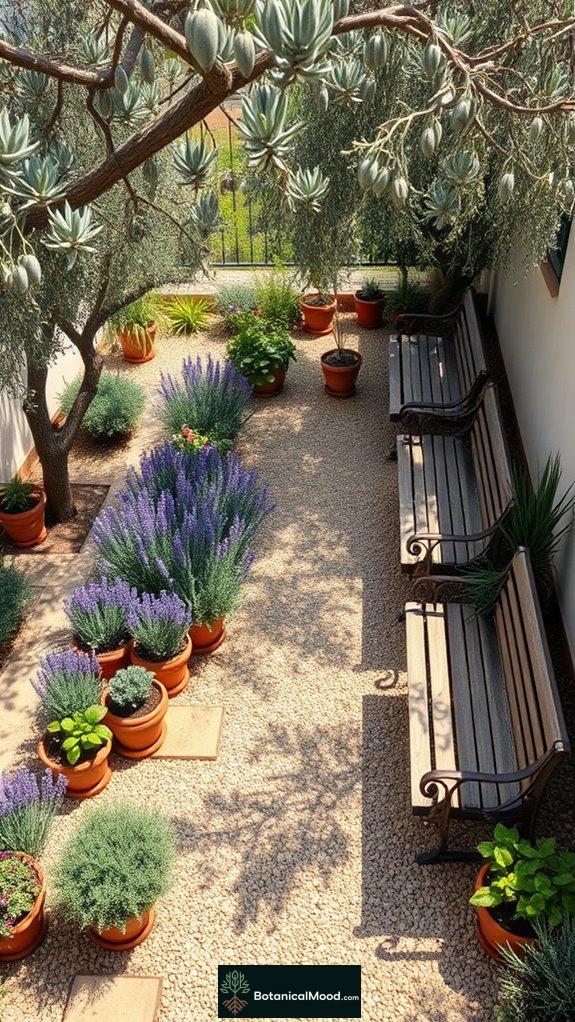
Creating a Mediterranean herb sanctuary brings a sense of tranquility and beauty to my garden, as I carefully select plants that thrive in warm, sun-soaked climates.
My herb sanctuary design features olive trees as focal points, surrounded by vibrant lavender and fragrant rosemary. I incorporate thyme and sage for culinary delights, while basil and oregano fill the air with freshness.
Olive trees stand tall, embraced by lavender and rosemary, while thyme, sage, basil, and oregano create a fragrant culinary haven.
Terracotta pots cluster beautifully, adding warmth and authenticity, and rustic benches invite relaxation.
This harmonious blend of Mediterranean plant choices creates a serene oasis, inspiring me to share my passion through Botanical Mood, where I celebrate the beauty of garden design.
Companion Planting Strategies for Herbs
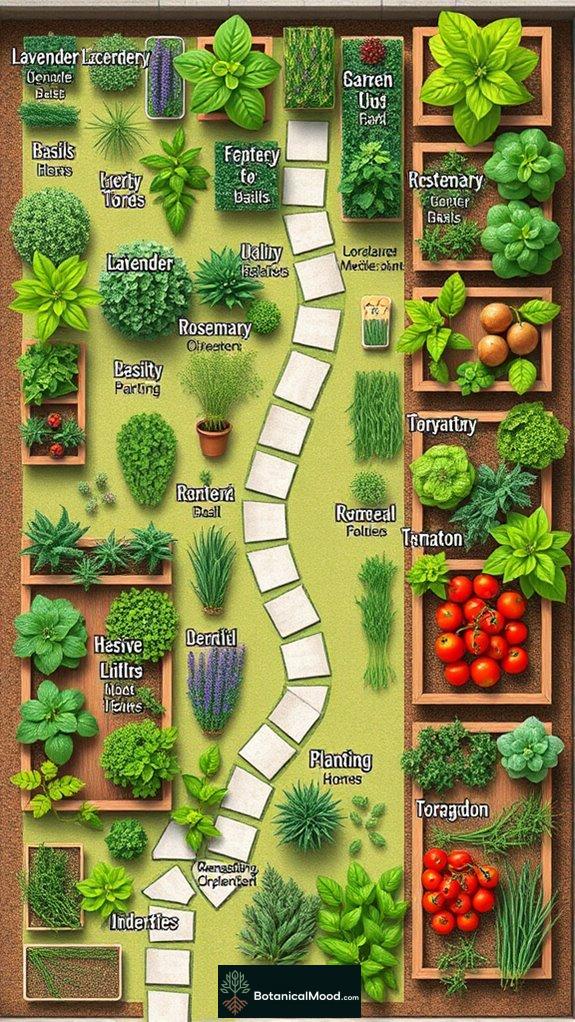
Companion planting strategies for herbs not only enhance the health of your garden but also create a thriving ecosystem that benefits all your plants.
By understanding herb compatibility and utilizing natural pest repellents, you can optimize your garden's potential.
Consider these effective combinations:
- Lavender and Rosemary – Both thrive in full sun and well-drained soil.
- Basil and Tomatoes – Basil enhances tomato flavor and growth.
- Dill and Cilantro – Attract beneficial insects like ladybugs.
- Oregano and Tarragon – Oregano deters pests targeting basil.
These partnerships elevate both aesthetics and function in your herb garden.
Mediterranean Herb Garden Arrangement
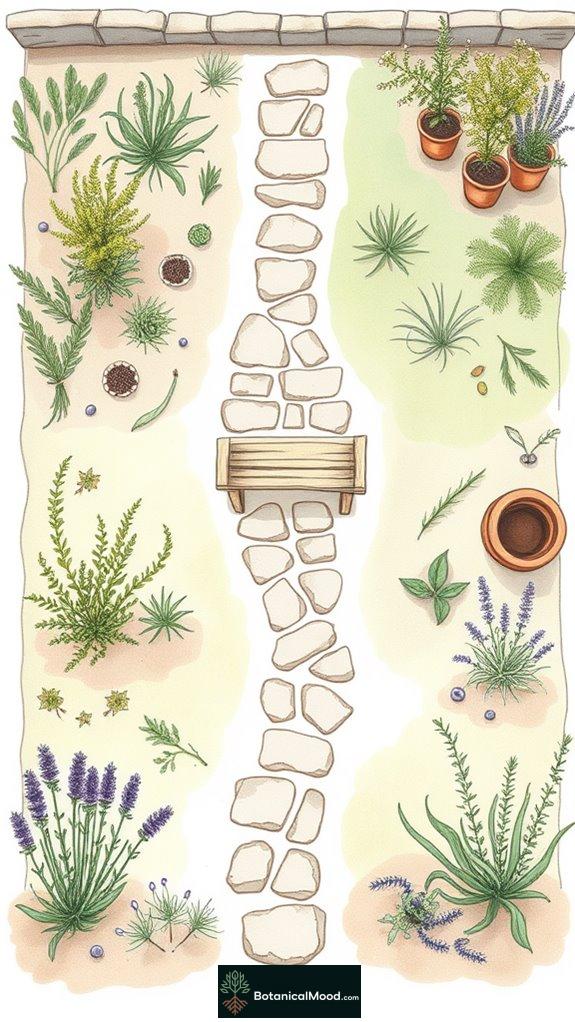
Designing a Mediterranean herb garden arrangement offers a delightful blend of functionality and beauty, as these fragrant herbs not only enhance culinary creations but also bring a touch of elegance to any outdoor space.
When selecting herbs, I focus on options like oregano, thyme, and rosemary, which are essential for Mediterranean cuisine.
I love layering my garden with low-growing lavender and tall sage, creating visual interest while providing easy access for harvesting.
Incorporating decorative elements like terracotta pots and stone paths enhances the aesthetic, while ensuring ample sunlight exposure and well-drained soil guarantees healthy growth.
This makes my garden a true delight.
Mediterranean Herb Companion Planting Layout

When planning a Mediterranean herb companion planting layout, I find it fascinating how certain herbs can enhance not only each other's growth but also the flavors they bring to the kitchen.
To create a thriving garden, I focus on these key herb associations:
- Rosemary, Sage, and Thyme for flavor and pest control.
- Basil with Oregano and Sage to enhance tomato dishes.
- Lavender paired with Thyme and Hyssop for shared sunlight needs.
- Oregano and Marjoram, both thriving in drier conditions.
These planting techniques optimize growth while cultivating a vibrant, aromatic space, which inspired my website, Botanical Mood.
Garden Maintenance Responsibilities
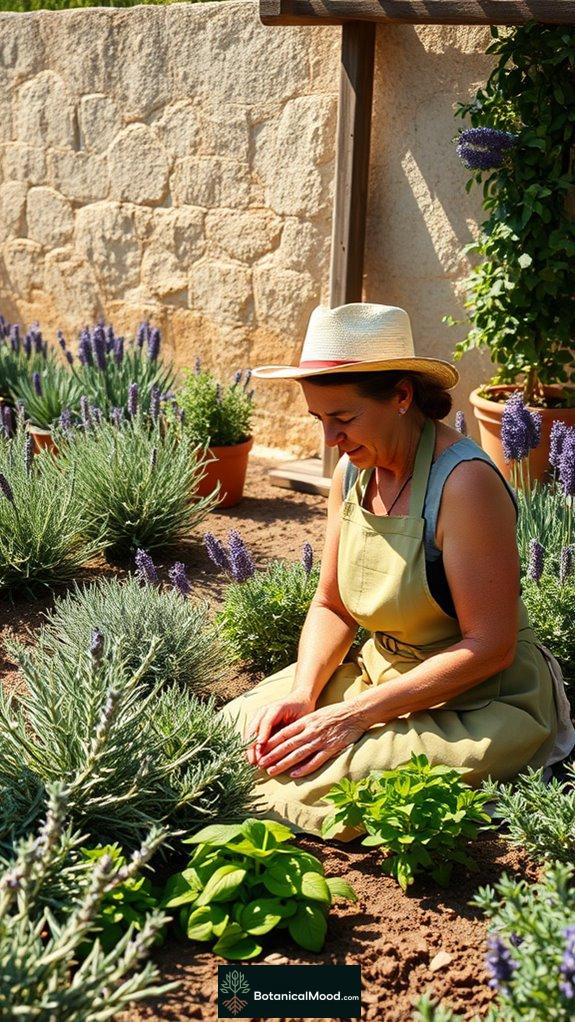
Maintaining a thriving herb garden involves a series of essential responsibilities that guarantee plants flourish and produce flavorful harvests.
Soil health is paramount, requiring organic amendments to enhance fertility and drainage. Effective watering techniques prevent over-saturation, while pruning strategies promote bushy growth and deter pests.
Soil health and effective watering are key to nurturing robust herbs and fostering lush, pest-resistant growth.
Seasonal maintenance includes evaluating herb selection and adjusting care based on growth monitoring. Weed management is crucial to prevent competition for nutrients.
Incorporating innovative garden design guarantees an aesthetically pleasing layout, enhancing the overall experience. These responsibilities inspire the creation of Botanical Mood, where a love for herb gardening flourishes through shared knowledge and beautiful designs.
References
- https://thehomesteadchallenge.com/growing-herbs-in-raised-beds/
- https://theherbalacademy.com/blog/designing-an-herb-garden/
- https://meadowlarkjournal.com/blog/raised-bed-herb-garden
- https://www.gardenersworld.com/how-to/grow-plants/how-to-create-a-herb-garden/
- https://www.finegardening.com/article/an-herb-garden-in-three-parts
- https://lovelygreens.com/grow-outdoor-herb-garden-diy-herb-spiral/
- https://gardeningsolutions.ifas.ufl.edu/design/landscaping-for-specific-sites/spiral-herb-garden/
- https://www.backyardharvestproject.com/blog/how-to-plant-a-herb-spiral
- https://bonnieplants.com/blogs/diy-garden-projects/planting-a-spiral-herb-garden
- https://www.backyardharvestproject.com/blog/garden-project-herb-spiral-part-1