Mosquitoes turned my backyard into their personal all-you-can-eat buffet. Until I took back control.
I started by dumping every water source I could find—birdbaths, old tires, gutters so clogged they were basically mosquito nurseries. Bti became my secret weapon when things got desperate.
Herbs became my new obsession. Lavender, rosemary, marigolds. Not exactly subtle, but bugs hate them. My garden looked like a cottagecore fever dream.
Screens went up. Yellow bulbs replaced white ones. I smelled like a walking citronella candle.
The drainage fixes? Tedious. Necessary. Weirdly satisfying.
Natural Mosquito Repellent Garden Design: How Strategic Planting Saves Summer Nights
Last July, I redesigned my entire patio border after watching my dog get swarmed during his evening routine. Mapped sun patterns, soil drainage, wind direction—way more planning than my actual career projects. Planted lemongrass, basil, and catnip in raised beds near seating areas. Integrated gravel pathways for dry conditions mosquitoes despise. Added a small water feature with a fountain—moving water only—because stagnant pools are essentially bug Airbnb. Companion planting with nasturtiums and alliums created living barriers. My dog now naps outside undisturbed. The space feels intentional, not defensive. Sometimes the best pest control looks like good landscaping.
Quick Takeaways
- Remove standing water sources and use larvicides like Bti to prevent mosquito breeding.
- Install fine mesh screens and seal gaps in doors and windows to block pest entry.
- Use natural repellents with essential oils like citronella, lavender, or peppermint around pet areas.
- Plant pest-repelling, pet-safe plants such as lavender, rosemary, and marigolds in landscaping.
- Minimize outdoor lighting at night with yellow “bug lights” and motion sensors to reduce insect attraction.
Understand How Mosquitoes Breed and Spread Near Pet Areas
Understanding how mosquitoes breed and spread near pet areas is essential for effective mosquito control, especially since these insects rely heavily on stagnant water sources and organic matter to reproduce.
Mosquitoes, primarily Aedes aegypti (Linnaeus) and Culex quinquefasciatus (Say), lay eggs in standing water found in birdbaths, discarded tires, and clogged gutters, often unnoticed by pet owners. These ideal breeding sites provide a fertile environment for the larvae to develop, accelerating mosquito population growth.
Recognizing these key habitats empowers you to target specific areas, disrupting breeding cycles and asserting control over mosquito populations around your pet’s environment efficiently and decisively. Creating catio spaces with safe climbing plants can provide enrichment for pets while helping to naturally deter insects from congregating in outdoor pet areas. Installing windbreaks for outdoor pet play areas can also reduce mosquito activity by minimizing standing water accumulation and creating less favorable breeding conditions.
Eliminate Standing Water and Improve Drainage in Your Pet Yard
Eliminating standing water and enhancing drainage are pivotal steps in maintaining a safe and healthy yard for pets, especially in areas prone to frequent rainfall or high humidity. I recommend inspecting low-lying zones where water accumulates after storms—scrutinize for soil compaction or inadequate slope that impedes runoff.
Installing French drains (subsurface drainage systems) or adjusting terrain grades guarantees swift water dispersal, preventing mosquito breeding habitats created by stagnant pools. Use permeable materials like gravel or decomposed granite in pathways to facilitate drainage.
Incorporate plantings such as *Lythrum salicaria* (purple loosestrife) to absorb excess moisture, creating an environment inhospitable for pests.
Keep the Area Clean by Removing Trash and Debris
Keeping the outdoor area free of trash and debris is essential to prevent pests such as insects and rodents from establishing habitats near your yard, which can threaten both pet health and overall garden hygiene. Trash heaps, discarded containers, and organic waste like leaves or grass clippings serve as breeding grounds for pests like Aedes aegypti (mosquitoes) and Rattus norvegicus (brown rats).
Regularly removing debris from flower beds, compost piles, and pathways disrupts pest nesting sites. Professional trash collection and secure compost bins prevent further infestation. A well-maintained yard with stylish decorative trim around garden beds and coop areas can also help define boundaries that make regular cleaning more efficient and organized. Creating designated scent garden areas can provide enrichment for your pets while maintaining clear zones for regular maintenance and debris removal.
Maintaining a tidy, debris-free environment creates a powerful barrier, reinforcing your garden’s defenses against invasive species and safeguarding your outdoor sanctuary.
Use Natural Repellents Like Citronella and Lavender to Keep Mosquitoes Away
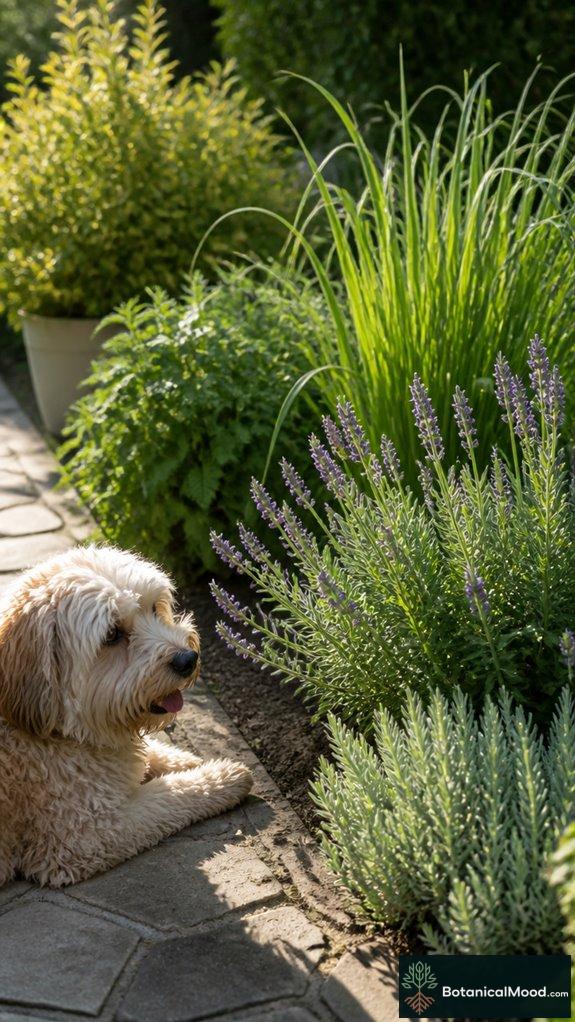
Have you ever wondered why certain scents like citronella (Cymbopogon nardus) or lavender (Lavandula angustifolia) seem effective at repelling mosquitoes (Culex spp., Aedes aegypti)? Their strong, aromatic properties interfere with mosquito olfactory receptors, overpowering attractant compounds like lactic acid and carbon dioxide.
Commercial products from brands such as Thermacell or Repel utilize these natural essential oils for targeted protection. Proper application boosts their repellent power—lavender oil applied in diffusers or citronella candles on outdoor terraces creates a formidable barrier. For pet-friendly outdoor spaces, natural turf deodorizers can complement these scent-based repellents while maintaining a safe environment for animals.
Harnessing these botanical scents provides an eco-friendly, potent line of defense, especially in gardens with diverse plant species designed to maximize repellent effects naturally. Ornamental grasses like feather reed grass can also contribute to a multi-layered garden defense by adding rustling sounds that may further deter certain insects.
Plant Mosquito-Repelling Herbs Around Your Pet Run
Planting mosquito-repelling herbs around your pet’s outdoor run creates a natural barrier that deters these persistent insects while providing a pleasant, aromatic environment for your animals.
Herbs like basil (Ocimum basilicum), lemon eucalyptus (Corymbia citriodora), and pennyroyal (Mentha pulegium) are highly effective, releasing essential oils that repel mosquitoes through volatile compounds.
Strategic placement along fences, entry points, and shaded areas optimizes their protective benefits.
Choosing hardy varieties guarantees year-round efficacy, while targeted cultivation emphasizes their absorbing, aromatic, and visual qualities.
This approach, rooted in organic garden design principles, combines botanical potency with aesthetic appeal, empowering you to create an insect-resistant, pet-friendly outdoor space.
Set Up Fine Mesh Screens and Physical Barriers to Block Bugs
Installing fine mesh screens and sturdy physical barriers around outdoor pet areas offers an effective method for blocking the entry of mosquitoes (Culex spp.), flies (Muscidae), and other persistent bugs.
- Use professional-grade, rust-proof aluminum or fiberglass mesh, such as Phifer SunTex or NO-See-Um, ensuring no gaps for tiny bugs to penetrate.
- Reinforce door and window frames with weatherstripping to seal seams, preventing pest infiltration.
- Install retractable or fixed screens on patios, decks, or enclosures, creating a bug-proof perimeter tailored to animal activity zones. Similar to how coyote fence rollers prevent dogs from escaping garden fences, properly installed screens create an impenetrable boundary that keeps unwanted pests out.
- Utilize magnetic or latch closures for ease of access while maintaining an impenetrable barrier, optimizing both safety and containment.
- Consider setting up DIY ice licking stations in screened areas to provide cooling relief for your pets during warm months while keeping them protected from insects.
Limit Outdoor Lighting at Night to Reduce Insect Attraction

Reducing insect attraction during nighttime hours hinges considerably on how outdoor lighting is managed, as many insects—particularly mosquitoes (Culicidae), moths (Nocturidae), and midges—are drawn to artificial light sources due to their phototactic behavior. To minimize this, switch to warm, yellow “bug lights” like the INDOOR/OUTDOOR LED Bulb (Philips) and install motion-activated fixtures to limit light spillage. For those with dogs, selecting dog-friendly grass seed mixes in landscaping can further reduce pest habitats around outdoor areas. Creating accessible outdoor spaces with ramps for senior pets ensures that all animals can safely navigate gardens while benefiting from reduced insect exposure during evening hours.
| Light Type | Color Temperature | Placement Recommendations |
|---|---|---|
| Incandescent | Warm, yellow tones | Keep fixtures 10–15 feet above ground |
| Fluorescent | Cool, bluish hues | Aim downward, away from seating areas |
| LED | Adjustable | Use shields to direct light downward |
Camouflage or Trim Overgrown Vegetation Near Your Pet Space
Overgrown vegetation near your pet’s outdoor space can serve as an inviting sanctuary for pests such as fleas (Ctenocephalides felis), ticks (Ixodida), and other insects that pose risks to animal health. To prevent infestation, take control by:
Overgrown plants near pets attract pests like fleas and ticks, risking their health.
- Trimming dense shrubbery like Ligustrum (Ligustrum vulgare) and overgrown hedges with sharp pruning shears, reducing hiding spots.
- Removing leaf litter and tall grass, which create dark, damp environments attractive to pests.
- Choosing low-maintenance, pest-resistant plants such as Lavender (Lavandula angustifolia) and Rosemary (Rosmarinus officinalis) for ground cover. Alternatively, consider planting a dog-friendly clover lawn as a safe and natural ground cover option that discourages pests while remaining non-toxic to pets.
- Regularly inspecting and edging the perimeter, creating a clear boundary that discourages pests from encroaching.
- Utilizing non-toxic plant choices in your landscape design ensures that your pest prevention efforts won’t harm your pets or family members.
Monitor and Remove Mosquito Breeding Sites and Bug Nests Regularly
Keeping your yard free of stagnant water, debris, and hidden nooks is essential in preventing mosquitoes (Culicidae) from establishing breeding sites that can turn outdoor spaces into health hazards. Regularly inspect containers, gutters, and plant saucers—especially after rainstorms—and treat standing water with larvicides like Bacillus thuringiensis israelensis (Bti). Remove bug nests from tree cavities, shrubs, and under decks using appropriate tools. Prioritize high-risk areas such as water features and neglected corners. To elevate your pest control strategy, utilize products like Reed’s mosquito dunks or Talstar Professional insecticide, and schedule inspections weekly for ideal results and long-term outdoor health security. When exploring your garden, consider using collapsible pet bowls to stay hydrated during outdoor pest management activities. Additionally, installing safe cat bell collars on outdoor cats can help protect bird populations while you manage the surrounding pest environment.
| Subtask | Key Action | Zone Focus |
|---|---|---|
| Water Source Management | Empty or treat stagnant water sources | Driveway drains, birdbaths |
| Vegetation Inspection | Remove nests from shrubs, trees, structures | Shrubbery, tree cavities |
| Debris Removal | Clear fallen leaves, clutter, debris | Under decks, garden beds |
| Routine Monitoring | Schedule weekly inspections and treatments | Entire yard |
Herbal Spray for Pet Areas
Are you seeking a natural and pet-safe solution to ward off insects around your furry friends? I recommend creating a powerful herbal spray using concentrated extracts of mosquito-repellent plants like citronella (Cymbopogon nardus), lavender (Lavandula angustifolia), peppermint (Mentha piperita), and eucalyptus (Eucalyptus globulus). For additional garden protection, consider complementing your herbal spray with thorny plants that provide a physical barrier against pests. Castile soap acts as a natural emulsifier to help blend the essential oils with water for better distribution and effectiveness.
Create a natural, pet-safe herbal spray with citronella, lavender, peppermint, and eucalyptus to repel insects effectively.
- Combine 1 cup of distilled water with 10 drops each of essential oils.
- Mix thoroughly in a spray bottle, preferably amber to preserve potency.
- Shake before application to maintain botanical efficacy.
- Spray generously around pet resting areas, entry points, and shaded corners, creating an invisible protective barrier that repels bugs naturally and safely.
Vertical Plant Wall Feature
A vertical plant wall feature transforms unused vertical spaces into living, dynamic artworks that enhance both aesthetics and biodiversity in garden settings. By deploying modular systems like WoollyPocket (Pachyphytum spp.), or utilizing vertical planters with integrated irrigation, you create a powerful barrier against pest entry points.
Selecting plants such as lavender (Lavandula angustifolia), rosemary (Rosmarinus officinalis), or marigolds (Tagetes spp.) strategically deters insects while fostering beneficial pollinators. Incorporating native species ensures resilient growth and ecological balance. These vertical installations can also incorporate treat hiding toys to encourage natural foraging behaviors and environmental enrichment.
Choosing structures with mesh or trellis supports sturdiness. A well-designed vertical garden amplifies biodiversity, controls pest access, and elevates your scenery’s visual command. These vertical installations work particularly well when integrated into dog runs, as natural grass alternatives for pet areas can be paired with pest-deterring plant walls to create a comprehensive, dog-friendly outdoor environment.
Creating Non-Toxic Pathways
Creating non-toxic pathways in a garden involves selecting natural, environmentally friendly materials that prioritize safety for children, pets, and beneficial insects.
- Use crushed granite or decomposed granite (DGA), which provides durable, non-slip surfaces that resist pests and microbial growth.
- Opt for shaded mulches like cocoa hulls (Theobroma cacao shells) or hardwood bark, avoiding chemicals, for organic, pest-repellent pathways.
- Incorporate permeable flagstones, such as sandstone or limestone, to facilitate water runoff and prevent puddling.
- Integrate stepping stones of recycled bricks or locally sourced slate, creating defined routes that deter crawling bugs while enhancing aesthetic appeal.
- Plant safe aromatic plants along pathway edges to naturally repel insects while maintaining a dog-friendly garden environment.
FAQ
Are Chemical Repellents Safe for Pets?
Yes, chemical repellents can be safe for pets if used properly, but I always recommend reading labels carefully and consulting my vet. I prefer natural remedies to avoid any risk, keeping my pets and family safe.
How Often Should I Replace Natural Repellents?
I replace natural repellents every few weeks, like invigorating a garden’s defense. Regularly updating them keeps pests at bay, empowering me to maintain control without relying on harsh chemicals. Consistency guards my space effectively.
Which Pests Are Most Attracted to Outdoor Pet Areas?
Mosquitoes and fleas are most attracted to outdoor pet areas. I recommend using powerful repellents, keeping the area clean, and removing standing water to effectively protect your pets and maintain control over these persistent pests.
Can Certain Plants Inadvertently Attract Bugs?
Ever wondered if plants might be unintentionally inviting bugs? Yes, some plants attract pests with their nectar, scent, or shelter, so choosing bug-resistant varieties gives you the power to keep your outdoor space bug-free and in your control.
How Can I Identify if Bugs Are Harming My Pets?
I quickly notice if my pets show signs of itching, biting, or skin irritations, and I examine their fur or skin closely. Any unusual behavior or symptoms signals potential bug-related harm, prompting immediate action to protect them.
Summary
By implementing these strategic, non-toxic measures—such as natural repellents, planting mosquito-repelling herbs like *Pelargonium graveolens* (geranium), and maintaining proper drainage—you’ll create a safer environment for your pets and reduce nuisance insects effectively. Yet, with each step, a new element might emerge, revealing hidden breeding grounds or overlooked vulnerabilities. Stay vigilant; the subtle balance between garden beauty and pest management is a delicate dance, and the next discovery might just be the key to complete pest-free peace.