I learned the hard way that my dog doesn’t care about my lawn goals. After he turned my backyard into a dirt track, I finally got smart.
Overseed in spring or fall. Kentucky bluegrass works wonders. Aerate first. Water gently. Your dog will still destroy it, but slower.
Pet Lawn Design Ideas That Actually Survive Dogs
My neighbor laughed when I installed a gravel border path. “Too ugly,” she said. Now her dog tears through her flower beds while mine follows the designated route. I added raised beds with sturdy ornamental grasses. Boxwood hedges create natural barriers. The border collie still wins sometimes, but the zoysia grass in the center holds up. Functional beats perfect every time.
Quick Takeaways
- Overseed with pet-safe grass varieties like fine fescues or perennial ryegrass to improve density and resilience.
- Prepare the lawn by aerating, removing debris, and mowing low before overseeding for better seed contact.
- Water frequently with gentle sprays during germination, gradually reducing volume as the grass establishes.
- Choose durable groundcover materials like flagstone to create a stable, long-lasting pet-friendly outdoor space.
- Plant non-toxic, native species to keep your lawn safe and healthy for pets while promoting lush growth.
Why Overseeding Your Dog-Friendly Lawn Makes a Difference
Overseeding a dog-friendly lawn is an essential practice that helps maintain a lush, resilient turf capable of withstanding high foot traffic and the frequent wear caused by canine activity.
By introducing high-quality grass seed—such as Kentucky bluegrass (Poa pratensis) or perennial ryegrass (Lolium perenne)—you reinforce the existing grass, promoting density and quick recovery.
This process fills in bare patches, suppresses weeds, and enhances overall vitality, especially critical in areas subjected to frequent activity. For dog runs that experience particularly intense use, natural grass alternatives can complement traditional overseeding strategies to ensure maximum durability and pet safety.
Regular overseeding with durable, pet-safe varieties guarantees your lawn remains inviting, lush, and strong enough to face both daily walks and playful moments with your furry companions.
Just as you would secure balcony furniture for pets, creating a resilient lawn ensures your outdoor space is both safe and enjoyable for your active dogs.
Choosing the Best Grass Seed for Pet-Safe Lawns
Choosing the right grass seed is essential for establishing a pet-safe lawn that’s durable, lush, and resistant to the wear and tear inflicted by active dogs.
Selecting the right seed is key for a durable, safe, and lush lawn for your active pets.
I recommend low-maintenance, drought-tolerant varieties like fine fescues (Festuca spp.), which thrive in shady areas and resist pet urine damage. Tall fescue (Festuca arundinacea) offers deep root systems for resilience.
Perennial ryegrass (Lolium perenne) provides quick germination and dense coverage.
Look for mix brands such as Pennington or Scotts, ensuring they contain non-toxic, pet-friendly blends.
Selecting high-quality seed adapted to your climate from local garden centers in spring increases success, creating a vibrant, safe space for your furry friends.
When Is the Best Time to Overseed? Timing Tips for Success
Timing is vital when it comes to overseeding your pet-safe lawn, and the ideal windows typically fall during early spring (March to April) or early fall (September to October).
These periods offer ideal soil temperatures—between 50°F to 65°F (10°C to 18°C)—which promote germination while avoiding extreme heat or cold stress. I recommend monitoring local climate patterns, as consistent moisture and moderate temperatures are essential for seed establishment. Using seed protection blankets during these critical periods can significantly improve germination rates and protect newly sown seeds from disturbance.
Overseeding in these windows ensures ample time for grass roots, such as Kentucky bluegrass (Poa pratensis) or fine fescues (Festuca spp.), to develop before seasonal extremes, creating a resilient, lush turf. Consider incorporating safe aromatic plants alongside your overseeding efforts to enhance your dog-friendly garden while maintaining a healthy lawn environment.
Preparing Your Lawn: Clear, Aerate, and Mow for Better Results
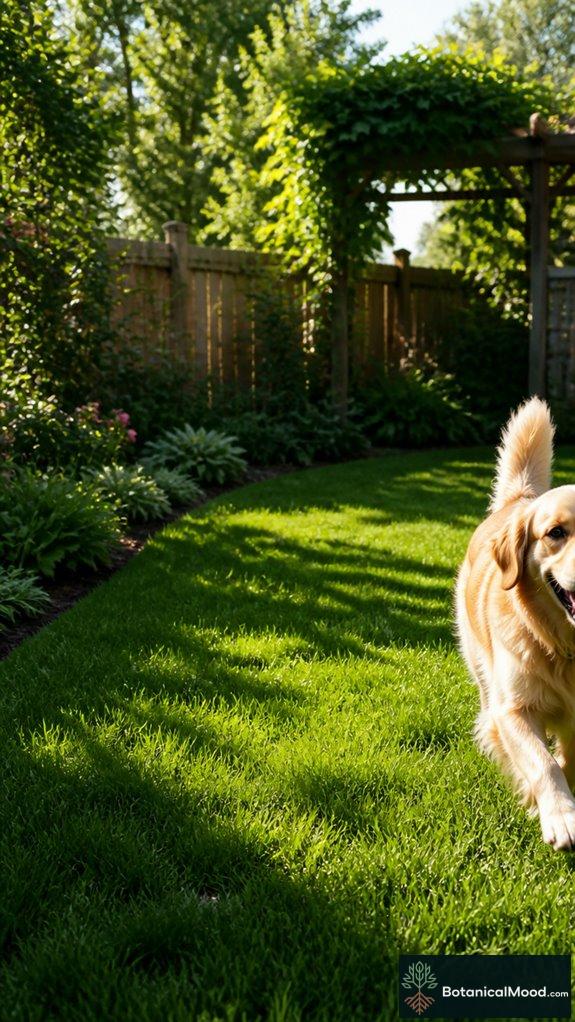
Before overseeding your pet-safe lawn, it’s essential to start with a thorough preparation process that sets the foundation for successful grass establishment. I recommend clearing debris like sticks, rocks, and excessive thatch using a dethatching rake or power rake to improve soil contact.
Aerate the compacted soil with a core aerator (such as the Lawn Solutions core aerator) to enhance nutrient and water penetration. For targeted treatment of damaged areas, handheld soil aerators are particularly effective for addressing concentrated dog urine spots before reseeding.
Mow your existing grass low, around two inches, to promote even seed contact.
These steps create a healthy, receptive environment, ensuring the new seed, like perennial ryegrass (Lolium perenne) or fine fescues (Festuca spp.), can thrive and establish robustly.
How to Water and Care for Your Lawn After Overseeding
After overseeding your pet-safe lawn—including perennial ryegrass (Lolium perenne), fine fescues (Festuca spp.), or a tailored blend—consistent watering becomes essential for seed germination and root establishment.
I recommend keeping the soil consistently moist, applying light, frequent waterings (around twice daily initially) with a garden hose or sprinkler system, ideally early morning and late afternoon.
Avoid heavy watering that leads to runoff or puddling.
As seedlings emerge over the next few weeks, gradually reduce frequency while increasing depth.
Use a gentle, adjustable spray nozzle to minimize soil disturbance and give your lawn the steady moisture needed for a lush, durable, pet-safe turf. For additional lawn protection, consider installing solar-powered doors to prevent pets from accessing newly seeded areas during vulnerable establishment phases. Consider adding colored garden markers to help you identify newly seeded areas and track your lawn’s progress as it establishes.
Troubleshooting Common Overseeding Problems and Fixes
When overseeding your pet-safe lawn, one of the most common issues encountered is patchy germination or uneven growth, which can stem from inconsistent seed distribution or inadequate soil contact.
To troubleshoot, guarantee even seed scattering with a calibrated broadcast spreader like the EarthWay model, followed by light raking to improve soil-seed contact.
Ensure even seed coverage using a calibrated spreader, then lightly rake to enhance soil contact and encourage germination.
Soil compaction or debris can hinder germination, so aerate areas with a manual or motorized aerator (e.g., LawnMaster).
Keep the soil consistently moist, avoiding pooling or dryness, to foster uniform growth.
Addressing these factors promptly reduces bare spots and promotes fuller, lush turf for your pet’s safe play area.
High-Quality Seed Mixes
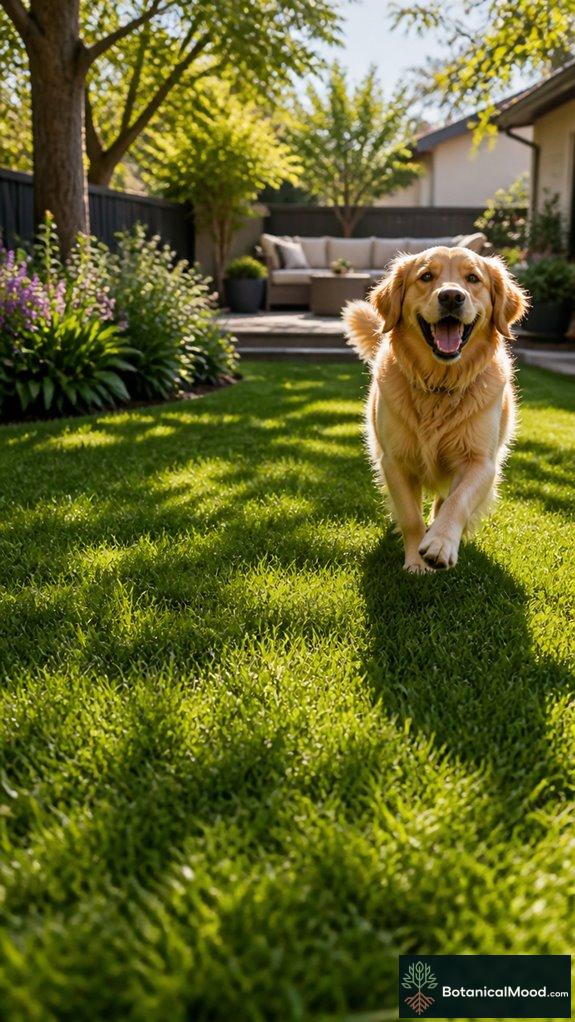
Selecting a high-quality seed mix is fundamental to establishing a resilient and pet-safe lawn that remains lush and vibrant over time.
I recommend choosing blends like Pennington’s Turf Types (Poa pratensis, Kentucky bluegrass, and fine fescues) or Scott’s Turf Builder mixtures, which emphasize disease resistance and drought tolerance.
Look for seed mixes with high germination rates and certified purity, ensuring superior quality. Organic options, such as those from Espoma, provide chemical-free choices suitable for pets.
Prioritize seed mixes tailored for your climate zone, whether USDA Hardiness Zone 5 or 8, to guarantee lush, durable turf that thrives, tolerates wear, and stays safe for your beloved pets.
Vertical Gardening for Pets
Vertical gardening offers an innovative solution for pet owners seeking to maximize green space without sacrificing safety or convenience. I’ve found that installing modular systems like the Gloriosa (Lilium) or WallGardens from Gardener’s Supply can transform limited areas into lush, pet-friendly retreats.
Using weather-resistant materials such as cedar or composite guarantees durability, while choosing non-toxic plants like basil, Ocimum basilicum reduces risks. Flagstone and other durable groundcover materials can also be incorporated into the base design to provide a safe, stable foundation for your vertical garden installation.
Vertical gardens not only optimize space but also provide sensory stimulation and shade, creating a microhabitat that benefits both pets and their owners. Similar to climbing structures for guinea pigs, vertical gardens encourage natural behaviors and physical activity that promote pet wellness. This approach connects you to a vertical ecosystem teeming with life and natural beauty.
Safe, Non-Toxic Plants Selection
Choosing plants for your pet-friendly garden requires careful attention to safety and toxicity.
I recommend selecting species like Spider Plant (Chlorophytum comosum), Boston Fern (Nephrolepis exaltata), and Parlor Palm (Chamaedorea elegans), which are known for their non-toxic properties.
Avoid plants such as Sago Palm (Cycas revoluta), Azaleas (Rhododendron spp.), and Tulips (Tulipa spp.), which can cause serious health issues for pets.
Opt for native plants from trusted nursery sources like Monrovia or Proven Winners, ensuring they’re free from harmful pesticides.
With mindful selection, your lush lawn can be both vibrant and safe, fostering a thriving environment for your pets.
FAQ
How Often Should I Reseed My Pet Lawn?
You should reseed your pet lawn every spring or fall, especially if patches appear or the grass thins. I recommend doing it annually to maintain lushness and resilience against pet wear and tear.
Can I Overseed During Winter or in Rainy Seasons?
Absolutely, you can overseed during winter or rainy seasons. I recommend timing it carefully to avoid overly wet soil, ensuring your new grass gets the best chance to establish, even in wetter or cooler months.
What Natural Fertilizers Are Best for Pet Lawns?
I recommend using organic options like compost, worm castings, or fish emulsion. They’re gentle on pets and boost your lawn’s health naturally, making your yard a safer, greener space for your furry friends to enjoy comfortably.
How Do I Repair Bald Patches Quickly?
You can repair bald patches quickly by raking away dead grass, loosening the soil, and overseeding with pet-safe grass. I promise, with regular watering, your lawn will bounce back, and your furry friend will love it again.
Are There Pet-Safe Alternatives to Traditional Grass?
Yes, there are pet-safe alternatives like clover, Vermont (or sheep’s) fleece, or eco-friendly turf. I recommend trying these options—they’re gentle for your pet, environmentally friendly, and add variety to your yard’s beauty and safety.
Summary
By selecting the right seed varieties, timing overseeding appropriately, preparing your lawn meticulously, and adopting consistent watering and care, you craft a resilient, lush, and pet-friendly turf. Incorporating vertical gardening and non-toxic plants further enhances safety, while troubleshooting common issues guarantees ongoing success. By merging botanical knowledge with strategic practices, you transform your outdoor space into a vibrant, durable sanctuary—an environment where your pets thrive alongside flourishing, resilient grass that withstands foot traffic and pet activity alike.