My lawn looked like a sad, forgotten wheat field last spring. Total disaster.
I grabbed a soil kit from the hardware store (maybe $12?), discovered my nitrogen was basically nonexistent. Shocking.
Liquid urea saved my weekends. Two weeks. Green again. No fancy lab needed, honestly.
I still overwatered because I’m anxious like that. Aeration helped. Kentucky Bluegrass filled the patches. My neighbor finally stopped judging me.
Small Front Yard Landscaping Ideas for Curb Appeal and Lawn Health
I once obsessed over my dying grass while ignoring the bigger picture. My front yard looked chaotic. Dead lawn. Mismatched shrubs. Zero cohesion.
A landscape designer friend visited. Laughed at my “lawn first” obsession.
She drew zones on a napkin: ornamental grasses for texture, raised beds for vegetables, permeable pathways for drainage. My Perennial Ryegrass suddenly thrived with less foot traffic. Smart design reduced my yellow patches permanently.
Sometimes the fix isn’t more fertilizer. It’s better planning.
Quick Takeaways
- Quickly apply water-soluble nitrogen fertilizers like urea or ammonium nitrate to stimulate rapid greening.
- Test soil pH and amend with lime or sulfur to correct imbalances causing deficiencies.
- Address pests or fungal issues promptly with organic or pet-safe treatments.
- Aerate and deep water early mornings to improve soil health and encourage root growth.
- Reseed with fast-germinating grass mixes such as Perennial Ryegrass or Kentucky Bluegrass.
Why Are My Lawn Patches Turning Yellow?
When lawn patches turn yellow unexpectedly, it often signals underlying issues related to nutrient deficiencies, soil conditions, or environmental stressors that disrupt the health of grass species such as Kentucky Bluegrass (Poa pratensis), Bermuda grass (Cynodon dactylon), or Fescues (Festuca spp.).
Nutrients like nitrogen, iron, or potassium might be lacking, or compacted soil could restrict root growth. Excessive heat, drought, or poor drainage further stress the turf, causing chlorosis and uneven coloration.
Recognizing these signs prompts immediate examination of soil health and environmental factors, essential steps in diagnosing the root causes of yellowing patches in your cherished lawn. Incorporating sustainable landscaping solutions like proper drainage systems and thoughtful garden design can help prevent these issues while enhancing your outdoor space aesthetics.
How to Test Your Soil for Nutrients and Deficiencies
Testing your soil for nutrients and deficiencies is an essential step in restoring health to yellowing patches, as it provides precise understanding into the chemical composition and fertility of your lawn’s substrate.
I recommend using second-generation soil test kits from brands like LabCorps, or professional laboratory analysis from services such as the University of Massachusetts Soil Testing Program.
Collect samples from multiple locations, avoiding recent amendments, and analyze for pH, macronutrients (nitrogen, phosphorus, potassium), and micronutrients like magnesium (Mg) and iron (Fe).
If you have pets, consider testing for pet pathogens in soil to ensure your garden is safe for both plants and animals. Certain dried culinary herbs can also support pet wellness when integrated into garden spaces.
This detailed profile reveals deficiencies or imbalances—information vital for targeted supplementation and soil amendments, restoring vibrancy to your garden patches efficiently.
Fast-Acting Fertilizers and Soil Amendments to Green Your Lawn
To rapidly restore vibrancy to yellowed lawn patches, it’s essential to apply fast-acting fertilizers and soil amendments that deliver immediate micronutrient and macronutrient boosts.
Boost yellowed lawns quickly with fast-acting fertilizers and micronutrient-rich soil amendments for vibrant green recovery.
- Use water-soluble Urea (CO(NH2)2) or ammonium nitrate with quick absorption.
- Apply liquid seaweed extracts rich in potassium (K) to stimulate cellular activity.
- Incorporate granular calcium nitrate for calcium (Ca) and nitrogen (N) supplementation.
- Use foliar feeds with trace elements like iron, manganese, and zinc, such as chelated products from brands like Microplex.
For pet owners with rock gardens, consider that pet-friendly sedum plants can also benefit from these nutrient treatments while keeping your landscape safe for animals.
Beyond chemical interventions, reclaiming damaged soil through organic amendments restores microbial activity and structure compromised by pet waste accumulation. These interventions guarantee swift nutrient uptake, revitalizing the chlorophyll synthesis process essential for lush, green growth.
Controlling Pests and Diseases Causing Yellow Lawn Patches
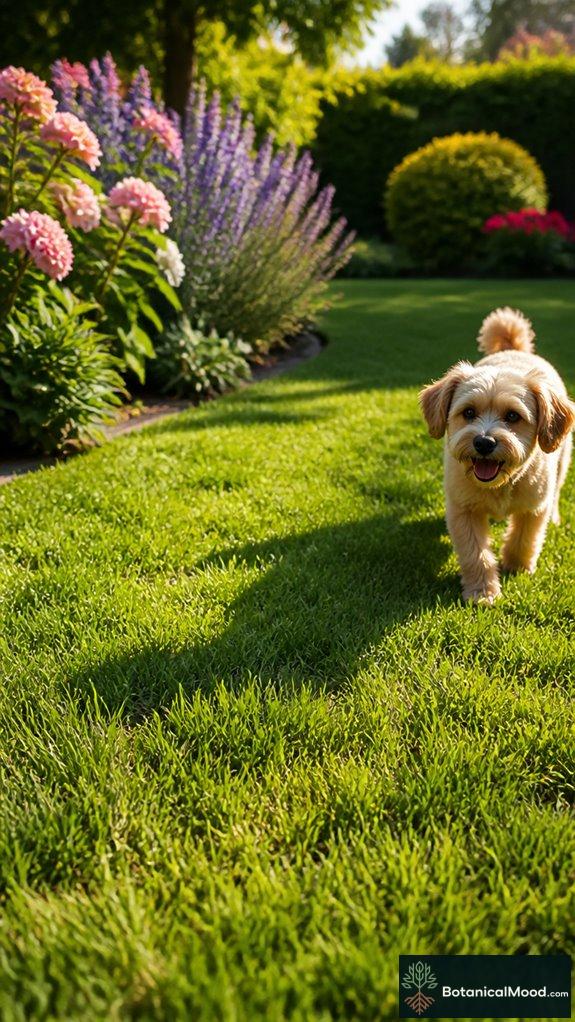
Yellow patches in lawns often stem from pest infestations or pathogenic infections that disrupt chlorophyll production and cellular integrity.
Grubs (Phyllophaga spp.) feeding under the soil damage roots, while fungal pathogens like Pythium (Pythium spp.) or Dollar Spot (Cladophyllum spp.) cause brown, yellow patches.
To control pests, I recommend applying targeted solutions such as beneficial nematodes or organic insecticides like Captain Jack’s Deadbug Brew. For pet-friendly gardens, diatomaceous earth offers a natural alternative that effectively controls lawn pests without harming your animals. For yard tick prevention around lawn perimeters, permethrin yard sprays provide targeted control while protecting your pets’ play areas.
For diseases, I rely on fungicides containing chlorothalonil or copper, applied promptly at the first sign of infection.
Regular inspection and proper lawn hygiene are essential, enabling early intervention and restoring your lawn’s lush vibrancy.
Preventative Tips for a Healthy, Green Lawn
A proactive approach to lawn care begins with establishing a strong foundation through proper soil health, adequate watering, and precise fertilization, which collectively foster vigorous grass growth and resilience against pests and diseases.
- Aerate your soil annually to reduce compaction and improve oxygen flow, ensuring roots like *Poaceae* (grasses) access nutrients efficiently.
- Water deeply and infrequently, ideally early morning, to encourage deep root growth while preventing fungal issues like *Dollar Spot* (*Sclerotinia homoeocarpa*). After winter activities, dry your pet’s paws and coat with microfiber pet towels to prevent moisture-related lawn damage and fungal spread.
- Apply a balanced, slow-release fertilizer such as Scotts Turf Builder or Milorganite to provide essential nutrients steadily.
- Test your soil regularly using kits from companies like Lamotte or LaMotte, adjusting pH levels and nutrient balance to optimize turf health.
- For high-traffic areas prone to wear, consider incorporating natural grass alternatives designed specifically for dog runs to maintain green coverage while reducing maintenance demands.
Reseed Kits for Dead Spots
When tackling dead spots in your lawn, selecting the right reseeding kit can considerably improve your chances of restoring a lush, uniform green surface.
Reseed kits like Scotts Turf Builder or Pennington One Step contain high-quality seed mixes—often a blend of Kentucky Bluegrass (Poa pratensis), Perennial Ryegrass (Lolium perenne), and Fine Fescue (Festuca spp.)—designed for quick germination and enduring growth.
These kits include specialized soil amendments, topsoil, and starter fertilizers to guarantee optimum nutrient uptake.
Applying during early spring or fall, with proper aeration, increases success. If you have climbing cats in your garden, using bitter apple sprays can help protect your newly seeded areas from damage while they establish.
This targeted approach allows you to reestablish vibrant, healthy turf, seamlessly blending with your existing lawn.
For pet owners with senior dogs, consider pairing your reseeding efforts with tactile garden paths that provide comfortable surfaces for aging pets to walk on while your lawn recovers.
Vertical Garden Wall Concepts
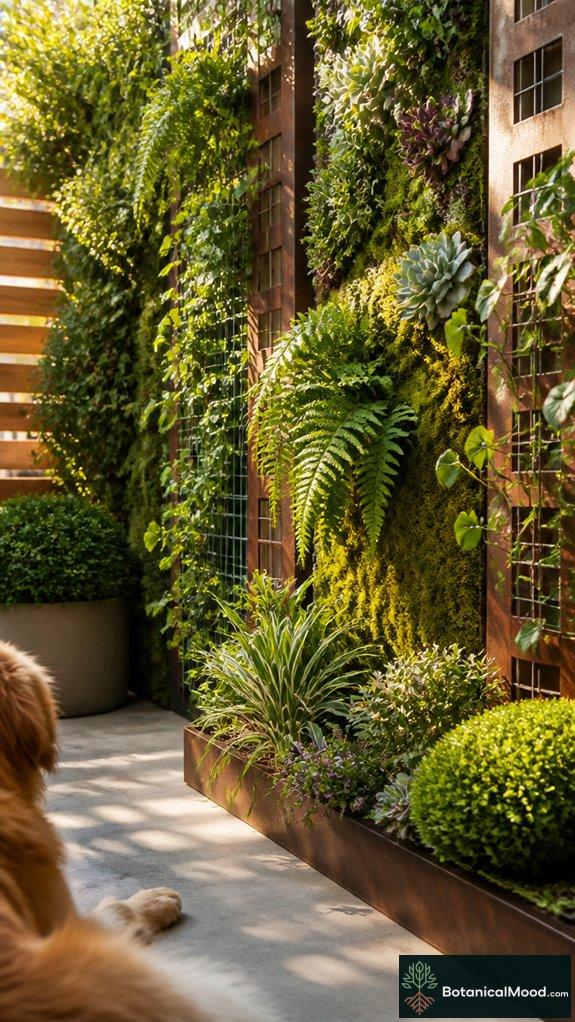
Vertical garden wall concepts offer an innovative approach to maximizing limited outdoor or indoor space by transforming blank vertical surfaces into lush, living displays.
- Modular panels, like those from Gardener’s Supply or GGreen Wall Systems, allow customization with diverse plant arrangements of Ferns (Polypodiopsida) or Succulents (Crassulaceae).
- Hydroponic systems, such as Linai’s AeroGarden, optimize water and nutrient delivery for rapid growth of Herbs (Ocimum basilicum) or flowering perennials like Echinacea (Echinacea purpurea).
- Living moss walls incorporate Hypnum or Bryophyte layers, adding texture and natural insulation.
- Trellises or wire grids, crafted from weather-resistant materials like Corten steel, support climbing plants like Clematis (Clematis spp.) or Bougainvillea.
- Vertical catio gardens utilize non-toxic climbing plants that are safe for cats while creating natural enrichment spaces within enclosed outdoor structures.
Safe Plants for Pets
For pet owners seeking peace of mind while cultivating greenery, understanding which plants are safe for pets becomes essential, especially given the variety of common household and ornamental species that can pose toxicity risks.
I’ve found plants like herbs (basil, mint), spider plants (Chlorophytum comosum), and certain succulents (Haworthia spp.) to be ideal choices. These species, with their non-toxic attributes and hardy nature, add visual interest without endangering furry friends. Echeveria succulents are another excellent option for cat owners, as they are completely non-toxic and provide beautiful rosette-shaped foliage that adds aesthetic appeal to any space.
Always verify Latin names and consult reputable sources like the ASPCA’s plant database. Incorporating these safe plants lets me enjoy my garden peacefully, knowing my pets remain protected. Beyond plant selection, implementing secure door latch hardware in garden access points further ensures pets cannot wander into unsecured areas.
FAQ
How Often Should I Water My Yellow Patches for Quick Recovery?
You should water your yellow patches once a day, early in the morning, ensuring the soil stays moist but not waterlogged. I recommend this routine to encourage quick recovery and help your plants bounce back vibrant and healthy.
Can Over-Fertilizing Cause More Yellow Patches?
Yes, over-fertilizing can worsen yellow patches because it burns roots and causes nutrient imbalances. I’ve learned that less is often more; I always follow instructions carefully and watch my plants closely for signs of stress.
What’s the Best Time of Year to Fix Yellow Lawn Spots?
Spring or early fall, when your lawn’s actively growing, is the best time to fix yellow patches. I’ve found these seasons give grasses the energy they need to recover quickly, making repairs more successful and satisfying.
Are Homemade Remedies Effective for Browning Patches?
Homemade remedies can work, but they’re often hit or miss. I’ve found that balancing nutrients and avoiding stress on plants makes a difference. Sometimes, blending simple solutions with proper care gives the best, most reliable results.
How Long Does It Take for Lawn Patches to Recover After Treatment?
You’ll see your lawn bounce back within a couple of weeks after treatment. I’ve watched patches turn lush and green again, like a gust of fresh air, as my care and patience gently restore your garden’s vibrant beauty.
Summary
Just as a seasoned gardener carefully examines soil health or pest activity, tending to yellow patches requires precise, informed care. I recall a fellow enthusiast whose quick soil test revealed magnesium deficiency, turning her struggle into a lush, vibrant lawn through targeted amendments. Addressing issues early—whether through nutrient tests, pest control, or reseeding—restores the integrity of your lawn much like restoring a masterpiece. With patience and the right tools, vibrant greenery can flourish once again, transforming your outdoor space into a living work of art.