My dog melted into a puddle last July. Literally. Poor Buster just flopped onto the patio, defeated.
So I got obsessive. Light meters. Shadow tracking. Turns out my oak tree (*Quercus rubra*) was doing 60% of the work already.
I added a Coolaroo canopy at 35°. Game changer.
Buster lives again.
Smart Garden Design for Pet-Friendly Outdoor Spaces
Last spring, I killed a lavender hedge. Overwatered, underwatered, who knows. Dead.
That failure taught me everything about drainage, soil composition, and why my shaded run needed raised beds instead. I integrated permeable pavers, native *Echinacea* for pollinators, and a rain garden that actually works. Companion planting with *Nepeta* keeps mosquitoes away. My vet approved. Buster approves. Mostly.
Quick Takeaways
- Analyze sun patterns to strategically place natural and artificial shade structures for optimal coverage.
- Combine durable materials like pergolas, shade sails, and UV-resistant fabrics for effective, long-lasting shading solutions.
- Incorporate natural canopies and dense foliage to create continuous, biodegradable shelter zones.
- Regularly assess and adjust shading setups to compensate for sun movement and weather changes.
- Design shaded areas that prioritize pet safety, comfort, and seamless integration with garden aesthetics.
Assess Your Garden’s Sun Exposure to Find the Hotspots
Understanding your garden’s sun exposure is the foundational step in designing effective shading strategies for pet runs during the summer months. I analyze how sunlight moves across your setting, paying attention to the intensity and duration in key areas—especially where your pets will spend most time.
Use tools like light meters or observe shadow patterns throughout the day, noting hotspots that receive full sun all afternoon. Document areas with dappled shade beneath mature trees (Quercus spp.) or structures like pergolas.
Identifying these sun-drenched zones helps prioritize where to implement shade solutions later, ensuring your pets stay cool and safe in the hottest hours.
Pick the Right Shade Solutions for Your Garden and Budget
Choosing the right shade solutions depends heavily on your garden’s specific conditions, budget constraints, and aesthetic preferences.
For swift coverage, consider UV-resistant fabric canopies like Apeixoto’s retractable models, which offer durability and easy customization.
Wooden pergolas, made from cedar (Cedrus spp.) or composite materials, provide longevity and a natural look fitting for traditional or rustic gardens.
Shade sails from SunGuard or ShadeTent deliver flexible coverage at varied price points.
Installing sturdy structures like steel or aluminum frames guarantees long-term strength.
Shade sails are among the most popular options reviewed for their combination of affordability and effective UV protection for outdoor pet areas.
Align your choice with your desired proportional coverage, ventilation needs, and visual harmony, ensuring an effective, sustainable shading system that maximizes pet comfort and garden ambiance.
Use Natural and Artificial Materials to Create Effective Shade
In creating effective shade for a summer garden pet run, selecting between natural and artificial materials offers a versatile array of options that can be tailored to both aesthetic preferences and functional needs. Natural materials, such as dense deciduous trees (e.g., Quercus alba) and bamboo (Bamboideae), provide biodegradable options with appealing textures and seasonal shading. These planted areas can also serve as grazing zones where rabbits and other small mammals can safely forage. When selecting plants for your pet run, it is essential to prioritize non-toxic plant species that won’t harm your animals if ingested. Conversely, artificial options like UV-resistant shade fabrics from brands such as Twilight or Coolaroo deliver durability, precise coverage, and consistent sun protection. Combining these materials strategically can maximize shade efficiency, resist weathering, and enhance visual harmony, making the pet run a resilient, comfortable sanctuary amid summer’s intense heat.
Install and Position Shade Structures for Maximum Coverage
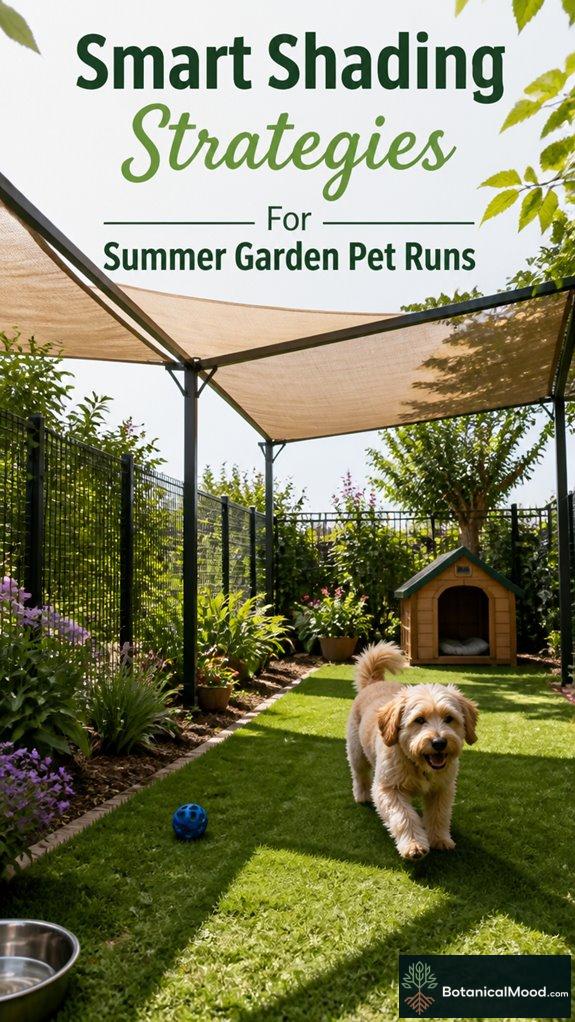
Proper installation and strategic positioning of shade structures play a essential role in ensuring maximum coverage and ideal protection from the summer sun’s intense rays.
To maximize coverage, consider the movement of the sun, noting its seasonal shifts—solar angles vary from approximately 75° during summer solstice to 15° near the winter solstice.
Use durable materials like galvanized steel (for stability) combined with UV-resistant fabrics such as shade cloths from brands like Coolaroo or ShadePro.
Position structures at suitable angles—generally 30-45°—to prevent shadow gaps during peak sunlight hours, and align edges to block prevailing breezes.
For year-round pet protection, consider complementary structures like cold frame greenhouses that provide shelter during colder months while maintaining proper ventilation.
- Precise sun path analysis for suitable placement
- Use robust, weather-resistant frameworks with high tensile strength
- Orient structures for minimal shadow gaps at peak hours
Maintain and Adapt Your Garden Shade Throughout Summer
Maintaining and adapting your garden shade throughout the summer requires regular oversight, as both natural conditions and plant growth patterns influence the effectiveness of shading solutions. Sudden heatwaves or shifting sun angles, like those from the late afternoon (around 4 p.m.), demand adjustments to guarantee optimal protection. Proper air circulation and ventilation will help prevent heat buildup and keep your garden pets comfortable during the hottest parts of the day. For additional visual interest and light management, consider incorporating crystal prisms into your shaded garden areas to create dynamic lighting effects while maintaining pet comfort.
| Adjustment Type | Key Consideration |
|---|---|
| Repositioning | Move shade sails or umbrellas (e.g., Budget Shade) to counteract sun drift. |
| Reinforcement | Add supplemental shading, such as shade cloth (Optex) for persistent sunpaths. |
| Replacement | Swap worn or tattered fabric for stronger, UV-resistant materials like Sunbrella. |
| Plant Trimming | Prune overgrown foliage to prevent blockages or unwanted sun exposure. |
| Timing | Schedule adjustments during early mornings or late evenings for maximum coverage. |
Uv-Protective Mesh Covers
Are ultraviolet (UV)-protective mesh covers the most effective solution for shielding your garden pet runs from the intense midday sun?
UV-resistant mesh, such as high-density polyethylene (HDPE), offers exceptional protection by blocking up to 90% of harmful UV rays without sacrificing airflow. Products like ShadeFX’s outdoor UV mesh or Coolaroo’s patented knit fabric provide durability against weathering, tearing, and UV degradation, ensuring long-term functionality. Combining these mesh covers with polished garden stones along pathways creates a comprehensive cooling solution that reduces overall heat absorption in the pet run area. During winter months, applying pet-safe ice melts helps maintain safe ground conditions while protecting your pets’ paws and the surrounding garden environment.
UV-resistant HDPE mesh blocks up to 90% of UV rays while maintaining airflow and durability for long-lasting protection.
- Enhances UV protection, reducing heat buildup and preventing skin and eye damage for pets
- Maintains necessary ventilation, promoting healthy airflow while limiting sun exposure
- Simplifies installation with lightweight, versatile materials compatible with various structures
Vertical Planting Walls
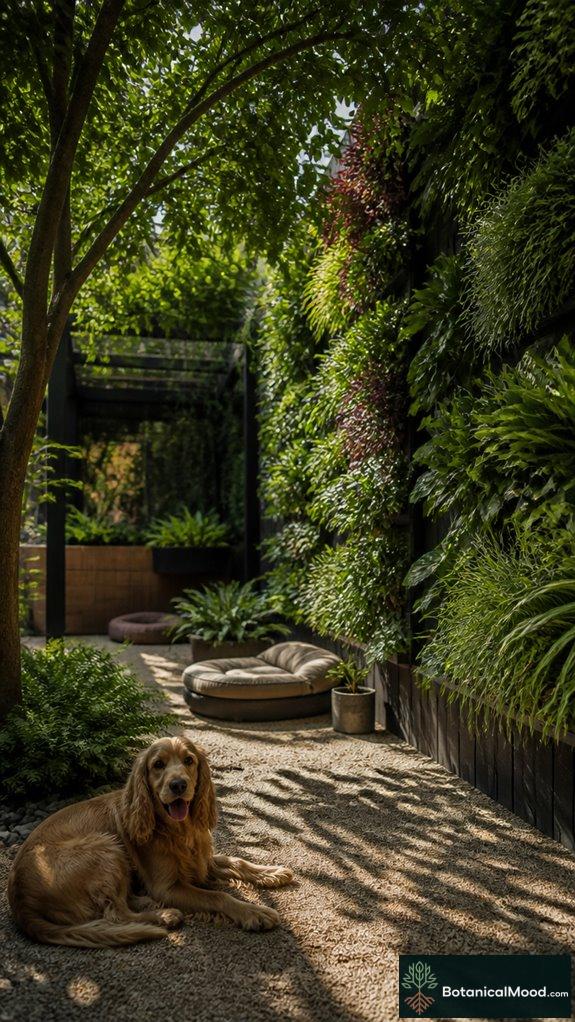
Vertical planting walls present an innovative solution to maximizing garden space while simultaneously creating natural shading and cooling effects for pet runs. These living structures utilize modular systems like Green Wall (or Living Wall) panels from brands such as Skyfarm or SproutWall.
Constructed with sustainable materials that support diverse plant species like Hedera helix (English ivy) or Ficus pumila. By integrating dense foliage vertically, these walls reduce ambient temperatures, block harsh sunlight, and enhance urban resilience. When selecting plants for these structures, incorporating thorny plant varieties can provide additional protective benefits for your garden space.
In strategic placement within the microclimate of your garden, they serve as powerful thermal barriers, improving pet comfort and asserting control over temperature fluctuations during peak summer months. For cat owners, selecting non-toxic climbing plants ensures both aesthetic appeal and safety for your feline companions enjoying the vertical garden space.
Design Safe, Shaded Zones
Creating safe, shaded zones within your garden involves strategic placement and careful selection of structural and natural elements to guarantee your pets’ comfort and security during the hottest months.
Properly positioned pergolas with adjustable louvered roofs (like Louvers by Durasol) allow control over sunlight intensity. This flexibility ensures you can shade specific areas as needed throughout the day.
Dense natural canopies from species like Ficus (Ficus benjamina) create enduring shelter. Incorporating shade sails from reputable brands such as ShadeFX or shade cloths utilizing high-density polyethylene (HDPE) fibers ensures durability.
These choices optimize cooling, protect from UV rays, and foster a secure environment for active pets in your summer oasis.
- Strategic positioning of structures to maximize shade during peak hours
- Selection of durable materials like HDPE shade cloths or aluminum pergolas
- Natural canopy cultivation with dense foliage species like Ficus or Viburnum tinus
FAQ
How Can I Ensure Shade Structures Stay Secure During Strong Summer Winds?
To keep shade structures secure during strong summer winds, I anchor them with heavy-duty stakes, use tension cables, and select sturdy, wind-resistant materials. Regularly inspect and tighten all fastenings to guarantee they stay firmly in place.
What Are Eco-Friendly Shading Options for Environmentally Conscious Gardeners?
“Less is more,” they say, and that’s true here. I choose eco-friendly shade fabrics and sustainable bamboo or recycled materials, empowering my garden with green solutions that work powerfully, shielding pets while respecting our planet.
How Do Shading Needs Differ for Small Versus Large Garden Pet Runs?
Large pet runs require more robust shading setups, like large shade sails or trees, to guarantee coverage, while small runs benefit from lighter solutions such as shade cloths or umbrellas, making protection efficient for any size.
Can Existing Trees Be Integrated Into the Shading Plan Effectively?
Yes, existing trees can transform your shading plan dramatically. By strategically positioning your pet run beneath their canopy, you harness natural shelter, creating a powerful, calming refuge that enhances comfort and security — all while preserving beauty.
What Maintenance Routines Keep Shade Covers in Optimal Condition?
I regularly inspect shade covers for tears or sagging, clean debris promptly, keep fasteners tight, and treat fabric against weather damage. Consistent maintenance guarantees ideal shade coverage, protecting your pets effectively and extending the lifespan of your shade structures.
Summary
By thoughtfully integrating UV-protective mesh covers, vertical planting walls, and strategic shading zones, you can transform your summer garden into a sanctuary of comfort and importance. Visualize your pet runs bathed in gentle, dappled sunlight, where natural architectural elements and modern fabric solutions create a harmonious refuge. With attentive maintenance and adaptive design, your garden becomes an oasis—an active tableau of shaded serenity that nurtures both your pets’ well-being and your outdoor aesthetic, flourishing through the height of summer’s warmth.