I’ve always been captivated by Swiss alpine stone gardens—they’re like nature’s own artwork, but you know, a tad less pretentious than a museum.
Picture this: winding stone paths that flirt with the scenery, rockeries bursting with resilient succulents, and, oh, let’s not forget cozy fire pits that practically scream “let’s have a roasting marshmallows party!”
And those serene water features? They’re just the cherry on top, offering a soundtrack of tranquility. Honestly, who doesn’t want a slice of alpine charm in their backyard?
Now I’m just wondering—can I get a garden like that without the Swiss postcard backdrop?
My Unexpected Alpine Inspiration: A Garden Tea Party
Just last summer, I decided to host a tea party in my suburban yard, inspired by those magnificent Swiss gardens. I ordered a few stones online, tossed in some vibrant succulents, and voilà! A cozy nook was born, complete with a quirky rock path—I guess you could say it was my not-so-humble homage to alpine elegance.
My friends raised an eyebrow, but hey—I had a rustic aesthetic going on! Watching them sip tea amid the rocky oasis had me thinking deeply about how outdoor spaces can infuse unexpected joy. Like, why settle for bland when you can have boulders and blooms, right? And isn’t gardening just a fancy way of saying, “Let’s play in the dirt”?
Quick Takeaways
- Utilize irregularly shaped Swiss granite to create authentic stone paths that harmonize with the natural alpine environment.
- Design alpine rockeries with layered stone formations and carefully selected plants to enhance visual interest and support healthy growth.
- Incorporate vertical gardens with stone accent walls to introduce microhabitats and create dynamic vertical elements in the garden.
- Add stone water features that mimic alpine brooks, using natural stones to enhance tranquility and aesthetics in the outdoor space.
- Implement fire pits made from durable bluestone for a rustic charm, creating inviting gathering spaces that harmonize with the alpine scenery.
Embracing Natural Surfaces With Stone Paths
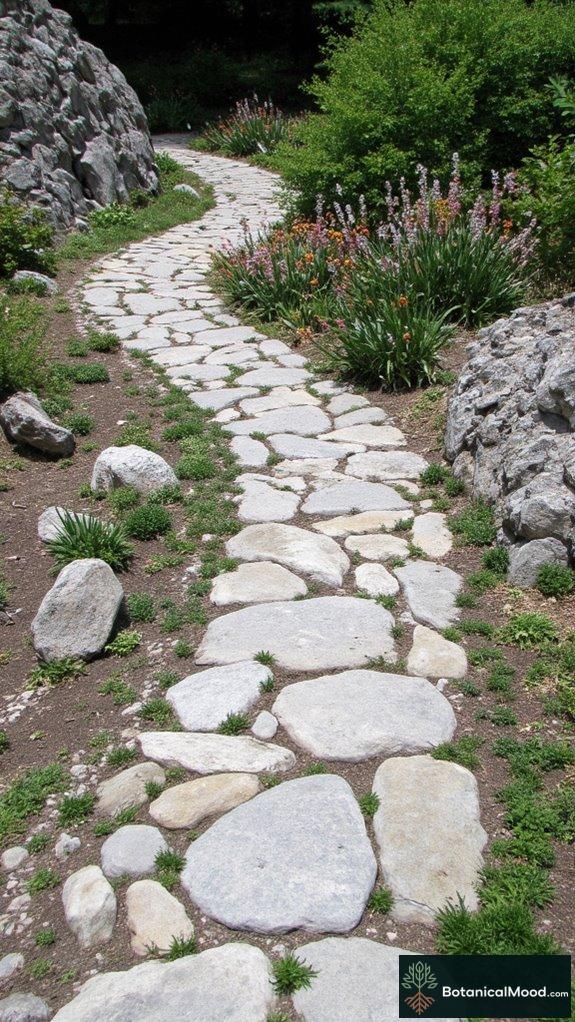
When I think about embracing natural surfaces in garden design, the allure of stone paths captures my imagination the most. Their stone path aesthetics blend seamlessly into any setting, especially in alpine environments where they evoke the rugged beauty of nature.
I love how these paths follow the natural flow of the terrain, promoting natural drainage and preserving the integrity of your garden’s ecosystem. Using irregularly shaped stones, like Swiss granite or limestone, enhances the authenticity and historical connection to alpine farming traditions. Dry stone walls provide stability and help prevent erosion, which is vital in maintaining the health of your garden. The incorporation of innovative asymmetrical arrangements can create visually interesting focal points that enhance the overall design.
Creating gentle curves between flower beds allows for an intimate experience, inviting exploration.
It’s these innovative touches that inspire me in my journey, leading to the creation of this website, Botanical Mood, where I share my passion for garden design.
Alpine Rockeries for Succulent Display
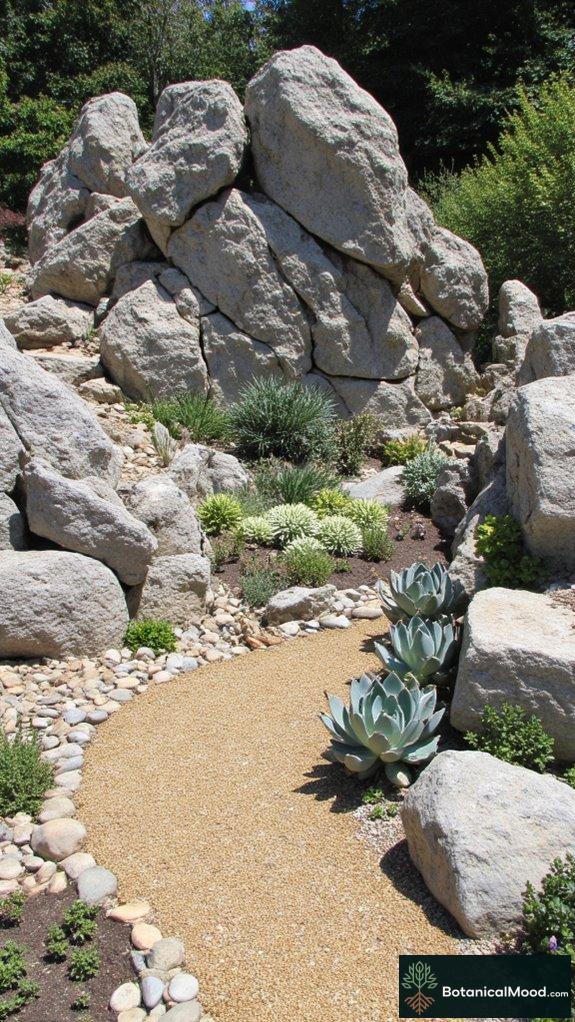
Exploring the concept of alpine rockeries for succulent display illustrates how blending rugged stone formations with carefully selected plants can create a visually stunning scenery in your garden.
To guarantee peak plant health, it’s essential to focus on soil drainage. Using a mix of compost, sharp sand, and grit, combined with a proper drainage layer of broken bricks and gravel, establishes the perfect environment for thriving succulents.
Focusing on soil drainage with compost, sand, and grit creates an ideal habitat for thriving succulents.
Strategic rock placement enhances this design, with larger keystones creating height and varied levels. Arranging plants based on their sunlight and moisture requirements fosters healthier growth while introducing visual interest through diverse shapes and colors.
Incorporating these artistic elements transforms your garden into an innovative haven, showcasing nature’s beauty while maintaining functional elegance.
Vertical Gardens Using Stone Accent Walls
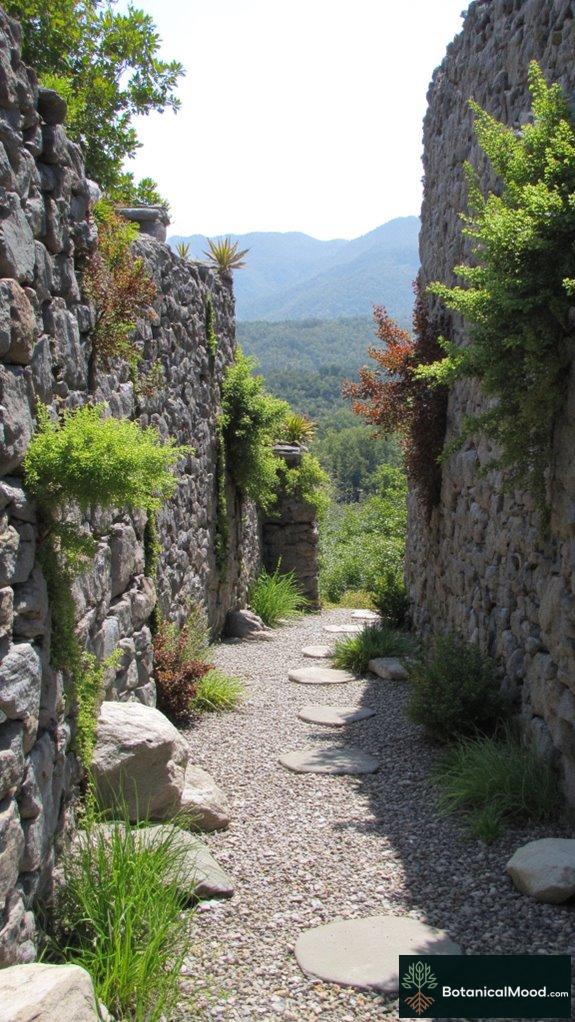
Vertical gardens using stone accent walls not only elevate the aesthetic of your space but also create unique microhabitats for a variety of plants. These walls draw the eye upward, enhancing the design while contrasting beautifully with horizontal environments, resulting in visual interest and texture. Incorporating sustainable sculptural elements can further enrich the overall design and functionality of your vertical garden.
| Stone Type | Ideal Plant Species |
|---|---|
| Slate | Mosses & Succulents |
| Bluestone | Alpine Ferns |
| Granite | Hardy Succulents |
| Natural Stone Veneer | Drought-tolerant Plants |
| Textured Stones | Shaded Plants |
When considering stone maintenance, choose materials that reflect Alpine environments to support moisture retention and temperature regulation. Incorporating irrigation systems prevents water damage, ensuring your vertical garden thrives, a passion that inspired my website, Botanical Mood.
Cozy Fire Pits Surrounded by Natural Stones
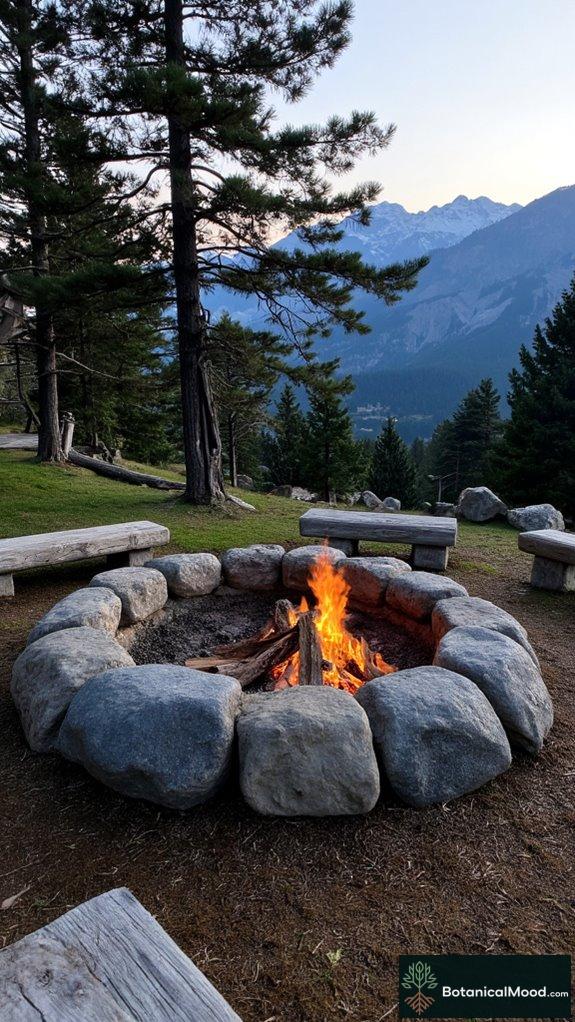
Cozy fire pits surrounded by natural stones create inviting outdoor spaces, perfect for gathering with friends and family.
I’ve always found that the rustic charm of these fire pits enhances any Swiss alpine garden, making them ideal for intimate evenings.
Using various fire pit materials like rugged bluestone or Montana ledge stone allows for durability while seamlessly blending with the scenery.
Surrounding the pit with a thoughtful seating arrangement, from wooden logs to stone benches, fosters comfort and adds to the rustic vibe.
Strategically positioning the fire pit within the garden not only elevates its aesthetic appeal but also guarantees safety.
As I explored innovative designs for this website, I could envision countless cozy moments shared around these enchanting focal points.
Creating Serenity With Stone Water Features
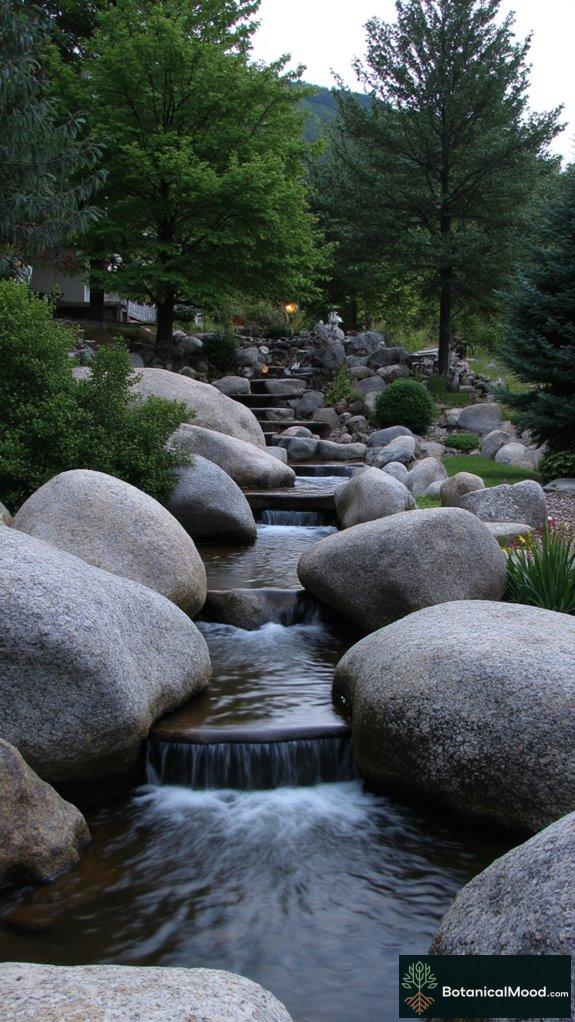
There’s something inherently calming about the gentle sounds of water trickling through stones, which is why I’ve found that stone water features can transform any Swiss alpine garden into a sanctuary of peace.
By using natural alpine stones like granite and limestone, I create authentic textures that reflect our stunning mountain geology. Incorporating carefully designed cascades encourages soothing water soundscapes reminiscent of alpine brooks.
I blend these features seamlessly into my garden, ensuring aesthetic harmony with existing stone elements. By utilizing moss and lichens, I soften stark edges, further enhancing the natural feel.
Adjustable LED lighting adds magic at dusk, illuminating the water, while hidden irrigation systems maintain levels effortlessly. Together, these elements foster a serene retreat that captures the essence of the Swiss scenery.
Rustic Stone Benches for Outdoor Sitting Areas
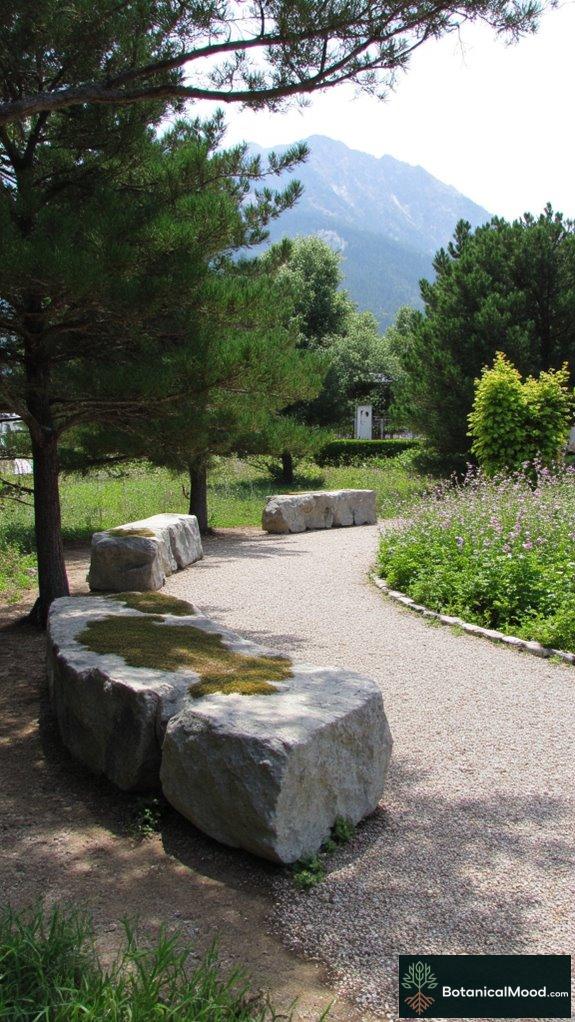
Integrating rustic stone benches into your outdoor sitting areas not only enhances the functionality of a garden but also adds a notable design element that reflects the natural beauty of the Swiss Alps.
- Using granite or locally sourced wood, your benches can embody durability and warmth.
- Employing rough-cut stones preserves that rugged alpine aesthetic, creating harmony with your surroundings.
- Thoughtfully considering bench placement fosters social interaction and scenic views.
- Multi-piece construction allows you to manage heavy materials while ensuring structural integrity.
These rustic materials not only withstand alpine weather but also enhance your garden’s charm, making it a welcoming retreat.
I created this website, Botanical Mood, to help you explore inspirations that resonate with nature’s elegance, including these solid and beautiful benches.
Layered Stone Terracing for Plant Diversity
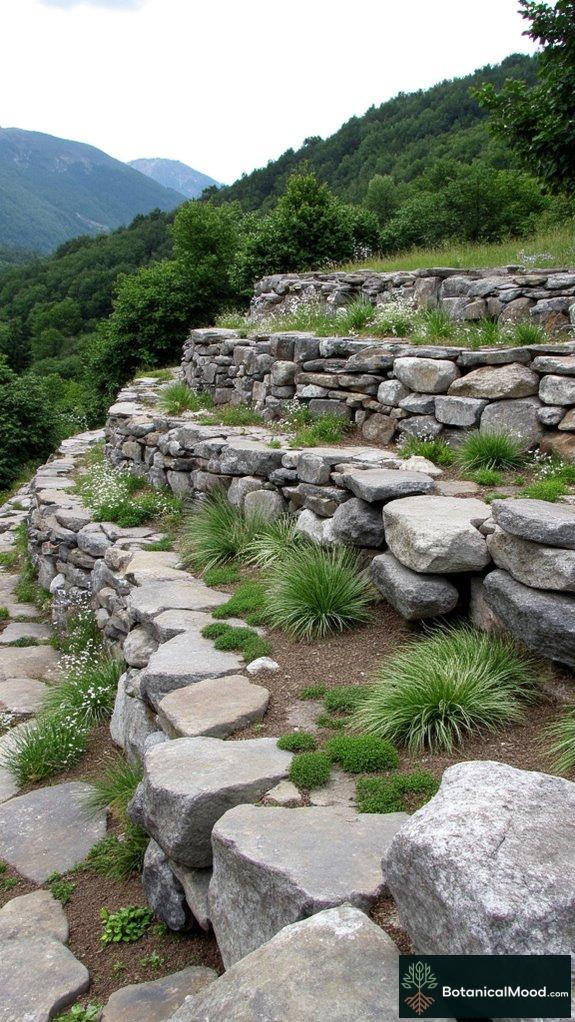
When you think about creating a thriving alpine garden, layered stone terracing offers a solution that not only enhances plant diversity but also respects the unique views of the Swiss Alps.
Utilizing distinct terraces allows for microclimate optimization, where each level captures different sunlight, moisture, and wind exposure, catering to a variety of alpine species.
By carefully considering soil pH, I can plant lime-loving species like saxifrages in the upper ledges while supporting deeper-rooted shrubs and grasses below.
This design promotes biodiversity, creating an appealing environment that feels naturally woven into the surroundings.
Using authentic stone complements the garden aesthetics, ensuring durability and effective drainage—essential elements I often emphasize on Botanical Mood.
These layered terraces transform both beauty and ecological balance in any alpine setting.
Terrain Elevation Variations
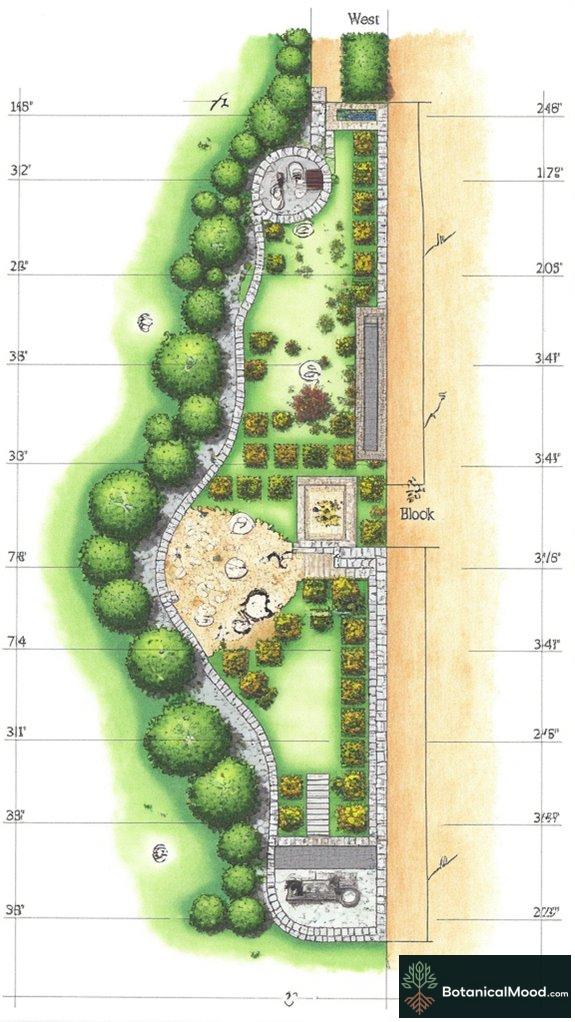
Crafting an alpine garden that honors the natural topography of the terrain requires a keen understanding of terrain elevation variations.
Respecting these contours not only showcases the garden’s beauty but also guarantees its integrity.
Honoring natural contours enhances both the visual appeal and structural stability of your alpine garden.
- Retain original elevation to preserve natural stability.
- Utilize multiple terraces instead of large platforms for moisture retention.
- Use slope stabilization techniques, like alpine grasses and dry stone walls.
- Incorporate elevation zoning methods for varied plant habitats.
Alpine Rock Formation Arrangements
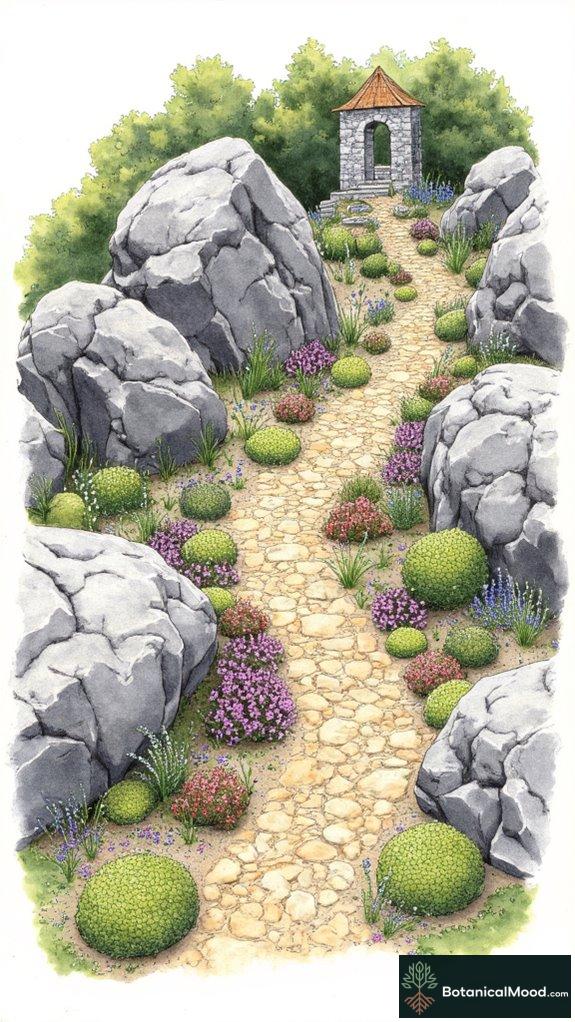
Alpine rock formations serve as the backbone of any stunning alpine garden, capturing the essence of mountainous scenery with their unique textures and shapes. When designing these complex arrangements, I focus on rock layering, incorporating stones of varying sizes from the same source, ensuring visual cohesion and interest.
I prefer porous materials like soft sandstone and tufa, providing a nurturing environment for alpine planting. By arranging stones asymmetrically and embedding them deeply into the soil, I simulate natural emergence while enhancing stability.
Creating pockets and crevices for planting not only promotes healthy root growth but also establishes a vibrant environment where ground covers like thyme and sedum thrive.
My passion for these elements inspired the creation of this website, Botanical Mood, to share these transformative garden experiences.
Swiss Chalet Stone Placement Design
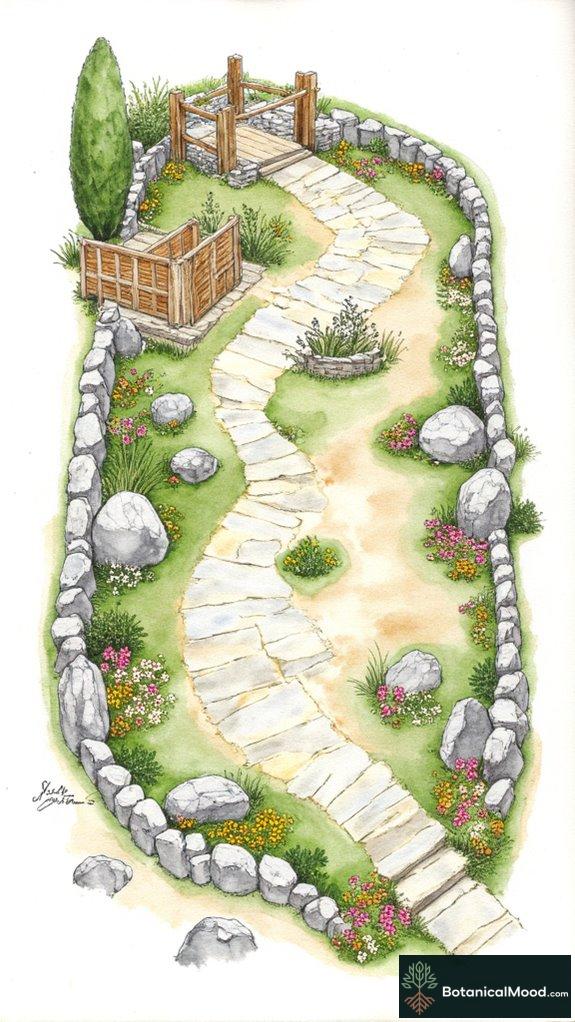
Stone placements in Swiss chalet design form not just a foundation but artfully integrate with the natural environment, showcasing the harmonious relationship between architecture and the alpine surroundings.
These thoughtful arrangements provide both stone aesthetics and functional stability, balancing beauty with practicality.
- Sturdy, irregular stone bases guarantee stability on steep slopes.
- Flat stones act as protective sill plates beneath timber walls.
- Exposed stone in lower sections creates a rustic connection to nature.
- Unique stone textures enhance visual contrasts with wood elements.
In my journey to explore elegant garden designs, I found that Swiss chalet stone placement inspires innovative ideas that celebrate the rugged, stunning quality of the alpine scenery while maintaining structural integrity.
Natural Stone Integration Techniques
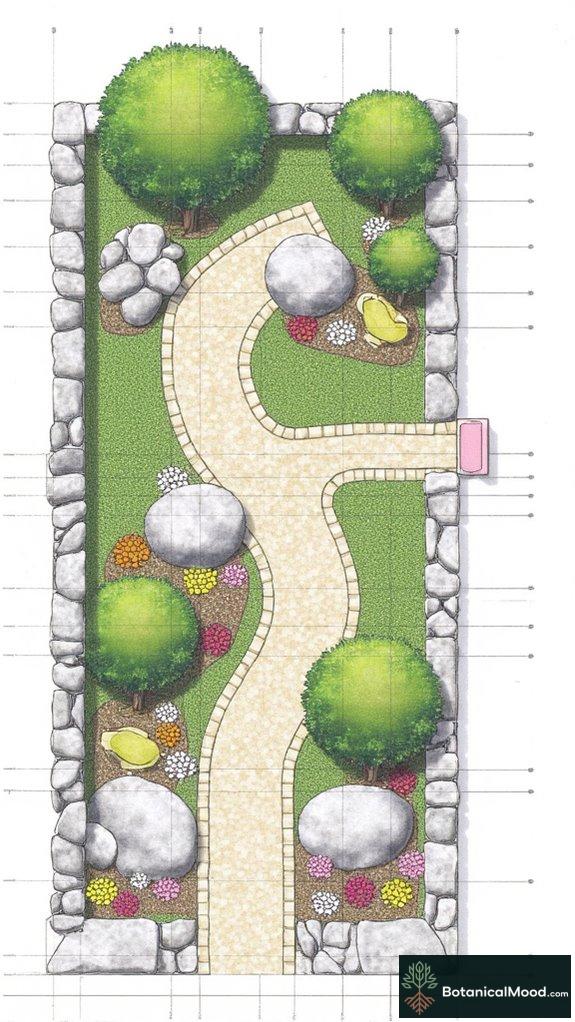
When designing an inspiring garden, integrating natural stone can dramatically enhance both aesthetics and functionality. I love using natural stone arrangements to create a unique, tranquil space that reflects alpine beauty.
By carefully selecting stone sizes and colors, I simulate authentic alpine environments while ensuring ecological integration. Positioning large, flat stones at the foundation allows for stability, while asymmetrical placements draw the eye without competition. I carve out microclimates within plants’ pockets for growth, and strategically place stones for ideal drainage, enhancing moisture retention.
Here’s a breakdown of my favorite techniques:
| Technique | Description |
|---|---|
| Stone Placement | Begin with flat stones for stability. |
| Plant Pockets | Design pockets tailored to plant needs. |
| Drainage Systems | Incorporate well-draining soil mixes. |
Garden Layout Essentials
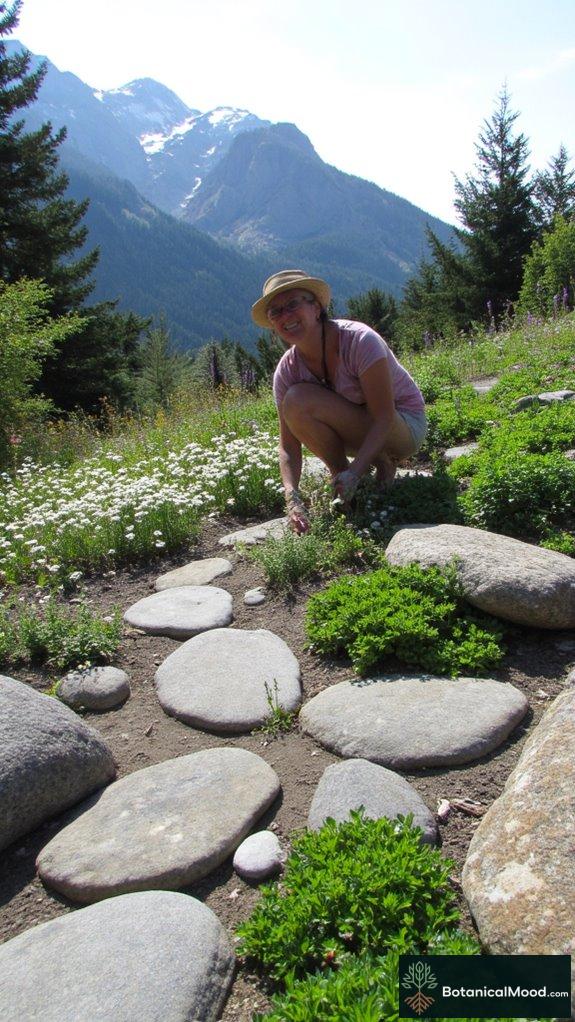
Creating a harmonious garden layout goes hand in hand with the art of integrating natural elements like stone.
Crafting a stunning garden design beautifully intertwines with the skilled incorporation of natural stone elements.
In designing your Swiss Alpine stone garden, I’ve found that focusing on essential elements guarantees beauty and functionality.
- Consider sloping beds for stability.
- Utilize larger stones as structural backbones.
- Prioritize soil drainage for robust plant selection.
- Create microclimates with stone crevices.
Questions and Answers
What Types of Stones Are Best for Alpine Garden Designs?
For alpine garden designs, I find natural stone types like granite, limestone, and schist are ideal.
The striking stone color variations, from light cream to dark black granite, create visual depth and charm.
Combining rough, weathered surfaces not only enhances stability but also fosters a habitat for moss and lichen, enriching biodiversity.
I appreciate these elements, as they beautifully echo the rugged allure of the Swiss Alps—an inspiration I cherish deeply through my work at Botanical Mood.
How Do I Maintain Stone Features in My Garden?
Maintaining stone features in my garden involves regular stone maintenance techniques and seasonal upkeep tips.
I start by gently removing dirt, moss, and algae using soft brushes, avoiding harsh chemicals. Annually, I inspect and reseal porous stones to prevent weather damage.
Moreover, I manage weeds with garden fabric and occasionally trim overhanging plants.
Can I Use Recycled Stones in My Design?
Absolutely, I can use recycled stones in my design! Embracing recycled materials not only enhances sustainable gardening, but it also adds a unique character to my outdoor space.
These stones, rich in texture and color, seamlessly blend into my garden’s natural aesthetics while promoting environmental health. Plus, they’re durable and serve as an efficient weed barrier, making maintenance a breeze.
For me, innovative design and sustainability go hand in hand, creating beauty with purpose.
What Plants Thrive Best in Alpine Stone Gardens?
In alpine stone gardens, I focus on alpine plant selection with a variety of drought resistant flora. Succulents like Sempervivum and Sedum thrive in harsh conditions, forming colorful mats that add texture.
Saxifraga and Aubrieta bring vibrant flowers, while Gentiana verna offers stunning blue blooms. These hardy plants not only withstand the elements but consume little water, creating an innovative and sustainable environment.
It’s this blend of beauty and resilience that inspired my website, Botanical Mood.
How Do I Prevent Weeds in Stony Garden Areas?
To prevent weeds in stony garden areas, I swear by using weed barriers beneath my stone mulching.
These barriers really block sunlight, keeping weed seeds dormant. I also layer thick mulch atop the fabric, reinforcing the defense against those pesky intruders.
Regular inspections help me catch any weeds before they can establish, ensuring my garden stays beautiful and manageable.
My experience with creating inviting spaces inspires me to share these tips through Botanical Mood.
References
- https://www.westdean.ac.uk/blog/alpine-gardens
- https://www.youtube.com/watch?v=LmdPL5utrL0
- https://www.etsy.com/listing/1729772218/custom-alpine-garden-design-detailed
- https://www.shutterstock.com/image-photo/amazing-summer-landscape-stone-path-on-1316658503
- https://growingwithplants.com/2016/05/how-to-make-real-alpine-trough-garden/
- https://www.diy.ie/ideas-advice/how-to-create-an-alpine-rockery/PROD_npcart_100691.art
- https://www.scribd.com/document/649368554/Design-Principles-for-Swiss-Style-Rock-Drawing
- https://icaci.org/files/documents/ICC_proceedings/ICC2009/html/nonref/25_4.pdf
- https://schraner-verbier.ch/blog/the-evolution-of-alpine-architecture-from-traditional-chalets-to-contemporary-luxury-homes/
- https://www.mainlandaggregates.co.uk/blog/how-to-build-a-rockery-step-by-step-guide.html