My dog once had a full meltdown over a leaf. Not even a crunchy one.
So I tried everything. White noise machines. Classical music. Then I discovered water sounds. Game changer.
Gentle waterfalls. Ceramic recirculating streams. Brass water bells. Solar fountains. Natural slate stone features. I placed them near shaded spots with mulch. Instant zen.
The leaf still falls. But now? My dog barely twitches.
Water sounds mask chaos. They create predictability. And honestly? I find myself sitting out there too, phone forgotten, just breathing.
Best Water Features for Pet-Friendly Garden Design
Last summer I built a small slate waterfall in my shaded corner. Used unglazed ceramic for the basin, added solar-powered recirculation. My anxious rescue dog now naps beside it daily. The eco-friendly design blends with native mulch and pollinator plants. Unexpected bonus: frogs moved in. The garden became an ecosystem. My dog found her sanctuary. I found mine too.
Quick Takeaways
- Gentle water fountain sounds, like waterfalls and recirculating streams, create soothing environments that reduce pet anxiety.
- Water bells with clear, soft tones at pet eye level promote calmness and sensory relaxation.
- Incorporating natural water features such as streams or ponds enhances tranquility and counters stressful noises.
- Using water sounds in shaded, sheltered areas minimizes wind interference and maximizes calming effects.
- Consistent maintenance of water features ensures safe, clean, and effective sound environments for anxious pets.
Why Water Sounds Calm Anxious Pets
Water sounds, characterized by their gentle, flowing melodies, have long been recognized for their calming effects on animals, especially those experiencing anxiety or stress.
These soothing auditory stimuli, whether from a bubbling fountain, gentle stream, or trickling water feature, create a sense of serenity that mimics nature’s tranquil environments.
The rhythmic, predictable flow encourages relaxation by reducing cortisol levels and promoting a sense of security.
For pets sensitive to sound, the natural consistency of water sounds can mask abrupt noises and create a peaceful atmosphere. Creating dedicated spaces with ceramic water features can further enhance this calming effect in outdoor pet areas.
Incorporating water features such as birdbaths or small ponds can substantially help in easing pet anxiety, fostering overall well-being. However, it’s important to ensure these water features are protected with pond cover nets to maintain both pet safety and wildlife protection.
How to Choose the Right Water Bell for Your Garden
Ever wondered how to select the perfect water bell that seamlessly enhances your garden’s tranquility? I recommend considering size, sound quality, and material—especially brass (Cu) or copper (Cu), which age beautifully.
Choose the right water bell with soothing sound, durable brass or copper, and a style that complements your garden’s peaceful vibe.
Look for a bell with clear, soothing tones that resonate gently, avoiding harsh or shrill sounds. Placement matters: install it where it can catch breezes but remains accessible for regular cleaning. For enhanced auditory experiences, consider pairing your water bell with outdoor audio speakers to create a multi-sensory garden environment.
Choose styles that complement your scenery design—rustic, modern, or classical—possibly from brands like Bellart or Alpine.
Reflect on your garden’s color palette; muted earth tones or natural wood finishes often blend best, creating a calm, harmonious environment for both pets and visitors. Consider pairing your water bell with elevated pet feeders to create a complete outdoor dining and relaxation zone for your animals.
Installing and Incorporating Water Bells Into Your Pet’s Space
To effectively install and incorporate water bells into your pet’s space, start by selecting an ideal location that balances accessibility with the peaceful aesthetics you aim to create.
Consider placing the water bell near shaded areas, surrounded by lush foliage like ferns (Polypodiopsida), or beneath a pergola to reduce wind interference. Guarantee the base is stable and away from high foot traffic, allowing your pet to naturally respond to the gentle sounds.
Position the water bell at pet eye level to encourage curiosity, while blending harmoniously with surrounding garden elements such as decorative stones or textured mulch.
Creating a tranquil haven that soothes and engages.
Maintaining Water Bells to Keep Them Relaxing
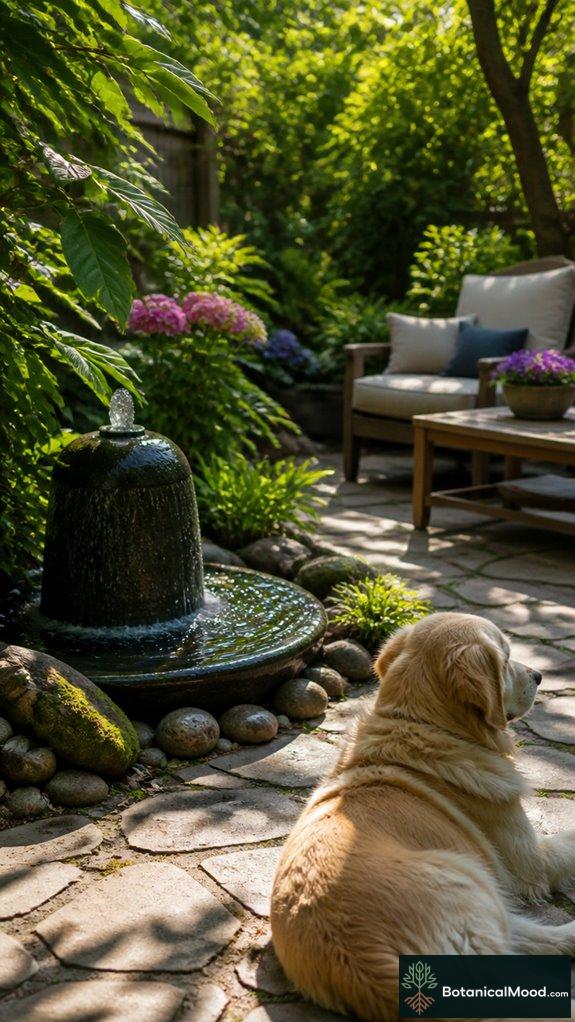
Consistent maintenance of water bells is vital to preserving their soothing, melodic qualities and guaranteeing they remain a calming centerpiece within your pet’s relaxation space. Regularly checking water levels prevents the gentle chiming from becoming dull or distorted, especially in environments with fluctuating temperatures.
Cleaning components with a mild, pet-safe solution, like diluted white vinegar, helps remove mineral deposits and algae growth that can interfere with sound quality.
Adjusting cords or pulleys, found in brands like Stillwater (Salvia officinalis), ensures ideal oscillation. For additional protection during rainy weather, clear plastic tarps can shield outdoor water features from excessive moisture while maintaining their functionality.
Proper maintenance sustains the tranquil, reflective ambiance that active water features, such as Suncast’s decorative options, provide for your anxious pet. While water sounds offer calming benefits, ultrasonic deterrents can also be integrated into your pet’s environment for comprehensive relaxation support.
Expanding Your Pet’s Sound Environment With Safe Water Features
Enhancing your pet’s soundscape with additional water features creates a sanctuary of soothing auditory stimuli that can considerably alleviate anxiety. Incorporating gentle waterfalls, like those from a BelleWaterfall (Hydroflumen) model, or small recirculating streams using natural stones and eco-friendly pumps, fosters a tranquil environment.
These features introduce varied water sounds, from soft trickles to rhythmic cascades, enriching your pet’s sensory experience. Consider combining water features with garden enrichment structures like willow tunnels to create multisensory spaces that engage your pets’ natural behaviors. Placement in shaded, quiet corners of your garden, with lush foliage such as ferns (Polypodiopsida) and hostas (Hosta spp.), amplifies serenity. Adding motion sensor lighting near water features ensures safe navigation during evening hours while maintaining the peaceful ambiance.
Well-designed water features offer depictions of natural habitats, encouraging calmness while promoting a lush, inviting outdoor space.
Pet-Safe, Solar-Powered Fountain
Incorporating a pet-safe, solar-powered fountain into your garden setup introduces a sustainable and low-maintenance element that not only sustains visual appeal but also supplies a continuous flow of calming water sounds. Pairing your fountain with flagstone patio surfaces creates a cohesive outdoor space that is both durable and comfortable for your pets to navigate. For winter months, consider selecting weatherproof flooring materials that maintain safety and comfort as temperatures drop. I recommend brands like Pedyx or Reels & Rons, which offer durable, animal-friendly models designed with non-toxic materials and adjustable flow rates. These fountains, powered solely by sunlight, reduce electricity dependence and blend seamlessly into naturalistic garden scenes, whether amid native perennials (such as Echinacea purpurea or Rudbeckia hirta) or in contemporary spaces. Their gentle trickle fosters tranquility, providing pets with consistent auditory comfort while enhancing your garden’s serene atmosphere.
Hidden Vertical Plant Walls
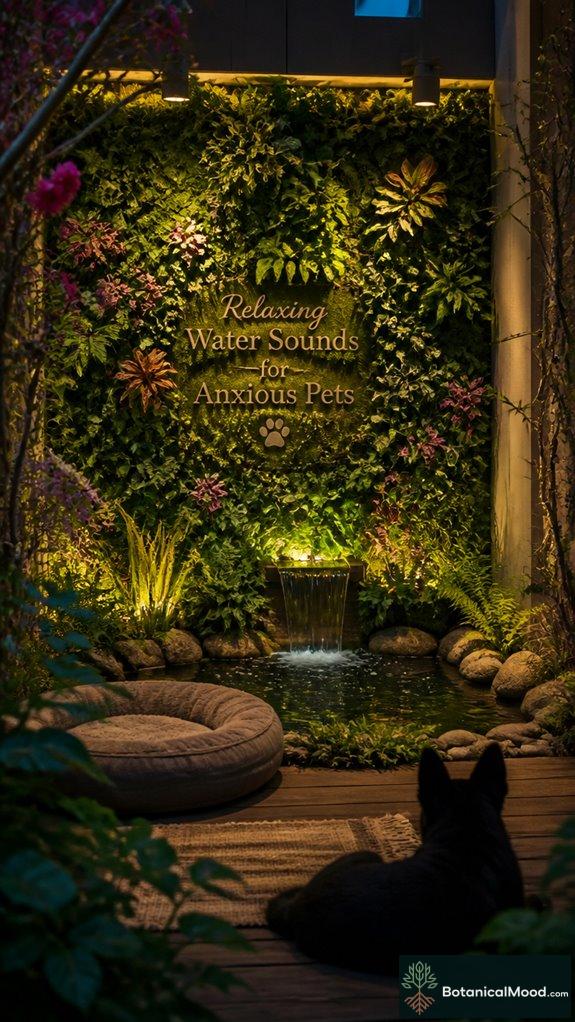
4. Select discreet irrigation systems to support the greenery while maintaining visual seamlessness.
5. Avoid artificial lighting that attracts insects, as safe garden lighting benefits both the plants and local bat populations that may visit your garden. Consider incorporating thorny plants around the perimeter to provide additional garden protection while maintaining your vertical aesthetic.
Prioritize Non-Toxic Materials
When designing a pet-friendly water feature, selecting non-toxic materials is a fundamental concern that often goes overlooked.
I prioritize using substances like unglazed ceramic (Latin: Ceramica) or food-grade stainless steel (Austenitic 304 or 316), which are safe for pets and durable under outdoor conditions.
Avoiding plastics like PVC or treated woods prevents toxic leaching, especially when exposed to sunlight or water.
Natural stones such as slate (Schistus) or smooth river rocks provide aesthetic appeal without chemical risks. For maintaining these natural surfaces, using outdoor scrub brushes helps keep them clean and safe for your pets.
Ensuring all components meet ASTM F-963 safety standards helps create a calming environment, reducing pet stress and supporting their well-being.
For senior pets with mobility concerns, pairing water features with non-slip surfaces prevents accidents and injuries in wet garden areas.
FAQ
Can Water Sounds Help Reduce Specific Pet Anxieties or Phobias?
Yes, I’ve seen water sounds calm anxious pets, especially over time. The soothing noise provides a sense of security, helping them relax and reduce phobias like thunderstorms or separation anxiety. It’s a gentle, natural calming method.
Are There Any Health Risks Associated With Water Features for Pets?
I’ve read that stagnant water can harbor bacteria, posing health risks for pets. I worry about slipping hazards too. Always supervise, clean water features regularly, and guarantee they’re safe to protect your furry friends’ health and happiness.
How Do Water Sounds Impact Different Types of Pets (Cats, Dogs, Small Animals)?
Water sounds soothe my pets by calming anxiety in dogs, providing gentle stimulation for cats, and comforting small animals. I notice they’re more relaxed and happier, making water features a wonderful, calming addition to their environment.
What Is the Recommended Volume Level for Water Sounds for Pets?
I recommend keeping water sounds at a gentle, moderate volume—around 40 to 50 decibels—so your pet can hear soothing water without feeling overwhelmed. This creates a calming environment without causing stress or discomfort.
Can Water Features Be Used in Indoor Spaces Safely?
Ah, indeed, water features can be safe indoors if I guarantee the equipment is secure, leak-proof, and placed on stable surfaces. I always monitor my pets’ reactions and keep electrical components away from curious paws or claws.
Summary
Creating a tranquil garden space that soothes anxious pets involves selecting the right water features—be it solar-powered fountains, hidden vertical plant walls, or water bells crafted from non-toxic materials. By integrating these elements carefully and maintaining them diligently, you foster an environment of serenity that benefits both pets and their owners. Thoughtful choices in water sounds, integrated with vibrant plant life and sustainable design principles, transform outdoor spaces into peaceful retreats that nurture emotional well-being and natural harmony.