My dog once outsmarted me at my own game. Embarrassing, really.
I set up this elaborate puzzle feeder from Nina Ottosson, feeling pretty proud. She solved it in forty seconds. Then looked at me like, *”That’s all you got?”*
Now I hide treats in hollow logs and weave scent trails with lavender oil. She still wins. Every time.
Weather-resistant toys help. Outward Hound makes decent ones, textured wood, bright colors. But honestly? Your pet probably doesn’t care about the aesthetics.
Obstacle courses work better. River stones, fallen branches, maybe skip the thorny stuff unless you enjoy vet bills. I learned that one the hard way with Hawthorn.
Spider plants and Areca palms add greenery without poison risk. Small wins.
Pet-Friendly Garden Design Ideas for Small Backyards
I once killed three “unkillable” succulents. My thumb is that black.
Turns out, dogs and delicate landscaping don’t mix. My pup trampled my lavender patch into oblivion. RIP.
Now I design with chaos in mind. Raised beds with sturdy borders. Ground covers like thyme and clover instead of fussy grass. Mulch paths that can handle zoomies.
Native plants, pollinator gardens, permeable pavers. Function over Pinterest perfection.
She digs anyway. I let her. Some battles aren’t worth fighting.
Quick Takeaways
- Design obstacle courses with natural materials like logs and rocks to promote physical activity and problem-solving.
- Hide treats in weatherproof containers or within garden beds to encourage scent tracking and foraging.
- Incorporate puzzle toys made of durable, weather-resistant materials for outdoor mental stimulation.
- Use natural barriers such as hedges or low fences to contain pets safely while allowing exploration.
- Create sensory-rich zones with plants, textures, and aromatic herbs to engage pets’ senses and mental agility.
Why Outdoor Puzzle Games Boost Your Pet’s Brain
Outdoor puzzle games actively stimulate a pet’s cognitive processes, engaging their natural instincts and problem-solving abilities in the expansive environment of a garden or yard.
Outdoor puzzle games boost your pet’s mind and instincts in a vibrant garden setting.
These games challenge their intelligence, encouraging them to explore, sniff out hidden treats, or manipulate objects like puzzle feeders and winding tunnels.
The varied textures, colors, and structures stimulate sensory perception (sensory integration), fostering mental agility.
Connecting with elements such as trellises or garden sculptures can enhance mental engagement.
Treat hiding toys designed specifically for garden foraging create interactive opportunities that transform outdoor spaces into natural learning environments for pets.
Create a Safe and Fun Puzzle Area in Your Garden
Designing a safe and engaging puzzle area within your garden requires deliberate planning, ensuring a harmonious blend of entertainment and security for your pet.
I recommend using natural barriers like dense hedges (Buxus sempervirens) or low fences (Wrought iron or PVC) to contain activity while maintaining visual openness. Incorporate shaded zones with deciduous trees such as Acer palmatum (Japanese maple) for comfort.
Select durable, non-toxic materials like weather-resistant timbers or special outdoor plastics for puzzle pieces.
Strategically place hidden treats within weatherproof, segmented containers. During hot weather, consider installing a hose pressure regulator to provide a gentle misting system that keeps your pet cool while they engage with puzzles.
For additional sensory enrichment, consider incorporating play sand into designated areas of your puzzle space to encourage natural digging behaviors.
This thoughtful layout combines aesthetic appeal with functionality, creating a stimulating, secure space for your pet’s mental and physical well-being.
Pick the Best Puzzle Toys for Outdoor Play
Choosing the right puzzle toys for outdoor play involves understanding the diversity of options designed to challenge your pet’s intelligence while withstanding the elements of nature. Durable materials like rubber, weather-resistant plastics, and treated woods ensure longevity amid rain, sun, and dirt.
Select durable, weather-resistant puzzle toys to enhance your pet’s outdoor mental challenge and withstand the elements.
Brands such as Outward Hound (Hide-A-Scent) and Nina Ottosson (Dog Tornado) offer complex leveling puzzles that stimulate cognitive skills. Pairing these toys with architectural shade sails creates shaded zones where your pet can engage in mentally demanding play while staying protected from harsh UV rays.
Selecting brightly colored or textured toys can engage your pet’s sight and touch, fostering mental agility.
Consider size, difficulty level, and safety standards, ensuring each toy integrates seamlessly into your garden’s setting, creating an immersive environment that nurtures your pet’s problem-solving capabilities. Just as bird watching spots can provide enrichment through window perches, outdoor puzzle toys create dedicated spaces for mental stimulation and engagement.
Use Natural Elements to Improve Your Pet’s Problem-Solving
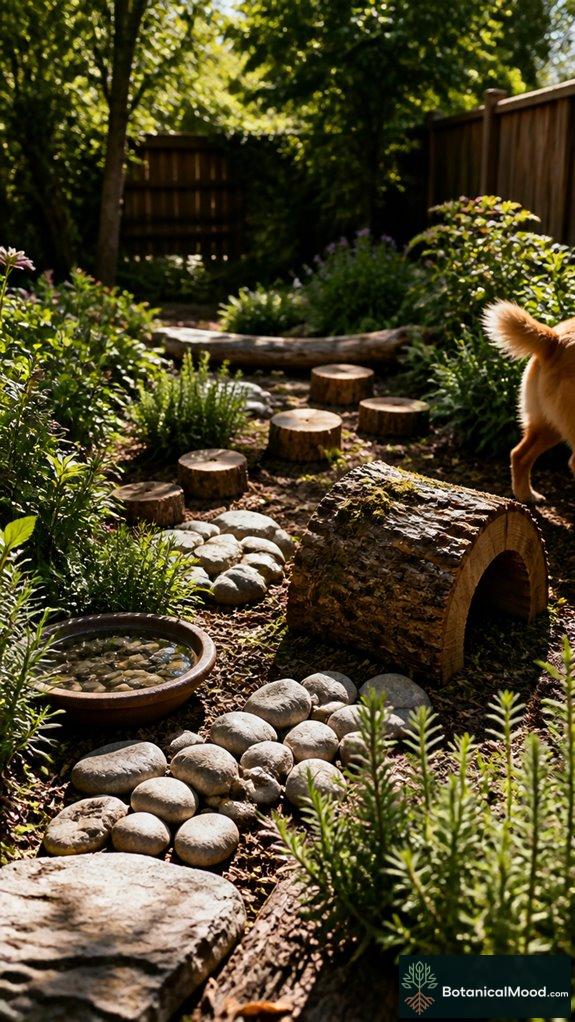
Incorporating natural elements like stones, logs, and plant-based objects into your pet’s play environment can markedly enhance their problem-solving skills, as these materials introduce diverse textures, scents, and physical challenges that stimulate their senses.
- Use river stones (Lithium silicate) for balance activities, encouraging dogs to step carefully and develop coordination.
- Place fallen branches or logs from native trees like oak (Quercus spp.) or birch (Betula spp.) to create tunnels or obstacle courses. These activities engage their curiosity and agility while providing tactile planting opportunities that allow pets to interact directly with natural garden materials.
- Introduce aromatic herbs like rosemary (Rosmarinus officinalis) or lavender (Lavandula angustifolia). Hide them among foliage to trigger scent-based puzzles and mental focus.
- For senior dogs, incorporate garden ramps into your outdoor layout to ensure safe navigation while they enjoy these enriching activities.
Tips to Make Outdoor Puzzles More Challenging and Rewarding
Enhancing outdoor pet puzzles requires thoughtful increases in complexity that challenge an animal’s natural instincts and cognitive abilities. By incorporating multi-layered obstacles, like hollow logs (Lignum vitae), or arranging items in varying heights resembling natural foraging environments, you stimulate their curiosity and problem-solving skills.
Using scent trails with essential oils (lavender, eucalyptus) encourages tracking, while hiding treats behind natural objects such as rocks or shrubs mimics wild challenges. Incorporating materials like textured woods or rustling fabrics adds sensory depths. Maintaining fresh outdoor spaces with natural turf deodorizers helps keep pet areas clean and hygienic while they play and explore.
Carefully balancing difficulty guarantees mental engagement without frustration, fostering a rewarding experience that mirrors the complexities found in nature’s diverse ecosystems.
Custom Treat Dispenser Puzzles
Creating custom treat dispenser puzzles offers an engaging way to stimulate your pet’s cognitive functions and natural foraging instincts by transforming an ordinary feeding routine into a playful challenge.
- Use durable, non-toxic materials like silicone, wood, or PETG (Polyethylene Terephthalate Glycol) to craft puzzles that withstand outdoor conditions and active, sharp teeth.
- Incorporate adjustable compartments or sliding lids, inspired by classic designs from brands like Nina Ottosson, to customize difficulty levels and maintain your pet’s interest over time.
- Embed scent trails or textured surfaces to encourage sniffing, tactile exploration, and problem-solving, blending garden elements with interactive enrichment for enduring mental stimulation. You can also include edible flowers as safe foraging options within these puzzles to provide natural enrichment and nutritional variety.
Urban Rooftop Greenery Designs
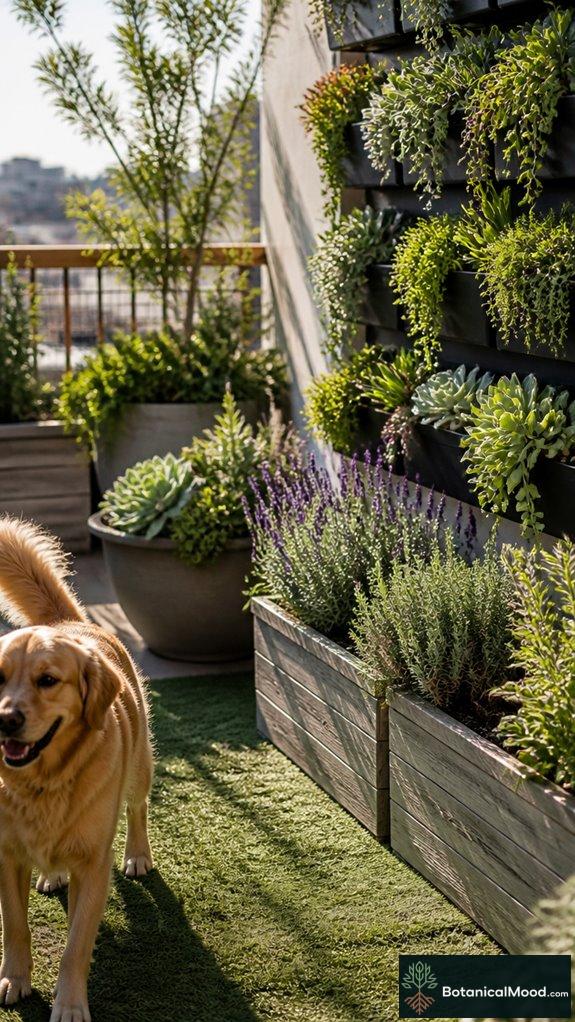
Transforming urban rooftops into verdant retreats requires thoughtful design that balances aesthetics, functionality, and sustainability.
I focus on layered greenery, combining drought-tolerant succulents (Sedum spp.), vibrant perennials like lavender (Lavandula angustifolia), and edible herbs such as thyme (Thymus vulgaris) to create textured panoramas. Incorporating adjustable planters and vertical gardens maximizes space, while eco-friendly materials like recycled composite decking reduce environmental impact.
I recommend integrating native species where possible, ensuring minimal maintenance and resilience against urban pollution. For pet-friendly rooftops, consider natural grass alternatives that withstand heavy paw traffic while maintaining durability in elevated environments. This careful combination fosters a tranquil oasis, enhances building insulation, and encourages biodiversity.
Transforming overlooked rooftops into lush, inviting retreats that nourish both pets and their humans.
Choosing Non-Toxic Plants
Have you ever considered how selecting non-toxic plants is essential for creating safe and healthy outdoor pet spaces?
So, I focus on varieties like Spider Plant (Chlorophytum comosum), which are non-toxic and resilient.
I recommend non-toxic, resilient plants like the Spider Plant for safe outdoor pet spaces.
I also recommend Areca Palm (Dypsis lutescens), with its lush, feathered fronds offering shade without toxicity risks.
Ultimately, incorporating Hibiscus (Hibiscus rosa-sinensis) brings vibrant color without harming pets.
For added safety and structure, consider planting thorny hedges like hawthorn varieties around your outdoor pet space to create natural barriers and wildlife-friendly boundaries.
Pairing these plants with poultry fencing rolls creates defined foraging areas where pets can safely graze and explore designated garden sections.
These choices, cultivated in well-draining soil and placed away from chemical treatments, guarantee that your outdoor environment remains both stimulating and safe.
Creating the perfect space for lively pets to explore, play, and thrive.
FAQ
How Can Outdoor Puzzles Prevent Pet Boredom and Destructive Behavior?
Outdoor puzzles keep my pet’s mind engaged and prevent boredom by challenging them to solve tasks. This mental stimulation reduces destructive behavior, making outdoor time more fun and peaceful for both of us.
What Safety Precautions Should I Take During Outdoor Puzzle Play?
Did you know over 60% of pet injuries occur outdoors? I always supervise closely, keep harmful objects away, guarantee puzzle materials are pet-safe, and check the area for hazards before we start playing together.
How Often Should I Rotate or Change Outdoor Puzzle Activities?
I recommend rotating outdoor puzzle activities every one to two weeks. This keeps your pet engaged, prevents boredom, and challenges their mind in new ways. I love seeing their excitement when I introduce fresh, stimulating challenges.
Can Outdoor Puzzle Games Be Adapted for Different Pet Breeds?
Absolutely, I adapt outdoor puzzle games for every breed’s quirks and skills, because nothing says ‘you’re special’ like a puzzle tailored to your furry genius. I swear, your pet’s unique brain deserves custom challenges—brain games for all!
What Signs Indicate My Pet Is Struggling With an Outdoor Puzzle?
I notice my pet gets frustrated, loses interest quickly, or startles easily around the puzzle. They might paw at it excessively, seem disengaged, or show signs of stress, which tells me they’re struggling and need a lighter challenge or break.
Summary
Exploring the interplay between stimulating outdoor environments and pet enrichment reveals that thoughtfully designed puzzle games, whether custom dispensers or natural element challenges, foster cognitive growth and deepen bonds. Just as a meticulously crafted garden marries aesthetic serenity with functional purpose—using non-toxic, native plants like *Lavandula angustifolia* or *Rosmarinus officinalis*—creating engaging outdoor spaces invites a harmonious balance between mental stimulation and safety. Ultimately, such environments transform from mere play zones into dynamic ecosystems that elevate both pet well-being and garden artistry.