Cats are basically tiny murder machines with good PR. I learned this the hard way.
My “wildlife sanctuary” became a buffet. Three finches. One afternoon. Devastating.
Now? Pole-mounted feeders. 1.5m minimum. Droll Yankees hardware, because cheap poles buckle. Thorny Berberis barriers. Motion sprinklers that occasionally soak me instead. Worth it.
Open sightlines beat “cozy corners.” Dense shrubs = cat ambush zones. I learned that from heartbreak and Google.
The vertical supports hide behind native foliage. Modular panels. Functional, not ugly. Birds see predators coming. I sleep better. Mostly.
Bird-Friendly Garden Design: Lessons From My Failed Hedge Maze
I once planted a “naturalistic” hedge tunnel. Looked magical. Functioned as a feline highway.
My cat, Professor Whiskers, patrolled it like a tiny warden. Birds entered. Birds vanished.
Now I design in zones. Open central spaces with peripheral cover. Native Viburnum, not dense privet. Water features with escape routes. Vertical complexity, not horizontal traps.
The hedge came down. Guilt lifted. Sightlines matter more than aesthetics, I’ve decided. Though my neighbors disagree.
Quick Takeaways
- Place feeders in open, elevated locations with good visibility to help birds detect predators early.
- Use nearby dense shrubbery or thorny barriers for cover, but avoid placing feeders directly within dense vegetation.
- Install physical barriers like thorny plants or protective screens around feeders to deter cats.
- Incorporate deterrent devices such as motion-activated sprinklers or ultrasonic repellents.
- Ensure supports are tall, stable, and camouflaged with foliage to prevent access by ground predators.
How to Keep Cats Away From Bird Feeders
To effectively keep cats away from bird feeders, understanding their natural predatory instincts and behaviors is essential. Cats (Felis catus) are highly territorial hunters, driven by sharp, stalking instincts that capitalize on movement and scent cues. They detect prey via keen eyesight, acute hearing, and sensitive vibrissae that respond to subtle air currents.
Strategically placing feeders near dense shrubbery, thorny barriers, or away from open spaces reduces their vantage points. Installing physical deterrents like motion-activated sprinklers or predator decoys can suppress pursuits. A well-designed pergola structure can also provide elevated feeding stations that keep birds safely above ground-level predators.
Mastering these tactics empowers you to control the environment, safeguarding delicate avian species from predatory threats, and asserting your authority over your garden’s ecological balance.
Choosing Safe, Elevated, and Shielded Spots for Feeders
Choosing the right location for bird feeders is essential for ensuring the safety of visiting avian species while maintaining easy access for maintenance. Elevated placements, such as sturdy branch tips (Prunus spp.) or specialized pole mounts from brands like Droll Yankees or Wildlife Garden, provide vital vantage points that deter predators. Shielded spots, ideally under eaves or dense foliage, reduce exposure to harsh weather and prowling cats. Pairing these feeder placements with wooden herb planters positioned strategically around the garden can create additional sensory enrichment for pets while maintaining separate zones for birds and animals. For dog runs and active pet areas, consider incorporating natural grass alternatives to create designated spaces that protect both your lawn and the bird feeding zones from damage. Use the following table to evaluate potential sites based on height, shelter, and visibility, ensuring each choice balances predator avoidance with bird comfort, creating an excellent environment for diverse species like American Robins (Turdus migratorius) and Northern cardinals (Cardinalis cardinalis).
| Attribute | Ideal Characteristics | Example Locations |
|---|---|---|
| Elevation | Prime vantage points above ground level for predator deterrence | Tree branches, pole-mounted platforms |
| Shelter | Natural cover or man-made shielding to protect from harsh elements | Under eaves, dense shrubbery |
| Visibility | Clear sightlines for safe feeding and predator detection | Open garden corners with minimal obstruction |
Why Avoid Dense Cover Near Feeders That Shelter Cats
Dense cover such as thick shrubs (Ribes spp.), overgrown hedges, or clusters of ornamental grasses (Miscanthus spp.) may seem like ideal spots for concealment and refuge, but they pose significant risks when placed near bird feeders.
- Cats can use dense cover as strategic ambush points, reducing their visibility to both prey and humans.
- Such thick vegetation provides shelter, allowing cats to remain concealed while stalking birds at feeders.
- It hampers effective monitoring of the garden, making early detection of feline intruders nearly impossible.
- Dense cover fosters a false sense of security for birds, increasing their vulnerability to feline predation, especially in active neighborhoods.
- Similarly, grazing meadow plantings should be positioned away from bird feeding areas to prevent conflicts between different garden wildlife zones.
- Installing secure catio door latch mechanisms can help contain cats and reduce access to open garden spaces where bird feeders are located.
Placing Feeders in Open Areas for Better Visibility
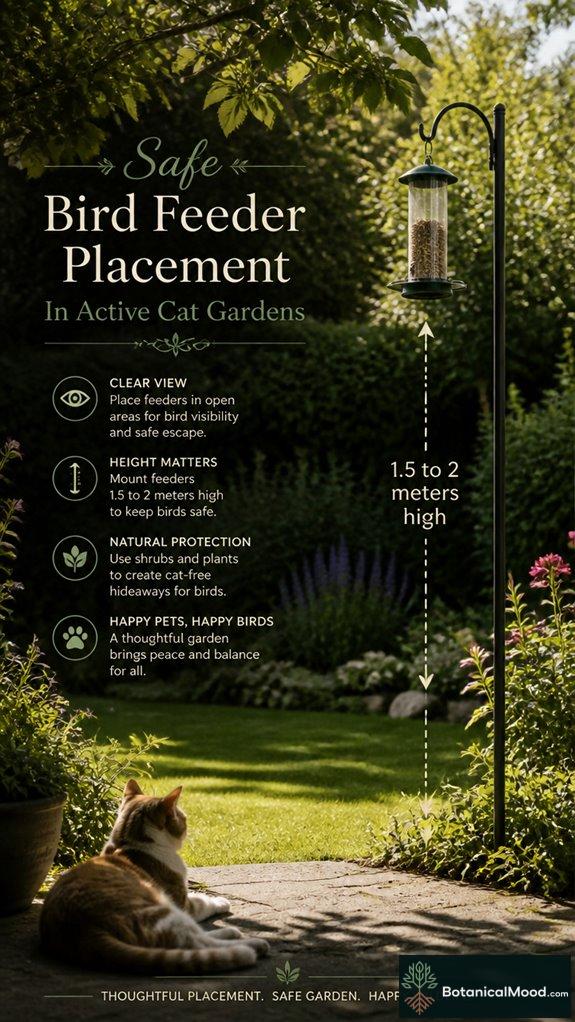
Positioning feeders in open areas enhances visibility and considerably reduces the risk of unseen predators approaching undetected. By selecting prominent, unobstructed locations in your garden—such as open lawns, borders with low-growing shrubs, or clearings near stone pathways—you create strategic vantage points.
This setup allows for swift detection of potential threats, empowering you to intervene if necessary. Use durable feeders from trusted brands like Droll Yankees or Brome, ideally mounted at heights of 1.5 to 2 meters, ensuring birds remain within a bird’s eye view range. Consider pairing your feeder placement strategy with pond liner guards to create comprehensive protection zones throughout your garden where both birds and other wildlife can safely access resources.
Proper placement in these exposed zones maximizes safety, keeping vigilant eyes on both avian visitors and lurking predators.
Using Cat-Deterrent Devices and Features to Protect Birds
To effectively safeguard visiting birds from predatory cats (Felis catus), implementing specialized deterrent devices and features around feeders becomes essential.
- Install motion-activated sprinklers, such as the Orbit Quik-Cam, which startle cats without harming birds, creating an intimidating barrier.
- Use strategically placed ultrasonic devices like Bird-X’s Sonic Owl, emitting sounds that discourage feline stalking behaviors.
- Incorporate dense, thorny shrubbery (e.g., Berberis thunbergii) near feeders to hinder cats’ approach while providing cover for birds.
- Employ reflective surfaces, like Mylar tape or metallic scare devices, which create unpredictable flashes and vibrations, deterring cats from lurking nearby.
Bird Feeder Pole Extensions
Adjusting the height and accessibility of bird feeders often involves employing pole extensions designed to elevate feeders beyond the reach of ground predators and prowling cats. Metal or polymer extensions, such as the “Perky-Pet Aluminum Extension Pole,” increase clearance, offering an effective barrier against Felis catus (domestic cats) and other ground threats.
These sturdy extensions typically attach securely to existing poles, such as galvanized steel or wooden posts, providing stability in various weather conditions, especially in regions with seasonal storms. Pairing these installations with pet fountain cleaning kits ensures your garden remains hygienic and welcoming for all wildlife.
Strategically, extending feeders to 5-7 feet minimizes predator intrusion while ensuring unobstructed access for avian visitors like cardinals (Cardinalis cardinalis) and titmice (Baeolophus bicolor). Creating designated outdoor play zones with safe bubble solutions can further enrich your garden space while keeping pets entertained away from bird feeding areas.
Hidden Vertical Garden Walls
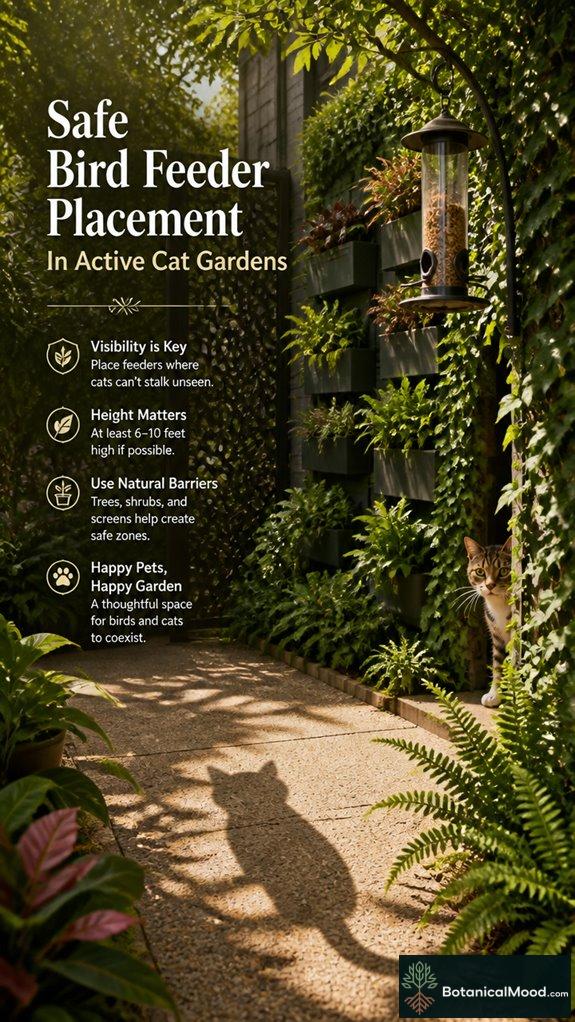
When integrating vertical garden walls into outdoor spaces, concealing structural elements becomes essential to achieve a seamless and aesthetically pleasing design.
To accomplish this, consider:
- Installing trellises (Lathyrus spp.) or grid frameworks that blend with plant foliage, such as Hedera helix (English ivy).
- Selecting vibrant, resilient plants like Ficus pumila (climbing fig) or tropical ferns (e.g., Nephrolepis cordifolia) to cover unsightly supports.
- Incorporating modular panels with built-in planting pockets made of sustainable materials like recycled composite or corten steel, from brands like UrbanGreens.
- Using decorative screens or latticework to conceal wiring or structural reinforcements, creating a clean aesthetic that complements the vertical ecosystem.
- Applying non-slip surface treatments to any exposed ramp areas or pathways accessing the vertical garden to ensure safe navigation for all visitors. For senior pets and elderly visitors, consider installing rubber mulches for tactile support on ground-level transition zones adjacent to vertical walls.
Adding Shaded Sheltered Resting Spots
Incorporating shaded, sheltered resting spots within outdoor spaces offers essential refuge for birds seeking protection from the sun, wind, or inclement weather. Durable structures like arbor-like canopies, constructed from cedar (Cedrus spp.) or metal with lattice coverings, provide strategic perching areas that deter feline predation.
Position these spots near native plantings such as salvia (Salvia spp.) or dogwood (Cornus spp.), ensuring visibility and safety. These refuges stabilize bird activity, encourage prolonged stay, and promote natural behaviors. Creating climbing structures within these sheltered zones allows birds multiple elevation options for roosting and observation, similar to how active animals benefit from enriched vertical spaces.
Thoughtful design, emphasizing shade cloth or vine-covered trellises, enhances the garden’s ecological resilience. Similar to how insulation materials protect kennels in harsh conditions, properly constructed shelters safeguard birds during extreme weather. It fosters a secure environment conducive to attracting and supporting diverse avian species.
FAQ
How Often Should Bird Feeders Be Cleaned to Prevent Cat Attraction?
I clean my bird feeders at least once a week to prevent attracting cats and other predators. Regular cleaning keeps the feeders fresh, minimizes buildup, and helps maintain a safe, peaceful environment for your feathered friends.
What Types of Bird Feed Are Safest in Cat-Active Gardens?
I recommend using solid seed mixes like sunflower or safflower, which cats usually dislike. Offer high-quality, fresh bird seed in protected feeders to minimize mess and deter cats from accessing fallen scraps or seeds.
Can Specific Plants Deter Cats From Approaching Bird Feeders?
Yes, certain plants like citronella, lavender, and rue deter cats effectively. I’ve used these around bird feeders, creating a powerful scent barrier that discourages cats from approaching while allowing birds to feed safely.
Are There Seasonal Considerations for Safe Bird Feeder Placement?
Absolutely, seasonal changes demand strategic placement adjustments. I move feeders away from dense foliage in spring for fledglings, and I guarantee they’re sheltered in winter, reducing predator risk and maintaining safe, consistent bird access throughout the year.
How Can Local Wildlife Laws Impact Bird Feeder Positioning?
Local wildlife laws can dramatically shape how I position my bird feeders, sometimes forcing me to rethink my strategy and even risking fines. I stay vigilant, knowing that compliance isn’t just smart—it’s essential to protect these delicate ecosystems.
Summary
By strategically positioning bird feeders in open, elevated spaces—integrated with protective elements like pole extensions, vertical garden walls, and shaded resting spots—you create a sanctuary that attracts avian visitors while blocking inquisitive feline prowlers. Thoughtful placement leverages visibility and deterrence techniques, transforming your garden into an expansive, safe haven for songbirds—from the vibrant Cardinal (Cardinalis cardinalis) to the elusive Cedar Waxwing (Bombycilla cedrorum). With these measures, you guarantee that your outdoor sanctuary remains a peaceful haven, resilient to predatory interruptions.