If you're a medieval history lover, you'll appreciate the enchanting layouts of herbal gardens that echo historical designs. From tranquil cloister gardens designed for contemplation to practical kitchen herb layouts brimming with flavorful plants like basil and thyme, these gardens offer beauty and purpose. Monastic gardens utilize raised beds for easy maintenance, while spiral herb gardens create diverse microclimates. By exploring these unique layouts, you can cultivate your own piece of history right outside your door. Discover more intriguing designs and how to bring them to life.
Quick Takeaways
- Historical garden designs, like the St. Gall plan, inspire modern layouts emphasizing beauty and functionality for medieval enthusiasts.
- Cloister gardens provide tranquil retreats with central fountains and herb selections that embody spiritual significance.
- Kitchen herb gardens feature symmetrical layouts for easy access, incorporating edible plants rooted in medieval traditions.
- Spiral herb gardens create microclimates for diverse herbs, blending aesthetic beauty with functional culinary uses.
- Companion planting enhances garden health through natural pest control and promotes vibrant ecosystems in medieval-inspired layouts.
Cloister Garden Design

Cloister gardens, with their serene beauty and thoughtful design, invite us into a world where nature and spirituality intertwine. These gardens, often enclosed by stone walls, create a peaceful retreat for contemplation. With paths dividing the space into four quadrants, every corner offers a new viewpoint. I love how the central fountains reflect tranquility, while lush lawns and fragrant herbs envelop us in nature's embrace. Each plant, chosen for its symbolic meaning, resonates with the spirit of the Virgin Mary. The Cloister garden design typically features a central fountain and crossed paths, enhancing the overall harmony of the space. Designing a cloister garden inspires me deeply, which is why I created Botanical Mood— to share this enchanting world with others.
2. Physic Garden Arrangement
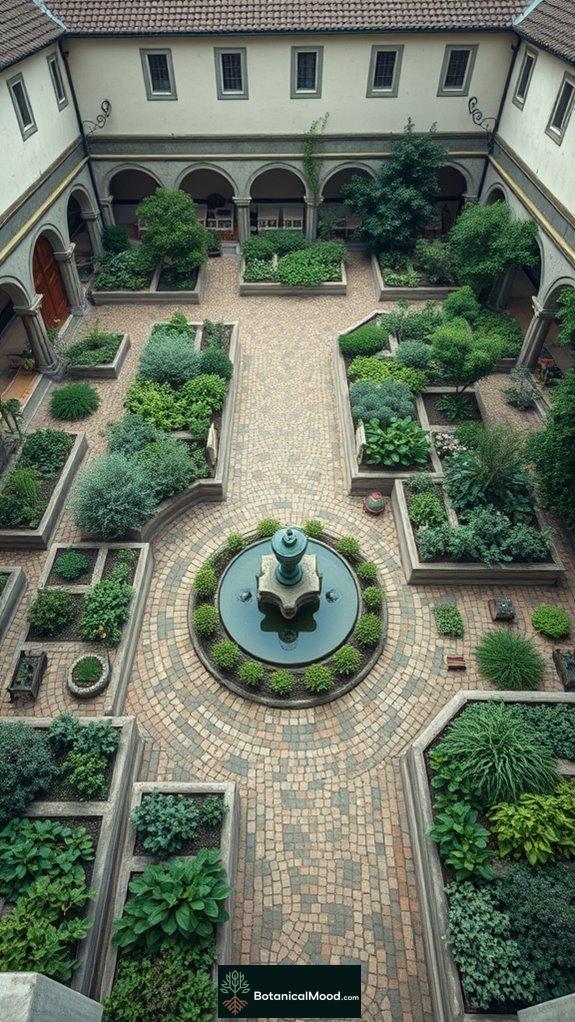
The arrangement of a physic garden is a fascinating journey into the historical practices of herbal medicine, inviting a closer look at how these spaces were meticulously designed to serve both practical and aesthetic purposes.
- Raised beds for easy access
- Central water features, like fountains, enhancing beauty
- Space divided by plant types for efficient care
I love how these gardens, often near monastic infirmaries, provided essential healing herbs.
They remind me of why I created Botanical Mood—sharing the beauty and purpose behind such historical designs.
Physic gardens truly reflect a blend of function and artistry.
3. Kitchen Herb Garden Layout
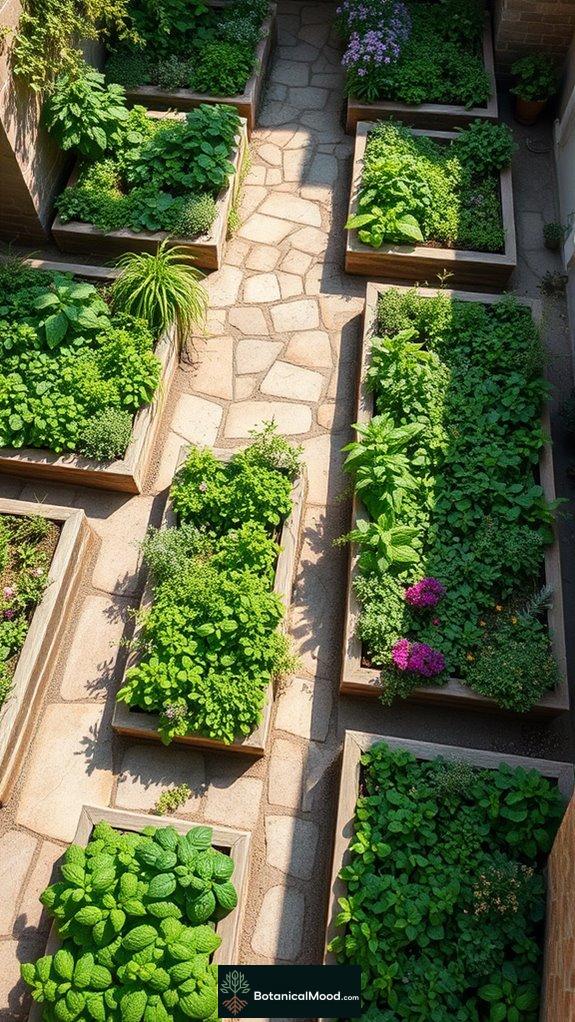
While exploring the enchanting world of kitchen herb gardens, one can't help but admire how they reflect both utility and beauty, particularly in their historical backdrop.
These gardens, rooted in medieval Europe, often featured symmetrical layouts with paths and beds designed for easy access from the kitchen. Envision stepping outside to gather fresh basil, sage, or thyme, each plant thriving in a compact space.
Utilizing natural materials for pathways, I love how these gardens blend aesthetics with practicality, inviting biodiversity. Additionally, incorporating edible landscape strategies can enhance both the productivity and visual appeal of these gardens. My passion for these designs inspired me to create Botanical Mood, showcasing how history can beautifully influence our modern gardening choices.
4. Monastic Garden With Raised Beds
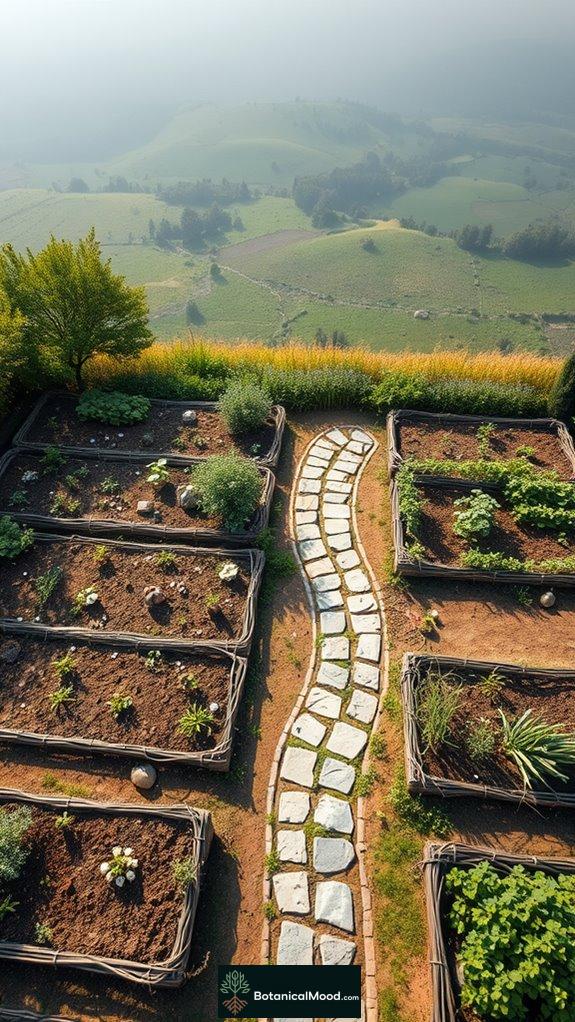
Monastic gardens, with their raised beds, create a unique blend of beauty and functionality that captivates any gardening enthusiast.
- Simple grid patterns for easy access
- A focus on medicinal herbs for healing
- A tranquil space for contemplation
I love how these gardens reflect a time of self-sufficiency, where every plant served a purpose.
Raised beds, often made from willow, invite you to kneel and tend to onions, garlic, and healing herbs like chamomile. Companion planting strategies can enhance the growth of these herbs and vegetables by promoting mutually beneficial relationships among them.
As I explore these layouts, I'm reminded of the beauty in simplicity, inspiring me to share this passion at Botanical Mood, where we embrace the art of gardening together.
5. Spiral Herb Garden

Spiral herb gardens, with their enchanting design and practical benefits, offer an innovative approach to growing a variety of herbs in a confined space. Inspired by medieval traditions, these gardens create delightful microclimates, allowing plants to flourish in harmony.
As I designed my spiral, I carefully selected classic Mediterranean herbs, like rosemary and thyme, for their beauty and culinary uses. Each level provides a unique environment, from the moist base for mint to the dry upper reaches for sage. The aesthetic charm and functionality of a spiral garden resonate deeply with my passion for both history and horticulture, which inspired Botanical Mood. Additionally, incorporating pastel wildflower accents can enhance the visual appeal of your spiral herb garden while attracting beneficial pollinators.
6. Medieval Knot Garden

Knot gardens captivate the imagination with their elaborate designs and historical significance, showcasing a harmonious blend of utility and beauty.
- Inspired by medieval kitchen gardens
- A mix of practicality and aesthetics
- Symbolizing order and harmony
I adore the way these gardens intertwine geometric patterns and vibrant herbs, creating a living tapestry.
The careful selection of plants like boxwood and medicinal herbs adds both charm and function.
As I explore these knot gardens, I'm reminded of why I created Botanical Mood—to celebrate the artistry and history of gardening, inviting others to experience the magic found within these elaborate designs.
7. Medicinal Plant Pathways

While exploring the enchanting world of medicinal plant pathways, I find that these garden designs not only serve practical purposes but also create a serene journey through history.
These pathways, often adorned with diverse herbs, reflect the careful cultivation practices of medieval monks who believed in nature's healing power. Each turn in the garden reveals plants rich in folklore and medicinal properties, inviting contemplation and connection. The incorporation of therapeutic landscape elements enhances the sensory experience, promoting mental wellness.
| Herb | Use | Symbolism |
|---|---|---|
| Sage | Wisdom, cleansing | Purity and protection |
| Thyme | Courage, healing | Strength in adversity |
| Lavender | Relaxation, antiseptic | Calmness and peace |
| Rosemary | Memory, clarity | Remembrance and love |
| Chamomile | Sleep aid, calming | Tranquility and comfort |
The beauty of these pathways is why I created Botanical Mood, to share their intimate magic.
8. Herb Spiral for Easy Access

Creating an herb spiral not only maximizes your gardening space but also transforms the way you interact with your herbs.
- It creates microclimates for diverse plants.
- Easy access makes maintenance a breeze.
- The spiral design adds unique beauty to your garden.
As I constructed my own spiral, I felt a deep connection with each herb, from the sun-loving rosemary atop to the moisture-loving parsley below.
The thoughtful design, using bricks and stones, allows me to enjoy the beauty and warmth of my herbs. Additionally, the strategic placement of companion plants can enhance growth and deter pests, further enriching your gardening experience.
I created this website, Botanical Mood, to share that intimate experience with fellow garden lovers.
9. Enclosed Herb Garden
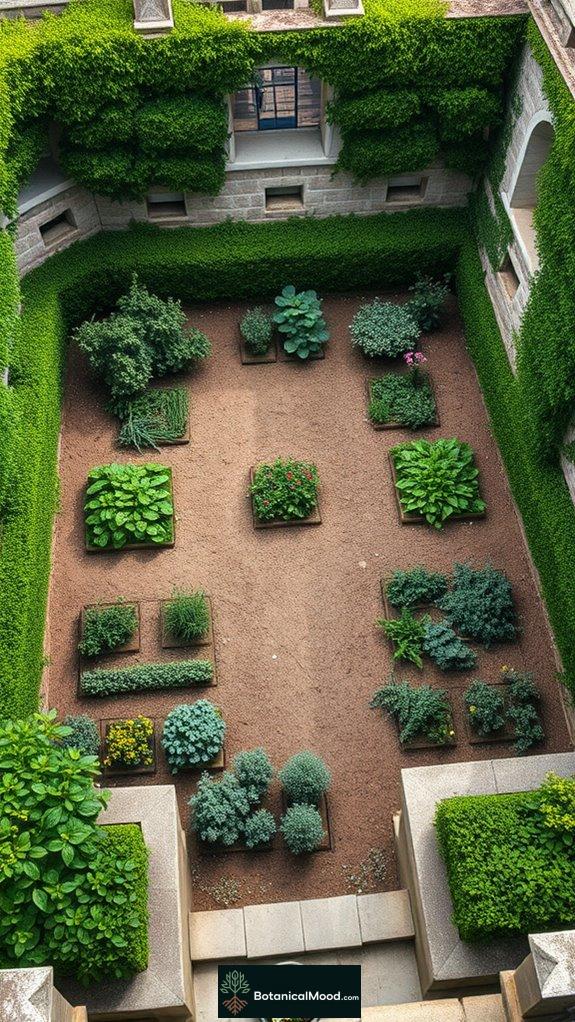
Enclosed herb gardens, often characterized by their protective barriers, invite a sense of intimacy and order that many garden enthusiasts cherish. These charming spaces, constructed from brick, stone, or hedges, not only safeguard the herbs from wandering animals but also create a secluded retreat for reflection and enjoyment. In these gardens, I love to cultivate a variety of herbs, from fragrant basil to medicinal sage, each reflecting medieval traditions. The design, inspired by historical layouts like the St. Gall plan, offers a delightful blend of beauty and functionality. Additionally, incorporating companion planting can enhance the growth and health of the herbs while providing a natural pest control solution. Each visit to my garden reminds me of the rich history that inspires my passion.
10. Herb and Flower Companion Planting

As I explore the enchanting world of herb and flower companion planting, I find a beautiful synergy that enhances the overall health and importance of my garden.
By integrating these plants, I create a vibrant ecosystem that not only looks stunning but also serves practical purposes.
- Marigolds repel pests and attract beneficial insects.
- Basil enhances the flavor of tomatoes while deterring diseases.
- Calendula supports pollination and brings a splash of color.
This delicate balance of beauty and utility fills my garden with life, inspiring my passion for creating spaces that resonate with nature's harmony. Additionally, incorporating edible landscaping can further enhance the aesthetic appeal while providing delicious harvests.
11. Seasonal Herb Rotation Garden

While planning a seasonal herb rotation garden, I find it fascinating how the historical practices of medieval horticulture can guide my choices today.
By embracing the ancient wisdom of crop rotation, I can guarantee my soil remains fertile and vibrant.
In spring, I'll sow peas and oats, while winter brings rye for early harvests. I'll mix in herbs like thyme and sage, enhancing both flavor and medicinal properties.
The geometric patterns of my design evoke the beauty of medieval gardens, and I can't help but feel inspired.
Botanical Mood embodies this passion, as I share my journey through the art of gardening.
Historical Garden Pattern Styles
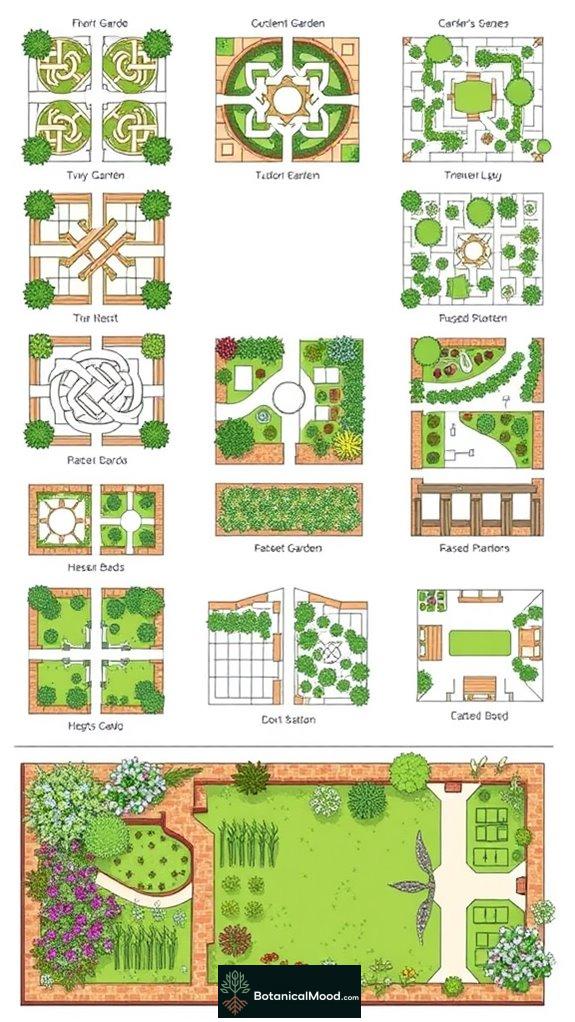
When I explore the various historical garden pattern styles, I'm often struck by how these designs not only reflect the cultural influences of their time but also serve practical purposes in gardening.
- Tudor knot gardens with their complex designs
- Geometric layouts of Renaissance collector's gardens
- Medieval rectangular beds showcasing medicinal plants
Each style tells a story, intertwining beauty and utility.
I've always believed that understanding these patterns enriches our gardening experience, helping us appreciate the beauty of nature.
That's part of why I created Botanical Mood, to share this passion with fellow history enthusiasts and gardeners alike.
Monastic Herb Garden Arrangements
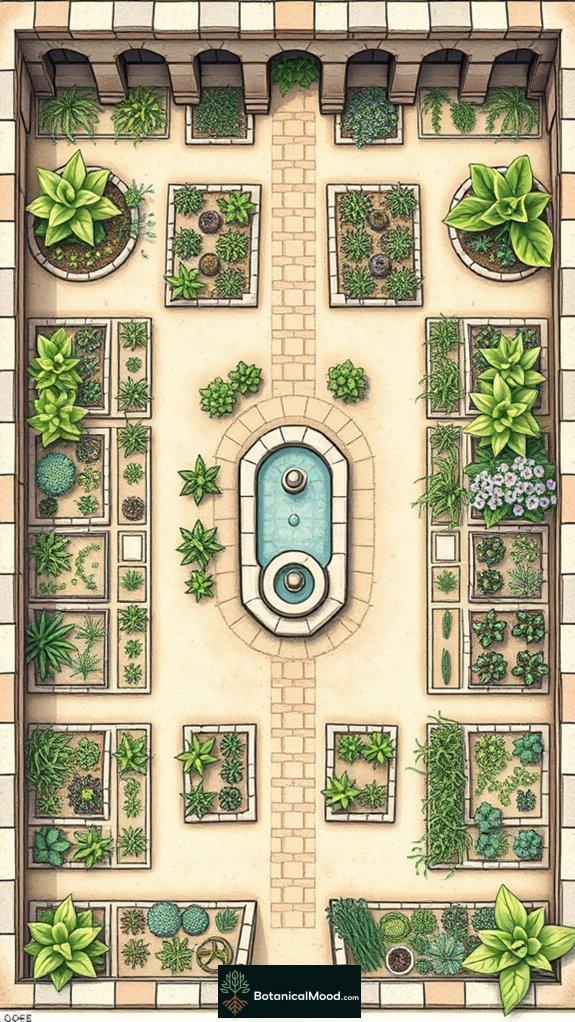
Monastic herb garden arrangements showcase a harmonious blend of beauty and functionality, reflecting the deep connection between nature and spiritual practice.
In these serene spaces, medicinal plants flourished in raised beds, each dedicated to a single herb, creating an organized, grid-like layout. Positioned near infirmaries, these gardens provided monks swift access to essential simples.
A cloister garth often served as a central courtyard, inviting contemplation with its pathways and perhaps a soothing fountain. As I explored these designs for Botanical Mood, I felt the tranquil energy radiating from the herbs, offering both healing and a reminder of the divine within nature's embrace.
Medieval Monastery Herb Bed Designs
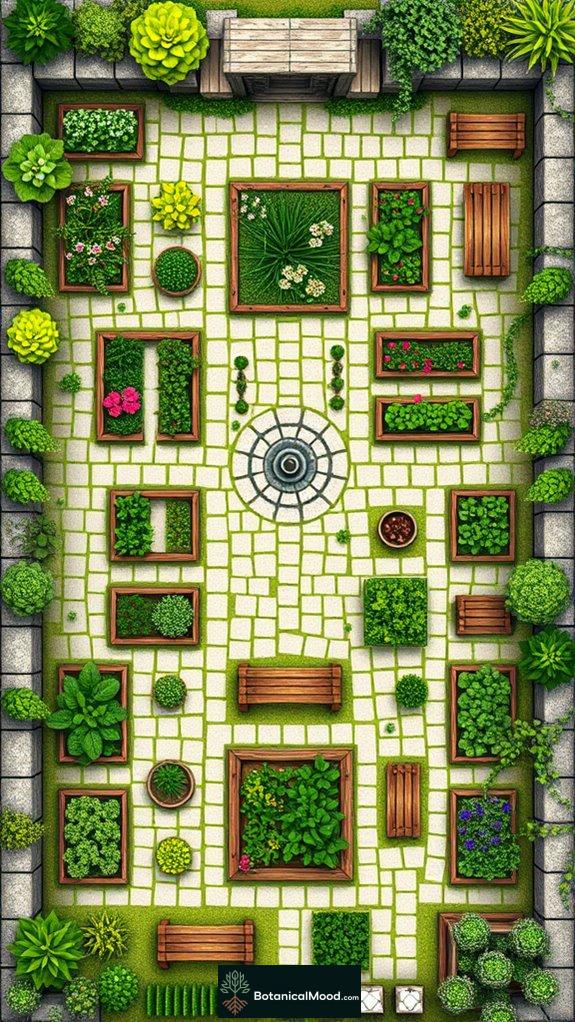
Creating a harmonious herb bed design in a medieval monastery involves a thoughtful arrangement that combines practicality with an appreciation for nature's beauty.
I find the elegance of these layouts truly enchanting.
- Raised beds for easy herb maintenance
- Central pathways ensuring accessibility
- Symbolic plant choices reflecting deeper meanings
Each herb bed serves a purpose, often cultivated by skilled herbalists, ensuring a self-sufficient sanctuary.
The structured geometric designs convey order, while natural materials like stone paths invite peaceful wandering.
Through my website, Botanical Mood, I hope to inspire others to embrace these timeless designs and their rich history in gardening.
Creating Symmetrical Plant Beds
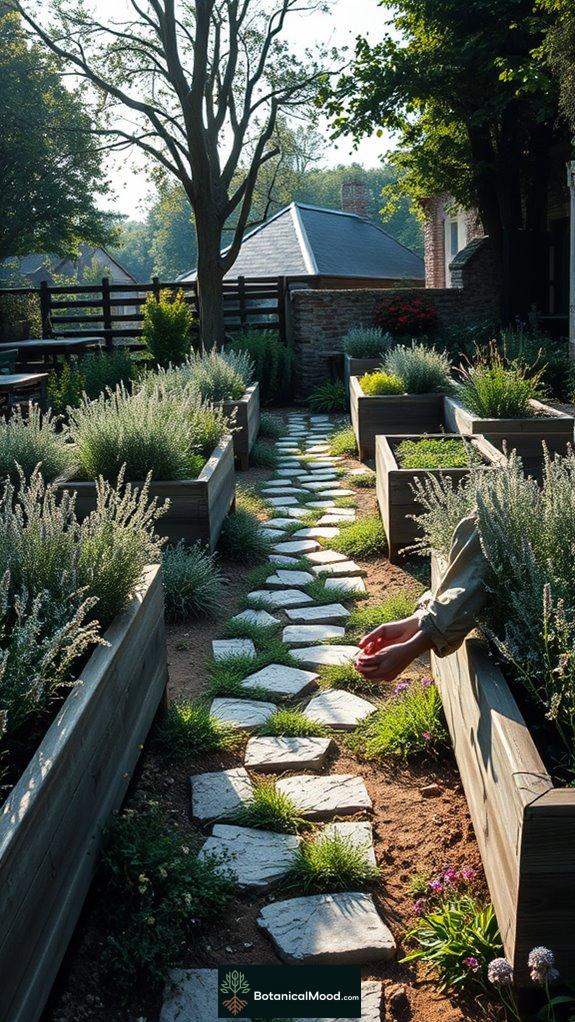
Symmetrical plant beds can transform a garden into a space of serene beauty, where balance and order reign supreme. By mirroring elements around a central axis, these layouts evoke a sense of harmony that enchants the eye.
I love using geometric shapes, like squares and circles, which give structure to my designs. Incorporating a central focal point, such as a trellis or sculpture, draws visitors in and creates a mesmerizing experience.
Regular pruning is essential to preserve that mirror-image balance, but the effort is well worth it. This attention to detail is what inspired me to create Botanical Mood, sharing my passion for garden design.
References
- https://www.metmuseum.org/about-the-met/collection-areas/medieval-art-and-the-cloisters/met-cloisters-gardens
- https://www.bbg.org/article/history_of_herb_garden_design
- https://plantingdiaries.com/2022/08/13/reflections-on-the-cloister-garden-at-the-museum-of-the-order-of-st-john/
- https://allusivefields.com/2020/12/21/medieval-herb-gardens-and-their-medicines/
- https://www.colwynn.com/garden-design-in-the-middle-ages/
- https://thecreativecottage.net/monastic-herb-gardens/
- https://theherbalacademy.com/blog/designing-an-herb-garden/
- https://en.wikipedia.org/wiki/Physic_garden
- https://landezine.com/the-physic-garden-by-thorbjorn-andersson-with-sweco-architects/
- https://www.motherearthnews.com/organic-gardening/garden-designs-kitchen-herbs-zmaz06onzraw/