Creating a drought-resilient garden is a fulfilling challenge, where beauty meets functionality. I've discovered that employing xeriscaping principles, raised bed gardening, and strategic water retention designs can transform your outdoor space. Arranging drought-tolerant plants and incorporating mulch not only conserves water but also enhances the garden's aesthetics. By thoughtfully grouping plants and designing for effective water use, I can cultivate a flourishing environment. Stick around, and you'll uncover more effective layouts and innovative techniques for your garden.
Quick Takeaways
- Utilize xeriscaping principles by selecting drought-tolerant plants and grouping them according to similar water needs for efficient water use.
- Design raised beds to enhance drainage and soil quality, incorporating moisture-retaining mixes to support plant health during dry periods.
- Implement swales and berms to direct rainwater runoff, maximizing water retention and promoting a sustainable garden layout.
- Create microclimates within the garden by strategically arranging plants to provide shade and shelter, improving overall plant resilience.
- Incorporate paths for easy access and maintenance, while optimizing space for diverse plant selections that promote biodiversity and ecosystem health.
Xeriscaping Principles

Xeriscaping techniques focus on water conservation, utilizing drought-tolerant plants like succulents and cacti to minimize water usage by 50-75%. Additionally, transitioning to xeriscaping can lead to significant water savings, with households saving approximately 120 gallons of water daily. By incorporating native plants into your design, you can further enhance the garden's resilience to drought conditions.
By carefully selecting plants and improving soil with organic matter, I've seen firsthand how vibrant colors and textures can flourish. These xeriscaping benefits not only enhance the garden's visual appeal but also support local wildlife.
Raised Bed Gardening

Raised bed gardening presents a fantastic solution for those aiming to cultivate a resilient garden in dry conditions.
These elevated plots offer improved drainage, reducing waterlogging and root rot, while allowing me to control soil quality with moisture-retaining mixes. I love using various raised bed materials, from wood to recycled plastic, tailored to my budget and aesthetic.
With thoughtful raised bed maintenance, like applying mulch and utilizing built-in water reservoirs, my plants thrive even in drought. Additionally, incorporating drought-resistant plants can enhance the garden's resilience, ensuring that it remains vibrant despite limited water availability.
Vertical Gardening Techniques
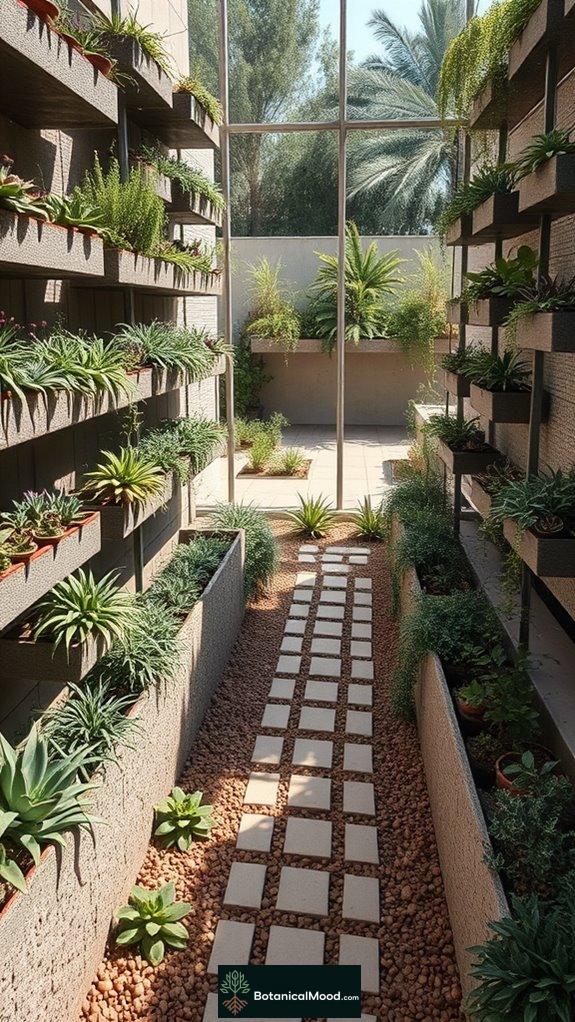
Vertical gardening techniques offer an innovative way to adapt our gardens to the challenges of drought, transforming limited spaces into lush, green retreats.
With vertical gardening benefits like improved water efficiency through hydroponics and drip irrigation, I'm amazed at how much space I can utilize.
However, I've encountered vertical gardening challenges, including high initial costs and the need for specialized maintenance.
Incorporating drought-tolerant plants, like succulents, not only enhances beauty but also supports sustainability.
Additionally, utilizing creative vertical garden design ideas can maximize aesthetic appeal while maintaining water efficiency.
Mulched Garden Beds

Mulched garden beds not only enhance the aesthetic appeal of your outdoor space but also play an essential role in promoting drought resilience. They offer numerous mulch benefits, such as retaining moisture, cooling the soil, and suppressing weeds. Additionally, using native plants in your mulched beds can further improve water conservation and support local ecosystems. I love using various mulch types like fine bark, pine straw, and compost, each contributing uniquely to plant health and soil fertility.
Drought-Tolerant Plant Grouping

Creating a garden that thrives in dry conditions starts with the thoughtful grouping of drought-tolerant plants. By focusing on drought-resistant perennials like *Artemisia* and *Salvia*, I've discovered that water conservation becomes effortless.
Using innovative plant selection strategies, I group plants based on their water needs, ensuring each one flourishes without excess irrigation. Larger plants, such as arborvitae, bring visual interest while reducing maintenance.
This method not only enhances the garden's beauty but also promotes sustainability. Additionally, incorporating native plant species can further improve the garden's resilience to drought conditions. I designed Botanical Mood to inspire others to embrace this approach, creating resilient environments that celebrate both nature and innovation.
Succulent and Cactus Arrangements
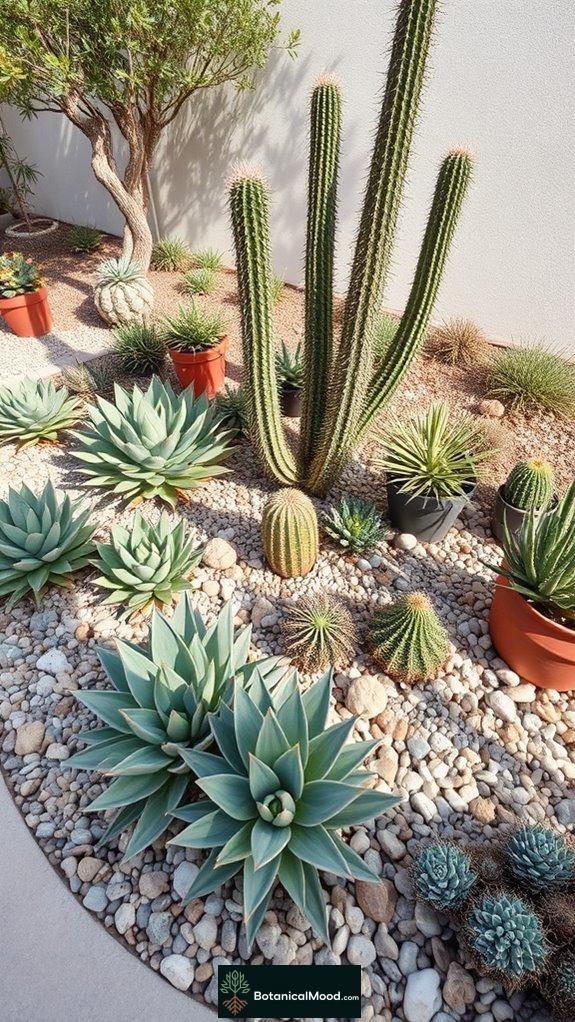
While arranging succulents and cacti in your garden can be a rewarding experience, it's essential to contemplate each plant's unique characteristics and how they interact with their surroundings.
I find that combining different succulent types and cactus varieties creates stunning visual interest.
Here are some ideas that inspire me:
- Pair tall yucca with low-growing sedums for contrast.
- Use colorful pots against vibrant painted walls.
- Incorporate recycled art for an eclectic vibe.
- Add decorative pebbles to enhance texture.
- Experiment with various container shapes for intrigue.
These arrangements not only beautify but also embody the innovative spirit I cherish at Botanical Mood. Additionally, selecting plants that are well-suited for drought-resistant ecosystems can significantly improve your garden's resilience to arid conditions.
Rain Garden Design

Designing a rain garden can transform an ordinary space into a vibrant ecosystem that not only manages stormwater but also enhances the beauty of your surroundings.
By collecting rainwater runoff, these gardens filter pollutants and reduce flooding, showcasing significant rain garden benefits. I love how they attract local wildlife while adding visual appeal to my environment.
For rain garden maintenance, I guarantee regular watering and mulching until the plants establish. Choosing native plants that thrive in varying moisture conditions creates a resilient setup, making them a key component of drought-resistant xeriscaping.
Ultimately, a thoughtfully designed rain garden not only supports sustainability but also brings joy to our outdoor spaces, which inspired Botanical Mood.
Mediterranean Garden Layout

When I think about a Mediterranean garden layout, I envision a sun-soaked paradise filled with vibrant colors and fragrant herbs that thrive in warm, dry climates.
This design embraces Mediterranean aesthetics while showcasing drought adaptations.
- Olive trees and rosemary for timeless elegance
- Bougainvillea and hibiscus for vivid splashes of color
- Succulents like agave for low-maintenance beauty
- Silver-foliaged artemisia to conserve water
- Jasmine and wisteria for lush canopies
With thoughtful planning, you can create an inviting outdoor space that balances sustainability and charm. Incorporating drought-resistant plants not only enhances the beauty of your garden but also ensures its resilience against harsh weather conditions.
That's why I created Botanical Mood, to inspire innovative gardening ideas like this one.
Native Plant Gardens

Native plant gardens not only celebrate the unique beauty of local flora, but they also promote sustainable gardening practices that are increasingly crucial in our changing climate.
By incorporating native plants, I've experienced firsthand their incredible benefits, such as reduced watering needs and deep root systems that enhance soil moisture retention. These gardens also support biodiversity enhancement, providing essential habitats for pollinators and wildlife.
With thoughtful design, I can create vibrant ecosystems that thrive while conserving water. As I've explored these gardens, it's become clear how critical they're for a resilient future, inspiring my passion for sustainable gardening at Botanical Mood. Additionally, native plants are well-adapted to coastal environments, making them ideal for resilient landscape designs.
Edible Landscaping
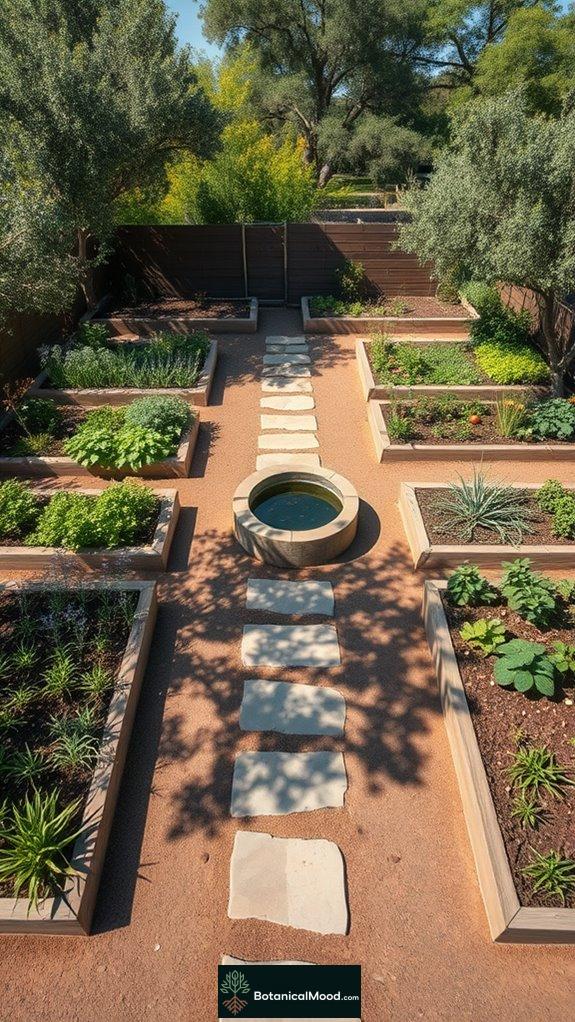
Edible Landscaping
Have you ever considered how an edible scenery not only serves as a beautiful garden but also provides a sustainable source of food?
Incorporating edible landscaping into your garden offers numerous benefits:
- Enhances biodiversity improvement through diverse edible plants
- Provides home grown food, reducing reliance on processed alternatives
- Supports urban agriculture, promoting local food production
- Implements conservation practices that absorb stormwater and reduce erosion
- Yields nutritional gardening benefits, with fresh, vitamin-rich produce
Additionally, edible landscape strategies can help maximize space by combining ornamental plants with productive food crops.
Permaculture Garden Design

Creating a garden that thrives sustainably involves more than just selecting beautiful plants; it requires a thoughtful approach to design and function.
I embrace permaculture principles by observing my site's sunlight and water flow, ensuring I catch and store energy with rainwater systems.
Herb Spiral Gardens

While I was exploring sustainable gardening methods, I discovered the incredible benefits of herb spiral gardens, which elegantly combine aesthetics with functionality.
Exploring sustainable gardening led me to the remarkable herb spiral gardens, blending beauty and practicality seamlessly.
These spiral structures not only save space but also create diverse microclimates that enhance plant growth.
Here are some features that captivated me:
- Spiral design mimicking nature
- Efficient use of small areas
- Thermal mass for heat retention
- Varied moisture zones for diverse herbs
- Aesthetic appeal as garden focal points
Utilizing effective herb selection strategies, I found these gardens promote biodiversity while accommodating both water-loving and drought-tolerant plants, making them ideal for resilient gardening.
Smart Irrigation Systems
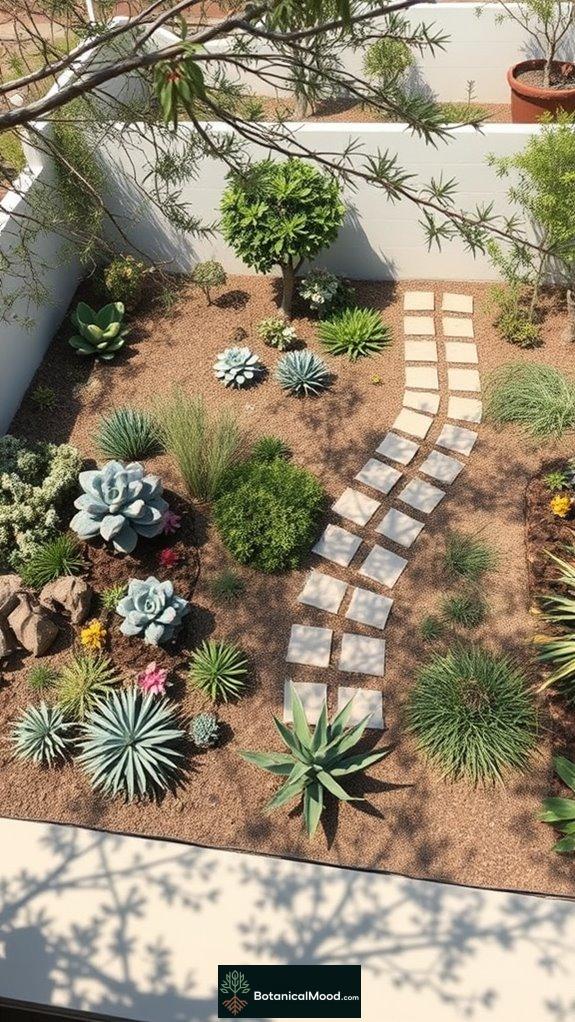
Smart irrigation systems represent a revolutionary approach to managing water in gardens, particularly as we navigate the challenges of drought. By integrating sensors, weather stations, and smart controllers, these systems enhance water management efficiency.
I've seen first-hand how they can reduce water usage by up to 30% compared to traditional methods, making a significant environmental impact. With soil moisture sensors and automated scheduling, these innovations guarantee precise irrigation timing.
While the initial cost may be higher, the long-term savings are undeniable. At Botanical Mood, I'm passionate about promoting these advancements to help create resilient, beautiful gardens that thrive sustainably.
Contoured Garden Beds
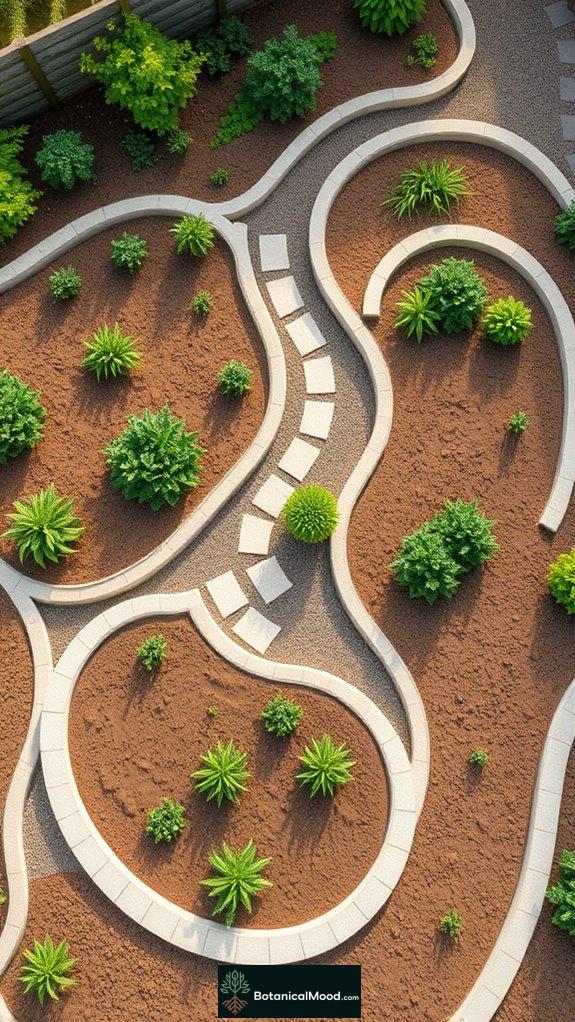
Contoured garden beds offer a fascinating solution for enhancing water management and soil health in our gardens.
The contoured bed benefits are numerous and truly innovative:
- Soil conservation techniques reduce erosion during heavy rains.
- They enhance water retention, allowing moisture to seep deep into the soil.
- Expect increased crop yield from healthier, more productive plants.
- Efficient pathways capture and reuse water, optimizing irrigation.
- These beds promote long-term sustainability, supporting soil health and conservation.
Shade Gardening Strategies
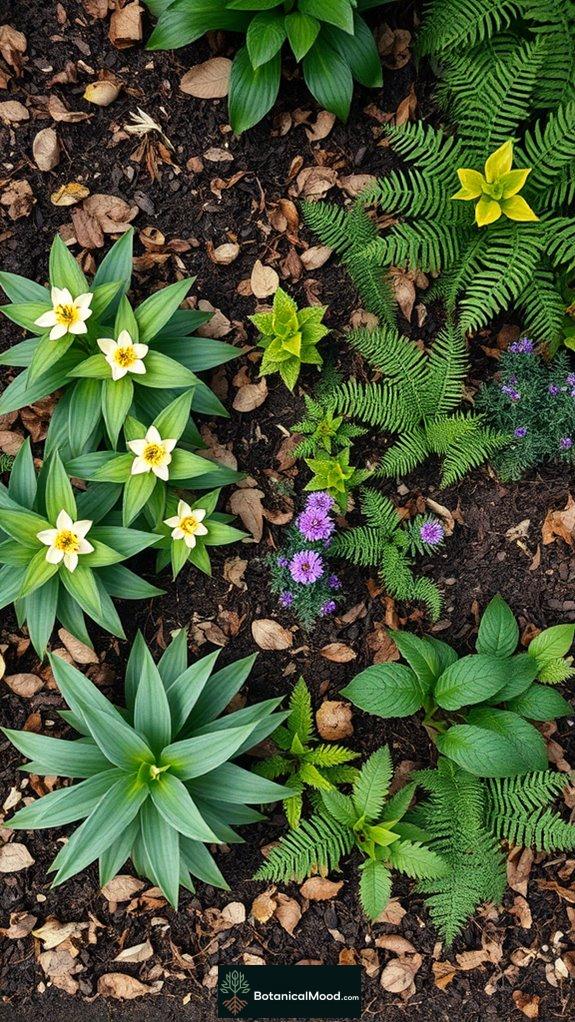
Creating a shade garden can be a rewarding endeavor, especially when you consider the unique challenges that dry conditions present.
I've found that selecting the right shade plant combinations is essential; options like Martagon lilies and zigzag asters thrive beautifully in these conditions.
To enhance moisture retention techniques, using fallen leaves as mulch not only preserves soil moisture but also enriches the earth over time.
Using fallen leaves as mulch is a great way to retain moisture and enrich your soil over time.
Layering plants with varying heights creates visual interest while maximizing available water.
Wildlife-Friendly Drought Gardens

While many gardeners may find it challenging to create a vibrant scenery in drought conditions, designing a wildlife-friendly drought garden isn't only feasible but rewarding.
I love incorporating native plants that support wildlife habitats and attract pollinators.
Here's what I recommend:
- Zigzag Goldenrod for bees and butterflies
- Slender Mountain Mint, a low-maintenance delight
- Woodland Sunflower, feeding birds and caterpillars
- Bird baths for hydration and wildlife attraction
- Mulching to conserve moisture
Water-Conserving Garden Layouts

Watering efficiently can greatly enhance the resilience of your garden, especially in areas prone to drought.
I focus on water-efficient landscaping by utilizing innovative techniques like drip irrigation, which guarantees water reaches the roots directly, minimizing waste.
I also create rain gardens and swales that capture and absorb rainwater naturally, promoting sustainable irrigation.
For best results, I adhere to specific watering schedules, targeting early mornings to cut evaporation losses.
These strategies not only conserve water but also cultivate a stunning, vibrant garden that flourishes despite dry conditions.
At Botanical Mood, I'm passionate about sharing these transformative ideas with you!
Drought-Tolerant Plant Arrangement Guide

When designing a drought-tolerant garden, the arrangement of plants plays an essential role in ensuring their survival and beauty.
To create an innovative oasis, consider these elements:
- Hydro-zoning for efficient watering
- Layering and repetition for visual appeal
- Sun and shade management to suit plants' needs
- Diverse plant color combinations for year-round interest
- Microclimate creation to enhance plant adaptability
Drought-Resilient Garden Blueprint
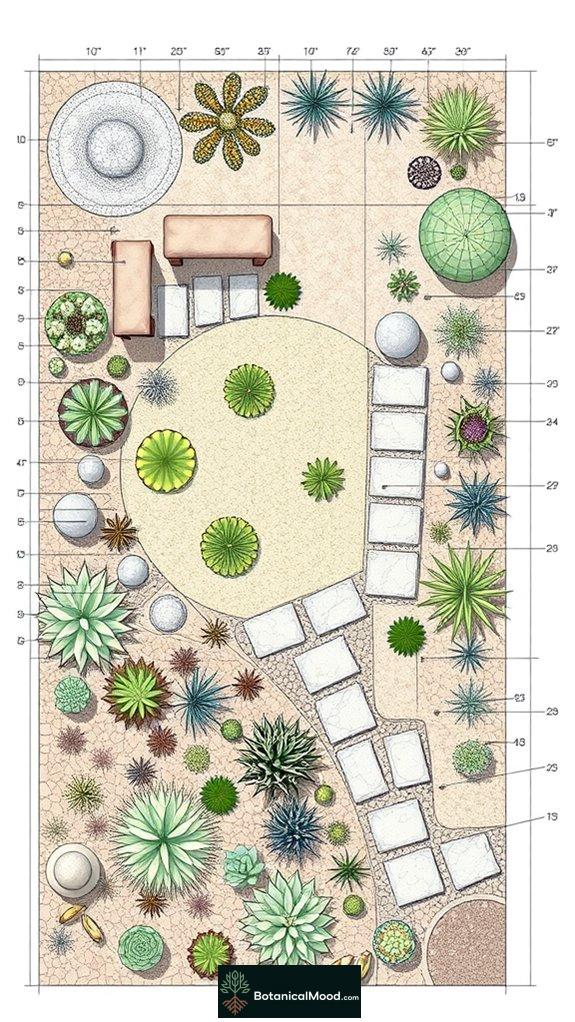
Creating a drought-resilient garden blueprint involves more than just selecting hardy plants; it requires a thoughtful arrangement that harmonizes aesthetics with functionality.
To achieve effective drought resistant landscaping, I focus on plant density that matches my garden's square footage, ensuring ideal resource competition. I enrich well-draining soil with mulch to retain moisture and implement rainwater collection systems for sustainable garden practices.
Incorporating native plants, I enhance resilience while maintaining visual appeal through repetition and layering.
This balance of beauty and practicality inspires my passion for designing gardens that thrive even in challenging conditions, which is why I created Botanical Mood.
Strategic Water Retention Design

Strategic water retention design transforms how we approach gardening, particularly in areas prone to drought.
By employing innovative techniques, we can enhance water efficiency and promote ecosystem balance.
Here are some effective strategies:
- Implement rainwater systems for collection and reuse.
- Utilize soil amendments to boost moisture retention.
- Practice plant zoning to align water needs.
- Explore efficient irrigation methods like drip systems.
- Design swales and berms to direct rainwater.
These elements not only support drought management but also create a vibrant, resilient environment.
At Botanical Mood, I'm inspired to share these innovations for a sustainable future.
References
- https://engagement.source.colostate.edu/7-principles-of-xeriscaping-horticulture-expert-explains/
- https://planetdesert.com/blogs/news/xeriscaping-guide-drought-tolerant-landscaping-design
- https://sensorex.com/xeriscape-gardens-principles/
- https://www.highcountrygardens.com/content/waterwise/how-to/plan-a-garden-xeriscape
- https://www.csbe.org/the-seven-principles-of-xeriscape
- https://deftspacelab.com/climate-proof-garden/
- https://www.finegardening.com/article/gorgeous-drought-tolerant-garden-plans-and-ideas
- https://caldwell.ces.ncsu.edu/2019/06/from-drought-to-deluge-planning-a-garden-to-withstand-weather-extremes/
- https://www.gardenary.com/blog/how-to-start-a-garden-part-2-creating-a-garden-design
- https://nebg.org/2022/08/31/six-strategies-improve-drought-resilience-vegetable-garden/