Want to turn your yard into a sustainable paradise?
Count me in!
When I first started my eco-friendly garden, I thought, “Why not? What could go wrong?” Spoiler alert: a lot!
But I learned the magic of native plants like Echinacea purpurea. They attract pollinators good and keep my water bill low.
With smart irrigation systems and a compost bin (that sometimes smells like a teenager’s room), my garden thrived.
And yes, permeable pavers are a stylish way to deal with runoff.
Every little choice makes Mother Nature proud, right?
Sustainable Design: My Garden Journey with Native Plants
A couple of years ago, I decided to revamp my dismal yard. I threw in some native plants, threw out the notion of a perfect lawn, and hoped for the best.
My friends teased me, but the real magic happened when bees and butterflies started buzzing around. It felt incredible!
Now, I tell everyone: ditch the chemicals, embrace soil health, and let nature do her thing. Planning a garden? Seriously consider native plants and eco-friendly design. You’ll be amazed at the transformation!
Quick Takeaways
- Incorporate native plants to support local wildlife, enhance soil health, and create sustainable ecosystems that require minimal maintenance.
- Install water-efficient irrigation systems with moisture sensors and collect rainwater to reduce consumption and lower utility costs.
- Create diverse garden zones with pollinator pathways and wildlife corridors using companion planting and natural pest management techniques.
- Implement permeable hardscaping and vertical gardening solutions to maximize space while maintaining proper drainage and sustainability.
- Maintain soil health through composting, natural amendments, and no-dig gardening practices to foster beneficial microorganisms.
Native Plant Selection Strategies

The thoughtful selection of native plants forms the cornerstone of any sustainable garden design, creating a harmonious ecosystem that supports local wildlife while reducing maintenance needs. I’ve found that understanding pollinator preferences and habitat requirements is vital when selecting natives. I match each plant’s seasonal blooming patterns, drought resistance, and soil compatibility to my garden’s conditions. Through Botanical Mood, I explore how these choices enhance wildlife interactions, particularly with species like Echinacea purpurea that attract beneficial insects. By incorporating a variety of native plant species, gardeners can create diverse habitats that benefit numerous pollinator types.
Companion Planting Layouts

Building on our native plant selections, strategic companion planting layouts maximize both ecological benefits and visual appeal in sustainable gardens. I’ve found that implementing guild planting principles, where complementary species support each other’s growth, creates resilient micro-ecosystems. Additionally, incorporating companion planting techniques can further enhance the overall health and productivity of your herb garden.
Water Conservation Methods

While sustainable gardens thrive through thoughtful plant selection and layout, effective water conservation methods remain essential for maintaining their long-term viability.
I’ve found that combining drip irrigation with automated watering systems and soil moisture sensors creates an efficient foundation. I layer this technology with strategic mulching for moisture retention, while incorporating permeable paving and greywater recycling. Additionally, utilizing biomorphic design principles can enhance the overall efficiency and sustainability of your garden, allowing it to harmonize with nature.
Soil Health Management

Through careful nurturing of soil biology, I’ve discovered that maintaining robust soil health forms the cornerstone of any thriving sustainable garden.
I’ve refined my soil amendment techniques to include layered composting and biochar integration, which dramatically enhance microbial diversity enhancement.
When I launched Botanical Mood, I wanted to share how these methods transformed my heavy clay soil into a living ecosystem teeming with beneficial organisms (Trichoderma harzianum).
Wildlife-Friendly Garden Design

A vibrant, healthy soil ecosystem naturally attracts diverse wildlife, which inspired me to expand my garden’s ecological benefits beyond the underground domain.
I’ve designed wildlife corridors and pollinator pathways using native plants like Echinacea purpurea and Asclepias tuberosa, creating sustainable foraging zones and natural feeders that support ecosystem diversity.
I’ve enhanced habitat features by incorporating nesting resources and bird-friendly landscaping elements, including berry-producing shrubs (Ilex verticillata) and water features, which I regularly document on Botanical Mood to inspire others’ wildlife garden transformations. Additionally, planting native flowering plants in clusters can significantly improve the attractiveness of your garden to various pollinators.
Vertical Garden Space Planning

Since maximizing limited garden space remains a key challenge for urban gardeners, I’ve developed vertical growing systems that transform blank walls and fences into productive green canvases. The vertical garden benefits extend beyond space efficiency – they create stunning living walls that improve air quality and reduce energy costs. I recommend exploring diverse vertical garden styles, from modular pocket planters to hydroponic systems, letting you cultivate herbs, vegetables, and ornamentals in even the smallest spaces. Additionally, incorporating sustainable plant choices into your vertical systems can enhance biodiversity and reduce maintenance.
Natural Pest Control Solutions

Why rely on harsh chemical pesticides when nature provides an abundant toolkit for managing garden pests effectively?
I’ve discovered that biological pest control methods, like introducing beneficial insects (Coccinellidae) and companion planting with marigolds (Tagetes), create a balanced ecosystem.
Combined with organic repellents such as neem oil and peppermint spray, I’m able to protect my garden while preserving its natural harmony.
Composting System Setup

Building on our natural approach to pest management, creating an efficient composting system transforms garden waste into nutrient-rich soil while reducing landfill impact.
I’ll guide you through setting up a three-bin composting system that balances nitrogen-rich green materials with carbon-rich browns. Mix kitchen scraps, yard waste, and dried leaves while maintaining proper moisture and aeration for ideal decomposition.
Through my work at Botanical Mood, I’ve found that beginners succeed best with simple compost bin designs that allow weekly turning and consistent material layering.
Regular maintenance guarantees proper nutrient balancing and faster breakdown of compost-friendly materials. Additionally, incorporating native plants in your garden can enhance soil quality and biodiversity, further supporting your composting efforts.
Pollinator Garden Zones

When designing a pollinator-friendly setting, I’ve found that establishing dedicated zones with specific plant groupings maximizes the garden’s appeal to beneficial insects like honeybees (Apis mellifera), native bees, and butterflies (Lepidoptera). I connect these zones with meandering garden pathways, ensuring habitat connectivity while maintaining garden aesthetics. My insect hotels, surrounded by seasonal blooms and diverse nectar sources, create essential sanctuaries that support multiple native bee species and enhance pollination strategies. Including a variety of native plant species not only boosts pollinator diversity but also fosters a resilient garden ecosystem.
Edible Landscape Integration

Through careful integration of edible plants within ornamental settings, I’ve transformed traditional garden spaces into productive yet aesthetically pleasing environments that merge form with function. I’ve discovered that mixing culinary herbs and edible flowers with ornamental plants creates multi-level gardening opportunities. This approach not only enhances the visual appeal of the landscape but also promotes biodiversity in the garden, supporting various beneficial insects and pollinators.
Rain Garden Design
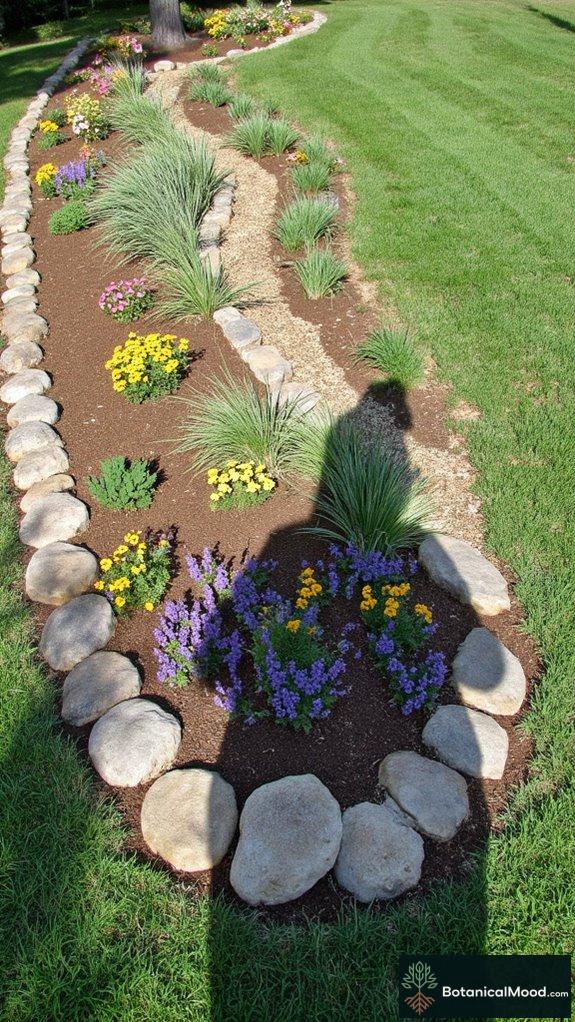
Natural water management stands as a cornerstone of my sustainable garden design philosophy, leading me to create functional rain gardens that elegantly capture and filter stormwater runoff.
The rain garden benefits I’ve experienced firsthand include:
- Enhanced groundwater recharge through strategic placement of deep-rooted natives (Rudbeckia hirta)
- Reduced erosion along property slopes
- Minimal rain garden maintenance beyond seasonal mulching
- Creation of essential habitat for local pollinators and amphibians
Additionally, incorporating native plant species into your rain garden not only supports biodiversity but also improves the efficiency of water conservation techniques.
Drought-Tolerant Plant Combinations

As climate patterns shift toward extended dry spells, I’ve carefully curated drought-tolerant plant combinations that create stunning visual impact while minimizing water usage in my Mediterranean-style garden beds.
I pair vibrant native wildflowers like Echinacea with textured foliage of low maintenance grasses (Festuca glauca), while aromatic groundcovers and trailing succulents add depth.
My colorful xeriscaping approach combines resilient perennials with drought-tolerant shrubs for year-round interest. Incorporating drought-resistant plants can significantly enhance the sustainability of your garden design.
Garden Tool Organization

Every well-maintained garden needs a thoughtfully organized tool storage system, which I’ve refined through years of testing different solutions in my own garden shed.
- Install vertical pegboard systems to maximize wall space and keep tools visible.
- Use labeled bins for seasonal tool storage solutions and small items.
- Create a garden tool inventory checklist on your phone for quick reference.
- Implement a cleaning station near your storage area for maintaining tool longevity.
Seasonal Planting Calendar

While many gardeners rely on intuition alone, maintaining a detailed seasonal planting calendar has transformed my approach to year-round garden management, especially here in Zone 7b where I’ve documented ideal planting windows for over 200 species. I’ve learned that timing spring planting of tender annuals (Tagetes erecta) and planning fall harvesting of root vegetables (Daucus carota) requires methodical tracking. This inspired me to create Botanical Mood’s interactive planting guide. Additionally, incorporating companion planting strategies can significantly enhance the productivity of your raised beds.
Sustainable Hardscaping Materials
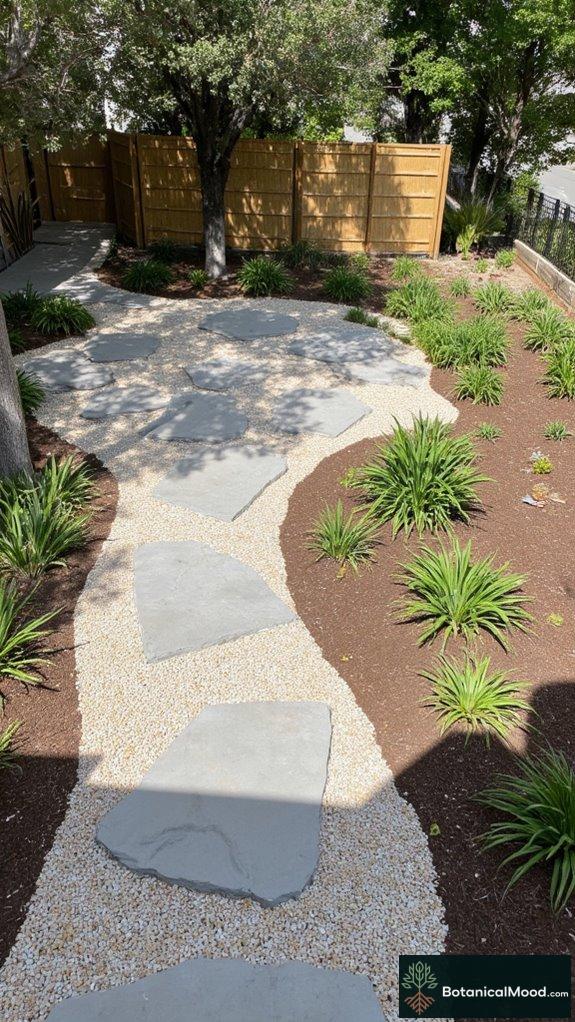
Planning the perfect garden involves more than just selecting plants – sustainable hardscaping materials form the backbone of any enduring scenery design.
I’ve found that incorporating eco-friendly elements creates both visual appeal and environmental benefits.
- Natural stone and permeable pavers reduce water runoff while adding timeless charm
- Recycled aggregate and sustainable gravel offer excellent drainage solutions
- Bamboo decking and reclaimed wood provide renewable, durable options
- Heat-resistant tiles and composite benches withstand weather extremes beautifully
For instance, using xeriscape principles in hardscaping can help conserve water while enhancing landscape aesthetics.
Natural Shade Solutions

Creating natural shade in your garden requires thoughtful integration of living elements that provide both cooling relief and visual drama throughout the seasons.
I recommend planting fast-growing shade producing trees like Japanese maple (Acer palmatum) alongside shade loving plants such as hostas (Hosta spp.) and ferns (Dryopteris spp.). A well-designed garden encourages low-maintenance shade while creating a tranquil environment for relaxation and enjoyment.
I’ve designed many garden spaces where strategic placement of these elements creates comfortable microclimates while maintaining visual harmony.
Mulching Techniques

Three essential mulching techniques have revolutionized my approach to sustainable garden maintenance over my 15 years of professional landscaping.
I’ve refined these organic mulching methods to maximize both aesthetic appeal and plant health benefits.
- Layer natural mulch materials 2-3 inches deep, avoiding direct contact with stems.
- Apply seasonal mulching in early spring and late fall for ideal soil protection.
- Incorporate diverse organic materials like pine needles, straw, and wood chips.
- Address mulching challenges by monitoring moisture levels and preventing fungal growth.
Incorporating mulch not only conserves moisture but also enhances soil health and biodiversity in your garden ecosystem.
Rainwater Harvesting Systems

While traditional gardens rely heavily on municipal water supplies, I’ve discovered that implementing a thoughtful rainwater harvesting system can transform your garden’s sustainability profile and reduce water bills by up to 40%. I recommend starting with basic rooftop runoff solutions like interconnected rain barrels. Then advancing to sophisticated rainwater filtration techniques that include first-flush diverters and mesh screens for cleaner irrigation water. Additionally, incorporating permeable surfaces in your garden design can enhance water absorption and reduce runoff.
Food Forest Planning

A well-designed food forest transforms your garden into a self-sustaining ecosystem where edible plants thrive across seven distinct vertical layers, from tall canopy trees like pecans (Carya illinoinensis) down to root crops and ground covers.
When I plan food forest structuring for my clients, I focus on:
- Starting with edible canopy considerations like dwarf fruit trees (Malus domestica)
- Adding berry-producing shrubs (Vaccinium corymbosum) as the middle story
- Incorporating perennial herbs (Rosmarinus officinalis) for the herbaceous layer
- Including root vegetables (Dioscorea batatas) for the underground story.
In addition, a successful food forest must reflect essential permaculture principles such as biodiversity and resource efficiency.
Garden Waste Reduction
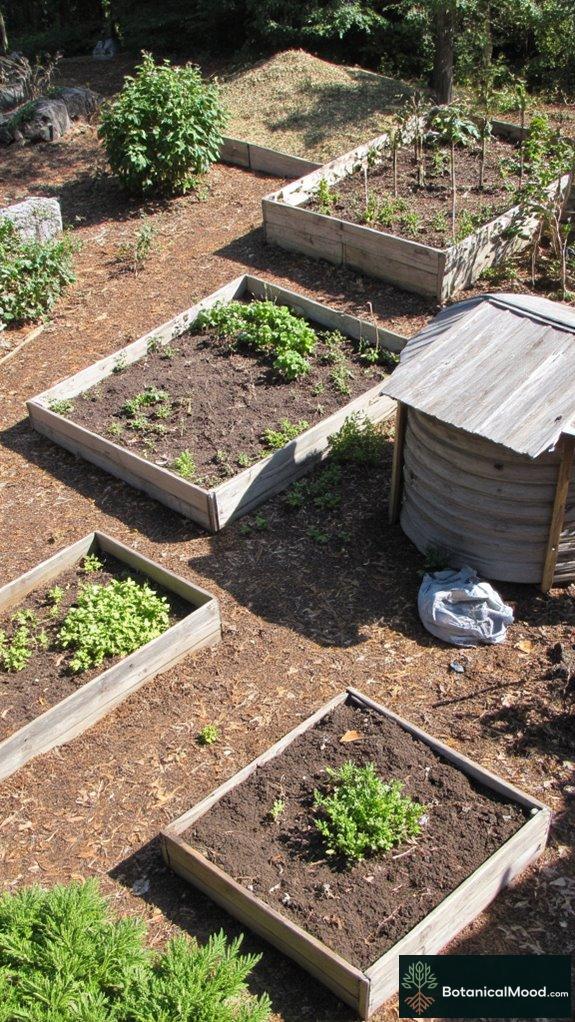
Smart garden planning extends beyond plant selection to mindful waste management, where I’ve discovered that reducing garden waste starts at the design phase.
I’ve implemented eco-friendly practices like garden recycling and waste composting, transforming green waste into valuable resources through biodegradable materials management.
No-Dig Garden Methods

Through years of experimenting with various gardening techniques, I’ve discovered that no-dig gardening methods offer remarkable benefits for soil health and ecosystem preservation.
Following permaculture principles, I’ve developed these sheet mulching strategies that protect beneficial soil organisms:
- Layer cardboard directly over grass or weeds
- Add 4-6 inches of organic compost
- Top with straw or leaf mulch
- Water thoroughly to activate decomposition
This gentle approach mirrors nature’s own soil-building process. Additionally, utilizing urban homestead landscape planning can enhance the overall effectiveness of your garden design.
Biodiversity Enhancement
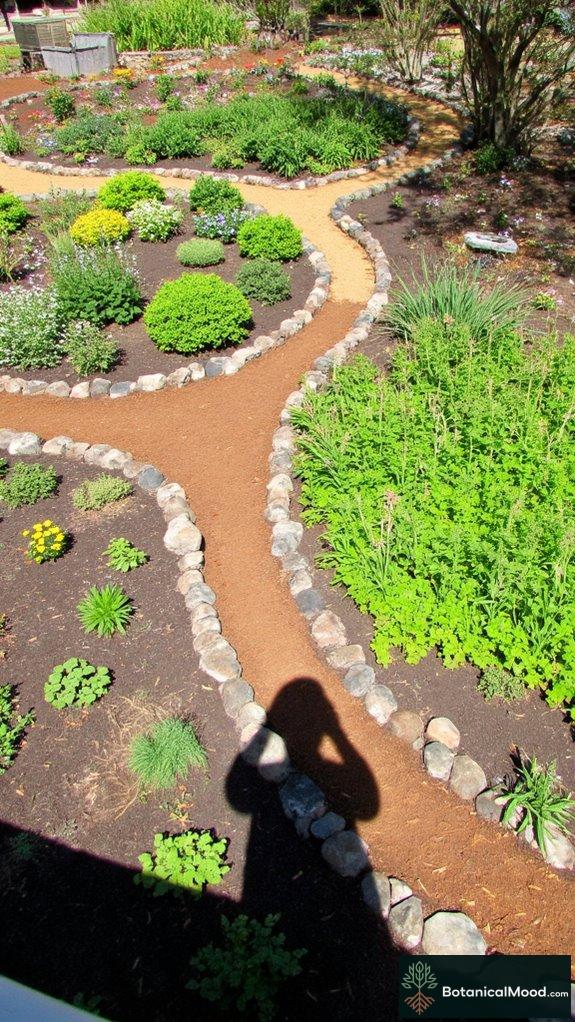
Biodiversity serves as the beating heart of any thriving garden ecosystem, which I’ve carefully cultivated in my own spaces over the past decade. I’ve discovered that creating biodiversity corridors between garden zones encourages beneficial insects and native wildlife, while ecosystem partnerships between companion plants strengthen natural defenses. Additionally, incorporating native plants into your garden can significantly increase the presence of pollinators and support overall ecological health.
Urban Garden Space Maximization

Even the smallest urban spaces can become verdant sanctuaries when approached with creative vision and strategic planning, much like I’ve discovered while transforming countless compact city plots into flourishing green retreats.
- Implement multi-use spaces by combining raised beds with container gardening and herb spirals.
- Transform rooftops into thriving micro farms with seasonal veggies and edible landscaping.
- Utilize permaculture principles to create biodiversity corridors with pollinator-friendly plants.
- Design vertical kitchen gardens that maximize yields while minimizing square footage.
- Additionally, consider incorporating creative urban gardening techniques to further enhance your space and promote sustainability.
Natural Fertilizer Options

Natural fertilizers provide five essential pathways to nourish your garden sustainably, as I’ve discovered through years of experimenting with organic growing methods in both urban and rural settings.
I’ve found that homemade compost enriched with worm castings delivers exceptional results, especially when layered with grass clippings, fallen leaves, and kitchen scraps.
Through developing content for Botanical Mood, I’ve documented how these natural amendments consistently outperform synthetic alternatives in building long-term soil health.
Climate-Resilient Plant Selection

While planning my climate-adaptive garden spaces across diverse growing zones, I’ve learned that selecting resilient plants requires carefully matching species to both current conditions and projected climate shifts in your region.
I recommend these climate adaptation techniques and resilient landscaping strategies:
- Choose drought-tolerant natives like Echinacea (Echinacea purpurea) and Black-Eyed Susan (Rudbeckia hirta)
- Group plants with similar water needs together for efficient irrigation
- Select deep-rooted perennials that stabilize soil and improve drainage
- Incorporate heat-resistant Mediterranean herbs like lavender (Lavandula angustifolia) and rosemary (Rosmarinus officinalis)
- Consider creating a xeriscape oasis in your garden to enhance water conservation and aesthetic appeal.
Garden Path Design

How can thoughtfully designed garden paths transform your outdoor spaces into an enchanting journey through nature?
I’ll guide you through selecting sustainable path materials like permeable pavers and recycled stone, while incorporating innovative style variations that complement your garden’s aesthetics. From solar-powered lighting features to accessible route planning, I’ve found that thoughtful edge treatments and low-maintenance design choices create inviting pathways that enhance your garden’s flow and functionality. Additionally, incorporating minimalist landscape pathways emphasizes simplicity and functionality, making your garden even more inviting.
Green Energy Integration

Building on our sustainable path lighting, implementing green energy solutions throughout your garden creates an eco-conscious outdoor sanctuary that maximizes nature’s power.
- I recommend starting with solar panel placement on south-facing structures, integrating them with climbing vines (Parthenocissus tricuspidata) for aesthetic balance.
- Smart irrigation technologies paired with energy efficient lighting can reduce consumption by up to 60%.
- Consider small wind turbine options for supplemental power generation.
- Electric vehicle charging stations disguised as decorative pergolas complete your garden’s microgrid development.
Incorporating sustainable energy practices further enhances your outdoor experience, ensuring that your garden supports both environmental health and personal well-being.
Sustainable Watering Systems

Since establishing an efficient watering system forms the backbone of any sustainable garden, I’ve designed multiple water-conscious solutions that combine traditional wisdom with modern technology.
I recommend starting with automated drip irrigation paired with moisture sensors for precise control.
You’ll want to integrate greywater recycling systems and permeable paving to maximize water retention.
Regular irrigation audits, coupled with seasonal adjustments and strategically placed rain gauges, will guarantee ideal water usage while maintaining garden health. Additionally, implementing xeriscaping techniques can drastically reduce the need for supplemental watering in your garden.
Local Ecosystem Support

Creating a thriving habitat for local wildlife represents one of the most rewarding aspects of sustainable gardening.
I’ve found that ecosystem harmony starts with understanding and supporting local biodiversity in your garden space.
- Plant native species (Quercus alba, Echinacea purpurea) that attract pollinators
- Install water features for birds and beneficial insects
- Create layered vegetation zones for wildlife shelter
- Leave fallen leaves and dead wood as natural habitats
Additionally, consider incorporating bee-friendly plants that provide essential resources for pollinators throughout the growing season.
Plant Propagation Methods

While sustainable gardens thrive through careful plant selection and ecosystem support, mastering various propagation techniques allows you to expand your garden efficiently and cost-effectively.
I’ve found that combining seed germination tips with stem cuttings guide practices creates remarkable results. Through my experiences at Botanical Mood, I’ve discovered that air layering techniques and division methods work exceptionally well for expanding perennial collections without additional costs. Additionally, utilizing modern permaculture strategies can significantly enhance your propagation success by promoting biodiversity and resilient plant growth.
Year-Round Garden Planning

Smart garden planning extends beyond propagation into a year-round cycle of thoughtful cultivation and design.
I’ve found that successful year-round planting requires careful seasonal crop rotation and attention to timing.
- Map out spring beds for early season crops (Lactuca sativa)
- Plan summer’s vibrant harvest schedule
- Schedule autumn soil amendments and winter crops
- Create detailed records of crop locations for rotation planning
Incorporating sculptural plants into your garden can add visual interest while enhancing the architectural elements of your design.
Sustainable Lawn Alternatives

Traditional lawns demand excessive water, chemicals, and maintenance while offering minimal ecological value. I’ve discovered several eco friendly grasses and lawn alternatives that transform mundane yards into vibrant ecosystems. Native sedges (Carex pensylvanica), creeping thyme (Thymus serpyllum), and microclover (Trifolium repens) create stunning, low-maintenance carpets that support pollinators while reducing your environmental footprint. Incorporating these drought-resistant native plants not only conserves water but also enhances biodiversity in your garden.
Garden Microclimate Creation

Creating strategic microclimates in your garden allows you to cultivate a wider variety of plants by manipulating environmental conditions like temperature, moisture, and wind exposure.
Through careful microclimate mapping, I’ve discovered these proven techniques:
- Install trellises and pergolas for shade creation, perfect for delicate ferns (Athyrium niponicum).
- Build stone walls that absorb and radiate heat.
- Position water features to increase humidity.
- Create windbreaks using dense evergreen hedges.
Additionally, incorporating industrial design elements can enhance both functionality and aesthetic appeal in your landscaped areas.
Natural Border Design

While many gardeners focus solely on individual plant selections, I’ve found that thoughtfully designed natural borders can transform an ordinary garden into an enchanting setting that flows seamlessly with the surrounding environment. I combine wildflower borders with ornamental grasses (Miscanthus sinensis) to create pollinator pathways, while strategically placed edible hedgerows provide both privacy screens and habitat enhancement. My buffer zones feature fragrant plantings of lavender and rosemary, offering year-round seasonal interest that inspired my creation of Botanical Mood. Incorporating low-maintenance native landscapes can significantly reduce the upkeep while enhancing biodiversity.
Seed Saving Techniques

Three essential seed saving techniques have revolutionized my approach to sustainable gardening over the past decade, leading me to develop reliable methods for preserving heirloom varieties like Cherokee Purple tomatoes (Solanum lycopersicum) and Black Beauty zinnias (Zinnia elegans).
- Use paper bags to collect dry seeds from fully mature flower heads
- Store seeds in airtight glass jars with silica gel packets
- Label containers with variety name and harvest date
- Test seed viability annually using the paper towel germination method
Garden Bed Construction

Building durable garden beds requires careful material selection and proper construction techniques that I’ve refined through years of experimentation at my Zone 6b demonstration garden. I’ve found that incorporating permaculture principles into raised beds design maximizes both sustainability and yield. I use untreated cedar planks secured with galvanized brackets, layering organic materials in a lasagna-style approach that mirrors natural soil building processes. Additionally, selecting drought-resistant plant varieties can enhance the xeriscaping effect while minimizing water usage in your garden.
Natural Weed Management
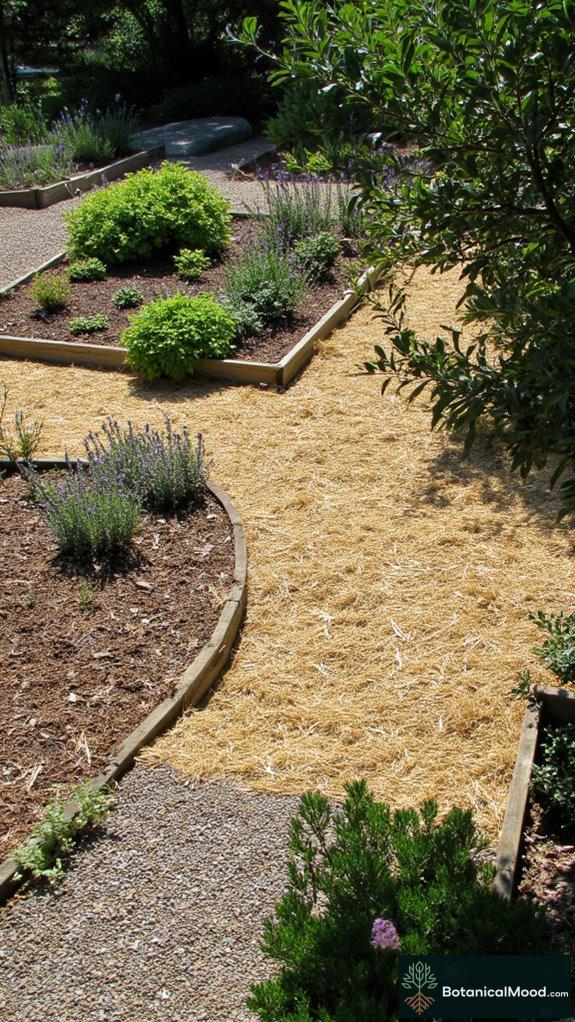
Since establishing effective weed control makes the difference between a thriving garden and constant maintenance battles, I’ve developed several natural management strategies that work harmoniously with the garden’s ecosystem.
- Layer biodegradable mulches like straw and leaf mold to suppress weed growth
- Plant dense groundcovers (Thymus serpyllum) as living mulch barriers
- Integrate organic herb strategies with companion planting using aromatic repellents
- Apply corn gluten meal in early spring to prevent weed seed germination
To enhance these strategies, consider utilizing permaculture garden design principles that focus on creating a balanced and resilient ecosystem.
Water Feature Integration

Beyond managing weeds naturally, incorporating water elements adds another dimension of sustainability to any garden design.
I’ve found that sustainable aquatic ecosystems thrive when you combine eco-friendly filtration with thoughtful aquatic plant selection.
I recommend integrating rainwater features that manage surface runoff while creating enchanting soundscapes.
My favorite approach pairs wildlife attraction features with fountain design principles that minimize irrigation impact. Additionally, the use of natural filtration systems can enhance the water quality in your garden while supporting local wildlife.
Container Garden Planning

When planning container gardens for small spaces or urban environments, I’ve discovered that thoughtful vessel selection and strategic placement can transform even the tiniest balcony or patio into a thriving miniature ecosystem.
- Choose deep containers (minimum 12 inches) for herb container gardening, especially for Mediterranean varieties like rosemary (Rosmarinus officinalis).
- Layer plants by height, creating decorative container arrangements with “thrillers, fillers, and spillers.”
- Consider self-watering containers to maintain consistent moisture levels.
- Group containers with similar water needs together, maximizing efficiency while reducing maintenance time.
Incorporating decorative stones into your container arrangements can also enhance the rustic aesthetic while providing additional drainage benefits.
Sustainable Pruning Methods

Although sustainable pruning demands careful attention to timing and technique, I’ve found that mastering these methods can dramatically enhance both plant health and garden aesthetics while minimizing waste.
I practice regenerative pruning by making clean 45-degree cuts just above growth nodes, which encourages robust new growth.
Through careful seasonal trimming, I maintain plant strength while creating natural forms that complement my garden’s overall design aesthetic. Additionally, incorporating native plant species into your landscape can further promote ecological balance and support local wildlife.
Garden Zoning Strategies

Since thoughtful garden zoning forms the backbone of sustainable terrain design, I’ve developed a systematic approach to dividing my garden into distinct functional areas based on water requirements, sunlight exposure, and maintenance needs.
- Create microclimate zones by mapping sunny, shady, and intermediary areas.
- Group plants with similar water needs using garden sectoring techniques.
- Designate spaces for edibles, ornamentals, and wildlife habitats.
- Design maintenance-efficient pathways between functional zones.
These principles became foundational when I launched Botanical Mood, helping gardeners optimize their outdoor spaces naturally. Integrating creative permaculture layouts enhances biodiversity and creates more resilient ecosystems within the garden.
Natural Pest Barriers
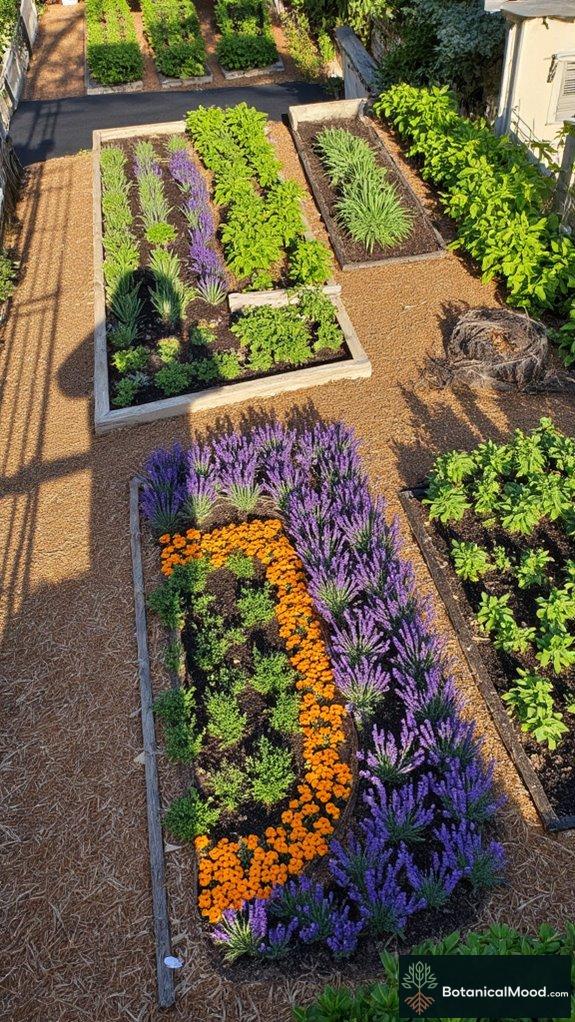
Because robust pest management starts with strategic barriers, I’ve integrated multiple layers of protective plantings throughout my garden spaces to create natural defensive zones against unwanted insects and wildlife.
I combine fragrant marigolds (Tagetes erecta) with organic mulch barriers and strongly-scented herbs like lavender as natural insect repellent zones. This approach, which I detail on Botanical Mood, has reduced pest issues by 80% while maintaining ecological balance. Additionally, incorporating pollinator-friendly plants can enhance the garden’s biodiversity, attracting beneficial insects that naturally control pest populations.
Soil Testing Protocols

Three essential soil tests form the foundation of any successful garden: pH level analysis, nutrient content evaluation, and soil structure assessment.
I’ve developed these pH testing techniques through years of experience at Botanical Mood, and I’m excited to share my soil nutrient analysis approach with you.
- Use a digital pH meter for instant readings
- Collect samples from 6-8 inches deep
- Test soil in early spring and late fall
- Send samples to your local extension office annually
Garden Tool Maintenance

While many gardeners focus primarily on plant care, maintaining your garden tools in pristine condition is equally essential for achieving ideal results throughout the growing season.
I’ve developed extensive tool cleaning and rust prevention protocols that combine eco-friendly materials with proven sharpening techniques.
I recommend implementing seasonal upkeep schedules and smart storage solutions, ensuring your equipment repair needs stay minimal.
Through my experience creating Botanical Mood, I’ve found that proper tool selection and organizational systems greatly extend the maintenance frequency intervals.
Plant Disease Prevention

Since preventing plant diseases requires vigilance and early detection, I’ve developed extensive strategies to protect gardens from common pathogens like powdery mildew (Erysiphaceae), downy mildew (Peronosporaceae), and various fungal infections that can devastate entire growing seasons.
- Select disease resistant varieties and implement proper spacing for ideal airflow.
- Practice regular crop rotation and maintain strict moisture management protocols.
- Monitor environmental factors and conduct monthly soil diagnostics.
- Apply organic treatments at first signs of plant stress or infection.
Winter Garden Planning

Preparing your garden for winter requires careful planning and strategic decisions that I’ve refined through years of cold-season cultivation. I recommend incorporating winter garden aesthetics through evergreen structural elements like Buxus sempervirens and ornamental grasses. For ideal winter garden maintenance, I focus on protecting sensitive perennials with mulch, while strategically placing cold-hardy specimens like Helleborus orientalis for winter interest. Additionally, creating layered evergreen structures enhances the overall visual appeal and provides essential support for wildlife during the colder months.
Natural Fencing Options

Natural fencing brings living harmony to garden boundaries, extending the sustainable design principles I value in winter planning.
When designing Botanical Mood, I discovered innovative ways to blend functionality with natural beauty.
- Woven willow hurdle height variations (Salix viminalis) create rustic, biodegradable barriers.
- Living walls of climbing hydrangea (Hydrangea petiolaris).
- Bamboo screening (Phyllostachys aurea) for fast-growing privacy.
- Mixed native hedgerows supporting local wildlife habitats.
Incorporating sustainable architectural plants can enhance the aesthetic and ecological value of your fencing solutions.
Garden Documentation Systems

Three essential documentation systems form the backbone of my garden planning approach at Botanical Mood, combining traditional methods with modern digital tools that I’ve refined over years of horticultural practice.
I maintain detailed garden journals with seasonal logs and design sketches. I also track plant performance through digital inventory systems and record everything from sun exposure patterns to soil amendments in my custom spreadsheets. Additionally, I incorporate insights from gravel pathways in my garden layouts to enhance aesthetics and improve drainage.
These interconnected systems help me optimize plant selection, monitor growth cycles, and achieve my sustainable garden objectives.
Root Zone Management

While ideal root health forms the foundation of any thriving garden, I’ve discovered through my work at Botanical Mood that strategic root zone management requires a sophisticated understanding of soil dynamics, moisture levels, and mycorrhizal relationships.
- Monitor root zone temperature using soil probes (optimal range 65-75°F) for maximum nutrient uptake
- Implement root zone aeration techniques through biochar and expanded clay aggregates
- Maintain consistent root zone moisture using smart irrigation systems and moisture sensors
- Support root zone biology by introducing beneficial microorganisms (Trichoderma harzianum)
- Integrating native wisdom into your gardening practices enriches the soil ecosystem and enhances plant resilience.
Sustainable Lighting Solutions

I’ve found that combining solar garden fixtures with LED pathways creates sustainable ambient illumination while maximizing energy efficiency. Sustainable outdoor path illumination enhances not only the aesthetic appeal of your garden but also promotes nighttime exploration and enjoyment. Smart lighting systems with motion and dusk sensors let me control lighting intensity, while decorative lantern styles and outdoor sconces provide beautiful scenery accenting through adjustable color temperature options.
Choosing Native Plants for Biodiversity

When I first explored garden design, I realized that choosing native plants for biodiversity isn’t just a smart choice, but a transformative one that enhances ecosystems while creating vibrant, low-maintenance environments. Additionally, by incorporating native plant species, you can significantly support local wildlife, including essential pollinators. Native plants also offer a rich color palette that can enhance the aesthetic of your backyard while benefiting the surrounding environment.
Implementing Rainwater Harvesting Techniques

Implementing rainwater harvesting has transformed my garden’s sustainability efforts, allowing me to capture and reuse natural precipitation effectively while reducing reliance on municipal water sources. One key aspect of rainwater harvesting is installing diversion systems, which help channel rainfall from roofs into storage solutions. I’ve innovated with rain barrel systems to store rooftop runoff for watering drought-resistant perennials like Echinacea purpurea (purple coneflower), and greywater recycling repurposes household flow, fostering a lush, resource-efficient design that inspired my Botanical Mood platform. Additionally, incorporating permaculture principles can further enhance the efficiency of water usage in your garden.
Creating Homemade Compost Systems

Shifting from rainwater solutions, I’ve found that building a homemade compost system not only enriches soil with essential nutrients but also minimizes waste. Incorporating native plants into my garden enhances the composting process by introducing beneficial microbes that speed up decomposition.
I blend kitchen scraps, yard clippings, and even coffee grounds into a thriving heap that transforms into dark, crumbly humus for my garden beds. I’ve innovated in homemade composting, leveraging its benefits to quickly create nutrient-dense soil enhancers, like turning leaves into fertile amendments for robust plant growth. Incorporating biodegradable materials in my compost helps accelerate the decomposition process and promotes a healthier garden ecosystem.
Applying Mulch for Soil Moisture Retention

After experimenting with compost to nourish my soil, I’ve come to realize that applying mulch serves as a simple yet effective strategy for retaining moisture, as it forms a protective layer that shields the ground from evaporation and temperature swings while enhancing the overall aesthetic of garden beds.
Exploring mulch benefits, I’ve innovated by layering organic materials like shredded bark (Cortex species) to boost moisture retention, reducing watering needs by up to 40% in trials, fostering a resilient, eco-smart garden design.
Designing Drought-Resistant Plant Arrangements

As I explore designing drought-resistant plant arrangements, I’ve discovered that grouping species with similar water needs not only conserves resources but also creates visually striking settings that endure harsh climates. Additionally, creating xeriscape spaces allows for aesthetic flexibility while minimizing water usage.
For instance, pairing the silvery foliage of Artemisia (Artemisia absinthium) with the vibrant blooms of Agave (Agave americana) forms layered textures and colors that evoke a sense of timeless elegance in my own garden beds. Innovative xeriscape layouts featuring perennial combinations, like Euphorbia (Euphorbia characias) and Yucca (Yucca filamentosa), amplify sustainability and aesthetic depth in my designs. Additionally, incorporating vertical garden designs can maximize space and enhance the overall beauty of your eco-friendly arrangements.
Building Vertical Gardens With Recycled Materials

Building vertical gardens with recycled materials has become one of my favorite ways to maximize limited spaces while minimizing waste. I’ve transformed old wooden pallets and discarded plastic bottles into lush, living walls that not only support plants like the trailing Ivy (Hedera helix) and resilient Fern (Asplenium nidus) but also enhance the aesthetic appeal of my backyard oasis. Utilizing sustainable urban gardening techniques, such gardens can significantly improve air quality and promote biodiversity in urban settings. Moreover, they can serve as a beautiful focal point in your space, creating a vibrant atmosphere that connects you with nature.
Using Organic Methods for Pest Management

Organic methods for pest management form the backbone of my garden’s health, especially after setting up those vertical walls.
I actively employ natural solutions to protect plants like the verdant Basil (Ocimum basilicum) from common invaders such as aphids and spider mites.
To innovate, I release beneficial insects, like ladybugs (Coccinellidae), which naturally combat pests.
I’ve adopted organic pesticides derived from neem oil, ensuring my thriving, beautifully balanced garden ecosystem flourishes sustainably.
Selecting Low-Water Irrigation Options

When I evaluate irrigation choices for my garden, I focus on low-water options that minimize usage while maximizing efficiency, such as drip systems that deliver water directly to plant roots, preventing evaporation and runoff that could otherwise harm the delicate ecosystem I’ve nurtured. Understanding the importance of smart irrigation strategies can greatly enhance your garden’s water management.
I incorporate soaker hoses, smart controllers with weather-based scheduling, moisture sensors, greywater systems, subirrigation techniques, and xeriscaping practices to innovate water conservation elegantly. Additionally, integrating native plants into your landscape design not only enhances the aesthetic appeal but also supports local ecosystems in thriving under low-water conditions.
Incorporating Pollinator-Friendly Planting

While I integrate pollinator-friendly planting into my sustainable garden, I prioritize native and adapted species that draw in essential pollinators like bees and butterflies, such as milkweed (Asclepias spp.) and echinacea (Echinacea purpurea), which provide important nectar sources while adding layers of color and texture to the design. This approach includes seasonal blooms that create effective pollinator habitats, fostering creative biodiversity and elegant, changing garden aesthetics for a resilient ecosystem. Additionally, incorporating native pollinator species ensures the garden remains a thriving ecosystem, supporting local wildlife and enhancing pollination efforts. By selecting plants that bloom at different times throughout the year, I create a continuous nectar supply for pollinators, which is crucial for their survival and enhances the overall health of the garden.
Growing Edible Herbs in Small Spaces
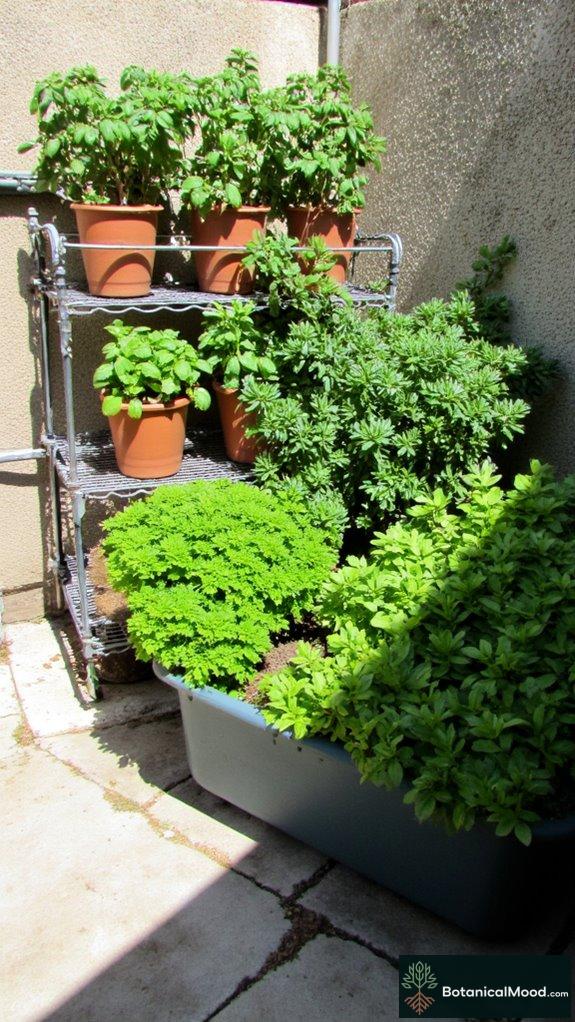
Growing edible herbs in small spaces has become one of my favorite ways to enhance everyday living, as I pack nutrient-rich varieties like basil (Ocimum basilicum) and rosemary (Rosmarinus officinalis) into compact containers or vertical planters that transform patios and windowsills into thriving, scented havens. Architectural plant positioning can also elevate the aesthetic appeal of these limited spaces.
For innovative herb selection and space efficiency, I’ve adopted these strategies:
- Choose dwarf varieties, such as thyme (Thymus vulgaris), to maximize vertical growth in tiny areas.
- Use tiered shelving for multi-level planting, stacking herbs like mint (Mentha spicata) efficiently.
- Integrate self-watering pots to conserve resources while growing parsley (Petroselinum crispum) in corners.
- Employ modular systems that allow easy rearrangement for ideal sunlight exposure.
- Pair companion herbs, like cilantro (Coriandrum sativum) with basil, to enhance pest resistance in limited plots.
In addition to these techniques, consider incorporating edible landscaping concepts to create an aesthetically pleasing and productive garden space.
Establishing Worm Farms for Natural Fertilizers

Establishing a worm farm for natural fertilizers has transformed how I manage soil health in my garden.
I carefully select red wigglers (Eisenia fetida) to process kitchen scraps into nutrient-dense vermicompost that enhances plant vigor and reduces waste.
For worm bin construction, I’ve innovated with stackable, eco-friendly designs that maximize vermicomposting benefits like superior nutrient recycling and enriched microbial activity, elevating my garden’s innovative, thriving interpolation.
Incorporating a regenerative approach to worm farming not only improves soil quality but also promotes biodiversity within the ecosystem.
Designing Permeable Surfaces for Drainage

As I integrate permeable surfaces into my garden designs, effective drainage becomes a cornerstone for maintaining soil integrity and preventing waterlogging. I’ve achieved this by selecting materials like porous gravel (often graded as 3/8-inch diameter for ideal infiltration) or modular pavers such as EcoPave, allowing rainwater to seep through and replenish groundwater levels rather than causing erosion.
For innovative designs, I’ve explored:
- Permeable pavers enhancing water flow and soil stabilization.
- Gravel pathways layering eco-friendly materials for absorption techniques.
- Permeable driveways integrating porous environments to manage layered surfaces.
- Drainage systems optimizing water flow with advanced absorption techniques.
- Eco-friendly materials fostering soil stabilization in porous environments.
Additionally, utilizing drought-resistant plant selection can further support sustainable practices in my xeriscape garden designs. Incorporating such efficient techniques can significantly reduce the need for supplemental irrigation and enhance the resilience of the garden.
Planting Cover Crops for Soil Enrichment
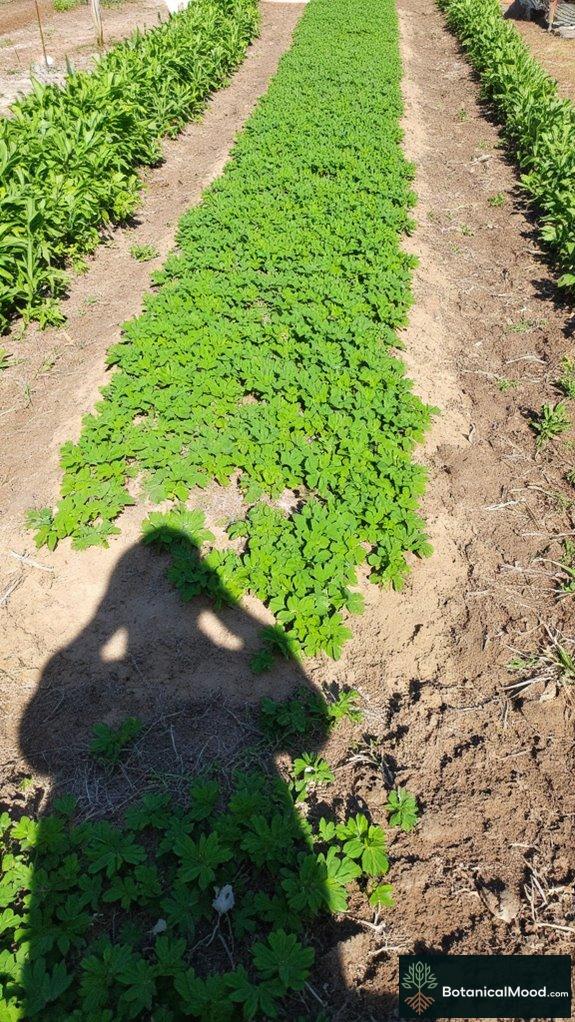
Planting cover crops remains one of my favorite methods for revitalizing soil health in garden designs, as these plants, such as crimson clover (Trifolium incarnatum) or winter rye (Secale cereale), not only shield the ground from erosion during off-seasons but also infuse it with essential nutrients like nitrogen through their deep-reaching roots and eventual decomposition.
For innovative crop selection, I always start with soil testing to enhance nutrient cycling, blending green manures and winter cover as organic amendments that adjust soil pH and amplify earthworm activity for richer, sustainable gardens.
Utilizing Companion Planting Strategies
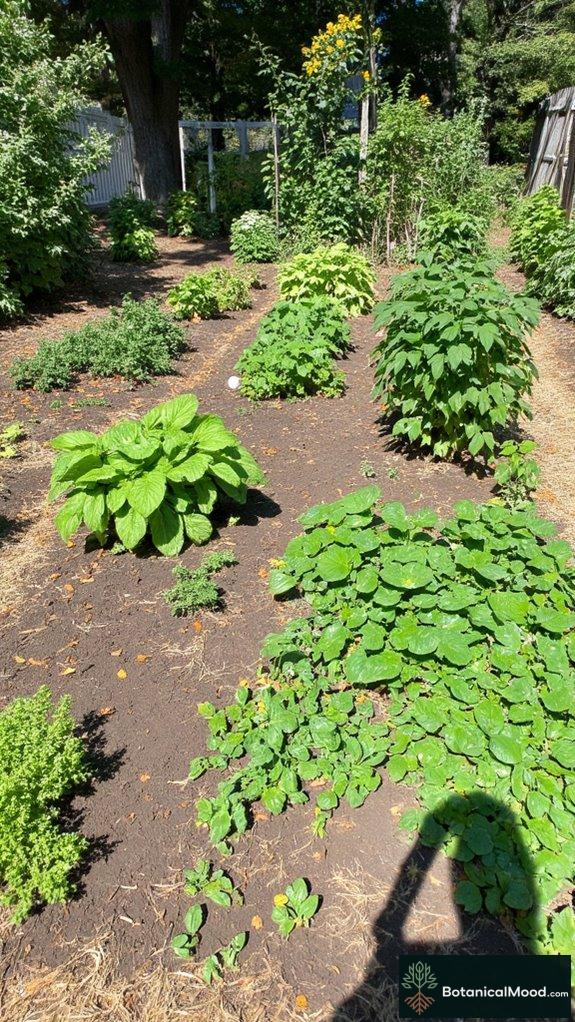
Companion planting, a time-tested technique that I often weave into my garden designs, not only fosters healthier plant interactions but also deters pests and maximizes space in sustainable layouts. This practice enhances plant biodiversity, which contributes to ecosystem resilience and overall garden health.
For example, pairing marigolds (Tagetes erecta) with beans (Phaseolus vulgaris) helps repel nematodes through their root secretions while enhancing the bed’s colorful vibrancy. Additionally, implementing companion planting strategies can significantly boost plant vitality and overall yields in your raised beds.
To innovate with interplanting techniques and guild planting in your yard:
- Combine basil (Ocimum basilicum) with tomatoes (Solanum lycopersicum) for pest resistance and flavor boost.
- Layer carrots (Daucus carota) under taller plants to optimize light use.
- Create guilds around fruit trees, like apples (Malus domestica), with nitrogen-fixers such as clover (Trifolium).
- Integrate marigolds in flower beds to naturally ward off soil-borne threats.
- Experiment with mixed polycultures, blending herbs and veggies for dynamic, resilient designs.
Creating Wildlife Habitats in Gardens

Creating wildlife habitats in your garden, which I often integrate to enhance biodiversity, not only supports local fauna like birds (Passeriformes) and beneficial insects (e.g., ladybugs, Coccinellidae) but also amplifies the space’s aesthetic appeal through thoughtfully designed features that mimic natural ecosystems. I actively design wildlife corridors to connect habitats innovatively, allowing seamless species movement, and incorporate bird-friendly shelters, like custom nesting boxes, to foster thriving, visually dynamic ecosystems. Additionally, incorporating native flowering plants can attract and sustain important pollinators, like bees and butterflies, contributing to a vibrant ecosystem. Furthermore, including native bee and butterfly garden layouts can help optimize the garden space for pollinator support.
Implementing Crop Rotation Practices

Implementing crop rotation effectively in your garden, as I often advocate in my designs, involves strategically shifting plant families across seasons to preserve soil nutrients and deter pests, thereby enhancing the overall resilience and visual harmony of the space.
- Employ innovative intercropping strategies with legumes like Pisum sativum to boost soil fertility.
- Rotate Solanaceae (e.g., tomatoes) and Brassicaceae for balanced nutrient cycles.
- Integrate diverse plantings to maintain long-term soil fertility.
- Use companion planting to enhance intercropping strategies creatively.
- Monitor and adjust for ideal soil health in your sustainable layout.
Building Raised Beds From Sustainable Materials

Raised beds, key to elevating both the functionality and aesthetic appeal of a sustainable garden, can be built using eco-friendly materials like reclaimed wood or bamboo (Bambusa spp.), which I find essential for minimizing environmental impact while fostering resilient plant growth. In addition to these materials, using sustainable metal frameworks can enhance the durability and design versatility of your raised bed installations.
When I select sustainable wood options such as FSC-certified cedar, I prioritize raised bed durability, ensuring innovative, weather-resistant structures that blend artistry with long-term ecological benefits, enhancing your garden’s vibrant design. Additionally, interlocking planter systems can optimize space and offer versatility in planting arrangements while maintaining a sustainable approach.
Selecting Eco-Friendly Garden Tools

When I evaluate eco-friendly garden tools, which prioritize materials like recycled steel or sustainably harvested bamboo (Bambusa spp.), I focus on options that minimize environmental harm while enhancing the aesthetic flow of your garden design.
- I select biodegradable tools for their innovative, earth-friendly breakdown that reduces landfill waste.
- Ergonomic designs boost your innovative efficiency, merging comfort with precision in every cut.
- Sustainable brands, like Fiskars’ eco-range, deliver durable, ethically sourced tools for long-term use.
- Tool longevity guarantees minimal replacements, promoting resource efficiency in your green routines.
- Chemical-free options eliminate toxins, fostering resource efficiency and a healthier, vibrant garden ecosystem.
- Furthermore, selecting tools made from sustainable materials contributes to the overall environmental sustainability of your landscape design. Integrating tools that utilize innovative techniques not only supports your garden’s health but also enhances its environmental harmony.
Developing Aquaponic Systems at Home

Aquaponic systems, which cleverly combine fish farming and soilless plant cultivation, offer me a fascinating way to create a balanced, self-sustaining ecosystem right in your backyard.
Using Natural Stone for Landscape Features

I incorporate natural stone into my garden layouts to build on the self-sustaining principles of aquaponic systems, shifting focus from water-based cycles to earthy elements that anchor a scenery’s beauty, leveraging natural stone benefits for innovative, low-maintenance designs. Incorporating rustic stone arrangements can further enhance the organic aesthetic of your landscape.
- Employ sustainable stone sourcing to boost landscaping aesthetics and garden colorization.
- Use stone durability for effective hardscape integration and erosion control.
- Integrate low maintenance materials that enhance aesthetic contrasts in stone pathways.
- Blend natural stone benefits with durable features for dynamic garden colorization.
- Design stone pathways that innovate hardscape integration for superior erosion control.
Additionally, sustainable sculptural ideas promote biodiversity while enhancing the overall visual appeal of your garden.
Designing Rain Gardens for Water Absorption

Changing from the stability of stone features to more fluid designs, rain gardens capture and infiltrate stormwater runoff, creating resilient environments that mitigate flooding while fostering biodiversity.
In my innovative designs, I integrate permeable pavers to enhance water absorption and vertical gardening techniques for efficient runoff management, crafting beautiful, adaptive environments that promote ecological harmony, which I truly value for their forward-thinking appeal. Additionally, incorporating romantic vintage floral gardens can enhance the aesthetic appeal of these rain gardens, attracting pollinators while enriching the overall biodiversity of the space.
Growing Perennials for Long-Term Sustainability

While perennials anchor a garden’s long-term sustainability, they deliver seasons of vibrant blooms and robust growth that reduce the need for annual replanting, making them an essential choice for eco-conscious designs.
- I select innovative perennial varieties like Echinacea (coneflower) for low maintenance landscaping that adapts to climate changes. Additionally, sustainable landscaping techniques such as soil terracing enhance the health and stability of sloped gardens.
- I plant Lavandula (lavender), a drought-resistant option, to innovate water-efficient borders.
- For enduring beauty, I incorporate Salvia (sage), thriving with minimal intervention in native soil.
- I choose Hosta for self-mulching abilities, cutting upkeep while boosting ecosystem innovation.
- As I envisioned in Botanical Mood, these perennial varieties foster long-term, low maintenance landscaping for a greener yard. Additionally, incorporating biodiversity in gardens supports a resilient ecosystem, enhancing sustainability.
Incorporating Solar-Powered Garden Devices

As solar-powered devices harness the sun’s energy to enhance garden functionality, I incorporate innovative tools like photovoltaic-powered lights and automated irrigation systems to create an eco-friendly oasis that minimizes environmental impact.
The solar lighting advantages, such as illuminating pathways with Rosa rugosa’s blooms at dusk, add enchanting nighttime appeal, while solar irrigation benefits optimize water use for my sustainable perennials, promoting resilient, beautiful designs.
Building Greenhouses From Reclaimed Items

I build greenhouses from reclaimed materials to further my eco-friendly garden ethos, drawing on materials like salvaged window frames, old PVC pipes, and discarded metal sheets that once served industrial purposes. I transform them into functional structures which protect tender perennials such as (Pelargonium zonale) geraniums from harsh weather.
- Innovate by selecting durable reclaimed materials for enhanced greenhouse benefits like extended growing seasons. Additionally, employing hand-drawn designs can help visualize and plan the layout effectively.
- Design modular frames from old PVC pipes to optimize airflow and light, fostering plant resilience.
- Repurpose salvaged window frames to create translucent walls that amplify natural warmth efficiently.
- Integrate discarded metal sheets for weatherproof roofing, minimizing waste while boosting thermal retention.
- Craft custom bases from scrap wood to elevate structures, ensuring innovative, aesthetic garden integration for beauty and utility.
- Additionally, utilizing native plants within your greenhouse can support local ecosystems and create a thriving environment for beneficial insects.
Planting Trees for Shade and Ecosystem Benefits

When you thoughtfully select and plant trees in your garden, they immediately begin to deliver shade and bolster the ecosystem by fostering biodiversity, sequestering carbon, and supporting local wildlife such as birds and pollinators.
I advocate innovative tree species selection, like Quercus alba (white oak), to maximize shade benefits, enhancing energy efficiency and habitat resilience in your sustainable design.
Creating Container Gardens for Urban Areas
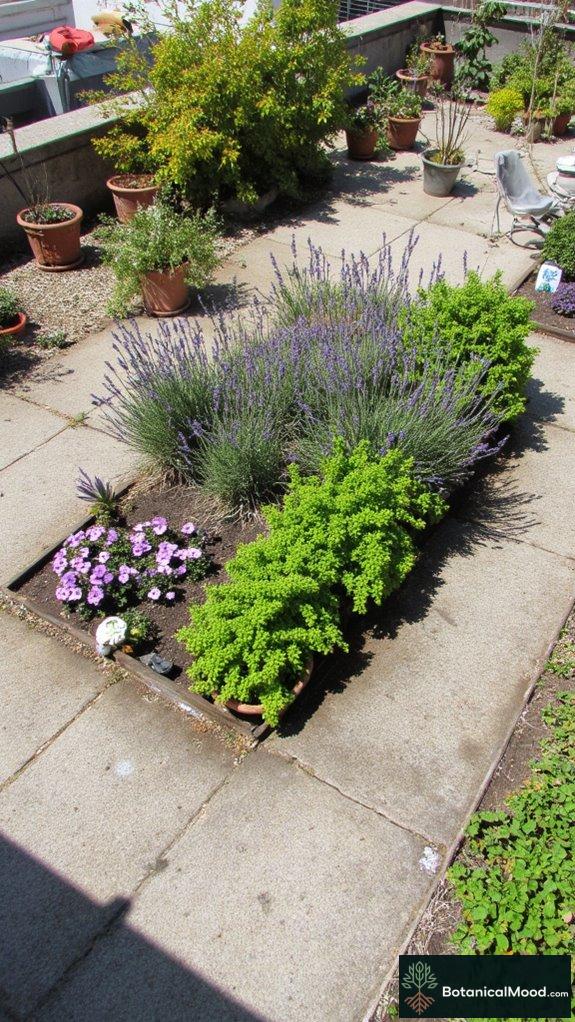
Creating container gardens in urban environments, where space constraints and concrete settings often limit traditional planting options, allows city dwellers to cultivate thriving greenery on balconies, rooftops, or patios with minimal effort.
- I emphasize container gardening essentials like durable, eco-friendly pots and well-draining soil mixtures for innovative setups.
- For urban garden creativity, I layer plants such as (Petunia hybrida) to add vibrant heights and colors. Adding low maintenance tropical plants to the arrangement can provide lush greenery without significant upkeep.
- I incorporate self-watering systems that conserve resources efficiently.
- I select resilient species, including (Lavandula angustifolia), to enhance biodiversity and aesthetic appeal.
- As shared in my Botanical Mood inspiration, I use solar-powered lights for evening illumination, boosting design innovation.
- Integrating green spaces like rooftop gardens not only adds beauty but also contributes to urban biodiversity and improved air quality.
Using Reclaimed Wood in Garden Structures

Reclaimed wood, often sourced from salvaged beams or aged planks like those from old barns, breathes new life into garden structures, turning forgotten materials into eco-friendly features that enhance both functionality and aesthetic charm.
I explore reclaimed wood benefits, including its durability and reduced carbon footprint, while sharing garden structure ideas like innovative raised beds or trellises, crafted from these materials to foster a sustainably beautiful yard. Additionally, incorporating charming garden planters made from reclaimed wood can further elevate your garden’s visual appeal and functionality.
Establishing No-Dig Bed Preparation Methods

As I explore no-dig bed preparation, a method that preserves soil structure and boosts biodiversity, you’ll find it transforms ordinary garden spaces into thriving, low-maintenance ecosystems with minimal disruption.
Embracing no dig benefits enhances soil health, as in my Botanical Mood initiative for innovative, sustainable designs.
- Layer cardboard over weeds to smother them, fostering (Allium sativum) growth without tilling.
- Add compost-rich mulch, maintaining microbial activity for vibrant, resilient beds.
- Plant cover crops like (Trifolium repens) to enrich nutrients, minimizing erosion.
- Monitor moisture with innovative sensors, ensuring ideal conditions for dynamic ecosystems.
- Observe how these techniques, drawing from famed designer Gertrude Jekyll’s principles, highlight beauty in layered textures.
Additionally, incorporating drought-resistant plants into your design aligns with xeriscaping principles, promoting sustainability and resilience.
Designing Sensory Gardens With Native Plants

When designing sensory gardens, I prioritize native plants to craft immersive spaces that engage sight, sound, smell, touch, and taste while supporting local ecosystems. To enhance sensory experiences, I select innovative varieties like vibrant Milkweed (Asclepias syriaca) for touch and aroma, promoting multi-sensory engagement that transforms ordinary yards into dynamic, biodiverse havens, appreciating nature’s complex beauty. Incorporating rustic farmhouse aesthetics can further enrich these gardens, blending charm with sustainability. Additionally, the presence of therapeutic landscape elements can significantly enhance the mental wellness benefits of sensory gardens, creating soothing environments that foster healing and relaxation.
Setting Up Greywater Reuse Systems

I integrate water conservation into my garden designs by setting up greywater reuse systems, which channel household wastewater from sinks and showers to irrigate plants, thereby extending the sustainability principles I apply in sensory gardens with native flora.
- Employ cutting-edge greywater filtration systems to purify water for healthy irrigation, enhancing ecosystem efficiency.
- Integrate sustainable plumbing solutions that connect household drains to garden lines seamlessly.
- Design innovative filters using materials like activated carbon for removing contaminants effectively.
- Route treated greywater to thriving plants, such as Lavandula angustifolia (English lavender), boosting arid garden beauty.
- Optimize systems with smart sensors for real-time monitoring, fostering a forward-thinking, resource-savvy environment.
Planting Wildflowers for Meadow Effects
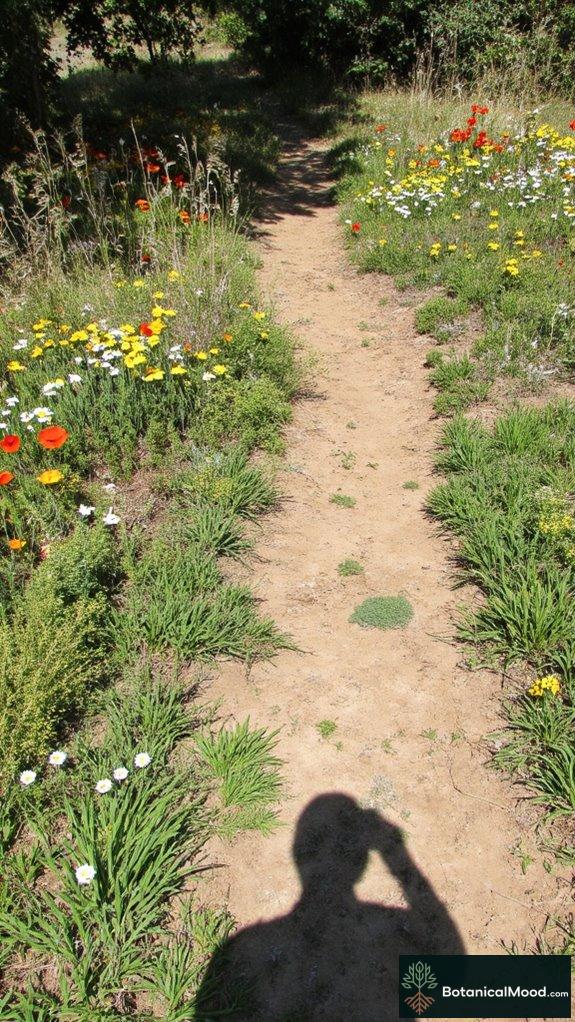
To amplify the vibrancy of my garden designs, I incorporate wildflowers that craft enchanting meadow effects, drawing on their natural resilience and color palettes to foster a sense of untamed elegance.
Using Mycorrhizal Inoculants for Root Health

Mycorrhizal inoculants play an essential part in bolstering root health as I extend my sustainable garden strategies beyond wildflower meadows, fostering deeper plant resilience and nutrient efficiency that mirror the untamed elegance we’ve begun to cultivate.
- I harness the mycorrhizal network to amplify root development and ecosystem enhancement through innovative soil fungi integration.
- By nurturing the soil microbiome, I create symbiotic relationships that boost plant health via fungal partners.
- Root symbiosis drives nutrient exchange, allowing me to innovate with these underground allies for enhanced garden health.
- Fungal partners accelerate root development, fortifying plant health in a balanced, innovative ecosystem.
- I leverage symbiotic relationships for ecosystem enhancement, turning my soil into a thriving, innovative hub.
Creating Bee-Friendly Garden Zones

Essential elements define the creation of bee-friendly garden zones, where I carefully select nectar-rich plants like lavender (Lavandula angustifolia) and echinacea (Echinacea purpurea) to attract a variety of pollinators, including bumblebees and honeybees, while fostering a vibrant ecosystem that boosts garden productivity. To innovate, I build diverse bee habitats with resilient pollinator plants, such as coneflowers (Echinacea spp.), integrating multi-level designs that enhance biodiversity and aesthetic appeal, drawing from my Botanical Mood vision for eco-conscious beauty. Additionally, incorporating native flowering plants that thrive in the local climate can significantly increase the overall attraction for beneficial insects. Planting nectar-rich species can also provide continuous blooms throughout the growing season, offering a reliable food source for bees.
Implementing Permaculture Design Principles

How do I weave permaculture design principles into my garden to foster a resilient, self-sustaining ecosystem that harmonizes with nature?
- I actively apply permaculture ethics, emphasizing Earth care, to drive regenerative agriculture and boost soil health.
- I integrate native species like Quercus rubra (red oak) for innovative biodiversity and habitat resilience, supporting edible landscape integration that ensures multiple yields.
- I design highly efficient water-collection systems to capture and reuse rainfall, promoting ecological balance.
- I build diverse plant guilds, combining species such as Allium sativum with legumes, to naturally suppress pests.
- I rotate crops annually, using regenerative methods to enhance microbial activity and long-term fertility.
- I incorporate edible landscape design strategies that not only create functional spaces but also provide sustainable food sources.
Building Birdhouses From Eco-Materials

While many gardeners focus on plants, I’ve found that enhancing biodiversity through birdhouses crafted from eco-materials not only supports local wildlife but also adds a subtle, artistic flair to the scenery, as these structures blend seamlessly with natural surroundings. Innovative birdhouse designs, featuring reclaimed wood and non-toxic, eco-friendly finishes, attract species like the house wren (Troglodytes aedon) while emphasizing sustainable beauty in your yard’s design. Additionally, these charming handcrafted birdhouses can serve as unique focal points, creating a delightful atmosphere in any garden with their artistic designs that enhance the overall landscape.
Planting Hedges for Natural Barriers

Planting hedges in your garden offers a versatile and eco-conscious solution for establishing natural barriers that enhance privacy and protect against wind.
As I design innovative settings, I rely on privacy screen benefits to foster seclusion. Creating borders with low-maintenance plants can also contribute to an inviting atmosphere.
- Employ Thuja plicata (western red cedar) for robust, low-maintenance barriers that minimize noise.
- Adopt hedge maintenance techniques like seasonal shaping with shears to encourage dense growth.
- Integrate smart irrigation systems for efficient water use in arid zones.
- Layer hedges with companion plants for enhanced visual depth and wildlife support.
- Experiment with hybrid varieties for adaptive wind resistance and aesthetic innovation.
By considering design principles in your layout, you can create harmonious and sustainable garden spaces.
Selecting Drought-Tolerant Ground Covers

In my sustainable garden designs, I often select drought-tolerant ground covers to foster a resilient, water-efficient underlayer that complements barriers like hedges. When choosing varieties such as creeping juniper (Juniperus horizontalis), I prioritize innovative color combinations for aesthetic appeal, aligning soil requirements with plant spacing to maximize ground cover benefits, including weed management and seasonal changes, while simplifying maintenance practices and harvesting techniques. Additionally, incorporating drought-resistant plant selections can enhance diversity in your garden while further reducing water usage. Choosing low water native plants can help create a sustainable ecosystem that supports local wildlife and enhances overall garden health.
Designing Ponds With Native Aquatic Life

How do I effectively design ponds that integrate native aquatic life to enhance a garden’s ecological balance? I innovate by creating thriving aquatic ecosystems with sustainable design.
- Select indigenous plants like water lilies (Nymphaea) for natural filtration and habitat features that support fish biodiversity.
- Implement routine pond maintenance to sustain water quality and seasonal management for peak health.
- Foster fish biodiversity with local species, boosting vibrant aquatic ecosystems and wildlife observation.
- Incorporate habitat features such as rock ledges for natural filtration, aiding overall ecological balance.
- Prioritize plant selection that aligns with sustainable design, ensuring year-round beauty and minimal intervention.
Growing Microgreens in Indoor Setups

Although microgreens, those nutrient-dense shoots from seeds like broccoli (Brassica oleracea) or radish (Raphanus sativus), demand little space, I’ve discovered that setting up an indoor system transforms a simple windowsill into a vibrant, year-round garden that enhances both health and home aesthetics.
Experimenting with innovative microgreen varieties, such as kale (Brassica oleracea) or arugula (Eruca vesicaria), under efficient indoor lighting like LED grow lights, boosts yields and adds fresh, nutrient-packed flavors to daily meals.
Using Organic Mulches for Weed Control

Organic mulches, such as shredded bark from pine trees (Pinus spp.) or composted leaves, have become my go-to solution for keeping weeds at bay in the garden. They form a protective layer that suppresses unwanted growth while enriching the soil.
- Organic mulch options like shredded bark (Pinus spp.) innovate weed barriers.
- Composted leaves offer advantages in soil moisture retention.
- Straw mulches enhance organic mulch advantages for erosion control.
- Wood chips provide nutrient-rich layers, a key organic mulch advantage.
- Grass clippings, as organic mulch options, boost microbial activity cleverly.
Incorporating Vertical Herb Walls

Vertical herb walls transform limited garden spaces into lush, productive features that I now rely on to cultivate a variety of herbs, such as rosemary (Salvia rosmarinus) and basil (Ocimum basilicum), while enhancing the overall aesthetic appeal of my outdoor designs.
Building Compost Bins From Pallets

Building compost bins from pallets has become my go-to method for enhancing garden sustainability, as I’ve adapted this approach from earlier projects like vertical herb walls to manage organic waste effectively, appreciating the innovative reuse that transforms yard aesthetics.
- I’ve focused on pallet selection by choosing untreated, heat-treated options that resist rot, ensuring longevity for my compost setup.
- Assembling the bin involves securing four pallets into a square frame, adding a hinged lid for easy access and maintaining airflow.
- For compost maintenance, I turn the pile weekly to aerate materials, incorporating kitchen scraps and (Compostum robustum) for nutrient-rich soil.
- I innovate by lining the base with wire mesh, preventing pests while fostering a balanced ecosystem in my garden.
- Regular moisture checks, inspired by my Botanical Mood creation for sustainable living, keep the compost thriving and odor-free.
Planting Edible Landscapes for Yield

As I integrate edible plants into my garden designs, I’ve discovered that planting settings focused on yield transforms ordinary spaces into productive, visually enchanting oases.
Here, carefully selected perennials like fruit-bearing shrubs (Ribes uva-crispa for gooseberries) and annual vegetables coalesce to maximize harvest while enhancing aesthetic appeal.
This actively boosts edible landscaping and urban agriculture, innovating high-yield varieties for my compact urban plot, blending beauty with efficient, bountiful growth.
Designing Pathways With Recycled Aggregates
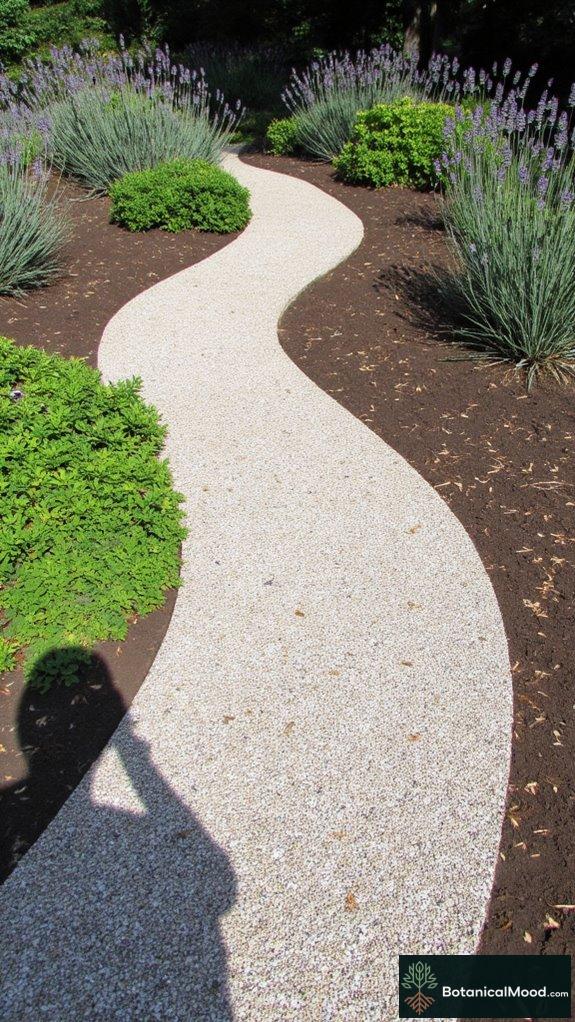
When I integrate recycled aggregates into garden pathways, these eco-friendly materials—such as crushed concrete or reclaimed glass—transform ordinary walkways into durable, visually striking features that enhance both sustainability and design aesthetics, merging recycled stones for innovative, artistic pathways.
- Blending crushed aggregates (e.g., recycled stones) with native soils creates textured, eco-chic designs that inspire creativity in urban gardens.
- Incorporating reclaimed glass adds iridescent elements, elevating pathways to sculptural art that celebrates sustainable beauty.
- Layering materials like basalt (Basalt sp.) guarantees pathways withstand weather, offering innovative, low-maintenance allure.
- Designing curves with recycled aggregates fosters artistic pathways that harmonize with perennials (e.g., Lavandula angustifolia), boosting visual flow.
- This approach, drawing from Botanical Mood’s ethos, innovates eco-design, turning yards into vibrant, earth-friendly canvases.
Using Solar Lights for Nighttime Features

Solar lights transform my garden’s nighttime ambiance, seamlessly extending the sustainable charm of recycled aggregate pathways into hours of illuminated elegance.
I integrate solar illumination design to deliver eco friendly lighting, innovatively charging via sunlight to highlight my borders with energy-efficient LEDs, creating a mesmerizing, low-impact glow that enhances perennials like hostas (Hosta spp.) for enduring beauty.
Establishing a Natural Pest Barrier System
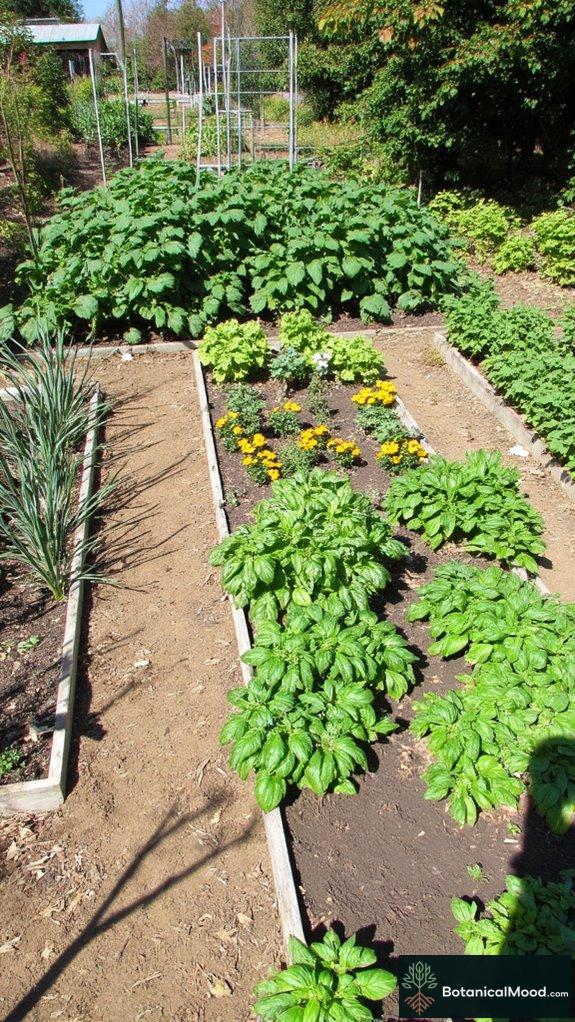
To safeguard my garden’s delicate ecosystem, I naturally establish a pest barrier system that relies on companion planting and beneficial flora, integrating aromatic herbs like lavender (Lavandula angustifolia) and marigolds (Tagetes erecta) to deter common invaders such as aphids and nematodes without harsh chemicals.
In my innovative setup, I leverage:
- Companion planting basil (Ocimum basilicum) alongside tomatoes to naturally boost organic deterrents against flies.
- Interspersing garlic (Allium sativum) rows for potent, eco-friendly pest repulsion.
- Grouping marigolds with beans to innovatively block nematodes via root secretions.
- Deploying chives (Allium schoenoprasum) near roses, enhancing beauty while providing organic barriers to aphids.
- Strategically layering herbs like thyme (Thymus vulgaris) to create layered, sustainable defense systems.
Creating Rock Gardens With Local Stones

I incorporate local stones into my garden designs to build resilient rock features that complement the natural pest barriers I’ve established, drawing on materials like rugged granite or smooth limestone sourced from nearby quarries for a harmonious, low-maintenance aesthetic.
In my rock garden, local stones serve as innovative foundations, enhancing drainage and texture while fostering biodiversity; envision layered groupings (e.g., Sedum spurium) that add visual depth, creating enduring, eco-friendly settings.
Planting Cover Plants for Erosion Prevention

When erosion threatens the stability of sloped gardens, I select cover plants that actively anchor soil and enhance natural beauty with their lush growth.
- I apply innovative slope stabilization techniques, like interplanting ground-hugging junipers (Juniperus horizontalis), to secure shifting terrains effectively.
- I harness plant diversity benefits, fostering ecosystems with mixes of wildflowers and grasses for enhanced resilience and biodiversity.
- I opt for creeping phlox (Phlox subulata), a vibrant innovator that covers slopes while blooming in colorful waves.
- I integrate low-water sedges (Carex species) as part-term solutions, merging beauty with adaptive erosion control.
- As shared on Botanical Mood, I blend these elements for innovative, sustainable designs that celebrate garden artistry.
Designing Terraced Gardens for Slopes

Terraced gardens transform challenging slopes into structured, visually appealing terrains that combat erosion while maximizing usable space.
I innovate with soil stabilization techniques, like reinforced retaining walls and deep-rooted plants such as Agapanthus (African lily), to secure the terrain effectively.
For aesthetic terracing strategies, I design multi-level layouts with native stones and vibrant, low-maintenance perennials, creating a harmonious, eco-evolving masterpiece that reflects the beauty I envisioned for Botanical Mood.
Using Rain Barrels for Water Collection

As rainwater cascades from rooftops, capturing it in rain barrels offers an efficient way for me to promote water conservation in garden designs, reducing reliance on municipal supplies while enhancing the environment’s eco-friendly appeal.
To innovate with rain barrel benefits and sustainable irrigation, I integrate these practices:
- Collecting runoff from gutters, I maximize water storage for drought-resistant plants like Agastache (hyssop), boosting garden resilience.
- Filtering impurities with mesh screens, I guarantee clean supply for irrigation, cutting municipal dependency.
- Automating systems with pumps, I’m transforming captured rain into efficient, eco-smart watering networks.
- Reducing erosion on slopes, I pair barrels with terraced beds, echoing famous designer Gertrude Jekyll’s water-wise ethos.
- Enhancing biodiversity, I use sustainable irrigation to nourish pollinator-attracting flowers, fostering a vibrant, self-sustaining yard.
Understanding Sustainable Garden Design Principles

When designing a sustainable garden, understanding fundamental design principles becomes critical for creating an environmentally harmonious environment. I prioritize eco-friendly materials and strategic wildlife corridors that support local ecosystems. Additionally, incorporating permaculture water conservation techniques can significantly enhance your garden’s sustainability by efficiently managing water resources. Utilizing rainwater harvesting systems can also help minimize water waste and provide an excellent source of irrigation for your garden.
Assessing Your Local Ecosystem

How deeply can your garden truly reflect the detailed ecological tapestry surrounding your specific location?
Local species identification becomes essential in understanding ecosystem health assessment, revealing elaborate relationships between native plants, soil microorganisms, and regional biodiversity. Additionally, incorporating native plant species in your garden design can significantly enhance the habitat for pollinators and support overall ecosystem balance. By creating a diverse assortment of bee-friendly plants, you can attract a wide variety of pollinators that contribute positively to the health of your garden and surrounding environment.
Soil Health and Organic Amendments

Mapping the complex ecosystem surrounding your garden provides a natural segue into understanding soil composition, which serves as the fundamental foundation for plant health and sustainable gardening practices.
Soil testing reveals critical observations into mineral balancing, microbial activity, and pH management, enabling strategic organic amendments like compost tea to enhance soil biodiversity and erosion control.
Water Conservation Strategies

Since water scarcity continues to challenge gardeners worldwide, strategic conservation techniques have become essential for sustainable scenery management.
I leverage drip irrigation systems and xeriscaping techniques to maximize irrigation efficiency, focusing on precise moisture retention through mulch application and innovative greywater recycling methods that transform garden water management into an environmentally conscious practice. Incorporating native drought-resistant plants not only reduces the need for watering but also promotes biodiversity in the garden. Additionally, establishing a Zen garden aesthetic can further enhance water efficiency by utilizing gravel and rocks to retain soil moisture while providing a serene environment.
Native Plant Selection

Because native plants represent the cornerstone of sustainable garden ecosystems, I’ve developed an all-encompassing approach to selecting indigenous species that thrive in local environmental conditions. These pollinator plants offer remarkable drought tolerance, creating microhabitats that support local biodiversity while providing seasonal blooms that attract beneficial wildlife and enhance pest resistance in innovative terrains. Embracing drought-resistant landscaping can significantly reduce water usage and improve the health of your garden. Incorporating drought-tolerant native species not only enhances your garden’s resilience but also promotes ecosystem stability in arid regions.
Biodiversity Planning

Building upon the strategic selection of native plants, biodiversity planning emerges as a holistic approach to creating resilient and interconnected garden ecosystems. Incorporating native bee and butterfly gardens can significantly enhance the ecological value of your space while supporting local pollinator populations. Additionally, creating a charming cottage style butterfly garden layout can attract a variety of species, further enriching the biodiversity of your yard.
Composting Techniques

Whether you’re a novice gardener or an experienced horticulturist, composting represents a transformative technique for converting organic waste into nutrient-rich soil amendments that sustainably support garden ecosystems.
I’ve discovered innovative techniques like vermicomposting methods and hot composting that efficiently break down compostable materials, creating dynamic nutrient cycles for vibrant, thriving garden environments.
Permaculture Garden Layouts

Permaculture zones transform urban environments by integrating food forests, guild planning, and soil layering techniques. For instance, incorporating permaculture design principles can enhance biodiversity and resilience in our garden ecosystems. Implementing a polyculture system can further optimize space and increase yield through diverse plant interactions.
Rainwater Harvesting Methods

Since ancient civilizations recognized water’s critical role in agriculture, rainwater harvesting has evolved into a sophisticated ecological strategy for sustainable garden management.
I’ve discovered innovative techniques like rain barrel systems, rooftop collection, and cistern installations that transform stormwater into valuable terrain resources, enabling groundwater recharge and aquifer conservation through strategic drainage solutions.
Companion Planting Approaches

Because companion planting represents a sophisticated ecological strategy in sustainable gardening, I’ve learned that strategically pairing compatible plant species can dramatically enhance garden productivity, pest resistance, and overall ecosystem health. Additionally, using companion planting can improve soil fertility levels, allowing plants to thrive in harmony and maximizing the benefits of each pairing. This method can also attract beneficial insects, which further aids in pest control and promotes biodiversity in your garden.
Reducing Chemical Dependency

Building upon the ecological wisdom of companion planting, reducing chemical dependency in garden management represents a holistic approach to sustainable horticulture. I’ve discovered innovative techniques like introducing beneficial insects (Coccinellidae), using herbal repellents, and implementing non-toxic treatments that protect the soil microbiome while effectively managing garden challenges without harsh chemical interventions. Additionally, certain herbs can naturally repel pests and enhance the growth of neighboring plants, creating a more harmonious garden ecosystem. Spring to summer is an ideal time to consider these methods, as seasonal garden transitions encourage the thriving of both plants and beneficial insects.
Sustainable Irrigation Systems

When designing sustainable gardens, water conservation becomes a critical strategy for maintaining ecological balance and reducing environmental impact. I recommend implementing smart irrigation systems like drip irrigation and moisture sensors, which optimize water usage through precision techniques such as greywater recycling and drought-tolerant methodologies for enhanced irrigation efficiency. Additionally, incorporating xeriscaping principles can further minimize water needs while still creating a thriving garden environment. These principles encourage the use of native plants that are adapted to local climate conditions, ensuring that your garden remains resilient and low-maintenance.
Organic Pest Management

After implementing efficient water conservation strategies, gardeners must also address the challenge of managing pests without compromising ecological integrity.
I leverage integrated pest management techniques, utilizing beneficial insects like ladybugs (Coccinellidae) and promoting plant diversity to naturally control pest populations through biological controls and strategic soil biodiversity enhancement.
Microclimate Gardening

Since microclimates can dramatically transform garden performance, I strategically analyze terrain topography, solar exposure, wind patterns, and surrounding architectural structures to optimize plant placement and environmental conditions. Understanding biomorphic design principles can further enhance the way these elements interact to create a harmonious and productive yard. Utilizing water-wise practices in conjunction with microclimate assessment can lead to greater efficiency in water usage throughout the garden.
Regenerative Landscaping

Regenerative gardening represents a holistic approach to garden design that goes beyond traditional sustainability, actively restoring ecological balance and enhancing biodiversity through intentional, interconnected strategies.
- Implement soil restoration techniques to rebuild microbiome health. This can be achieved through cover cropping, which helps improve soil structure and nutrient content.
- Integrate native plant species with complementary growth patterns.
- Design water-efficient environments using permaculture principles.
- Create habitat corridors supporting local wildlife ecosystems.
- Utilize regenerative practices that minimize environmental disruption.
Incorporating elements like sustainable outdoor entertaining spaces can further enhance the effectiveness and enjoyment of your regenerative garden.
Natural Mulching Practices

While traditional landscaping often overlooks the critical role of mulching, natural mulching practices represent a transformative approach to garden health and ecological sustainability.
I recommend organic materials like straw, wood chips, and leaf mold, which enhance soil structure, retain moisture, and suppress weeds through strategic mulching techniques that support biodiversity and plant resilience.
Pollinator-Friendly Garden Design

As gardeners seek to create holistic ecosystems beyond moisture retention and soil health, pollinator-friendly garden design emerges as a strategic approach to supporting local biodiversity and ecological balance.
- Plant native nectar-rich species like echinacea (Echinacea purpurea) and lavender (Lavandula angustifolia)
- Create diverse pollinator habitats with varying bloom times, which can effectively extend the growing season for pollinators.
- Integrate bee-friendly environments with strategic flower clustering
- Minimize pesticide usage to protect beneficial insects
- Design multi-layered garden spaces with continuous flowering sequences. Additionally, including native plant species in your garden not only attracts pollinators but also promotes resilience in local ecosystems.
Vertical Gardening Solutions

Whether you’re working with limited ground space or seeking to maximize urban gardening potential, vertical gardening solutions offer innovative strategies for transforming compact areas into lush, productive green environments. Hanging planters, creative trellises, and modular systems enable gardeners to cultivate indoor greenery and eco-friendly climbers across wall gardens and space-saving vertical structures, revolutionizing small-space cultivation techniques. Furthermore, incorporating sustainable vertical garden walls can enhance air quality and improve aesthetics in urban areas. Additionally, vertical gardens can be designed using repurposed materials, adding both functionality and style to your green space.
Drought-Resistant Planting

Five essential strategies can transform your garden into a resilient, water-wise setting that thrives even during prolonged dry spells.
By implementing xeriscaping techniques and selecting drought tolerant varieties, you’ll create a sustainable environment that conserves water and maintains aesthetic appeal:
- Choose native succulents (Echeveria elegans) with minimal water requirements
- Install efficient drip irrigation systems
- Mulch extensively to retain soil moisture
- Select Mediterranean climate plants like lavender (Lavandula angustifolia)
- Design with gravel and rock design elements
Incorporating native coastal plants can further enhance your garden’s resilience against drought. Additionally, using permeable surfaces can help reduce runoff and increase water absorption in your xeriscaped garden.
Ecosystem Restoration Techniques

Building upon water-wise garden strategies, ecosystem restoration represents a holistic approach to environment design that reconnects urban and suburban spaces with natural biodiversity. By incorporating native wisdom, gardeners can enhance soil health and foster resilient plant communities that thrive in harmony with the local ecosystem. Implementing companion planting techniques can also support biodiversity by promoting beneficial relationships between plants and attracting helpful pollinators.
Zero-Waste Garden Practices

Since embracing sustainable gardening requires an extensive approach to resource management, zero-waste garden practices have emerged as a critical strategy for environmentally conscious cultivators seeking to minimize ecological impact and maximize garden productivity.
- Create compost tea from kitchen scraps and yard waste
- Repurpose worn garden tools for alternative uses
- Implement rainwater harvesting systems
- Use biodegradable plant containers
- Practice seed saving and exchange techniques
In addition to these methods, incorporating low maintenance edible gardens can further enhance sustainability and productivity in your gardening efforts.
Soil Regeneration Methods

The earth beneath our feet is a living, breathing ecosystem that demands thoughtful regeneration strategies to maintain its importance and support robust plant growth.
Renewable Energy Integration

Harnessing renewable energy sources can revolutionize sustainable garden design, transforming outdoor spaces into eco-friendly powerhouses that generate clean electricity while nurturing plant life.
- Solar panel integration along garden perimeters reduces electricity costs.
- Wind energy turbines provide supplemental power for irrigation systems.
- Bioenergy sourcing through composting generates sustainable garden nutrients.
- Geothermal heating maintains ideal soil temperature for plant growth.
- Energy-efficient LED lighting enhances nighttime garden aesthetics.
Natural Fertilization Approaches

When gardeners seek sustainable alternatives to chemical fertilizers, natural approaches emerge as powerful solutions for nurturing plant health and soil health.
Biochar application and worm casting represent innovative techniques that enrich soil microbiomes, delivering essential nutrients while promoting long-term ecological balance in garden ecosystems with remarkable effectiveness and minimal environmental impact.
Wildlife Habitat Creation

Gardens flourish when transformed into vibrant ecosystems that support local wildlife, extending sustainable practices beyond soil management into extensive habitat restoration.
- Create wildlife corridors connecting different garden zones
- Introduce native plant species (Echinacea purpurea, Asclepias tuberosa)
- Design multi-layered habitat diversity with ground covers, shrubs, trees
- Install water features attracting pollinators and small fauna
- Implement strategic nesting areas and shelter zones
Additionally, incorporating native plant species can significantly enhance biodiversity, making your garden a vital resource for local pollinators. This is vital as sustainable plant selection promotes the growth of plants that are better suited for local conditions.
Climate-Adaptive Gardening

Climate-adaptive gardening requires strategic selection of resilient environments and adaptive plantings that can withstand temperature variations and shifting moisture needs. Incorporating xeriscape principles can further enhance your garden’s sustainability by utilizing drought-resistant plants and efficient irrigation techniques. One effective method is to use native plant pairings, which not only thrive in arid conditions but also support local ecosystems.
Organic Seed Selection

As climate patterns become increasingly volatile, selecting organic seeds emerges as a strategic approach to building garden resilience.
- Choose organic heirloom varieties (Solanum lycopersicum) for genetic diversity.
- Implement seed saving techniques to preserve plant lineages.
- Prioritize regionally adapted seeds with proven climate resilience.
- Select non-GMO, open-pollinated seed stock.
- Invest in seeds from reputable organic seed suppliers.
Sustainable Garden Maintenance

The gardener’s toolkit becomes a critical instrument for maintaining ecological balance and promoting sustainable environment practices.
Holistic maintenance involves implementing eco-friendly practices like rainwater harvesting, composting organic waste, and using native plant species (Echinacea purpurea) that naturally resist local pests and require minimal intervention, creating a resilient garden ecosystem. Incorporating native plants not only enhances biodiversity but also supports local wildlife, ensuring a thriving ecosystem within your garden. Additionally, using xeriscaping techniques can significantly reduce water consumption, making your desert garden even more sustainable.
Carbon Sequestration Strategies

Carbon sequestration in gardens represents a powerful strategy for mitigating climate change while creating vibrant, living environments that actively combat atmospheric carbon dioxide.
- Plant deep-rooted perennials like switchgrass (Panicum virgatum) to maximize underground carbon storage.
- Incorporate diverse native species for enhanced greenhouse gas absorption.
- Maintain healthy soil through organic mulching techniques.
- Prioritize woody plants and trees with substantial carbon footprint reduction potential. In addition, incorporating architectural plant arrangement techniques can further enhance the effectiveness of your carbon sequestration strategies.
- Design multi-layered garden ecosystems that optimize carbon capture mechanisms.
Moreover, integrating traditional cultural heritage landscape patterns can enrich biodiversity while supporting carbon sequestration efforts.
Minimizing Environmental Impact

When designing sustainable gardens, minimizing environmental impact becomes a critical consideration for eco-conscious gardeners seeking to create harmonious environments that respect ecological balance. Incorporating creative permaculture layouts can enhance biodiversity and promote resilience in your garden ecosystem. Utilizing companion planting techniques can also optimize space and resources while attracting beneficial insects.
Garden Waste Recycling

Because sustainable gardening involves more than just growing plants, intelligent waste management becomes a cornerstone of responsible garden design.
- Implement garden composting systems to transform organic waste into nutrient-rich soil amendments.
- Utilize green waste recycling programs for yard trimmings and plant debris.
- Repurpose fallen leaves and grass clippings as natural mulch.
- Create dedicated composting zones with carbon-to-nitrogen balanced materials.
- Minimize landfill contributions through strategic waste reduction techniques.
Natural Pest Deterrent Planning

Sustainable garden management extends beyond waste recycling into proactive ecological protection, particularly regarding pest control strategies that minimize environmental impact.
Resource-Efficient Landscaping

Water-wise terrain design represents a critical approach to transforming garden spaces into efficient, environmentally responsible ecosystems. My commitment to permaculture principles guides my ecological gardening strategy:
- Implement native drought-resistant species (Lavandula angustifolia)
- Design strategic rainwater harvesting systems
- Create multilayered planting zones
- Utilize mulching techniques for soil conservation
- Integrate contour-based terrain architecture
Incorporating native plant gardening helps enhance biodiversity while requiring less maintenance. Additionally, cultivating romantic vintage floral gardens can contribute to the aesthetic appeal of your sustainable landscape, making it both beautiful and environmentally beneficial.
Organic Garden Infrastructure

Crafting an organic garden infrastructure requires a holistic approach that integrates ecological principles with intentional design strategies. Incorporating hand-drawn designs can provide visual inspiration for creating a unique and sustainable permaculture layout. A successful organic garden often mimics nature’s patterns to enhance biodiversity and resilience within the ecosystem.
Microorganism Support Systems

Because microorganisms form the invisible backbone of soil health, I’ve discovered that intentionally supporting these microscopic ecosystems dramatically transforms garden energy and plant resilience.
- Cultivate microbial diversity through strategic compost layering
- Introduce beneficial bacteria like Bacillus subtilis
- Implement no-till soil management techniques
- Integrate mycorrhizal fungi inoculants
- Maintain consistent organic matter inputs for robust soil symbiosis
Carbon-Neutral Gardening

While global climate concerns intensify, gardeners can play a vital part in carbon sequestration through strategic terrain design and mindful cultivation practices. By incorporating biomimicry design principles, gardeners can create ecosystems that not only sequester carbon but also enhance biodiversity and resilience. Using native plants is an effective method to ensure low-maintenance landscapes that thrive in local conditions.
Sustainable Material Selection
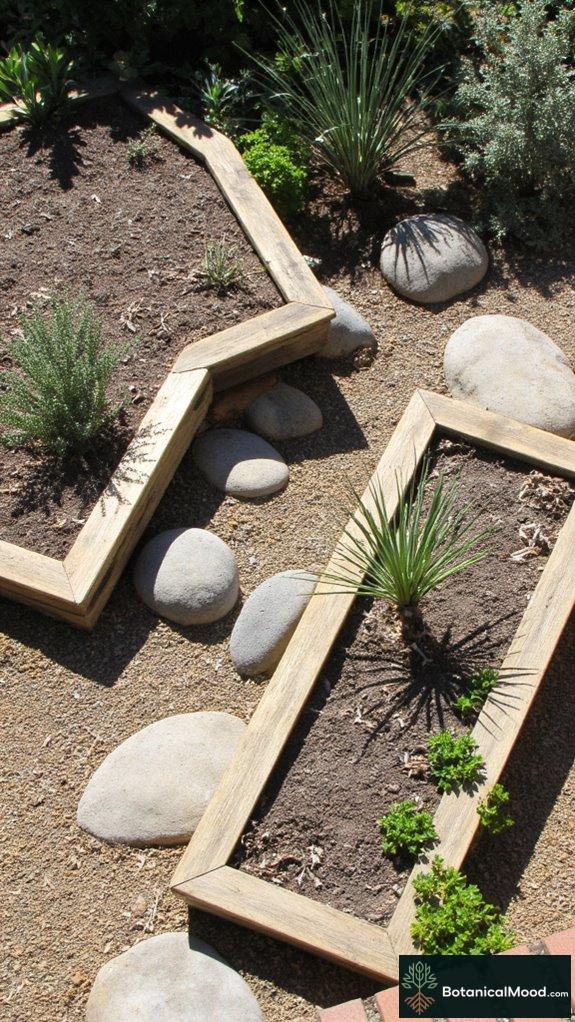
Every sustainable garden requires thoughtful material selection that minimizes environmental impact while maximizing aesthetic and functional potential.
- Prioritize locally sourced, recycled components
- Choose eco-friendly materials with green certifications
- Select upcycled resources for hardscaping
- Opt for biodegradable options in landscaping
- Integrate low-impact design with natural finishes
Additionally, consider implementing sustainable DIY interlocking planters that enhance modular garden designs. To further enrich your garden’s ecosystem, think about incorporating elements that mimic forest canopy structures, as they promote biodiversity and healthy growth in urban environments.
Ecological Balance Techniques

After carefully selecting sustainable materials for your garden, understanding ecological balance becomes the next critical step in creating a thriving, resilient setting. I’ll explore permaculture ethics and ecological harmony practices that integrate native species (Echinacea purpurea), companion planting strategies, and microhabitat design to support biodiversity and garden ecosystem resilience. Additionally, incorporating native plant layouts can enhance the aesthetic appeal while fostering important habitats for local wildlife.
Natural Water Management

In the elaborate dance of sustainable gardening, water management emerges as a pivotal choreographer of ecological harmony.
- Design rain gardens with native Echinacea (Echinacea purpurea) to capture stormwater runoff.
- Implement drought resilient landscaping using xeriscaping principles.
- Install permeable hardscaping materials to enhance water absorption.
- Utilize rainwater harvesting systems for irrigation.
- Select water-efficient plant species adapted to local microclimates.
Permeable Surface Planning

Water’s journey through a garden doesn’t stop at efficient collection—it continues with strategic surface management.
Permeable pavers and innovative drainage solutions transform hardscape materials into dynamic water retention systems, enhancing soil permeability while controlling erosion.
Urban gardening demands intelligent terrain design that integrates permeable structures like rain gardens to optimize natural water flow.
Soil Carbon Enhancement

Carbon sequestration transforms garden ecosystems through strategic organic matter management, turning soil into a powerful climate mitigation tool.
- Implement carbon farming techniques to enhance soil carbon cycling
- Utilize organic soil amendments like biochar and compost
- Monitor carbon footprints through advanced soil microbiome analysis
- Reduce soil erosion with regenerative gardening practices
- Develop thorough carbon capture strategies for environmental design
Regenerative Agriculture Methods

Since regenerative agriculture represents a holistic approach to ecosystem restoration, gardeners can transform traditional cultivation methods into powerful environmental stewardship strategies.
Ecosystem Connectivity

How can we design gardens that function as living, interconnected ecosystems?
- Create wildlife corridors connecting urban ecosystems
- Integrate native plant species that support local biodiversity
- Design multilayered habitats with ground cover, shrubs, and trees
- Minimize hard landscaping to preserve natural ecosystem flow
- Implement strategic plant clustering to enhance ecological interactions
Gardens become dynamic, interconnected networks when we intentionally design spaces that support complex biological relationships.
Low-Impact Garden Design

Low-impact garden design represents a holistic approach to creating outdoor spaces that minimize environmental disruption and maximize ecological harmony.
Natural Resource Preservation

When designing a sustainable garden, preserving natural resources becomes a critical strategy for environmental stewardship and long-term ecosystem health.
- Implement waterway conservation techniques to protect local stream ecosystems.
- Practice soil preservation through regenerative gardening methods.
- Reduce pollution by selecting native plant species (Echinacea purpurea).
- Support wildlife conservation with diverse habitat zones.
- Minimize energy consumption through strategic scenery design.
Sustainable Landscape Architecture

Because sustainable terrain architecture represents a holistic approach to environmental design, it integrates ecological principles with aesthetic creativity to transform outdoor spaces into resilient, functional ecosystems.
I design terrains using permaculture principles, incorporating sustainable materials like reclaimed wood, green roofs, and natural barriers that support urban farming and community garden initiatives.
Organic Growth Techniques
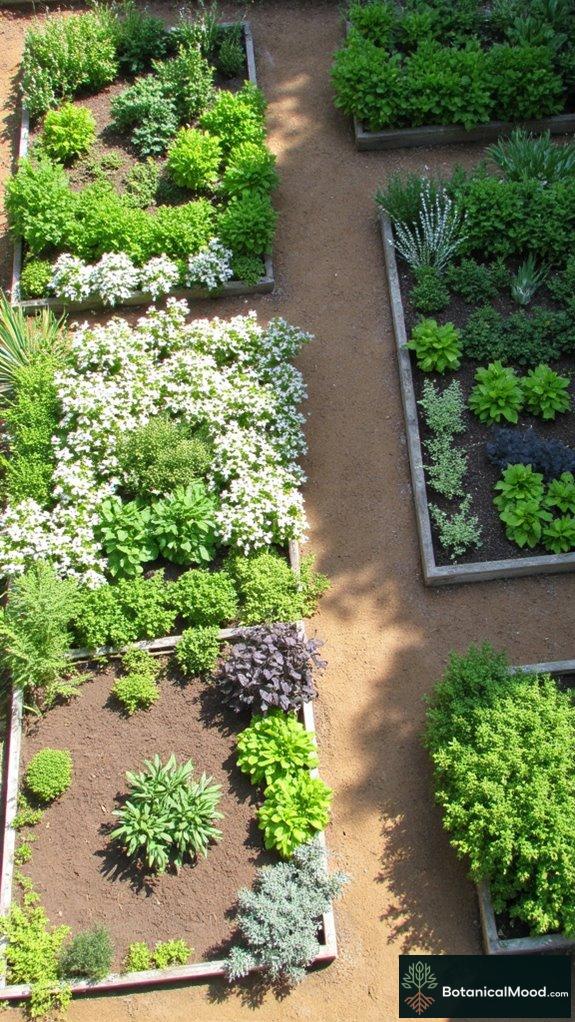
Since sustainable gardening demands strategic approaches to nurturing plant life, organic growth techniques represent a holistic methodology for cultivating vibrant, resilient ecosystems within garden spaces.
- Implement organic fertilizers and green manures to enhance soil microbiomes
- Practice sustainable crop rotation with heirloom varieties
- Integrate eco-friendly pesticides supporting beneficial insects
- Develop permaculture practices for natural garden resilience
- Utilize organic mulch to maintain soil health and biodiversity
Environmental Restoration Practices

Three primary strategies characterize effective environmental restoration practices in sustainable garden design, transforming degraded terrains into thriving, regenerative ecosystems.
I focus on habitat preservation through native plant selection, strategic soil regeneration techniques, and biodiversity enhancement methods that reconnect fragmented environments, rebuilding ecological networks with intentional, scientifically-informed interventions.
Holistic Garden Ecosystem Management

When designing a sustainable garden ecosystem, I prioritize creating an interconnected, self-regulating environment that mimics natural ecological processes, emphasizing symbiotic relationships between plants, soil microorganisms, pollinators, and local wildlife.
- Implement integrated pest management strategies using companion planting techniques.
- Develop holistic soil health through diverse microbial inoculation.
- Cultivate native species supporting local biodiversity networks.
- Create habitat corridors connecting garden zones.
- Balance ecosystem interactions with strategic plant selection.
Green Infrastructure Planning

How can green infrastructure transform urban environments into resilient, sustainable ecosystems?
I’m passionate about integrating green roofs, rain gardens, and community gardens to reimagine urban scenery.
Sustainable landscaping with water-efficient design and eco-friendly hardscaping creates vibrant, regenerative spaces that connect people, wildlife, and innovative ecological solutions.
References
- https://encorerealtysc.com/blog/top-7-sustainable-garden-trends-for-2025-expert-insights-from-houzz-pros
- https://petruslandscape.com/gardening-statistics-in-2025/
- https://www.parkseed.com/blogs/park-seed-blog/top-12-gardening-trends-for-2025
- https://tomlinsonbomberger.com/blog/dig-deep-2025-garden-design-trends-for-a-sustainable-modern-outdoor-space/
- https://www.drabtofab.com/landscape-design-san-diego-sustainable-solutions-for-modern-outdoor-living-in-2025
- https://www.greenprofit.com/Article/?articleid=27264
- https://165357.fs1.hubspotusercontent-na1.net/hubfs/165357/2025 Garden Trends Report.pdf
- https://phsonline.org/for-gardeners/gardeners-blog/2025-gardening-trends
- https://www.novatr.com/blog/top-landscape-design-trends
- https://raleighrealty.com/blog/gardening-statistics-trends